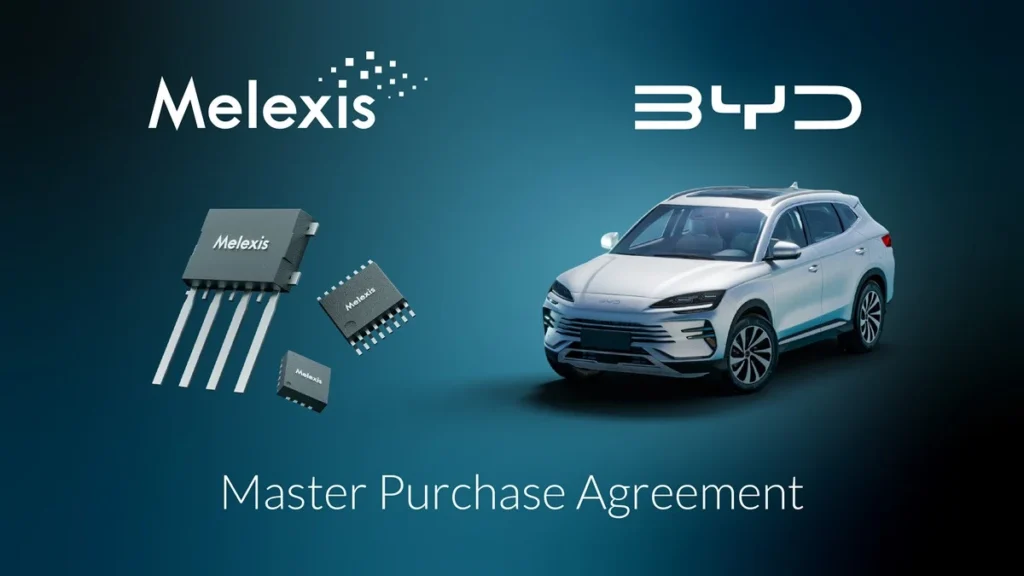
Melexis, a global leader in semiconductor solutions for the automotive industry, has formally cemented its relationship with BYD, the world’s leading manufacturer of new energy vehicles (NEVs), through the signing of a Master Purchase Agreement (MPA). This pivotal agreement designates Melexis as a direct supplier within BYD’s extensive global procurement network, formalizing an existing multi-year collaboration and granting BYD immediate, direct access to Melexis’ advanced semiconductor technologies crucial for electric vehicle (EV) applications. The move is anticipated to streamline supply chains, foster closer engineering synergy, and accelerate innovation for both entities within the rapidly evolving landscape of electrified mobility.
The Strategic Imperative: Securing the EV Future
The transition to a direct supplier relationship comes at a critical juncture for the global automotive industry, characterized by unprecedented demand for electric vehicles and persistent challenges in the semiconductor supply chain. For BYD, which has rapidly ascended to become a dominant force in the NEV market, securing a robust and direct supply of high-quality components is paramount to sustaining its aggressive growth trajectory and maintaining its competitive edge. Melexis, with its specialized expertise in automotive-grade sensors and driver integrated circuits (ICs), represents a vital partner in this endeavor.
-
BYD’s Ascent and Vertical Integration: BYD’s journey from a rechargeable battery manufacturer in the mid-1990s to a global NEV powerhouse is a testament to its strategic vision and vertical integration capabilities. The company not only produces a wide array of electric and plug-in hybrid vehicles, but also manufactures its own batteries, electric motors, and semiconductor components. This comprehensive approach has allowed BYD to control quality, manage costs, and navigate supply disruptions more effectively than many competitors. In the fourth quarter of 2023, BYD notably surpassed Tesla in global battery electric vehicle (BEV) sales, underscoring its significant market presence and operational scale. With ambitious plans for international expansion, including significant inroads into European, Southeast Asian, and Latin American markets, BYD’s need for reliable and innovative component suppliers has intensified. Direct access to Melexis’ cutting-edge sensor and driver technologies will enable BYD to enhance the performance, safety, and intelligence of its next-generation NEV platforms, from passenger cars to commercial vehicles.
-
Melexis’ Foundational Role in Automotive Electronics: Melexis has long been recognized as a critical enabler of automotive innovation, specializing in micro-electronic semiconductor solutions that enhance safety, efficiency, and comfort in vehicles. The company’s product portfolio spans a broad spectrum, including magnetic sensors, current sensors, optical sensors, motor drivers, and LED drivers. These components are indispensable for modern vehicles, particularly EVs, where they play crucial roles in powertrain management, battery monitoring, thermal control, advanced driver-assistance systems (ADAS), and body electronics. For instance, Melexis’ Hall-effect sensors are vital for precise motor control in electric powertrains, optimizing efficiency and range. Its current sensors are essential for accurate battery management systems (BMS), ensuring battery health, longevity, and safe operation. The company’s focus on high-reliability, AEC-Q100 qualified components aligns perfectly with the stringent demands of automotive applications, making it a preferred partner for leading global automakers.
A Partnership Evolved: From Indirect to Direct
The transition to a direct supplier relationship marks a natural progression in what Melexis Vice President of China Strategy, Dieter Verstreken, described as a "multi-year collaboration." While the specific details of their prior engagement remain largely proprietary, it is common for semiconductor suppliers like Melexis to initially supply automotive OEMs indirectly through Tier 1 suppliers (e.g., manufacturers of electronic control units or specific modules). This indirect model, while effective for initial market penetration, can introduce layers of complexity and reduce the direct influence of the OEM on component development.
-
The History of Collaboration: Over the years, Melexis’ components would have likely been integrated into various systems supplied to BYD by Tier 1 automotive suppliers. This could have included sensors for electric power steering systems, thermal management modules, or infotainment components. Through this indirect route, BYD would have gained familiarity with the quality, reliability, and performance of Melexis’ technology. As BYD’s production volumes soared and its technological ambitions grew, the advantages of a more direct, collaborative relationship became increasingly apparent. The established trust and demonstrated performance of Melexis’ solutions during this indirect phase paved the way for the formal MPA.
-
Rationale for Direct Engagement: The primary drivers behind moving to a direct supplier relationship are multi-faceted. Firstly, supply chain resilience has become a paramount concern for automakers globally, especially after the profound disruptions caused by the COVID-19 pandemic and subsequent semiconductor shortages. By directly engaging with Melexis, BYD gains greater visibility and control over its critical component supply, reducing reliance on intermediary suppliers and mitigating potential bottlenecks. Secondly, accelerated innovation and customization are key. Direct collaboration between engineering teams allows for bespoke solutions, where Melexis can tailor its technology roadmap more precisely to BYD’s evolving vehicle architectures and performance requirements. This can lead to more optimized designs, faster integration, and enhanced vehicle differentiation. Lastly, operational efficiency and cost optimization are significant benefits. Streamlining the purchasing process by removing intermediaries can lead to reduced lead times, improved logistics, and potentially more favorable pricing structures, contributing to BYD’s overall cost competitiveness.
Technological Synergies and Future Platforms
Under the terms of the MPA, BYD will gain direct access to an expansive portfolio of Melexis’ sensor and driver technologies. This comprehensive access is critical for the myriad of sophisticated electronic systems within modern electric vehicles.
-
Melexis’ Portfolio: Powering BYD’s Innovation:
- Automotive Powertrain: Melexis’ magnetic position sensors and current sensors are vital for the efficient control and monitoring of electric motors and inverters, optimizing energy conversion and extending range.
- Thermal Management: With EVs, precise thermal management of batteries, motors, and cabin is crucial for performance, safety, and longevity. Melexis’ temperature sensors and driver ICs facilitate intelligent control of cooling and heating systems.
- Lighting: Advanced LED drivers from Melexis enable sophisticated adaptive lighting systems, enhancing safety and vehicle aesthetics while minimizing power consumption.
- Braking and Steering: High-precision magnetic sensors are fundamental to electric power steering (EPS) systems, providing accurate feedback for steering angle and torque. Similarly, they contribute to advanced braking systems (e.g., regenerative braking and ABS), improving vehicle control and energy recovery.
- Battery-related Applications: Beyond current sensors for BMS, Melexis offers solutions for battery cell monitoring and isolation sensing, crucial for safety and optimal performance of high-voltage battery packs.
-
Accelerating Next-Generation EV Development: The direct supplier relationship is specifically designed to enable deeper collaboration between the engineering teams of both companies. This means Melexis’ R&D efforts can be more closely aligned with BYD’s long-term product development cycles and strategic vision for future electric and new energy vehicle platforms. This co-development model can lead to highly integrated, purpose-built solutions that offer superior performance, smaller footprints, and reduced system costs compared to off-the-shelf components. For example, if BYD is developing a new battery architecture, Melexis engineers can work directly with BYD to design custom current sensors or battery management ICs that are perfectly optimized for that specific application, ensuring peak efficiency and safety.
Industry Landscape and Market Dynamics

This agreement between Melexis and BYD is not merely a transactional deal; it reflects broader trends and shifts within the global automotive and semiconductor industries.
-
China’s Dominance in NEVs: China stands as the world’s largest automotive market and the undisputed leader in NEV production and adoption. The Chinese government has aggressively promoted EV development through subsidies, infrastructure investment, and regulatory mandates, fostering a vibrant domestic industry. Companies like BYD have thrived in this environment, not only meeting domestic demand but also becoming formidable global exporters. For international semiconductor suppliers like Melexis, a strong presence and direct relationships within the Chinese market are indispensable for sustained growth and market leadership. This MPA significantly bolsters Melexis’ foothold in this critical region.
-
The Global Semiconductor Squeeze and Supply Chain Lessons: The automotive industry learned a harsh lesson during the global semiconductor shortage of 2020-2022, which saw production lines idled and billions in revenue lost. This crisis highlighted the vulnerability of traditional, multi-layered supply chains and spurred a movement towards greater transparency and direct engagement between OEMs and chip manufacturers. Automakers are increasingly seeking to diversify their supplier base, secure long-term contracts, and even invest directly in chip foundries or design capabilities. The Melexis-BYD MPA exemplifies this strategic shift, prioritizing supply chain resilience and predictability.
-
The Trend Towards Direct OEM-Supplier Relationships: The direct engagement model is gaining traction across the automotive industry. Traditional Tier 1 suppliers, while still crucial, are seeing OEMs increasingly reach out directly to Tier 2 and Tier 3 component manufacturers, particularly for high-value, high-tech components like semiconductors. This trend is driven by the increasing "software-defined vehicle" paradigm, where the underlying silicon and software determine much of a vehicle’s performance and features. OEMs want more direct influence over the foundational technologies that define their products.
Official Voices and Strategic Outlook
The official statements surrounding the MPA underscore its strategic importance for both parties.
-
Melexis’ Perspective: Dieter Verstreken, VP China Strategy at Melexis, articulated the significance of the agreement, stating, "BYD continues to set the global pace for scale and innovation in electrified mobility. Transitioning to a direct supplier relationship is a natural evolution of our multi-year collaboration. It allows our engineering teams to collaborate more closely, ensuring our high-performance semiconductor solutions directly support BYD’s mission to deliver safer, more efficient, and smarter vehicles." This statement highlights Melexis’ recognition of BYD’s market leadership and its commitment to contributing to BYD’s objectives. Beyond the direct sales, the collaboration offers Melexis invaluable insights into future EV requirements, guiding its own research and development initiatives. It also serves as a strong endorsement of Melexis’ technological capabilities and its reputation as a reliable automotive partner.
-
Inferred BYD Stance: While BYD has not released an immediate public statement regarding the MPA, their motivations can be logically inferred. For BYD, this agreement is a strategic triumph, reinforcing its ability to secure critical, high-quality components directly from a leading innovator. It signifies a move to further optimize its internal processes, potentially leading to faster vehicle development cycles and enhanced product differentiation. BYD executives would likely view this partnership as a means to solidify their competitive edge by ensuring a stable supply of cutting-edge technologies, enabling them to continue delivering high-performance, cost-effective, and technologically advanced NEVs to global markets. The focus would be on leveraging Melexis’ expertise to push the boundaries of energy efficiency, driving range, safety features, and overall vehicle intelligence.
-
Analyst Commentary: Industry analysts would likely view this agreement as a significant positive for both Melexis and BYD. For Melexis, it represents a substantial long-term revenue stream from one of the largest and fastest-growing automakers, validating its strategic focus on EV technologies and strengthening its position in the crucial Chinese market. For BYD, it provides greater supply chain security and direct access to specialized semiconductor expertise, which is increasingly critical for EV innovation. Analysts might also point to this agreement as a benchmark for future OEM-supplier relationships in the evolving automotive landscape, where specialized component suppliers are becoming more integral to vehicle design and production.
Broader Implications and Future Trajectories
The Master Purchase Agreement between Melexis and BYD carries implications that extend beyond the immediate commercial benefits for the two companies, signaling broader trends in the automotive and technology sectors.
-
Impact on Melexis’ Global Strategy: This agreement significantly strengthens Melexis’ position in the global EV market. It not only secures a major customer but also provides a platform for showcasing its advanced technologies in a high-volume, cutting-edge environment. The insights gained from collaborating with BYD, a company at the forefront of NEV innovation, will be invaluable for Melexis’ future product development, enabling it to anticipate and address emerging technological needs across the industry. This could lead to an expansion of its R&D investments in areas directly relevant to electrification, further solidifying its market leadership.
-
Impact on BYD’s Competitive Edge: For BYD, the direct partnership with Melexis enhances its ability to integrate state-of-the-art semiconductor solutions into its vehicles more quickly and efficiently. This translates into tangible benefits for consumers: vehicles with improved range, faster charging capabilities, more robust safety systems, and more sophisticated user experiences. By having a direct line to Melexis’ engineers, BYD can ensure its vehicles incorporate the latest sensor and driver technologies, helping it stay ahead of competitors in a fiercely competitive market. The agreement also plays into BYD’s long-term strategy of technological self-reliance and innovation, further reducing its vulnerability to external supply chain disruptions.
-
Setting a New Standard for EV Supply Chains: The move towards direct OEM-supplier relationships, as exemplified by this MPA, is likely to become a more prevalent model in the EV industry. As vehicles become increasingly defined by their electronic architecture and software, OEMs will seek closer ties with the core technology providers. This shift could lead to more collaborative development cycles, faster innovation, and ultimately, more advanced and reliable electric vehicles for consumers worldwide. It also underscores the growing importance of semiconductor companies in the automotive value chain, elevating their strategic significance beyond traditional component suppliers.
-
The Path Forward: Sustained Innovation: This collaboration is not a static arrangement but a dynamic partnership poised for continuous evolution. As EV technology advances, requiring even more sophisticated sensors for autonomy, enhanced battery management, and smarter cabin experiences, the direct channel between Melexis and BYD will facilitate rapid co-development and integration of next-generation solutions. This symbiotic relationship between a leading semiconductor innovator and the world’s largest NEV manufacturer is set to drive significant advancements in electrified mobility, shaping the future of transportation globally.






