In a landmark achievement for the field of quantum physics, a multinational team of experimental atomic physicists has identified a definitive maximum limit to electrical resistance caused by particle collisions. The research, conducted through a collaboration between the University of Toronto, L’École Normale Supérieure in Paris, and Lehigh University in Pennsylvania, provides the first clear evidence of a "ceiling" to resistivity in controlled quantum environments. By utilizing ultracold potassium atoms to simulate the behavior of electrons in a solid, the scientists observed that while resistance initially scales with the frequency of internal collisions, it eventually reaches a saturation point beyond which it cannot rise. This discovery, published in the journal Physical Review Letters, offers a transformative perspective on the microscopic mechanisms of electron transport and may hold the key to developing more efficient power systems and advanced quantum materials.
The fundamental nature of electrical resistance has long been a cornerstone of condensed matter physics. In traditional materials, resistance arises when moving electrons collide with impurities, lattice vibrations (phonons), or other electrons. These collisions dissipate energy as heat, a phenomenon that accounts for significant inefficiencies in modern technology. According to the research team, led by Professor Joseph Thywissen of the Department of Physics and the Centre for Quantum Information and Quantum Control at the University of Toronto, understanding the absolute limits of this resistance is essential for both theoretical physics and practical engineering.
The Microscopic Mechanics of Resistivity
At the heart of the study is the interaction between particles at the quantum level. In most common conductors, such as copper or aluminum, resistance is relatively predictable at room temperature. However, as materials are pushed to extremes—whether through intense pressure, magnetic fields, or cooling to near absolute zero—the behavior of electrons becomes increasingly complex.
"Electron-on-electron collisions are known to increase resistivity in some pure materials," explains Professor Thywissen, the study’s senior author. "The energy produced by electrical resistance shows up as heat. This is not merely a theoretical concern; for instance, modern transmission lines lose up to eight per cent of generated electrical power due to resistance. Beyond the practical implications, resistivity is also a primary signature of new physics. When a material behaves in a way that defies standard models of resistance, it often signals the presence of a novel quantum state."
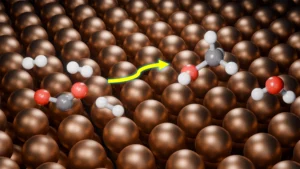
To isolate the specific effects of particle collisions from other factors like lattice defects or thermal vibrations, the researchers turned to the field of ultracold atomic physics. By cooling potassium atoms to temperatures just a fraction of a degree above absolute zero, the team was able to slow the particles down to a point where their quantum properties became dominant. In this state, the atoms behave as "surrogates" for electrons, allowing scientists to observe their interactions with unprecedented clarity.
The Quantum Simulator: Optical Lattices and Potassium Atoms
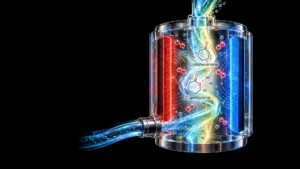
The experiment relied on a sophisticated setup known as an optical lattice. This technology uses intersecting laser beams to create a standing wave of light, forming a microscopic grid that resembles the crystalline structure of a solid material. The potassium atoms are trapped within the "wells" of this light grid, mimicking how electrons are situated within the atomic structure of a metal.
The advantage of using an optical lattice over a traditional solid-state material is the degree of control it affords researchers. In a natural metal, the density of atoms and the strength of their interactions are fixed by the material’s chemical composition. In an optical lattice, however, physicists can use magnetic fields and laser intensity to tune the strength of collisions between atoms at will. This allowed the Toronto-led team to recreate extreme conditions that are physically impossible to achieve in ordinary solids.
As the team increased the interaction strength between the potassium atoms, they observed a phenomenon they describe as "quantum enhancement." Thywissen noted that the atoms, despite being only a few nanometers in size, began to "bump into each other as if they were much larger." This effective increase in size made collisions much more frequent. Initially, as expected, this led to a sharp rise in the system’s resistivity. However, the surprise came when the interactions reached a certain threshold: the resistivity stopped climbing and entered a plateau phase.
Chronology of the Experiment and Theoretical Context
The path to this discovery involved several years of incremental breakthroughs in laser cooling and quantum simulation. The timeline of the research highlights the evolution of the project:
- Phase I: Development of the Optical Lattice (2018–2020): Researchers at the University of Toronto refined the precision of their laser traps, ensuring that potassium-40 isotopes could be maintained in a stable Fermi gas state at nanokelvin temperatures.
- Phase II: Calibration of Particle Interactions (2021): The team utilized Feshbach resonances—a tool in atomic physics that allows for the tuning of interaction strength between atoms using an external magnetic field. This allowed them to simulate "strong correlation" environments.
- Phase III: Data Collection and Analysis (2022–2023): Observations were conducted to measure the transport of atoms across the lattice. By monitoring how quickly the "atomic current" decayed, the researchers could calculate the effective resistivity of the system.
- Phase IV: Validation and Publication (2024): Collaborators in Paris and Pennsylvania provided theoretical modeling to confirm that the observed saturation was a fundamental property of the quantum system rather than an experimental artifact.
The concept of a resistance limit has been debated in physics for decades, most notably through the "Mott-Ioffe-Regel" (MIR) limit. This theoretical framework suggests that the mean free path of an electron (the distance it travels between collisions) cannot be shorter than the distance between atoms in the lattice. If the scattering is so frequent that it happens at every atomic site, the resistance should theoretically saturate. The results from the Thywissen group provide a clear, microscopic validation of this limit in a controlled environment.
Supporting Data and Statistical Findings
The data gathered during the experiment showed a distinct curve in the resistivity measurements. In the low-interaction regime, the resistance followed a linear trajectory, correlating directly with the frequency of collisions. However, as the scattering rate approached the "Planckian limit"—a theoretical speed limit for how fast energy can be dissipated in a quantum system—the curve flattened.
Key data points from the study include:
- Temperature Range: Atoms were cooled to approximately 50 nanokelvin.
- Collision Frequency: At the saturation point, the scattering rate was found to be nearly equal to the "Fermi energy" divided by Planck’s constant, a hallmark of universal quantum transport.
- Energy Loss Comparison: The researchers noted that while traditional copper wires lose energy via phonon scattering, the saturation observed in their quantum gas was driven entirely by particle-particle interactions, proving that even in "perfect" materials without defects, a maximum resistance exists.
Implications for Quantum Materials and Future Technology
The discovery of a maximum resistivity limit has profound implications for the study of "strongly correlated" materials. These include high-temperature superconductors and "strange metals," which often exhibit electrical properties that do not follow the standard rules of metallic conduction.
"Our results provide a clear microscopic understanding of how resistivity works in low-density metals and open the door to new studies of strongly correlated atomic systems and quantum materials," says Thywissen. By proving that a saturation point exists, the research suggests that there is a fundamental "floor" to how poorly a material can conduct electricity before it enters a different phase of matter.
From a practical standpoint, this research helps define the boundaries of electrical engineering. As the world moves toward miniaturized electronics and quantum computing, understanding how particles move through narrow channels is vital. If engineers know the absolute maximum resistance a system can encounter, they can better design circuits that operate near the edge of quantum limits without unexpected failures.
Furthermore, the study sheds light on the 8% energy loss in global power grids mentioned by Thywissen. While the ultracold atoms in the lab are far removed from high-voltage power lines, the underlying physics of collision-driven resistance is universal. By understanding the "maximum" limit, researchers may find new ways to bypass these limits entirely, perhaps by engineering materials that "skip" the collision-heavy phase and move toward superconducting states more efficiently.
Reaction from the Scientific Community
The physics community has responded with significant interest to the findings. Dr. Elena Rossi, a theoretical physicist not involved in the study, noted that the use of ultracold atoms as a "testbed" for solid-state physics is one of the most promising frontiers in science. "What the Toronto team has done is essentially build a perfect model of a metal where they can turn the knobs of nature," Rossi said. "The fact that they found a saturation point confirms some of our deepest suspicions about the limits of quantum transport."
Other researchers have pointed out that this study could help solve the mystery of "bad metals"—materials that seem to have much higher resistivity than traditional theories allow. By showing that collisions alone have a limit, the study suggests that "bad metals" must involve other complex interactions, such as many-body localization or emergent quantum phases, providing a roadmap for future investigation.
Conclusion and Next Steps
The finding that electrical resistance has a maximum limit marks a significant milestone in our understanding of the quantum world. By stripping away the complexities of traditional solids and focusing on the pure interactions of ultracold atoms, the team from the University of Toronto, L’École Normale Supérieure, and Lehigh University has revealed a fundamental law of nature.
Looking forward, the research team plans to explore how this resistivity limit changes in different lattice geometries and under varying degrees of "disorder" (simulated impurities). These future studies will continue to bridge the gap between the exotic world of quantum gases and the practical world of material science, potentially leading to a new era of high-efficiency electronics and a deeper understanding of the very fabric of matter. As quantum simulators become more advanced, the "ceiling" of resistance discovered today may become the foundation for the superconductors of tomorrow.