The haunting stillness of Western Ewe Pullet-style car graveyards, vast repositories of automotive history, is often punctuated by a familiar sight: the four-door sedan from the 1940-1955 era, manufactured by Chrysler Corporation. These ubiquitous survivors, or rather, their discarded shells, are a testament to the sheer volume of their production and, perhaps, a less-than-stellar fate in the collector car market. A recent expedition through a northeastern Colorado junkyard revealed another such specimen, a poignant reminder of this enduring trend in automotive archaeology.
Since embarking on a personal mission in 2007 to document junkyard vehicles with compelling narratives, the author has encountered a veritable parade of these discarded Mopar sedans from the 1940-1955 model years. The extensive list includes numerous examples: a 1941 Plymouth Special Deluxe, another 1941 Plymouth, a 1942 Plymouth Special De Luxe Town Sedan, a 1947 Dodge Custom Sedan, a 1948 Dodge Custom Sedan, a 1948 Plymouth, a 1949 Dodge Coronet, another 1949 Dodge Coronet Sedan, a 1949 Plymouth Special Deluxe Sedan, a 1950 Chrysler, a 1950 Chrysler Windsor Club Coupe, a 1951 Plymouth taxi, a 1951 Plymouth Cranbrook Sedan, a 1952 Chrysler Windsor Deluxe Six Passenger Sedan, a 1953 Chrysler New Yorker, a 1953 Plymouth Sedan, a 1954 Dodge Meadowbrook 4-door Sedan, a 1954 Plymouth Belvedere Sedan, and a 1954 Plymouth Savoy Sedan. This extensive inventory underscores the sheer prevalence of Chrysler Corporation’s mid-century four-door sedans in automotive boneyards.
A closer examination of these vehicles reveals a common mechanical thread for most of this period: the flathead straight-six engine. Notable exceptions include the 1953 Chrysler and the 1954 Dodge, which were equipped with Chrysler’s pioneering FirePower and Red Ram Hemi V8 engines, respectively. The question then arises: did the inherent design of these four-door sedans, coupled with the complexity and cost of rebuilding their flathead engines, contribute to their eventual consignment to junkyards, escaping the embrace of dedicated restorers and succumbing instead to the crushing jaws of the scrap industry?
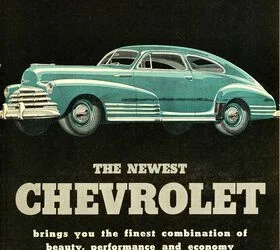
In stark contrast, the author’s junkyard travels reveal a significantly smaller number of Chevrolet and Ford products from the same 1940-1955 timeframe. For instance, a 1951 Chevrolet Styleline, pictured in a separate context, represents one of only two 1940-1955 Chevrolets documented by the author in such locations. While General Motors and Ford may have offered more appealing engine options throughout much of this era, a more significant factor contributing to the scarcity of their contemporary models in junkyards might be their comparatively more appealing, or less "stodgy," styling. The 1948 Plymouth, for example, was a subtle evolution of the 1942 Plymouth, which itself was a refinement of the 1940 Plymouth, featuring an updated frame design. This design lineage, while efficient, lacked the visual dynamism that might have captured the imagination of collectors and enthusiasts seeking to preserve automotive history.
Styling Divide: A Matter of Aesthetic Appeal
The styling of American automobiles underwent a significant transformation in the post-World War II era. While all three major American automakers – General Motors, Ford, and Chrysler – were still utilizing pre-war designs as the basis for their initial post-war offerings, the visual divergence became increasingly apparent. By 1948, the affordable offerings from the Detroit Big Three were at the tail end of their pre-war design cycles. However, even within this context, Chevrolet and Ford generally presented a sleeker profile than their Plymouth counterparts.
The contrast in aesthetic appeal became even more pronounced with the introduction of the all-new 1949 models. The 1949 Ford, in particular, is still celebrated today as an enduring classic, embodying a more modern and dynamic design language. While Plymouth offered substantial value for the money during the late 1940s and early 1950s, with strong sales figures reflecting this affordability, its market share experienced a dramatic decline by 1954. In that year, even the significantly more expensive Oldsmobile and Buick brands from General Motors surpassed Plymouth in total unit sales, a stark indicator of a shifting consumer preference that favored more contemporary styling and potentially more advanced features.
The Personal Quest for a Specific Part
The author’s personal automotive pursuits played a role in the discovery of the featured 1948 Plymouth. While the sheer ordinariness of these sedans, even after nearly eight decades, might not typically warrant a dedicated trip to a junkyard, a specific need for a 1941-1948 Plymouth decklid for a personal project car provided the impetus. This project, a 1941 Plymouth race car that had been languishing in a field east of Pikes Peak since the Lyndon B. Johnson administration, boasted impressive patina but suffered from significant rust damage on the lower edge of the decklid, a consequence of snow accumulation in the trunk over years of neglect.
The restoration of this race car is a meticulous process, involving a complete rewiring with modern electrical hardware, including LED lighting, while striving to preserve its authentic patina. The challenges are manifold, including the use of notoriously cheap pot-metal hardware in the headlight assemblies. The extent of the decklid’s structural weakness became apparent during the revival of the trunk latch, stop light, and license plate light assembly. This prompted a targeted search for a replacement decklid, specifically from a Plymouth sedan of the correct era. The search extended across a broad geographical area, from Albuquerque, New Mexico, to Cheyenne, Wyoming, with the understanding that while Dodge and DeSoto sedans of the period shared a similar visual appearance, their decklids were slightly wider and thus incompatible.
A Junkyard Discovery and a Hanta-Virus Scare
The search for the elusive decklid eventually led to a crucial tip from "Rollin over at junkyard_cars_of_colorado" on Instagram. The spotted Plymouth, isolated between the Chrysler and Ford sections of a junkyard, immediately prompted a visit. Upon opening the trunk, the author was confronted with an exceptionally thick and repulsive accumulation of rodent nesting material, a stark reminder of the pervasive presence of wildlife in these forgotten automotive graveyards. This discovery heightened concerns about hantavirus, a deadly respiratory illness transmitted by rodents. Colorado, unfortunately, ranks as the second-worst state for hantavirus cases, trailing only New Mexico. While equipped with gloves and disinfectant, the author resolved to incorporate a respirator into future junkyard excursions, particularly when undertaking more involved parts retrieval.
Despite the unsettling discovery, the decklid itself, baked by the intense High Plains sun on a 100-degree day, was in remarkably good condition, the bolts fortunately located away from the hanta-infested trunk floor. The junkyard, Andersen’s, charged a reasonable $50 for the part, a price considered excellent given its rarity and condition.
Historical Context and Value Proposition
The build tag of the acquired decklid indicated that the Plymouth was manufactured at the Lynch Road Assembly plant in Detroit, signifying its status as an early production 1948 model. In 1948, Chrysler Corporation sold a substantial 378,048 new Plymouths. The bodies for these vehicles were primarily constructed by the Briggs Manufacturing Co. The Special De Luxe trim level represented the top tier for the 1948 Plymouth, with a Manufacturer’s Suggested Retail Price (MSRP) of $1,529. Adjusted for inflation, this would equate to approximately $21,453 in 2026 dollars, offering a glimpse into the purchasing power of the era.
An optional MoPar heater was available that year, a feature that did not become standard equipment in U.S.-market cars until the late 1960s or early 1970s. For context, the least expensive 1948 Plymouth model, the De Luxe business coupe, retailed for $1,346, or about $18,964 in today’s currency. This contrasts with the Chevrolet Stylemaster business coupe, which started at a more frugal $1,244 ($17,527 adjusted), and the Ford Deluxe Six business coupe, priced even lower at $1,154 ($16,259 adjusted).
Despite the Plymouth’s higher sticker price, it offered a more advanced front suspension system compared to its contemporaries. Both the 1948 Ford and Chevrolet models still utilized solid kingpin front axles, with the Ford’s suspension design being particularly antiquated, tracing its lineage directly back to the Model T. The Plymouth, in contrast, featured an independent front suspension, a significant advantage in ride quality and handling.
Under the hood, both the Ford and Plymouth models were equipped with 95-horsepower flathead straight-six engines. Ford offered an optional flathead V8 producing 100 horsepower, though its cost approached three thousand 2026 dollars. The Chevrolet Thriftmaster six, while generating a more modest 90 horsepower, benefited from an overhead-valve design that enhanced its resistance to overheating under load. All three vehicles came standard with a three-on-the-tree column-shift manual transmission; Plymouth did not introduce a true automatic transmission until 1954.
The longevity of the discovered Plymouth in the junkyard was evident from the presence of a Riverside Power Grip tire, a product of Montgomery Ward from the 1960s, and Brunswick Super Quality rubber from a similar era. While the car lacked a radio, it retained the speaker grille and the necessary block-offs for volume and tuning knobs. The body, though not significantly rusted, showed signs of older, field-expedient bodywork.
The Economics of Restoration and Evolving Automotive Design
While the revival of this particular Plymouth might have been technically feasible, especially if the engine had remained protected, it would likely not have been a sound financial investment. In the realm of 1940-1948 Plymouths, only convertibles generally offer a chance of recouping restoration costs, and even then, the investment often exceeds the car’s market value.
The automotive landscape shifted dramatically with the introduction of the all-new 1949 models from Ford, Chevrolet, and Plymouth. While Plymouth was the last of the trio to unveil its 1949 redesign, both Ford and Chevrolet adopted lower, longer, and significantly more modern styling. It wasn’t until 1955 that Plymouth’s styling truly aligned with the contemporary aesthetics of Ford and Chevrolet, largely due to Virgil Exner’s influential "Forward Look" design philosophy. Although Plymouth buyers in 1955 still couldn’t opt for a true Hemi engine (a feature that wouldn’t appear in production Plymouths until the late 1960s), the optional 259-cubic-inch "Semi-Hemi" HyFire polyspherical V8 delivered five more horsepower than Chevrolet’s brand-new 265-cubic-inch small-block V8, signaling a resurgence in Plymouth’s performance credentials and a renewed competitive spirit in the American automotive market. The journey of these once-common sedans from bustling roadways to the silent expanse of junkyards serves as a tangible record of evolving automotive tastes, technological advancements, and the enduring cycle of vehicle obsolescence.