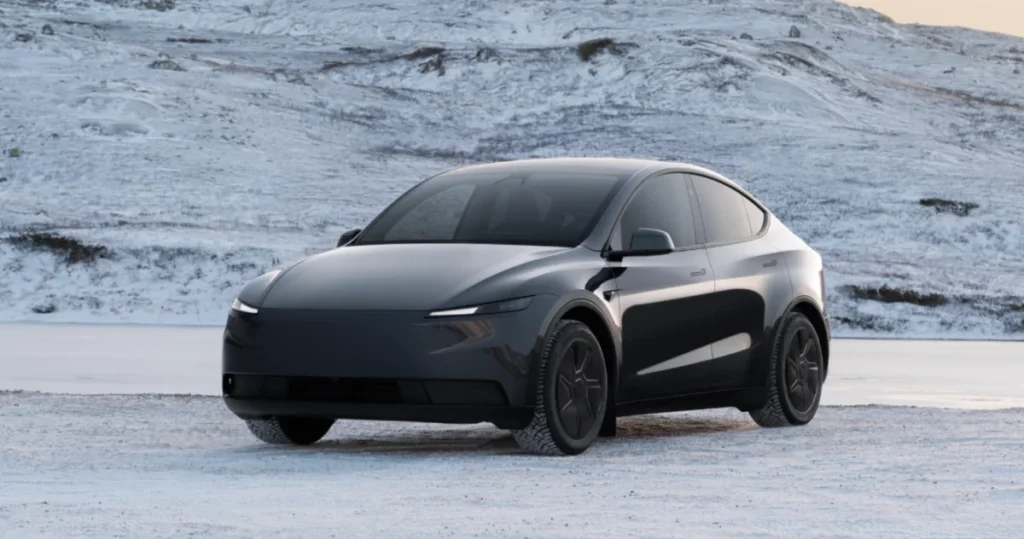
Australia achieved a significant milestone in automotive history in August, as battery-electric vehicles (BEVs) for the first time outsold traditional petrol-powered cars. The surge in EV adoption saw BEVs capture 27,078 sales, representing 24.9% of the new-car market, eclipsing both petrol vehicles (25,824 sales) and diesel vehicles (23,608 sales). This dramatic shift marks a pivotal moment in the nation’s transition to sustainable transportation, with the majority of these sales originating from Chinese manufacturers, including Tesla’s Australian offerings.
The broader electrified vehicle market, encompassing BEVs, hybrids, and plug-in hybrids, commanded an impressive 51.8% of the total market share in August. This indicates that for the first time, vehicles relying solely on internal combustion engines have fallen into the minority in Australia. This trend mirrors developments in Europe, which crossed a similar threshold last year, underscoring a global acceleration towards electric mobility. The overall Australian new-car market experienced growth of 4.9% in August, reaching 108,760 units, with the burgeoning EV segment being the primary driver of this expansion.
A Record Month: Electrification Ascends, Combustion Declines
The remarkable performance of BEVs in August was characterized by a staggering 171% year-over-year increase in sales, according to data compiled by VFACTS and the Electric Vehicle Council. This surge is not merely a fleeting trend but a clear indicator of a fundamental reshaping of the Australian automotive landscape. The combined strength of BEVs, plug-in hybrids (PHEVs), and traditional hybrids meant that over half of all new vehicles registered in August were powered, at least in part, by electricity. This marks a critical turning point, where the once-dominant internal combustion engine (ICE) has been relegated to a secondary position in new vehicle sales.
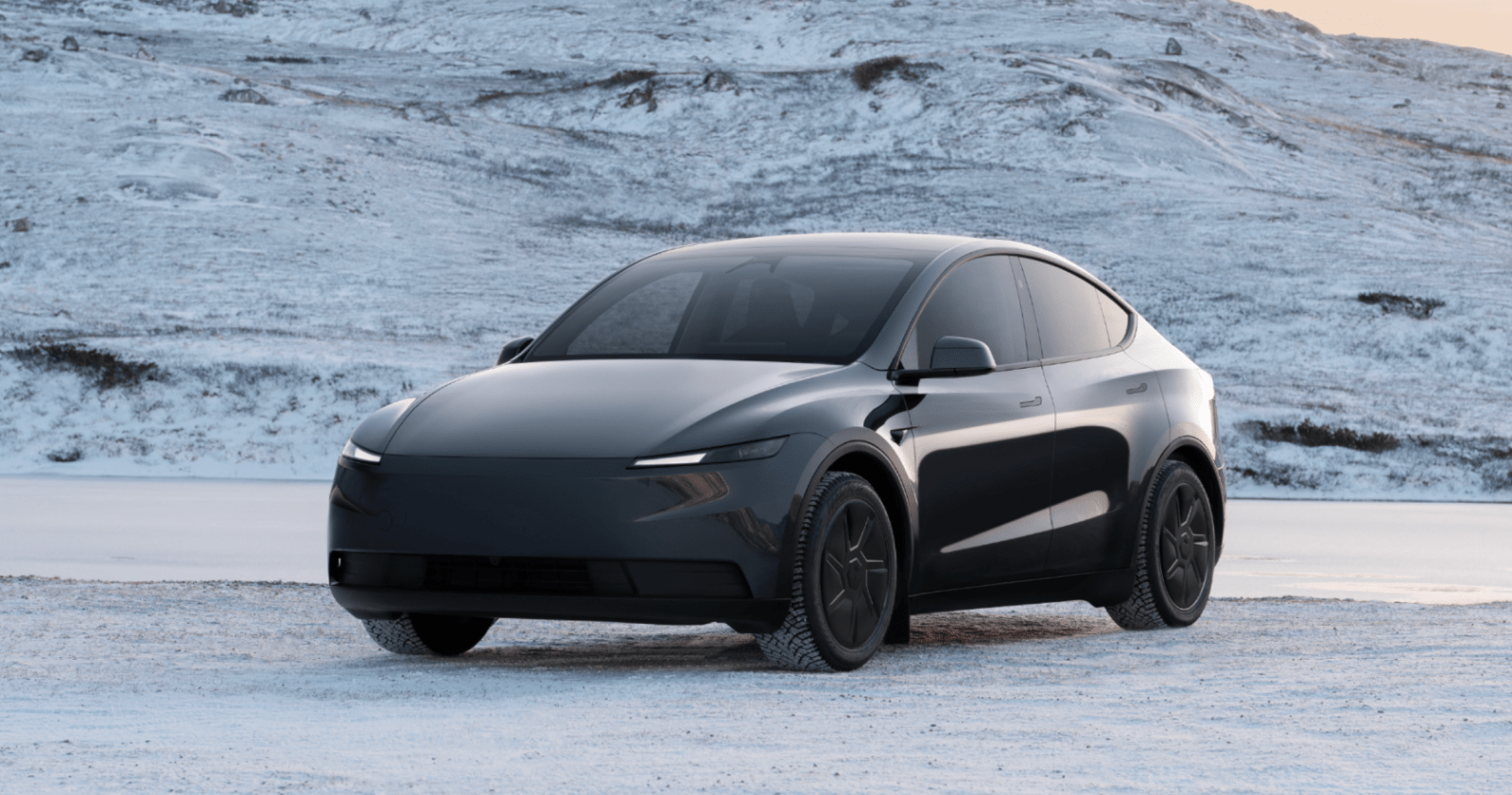
This rapid electrification mirrors the trajectory observed in other developed markets. Europe, for instance, witnessed a similar crossover point in the previous year. While specific circumstances can vary, the underlying drivers – increasing environmental awareness, government incentives, improving technology, and a wider array of affordable and capable electric models – are globally consistent. Australia’s rapid ascent to this milestone suggests a particularly receptive market, potentially driven by factors such as favorable import policies and a growing consumer appetite for cleaner transport options. The overall market’s growth, while positive, was significantly outpaced by the phenomenal growth in the EV sector, highlighting the segment’s crucial role in the market’s expansion.
The Chinese Engine of Australia’s EV Boom
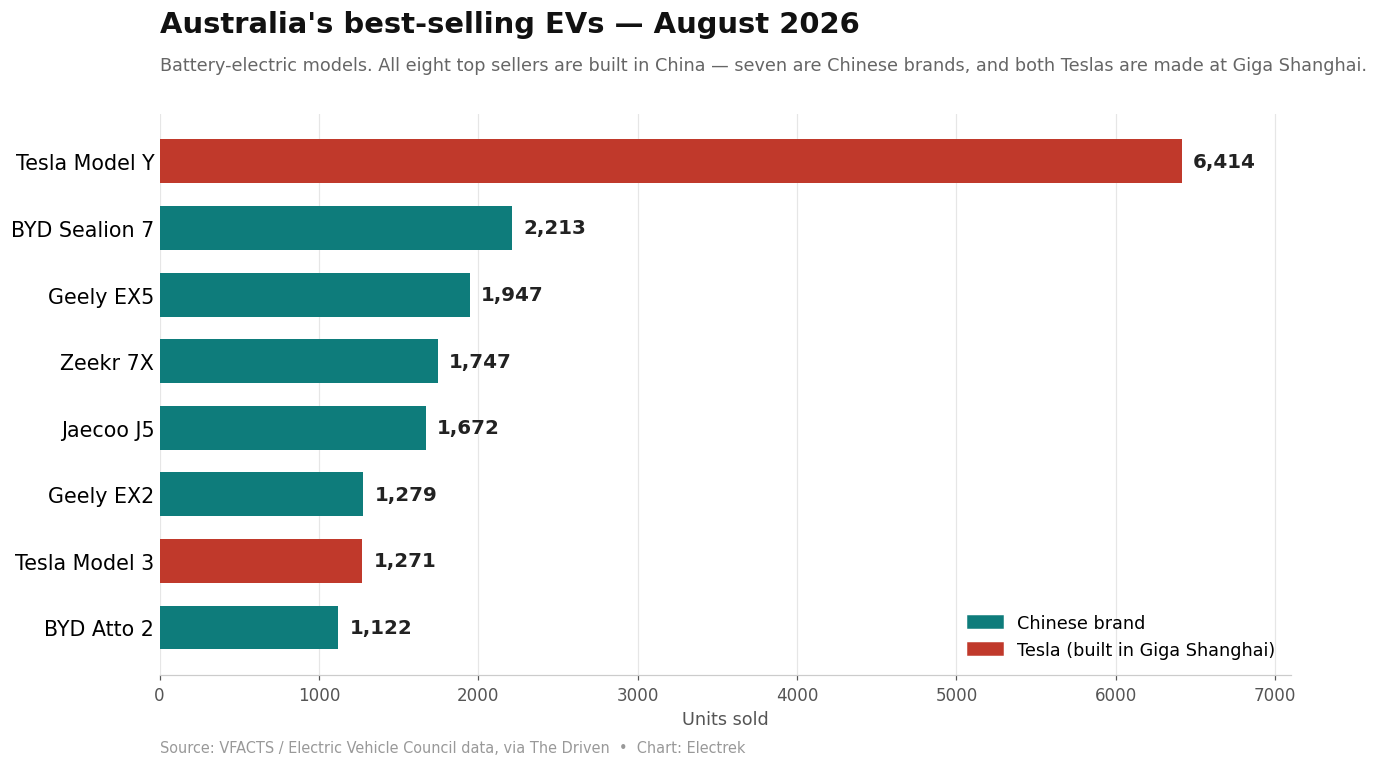
A closer examination of Australia’s top-selling electric vehicles in August reveals a striking pattern: the vast majority of these popular models are manufactured in China. The data showcases that seven of the top eight best-selling EVs are from Chinese brands, including burgeoning players like BYD, Geely, Zeekr, and Chery’s Jaecoo sub-brand. The BYD Sealion 7 emerged as a standout performer, securing sixth place in the overall market with an impressive 2,213 units sold, outselling many established "household nameplate" vehicles. Geely’s EX5 also demonstrated substantial growth, with sales jumping by over 385% year-over-year.
The inclusion of Tesla’s Model Y and Model 3 in the top eight might appear to dilute this trend, but in reality, it reinforces the dominance of Chinese manufacturing. Tesla, a pioneer in the EV space, strategically manufactures all its right-hand-drive vehicles destined for the Australian market at its Giga Shanghai facility. Consequently, all eight of the country’s most popular electric vehicles, including Teslas, rolled off production lines in China. This observation was previously flagged by industry analysts in July, when the top seven best-selling EVs were already identified as Chinese-manufactured. The August data confirms and expands this trend, solidifying China’s pivotal role in supplying Australia’s rapidly growing EV fleet.
The implications of this manufacturing concentration are significant. It points to the cost-competitiveness and manufacturing prowess of Chinese automakers in the global EV market. As more Chinese brands enter and expand their offerings in Australia, consumers benefit from a wider selection of vehicles at increasingly competitive price points. This dynamic is accelerating the adoption of EVs and contributing to the rapid decline of traditional internal combustion engine vehicles.
Tesla Leads the Month, BYD Excels in Market Breadth
In August, Tesla secured the top spot for individual model sales with its Model Y, which sold an impressive 6,414 units, marking a substantial 176% increase compared to the previous year. This achievement represented Tesla’s third monthly sales victory of 2026, reinforcing its strong presence in the Australian market. As a brand, Tesla climbed to third place overall in August, with a total of 7,685 vehicles sold, reflecting a robust 163% year-over-year growth.
However, the narrative of EV leadership in Australia is not solely about Tesla. Chinese manufacturer BYD held a strong second position among brands, selling 8,231 vehicles, an increase of 68.8% year-over-year. BYD’s success is particularly noteworthy given its significantly broader product lineup compared to Tesla’s two-model offering. This diversity in BYD’s range, encompassing various vehicle types and price points, allows it to cater to a wider spectrum of consumer needs and preferences. It is worth noting that BYD had previously outsold Tesla in Australia by a significant margin of 10-to-1 back in January. While Tesla has since recovered and narrowed the gap, BYD’s consistent performance and expanding market share underscore its formidable challenge to established players.
In contrast to the surging growth of EV brands, traditional automotive giants like Toyota, Mazda, and Kia are experiencing a decline in their sales figures. Toyota, despite leading all brands with 19,712 sales, saw a 5.2% decrease year-over-year. This trend suggests a broader market shift where legacy automakers are struggling to adapt to the rapid pace of electrification, while newer, more agile Chinese EV manufacturers are gaining significant traction.
Electrek’s Analysis: A Paradigm Shift Driven by Global Manufacturing and Open Markets
The August sales figures for Australia represent a profound paradigm shift in the automotive industry. This milestone is not merely about the rise of electric vehicles but, more specifically, a testament to the burgeoning influence of Chinese EV manufacturers on the global stage. The fact that seven of the top eight best-selling EVs in Australia are from Chinese brands, and the remaining two (Teslas) are manufactured in China, unequivocally highlights the origin of the vehicles driving this historic transition.

This dominance is further amplified by the contrasting performance of established automotive players like Toyota, Mazda, and Kia, whose sales are reportedly sliding. Meanwhile, Chinese brands such as BYD, Geely, and Zeekr are consistently introducing new models and capturing market share, signaling a significant disruption to the traditional automotive hierarchy.
A key factor contributing to this rapid EV adoption in Australia is the nation’s relatively open trade policy towards Chinese vehicles. Unlike markets such as the United States or the European Union, which have imposed tariffs on Chinese EVs, Australia maintains minimal tariffs. This policy environment has allowed competitively priced and technologically advanced Chinese EVs to enter the Australian market, offering consumers compelling alternatives to traditional internal combustion engine vehicles. Consequently, Australia is emerging as a clear indicator of what a largely unhindered, tariff-free EV market can produce: accelerated consumer uptake and a faster phase-out of fossil fuel-powered transportation. The Australian experience serves as a compelling case study for other nations contemplating their approach to EV policy and international trade in the automotive sector.
The implications of this trend extend beyond Australia’s borders. It suggests that countries seeking to expedite their transition to electric mobility might consider reviewing their tariff structures and fostering an environment conducive to a diverse range of EV manufacturers. The competitive landscape shaped by Chinese automakers is likely to drive further innovation and cost reductions across the entire EV sector, ultimately benefiting consumers worldwide. The rapid success of Chinese EVs in Australia also raises questions about the future competitiveness of established automakers who have been slower to adapt to the electrification revolution and the evolving global manufacturing landscape. The coming years will undoubtedly reveal how traditional automotive powerhouses respond to this intensified competition and the changing dynamics of the global automotive market.
The momentum witnessed in August is unlikely to be a temporary anomaly. With an increasing number of new EV models slated for release and continuing consumer interest in sustainable transportation, the trend towards electrification is expected to persist. The Australian market, by embracing this change so decisively, is providing valuable insights into the future of personal mobility and the evolving global automotive supply chain. The success of Chinese manufacturers in this market underscores their growing importance and their ability to compete on a global scale, setting a precedent for other emerging markets and challenging established automotive players to accelerate their own electrification strategies.