As the additive manufacturing (AM) sector continues its rapid expansion, the demand for efficient and specialized post-processing solutions is escalating. Mass Finishing Inc. (MFI), a prominent provider of industrial parts polishing and deburring machines, has responded to this growing need with the introduction of its HZ-6 centrifugal barrel tumbler finishing machine. This innovative system is specifically designed to address the unique surface finishing challenges presented by additively manufactured components, offering a compact, high-performance solution for achieving superior surface quality.
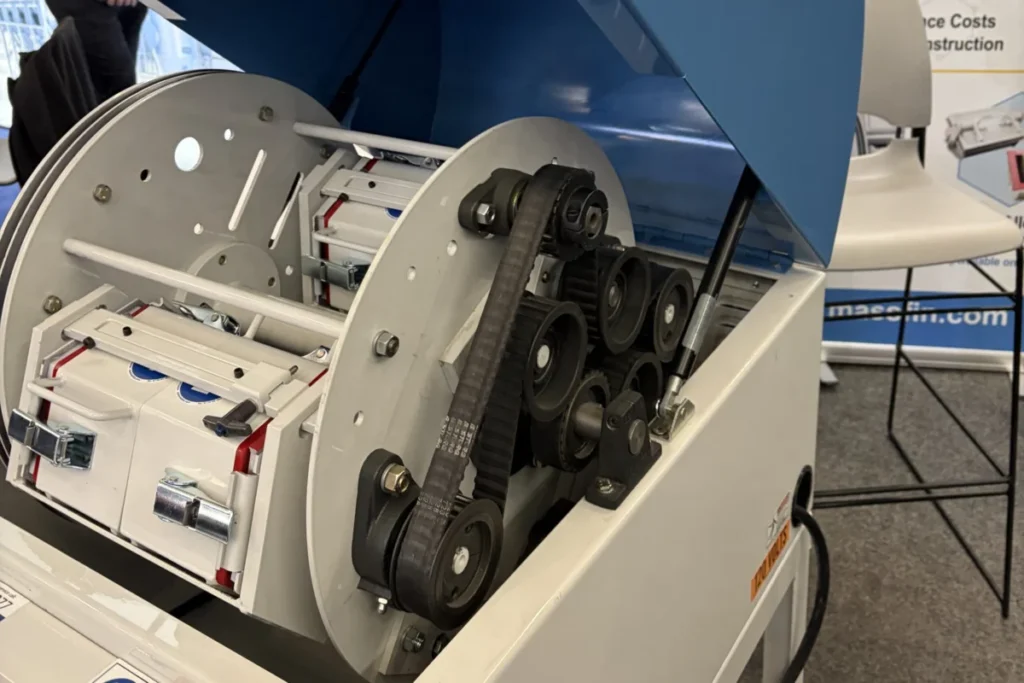
The HZ-6 boasts a 6-liter capacity and an impressively small footprint of just 3 x 2 feet, making it an ideal addition to workshops with limited space. Its mobility, facilitated by an integrated set of wheels, allows for easy relocation to areas where it is needed most or for convenient removal when not in use. This flexibility is a key advantage for production environments that require adaptable workflows. MFI has engineered the HZ-6 to deliver rapid, high-polish finishes on multiple additively manufactured parts simultaneously, significantly streamlining the post-processing phase.
Understanding the Need for Advanced AM Surface Finishing
The widespread adoption of additive manufacturing, particularly in industries such as aerospace, medical devices, and automotive, has highlighted a critical bottleneck: surface finish. Processes like Laser Powder Bed Fusion (LPBF) and Electron Beam Melting (EBM) enable the creation of intricate geometries and complex internal features that are impossible with traditional manufacturing methods. However, these additive processes inherently result in a layered surface texture, often characterized by increased surface roughness. This roughness can compromise the performance, functionality, and aesthetic appeal of AM parts.
For critical applications, a smooth and uniform surface is not merely desirable but essential. In the medical field, for instance, implants and prosthetics require precise surface finishes to promote biocompatibility, osseointegration (bone ingrowth), and to prevent irritation or infection. Similarly, in aerospace, a smooth surface finish is vital for reducing stress concentrations, enhancing fatigue life, and improving aerodynamic efficiency. The HZ-6 directly addresses this challenge by offering a robust solution for achieving the requisite surface quality on a wide array of AM materials.
The HZ-6 Centrifugal Barrel Tumbler: Design and Capabilities
The HZ-6 is a two-barrel system featuring two distinct cradle positions, allowing for versatile processing configurations. It includes one standard full-size latched-end barrel, measuring 8.375 inches in length, and two half-size latched-end barrels, each 3.625 inches long. This configuration is particularly beneficial for iterative testing and development, as the smaller barrels require minimal media for simpler experiments. The half-size barrels are optimized for processing small, micro-precision parts, while the full-size barrel can accommodate components up to 8 inches long and with an outside diameter of 4.5 inches.

A significant advantage of MFI’s centrifugal barrel tumbler technology is its operational quietness compared to many vibratory tumbling systems. The HZ-6 leverages centrifugal force to achieve its finishing objectives, effectively removing excess material, deburring, and polishing part surfaces without the jarring vibrations often associated with other methods. This not only contributes to a more pleasant working environment but also reduces wear and tear on the machine and surrounding equipment.
The system is designed to process 3D printed components made from a range of common AM materials, including titanium, copper, nitinol, and carbon steel. This broad material compatibility makes the HZ-6 a valuable asset for manufacturers working with diverse metal alloys.
The Science Behind Centrifugal Barrel Finishing
Centrifugal barrel finishing, also known as centrifugal barrel tumbling, represents a high-energy, accelerated approach to surface finishing. Unlike traditional vibratory finishing, which relies on sustained agitation, centrifugal barrel finishing operates on a principle often likened to a "Ferris wheel." In this process, the barrels rotate at a speed that generates significant centrifugal force. This force presses the media, compound, and parts against the interior walls of the barrel, creating a powerful sliding action.
The HZ-6 employs a 1:1 ratio of barrel rotation to turret rotation. Users load one or all four chambers of the machine (referring to the individual barrels within the system) with an estimated 50-80% capacity, using a combination of components, water, a finishing compound, and abrasive media. As the machine’s turret rotates, the barrels are propelled around it in a planetary motion. This movement generates intense pressure and friction within each barrel, enabling the rapid removal of excess material, burrs, and the polishing of component surfaces.
The key outcome of this high-energy process is isotropic finishing, meaning that parts are polished uniformly and evenly in all directions. This contrasts with some other finishing methods that might favor certain surfaces over others. The speed at which centrifugal barrel finishing achieves these results is particularly noteworthy. While vibratory finishing might require 10 to 20 hours to achieve a smooth surface on a metal AM component, MFI’s HZ-6 can accomplish similar results in as little as one hour, processing multiple parts concurrently. This dramatic reduction in cycle time translates into significant productivity gains and faster throughput for manufacturers.
The HZ-6 is also versatile in its media compatibility, accommodating a wide array of media types. This includes heavy ceramic, porcelain, and plastic media, available in various shapes and sizes, allowing for tailored finishing processes for both harder and softer metal materials. The selection of appropriate media and compounds is crucial for optimizing the finishing outcome for specific part geometries and material properties.

A Spectrum of AM Surface Finishing Techniques
The need for effective surface finishing in additive manufacturing is underscored by the variety of post-processing methods available. Each technique offers distinct advantages and is suited to different materials, part complexities, and end-use requirements. Understanding these options provides context for the role of centrifugal barrel finishing.
- Media Blasting (Bead, Sand, or Soda): Often a preliminary step for both metal and polymer AM parts, media blasting effectively removes loose powder, smooths minor surface imperfections, and creates a uniform matte finish. It is a quick and cost-effective initial treatment.
- Tumbling and Vibratory Finishing: This well-established method involves agitating parts with abrasive media in a bowl or barrel for extended periods, often hours or days. It is suitable for batch processing small to medium-sized parts and for breaking sharp edges.
- Chemical and Electrochemical Polishing: These processes involve submerging parts in specific chemical solutions that selectively dissolve surface peaks. They are effective for both external and internal surfaces, making them valuable for complex geometries like lattice structures, conformal cooling channels, and medical implants.
- Abrasive Flow Machining (AFM): AFM utilizes a viscous, abrasive-laden putty that is pumped back and forth through internal passages under pressure. This method is frequently employed for smoothing critical internal features in parts like fuel nozzles, manifolds, and hydraulic blocks.
- CNC Machining: For components requiring extremely tight tolerances, critical mating surfaces, bearing journals, or sealing faces, CNC machining remains indispensable. Increasingly, hybrid manufacturing machines are integrating additive processes with subtractive milling capabilities in a single setup.
- Manual Grinding, Sanding, and Polishing: While labor-intensive, manual finishing techniques are often essential for large structural parts, prototypes, and for addressing support witness marks. In low-volume production, manual finishing can be a significant cost driver.
- Laser Polishing: This advanced technique uses a defocused laser to remelt a thin surface layer, allowing surface tension to smooth out irregularities. It offers the advantage of no consumables and no media to clean from internal features, with tightly controllable parameters, making it suitable for high-value, small components.
- Coatings and Plating: Applied after mechanical preparation, processes like anodizing, Physical Vapor Deposition (PVD), electroless nickel, and powder coating can mask minor surface defects, enhance wear or corrosion resistance, or provide a uniform aesthetic.
- Vapor Smoothing: In this automated process, 3D printed parts are exposed to a solvent vapor within an airtight vessel. The vapor smooths and polishes the part’s surface over several hours, offering a way to achieve smooth finishes on complex geometries.
MFI’s Strategic Positioning in the AM Ecosystem
The introduction of the HZ-6 centrifugal barrel tumbler by Mass Finishing Inc. signifies a strategic move to cater to the burgeoning additive manufacturing market. As AM technologies mature and their applications broaden across various industries, the importance of efficient and effective post-processing cannot be overstated. MFI’s focus on compact, mobile, and high-throughput solutions like the HZ-6 aligns with the evolving needs of manufacturers seeking to integrate AM into their production workflows seamlessly.
The company’s emphasis on centrifugal barrel finishing as a superior alternative to traditional vibratory methods, particularly in terms of speed and efficiency, positions it as a key enabler for scaling AM production. By providing a solution that significantly reduces cycle times from hours to minutes, MFI is helping to bridge the gap between the design freedom offered by AM and the stringent performance requirements of end-use parts.
The ability of the HZ-6 to handle multiple small parts simultaneously is a critical factor for many AM applications where batch production of intricate components is common. This capability, combined with its relatively small footprint and mobility, makes it a practical and economically viable investment for businesses of all sizes looking to enhance their AM post-processing capabilities. As the AM industry continues to innovate, the demand for specialized finishing equipment like the HZ-6 is expected to grow, further solidifying MFI’s role as a vital partner in the additive manufacturing ecosystem.