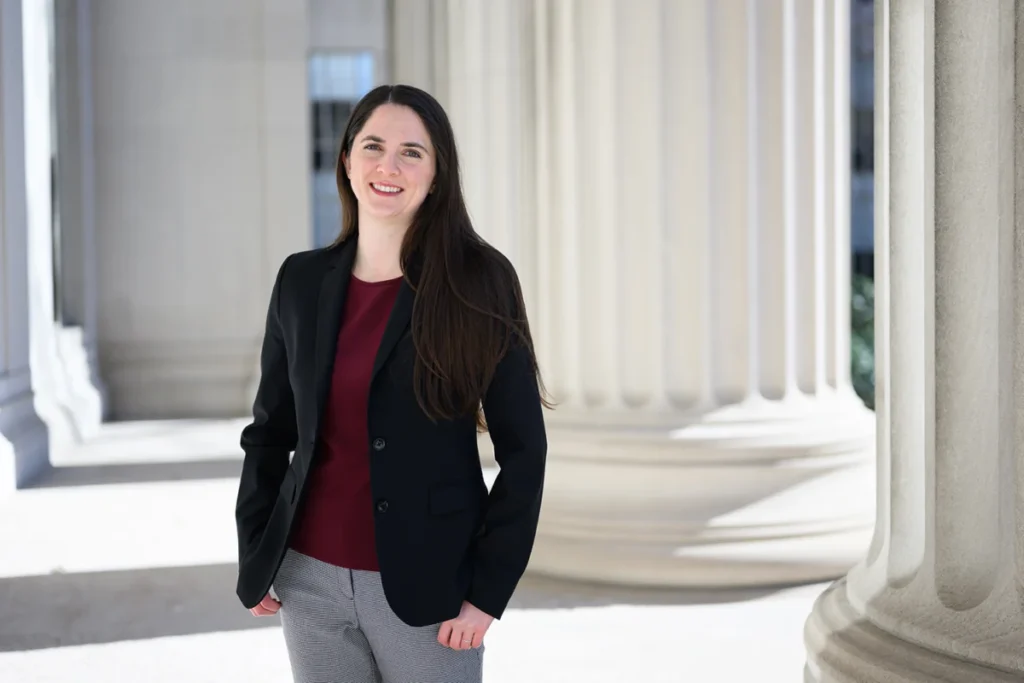
For nuclear energy to fully realize its potential as a cornerstone of a sustainable, clean energy future, it must overcome significant economic hurdles, primarily by achieving competitive pricing and cost-effective production. This critical challenge is being addressed head-on by Lauren Fortier, a second-year doctoral student in the Massachusetts Institute of Technology’s (MIT) Department of Nuclear Science and Engineering (NSE). Fortier is at the forefront of developing remote operation protocols designed to enable autonomous control of nuclear plants, a breakthrough that promises to revolutionize the industry by dramatically reducing operational costs and enabling the widespread deployment of advanced reactor technologies. Her work is not merely theoretical; it is rooted in practical experience and driven by a clear vision for a more efficient and accessible nuclear future.
The Economic Imperative for Autonomous Nuclear Energy
The global energy landscape is undergoing a profound transformation, driven by an urgent need to decarbonize electricity grids and ensure energy security. Nuclear power, with its capacity for continuous, carbon-free electricity generation, stands as a powerful contender in this transition. However, its widespread adoption has historically been hampered by high upfront capital costs, lengthy construction timelines, and the substantial operational expenses associated with maintaining large, highly skilled human workforces for traditional gigawatt-scale plants. These factors have often made nuclear power less competitive than fossil fuels or even some renewable sources in certain markets.
The advent of Small Modular Reactors (SMRs) and, more recently, microreactors (MRs), offers a paradigm shift. These smaller, factory-fabricated units promise lower capital costs, shorter construction schedules, and greater deployment flexibility, making them suitable for diverse applications, from powering remote communities and industrial complexes to military bases. Yet, to truly unlock their economic potential and enable their distributed deployment, the operational cost structure must be fundamentally re-evaluated. It is precisely in this context that Fortier’s research into autonomous operations becomes indispensable. By minimizing the need for extensive on-site human intervention, autonomy can significantly reduce staffing requirements, thereby lowering operational expenditures and making nuclear power an economically viable option for a broader range of applications and locations. This innovation moves nuclear energy from a capital-intensive, centralized model to a more agile, distributed, and economically competitive one.
A Foundation Forged in Naval Nuclear Operations
Lauren Fortier’s path to pioneering autonomous nuclear operations is marked by a unique blend of academic rigor and hands-on, high-stakes experience. Her foundational journey began at Northwestern University, where she earned an undergraduate degree in materials science and engineering. This period was also distinguished by an ROTC scholarship, which foreshadowed her future service.
Upon graduation, Fortier embarked on an extraordinary chapter in her career, supervising nuclear plant operations aboard a U.S. aircraft carrier. Deployed deep in the South China Sea, this experience offered an unparalleled immersion into the realities of nuclear power. "It was a unique experience that you don’t easily see anywhere else, especially the complete reliance on nuclear power," Fortier recounts. "The only way you’re moving through the ocean is if you have that nuclear reactor working." This intense, mission-critical environment instilled in her a profound appreciation for the intricate science and operational discipline required to run nuclear facilities. More than just an operator, she "fell in love with the operations aspects of it all, learning the science behind plant operations."
However, this invaluable experience also served as a crucible for critical observation. Fortier became acutely aware of the "process shortcomings" inherent in many traditional nuclear operations. She noticed that a significant number of plant procedures were "extremely manually intensive," leading her to ponder whether these processes could be made more efficient and less reliant on constant human intervention. This firsthand exposure to the labor-intensive nature of conventional nuclear plant management laid the intellectual groundwork for her later academic pursuits. It was the genesis of her core research question: how can we transition from manual, human-centric operations to more streamlined, potentially autonomous systems without compromising safety or reliability?
Transition to Academia: MIT and the Master’s Foundation
The U.S. Navy, recognizing Fortier’s exceptional aptitude and her growing interest in optimizing nuclear systems, presented her with an opportunity to pursue a master’s degree from a curated list of approved disciplines. Fortier’s choice was clear and strategic: nuclear engineering at MIT. This decision was a natural extension of her naval work and a deliberate step towards bridging her operational insights with advanced academic research. "My experiences in nuclear up until then had been overwhelmingly positive, so I thought I would build on them and move from the operations realm to the academic realm," she explains. The rigorous training and demanding environment of the Navy had inadvertently prepared her for the intellectual intensity and high academic standards characteristic of MIT, allowing her to seamlessly transition into a challenging graduate program.
For her master’s degree, Fortier immediately delved into the heart of her emerging interest: developing a supervisory control system for the operation of nuclear plants. Her research utilized a sophisticated simulator designed with a strong thermal-hydraulic response, allowing for realistic modeling of reactor behavior. The underlying assumption was that the lessons and insights gleaned from these detailed simulations would directly translate to real-world operational improvements. This foundational work, while significant, proved to be merely "the tip of the iceberg," as Fortier realized the vast scope of the challenge and the profound potential that lay beyond initial simulations. The master’s laid a solid theoretical and practical groundwork, but the full vision of autonomous nuclear operations required a deeper, more comprehensive investigation, prompting her to pursue doctoral studies.
In Pursuit of Autonomous Nuclear Plant Operations: The Doctoral Mission
Fortier’s doctoral research at MIT represents a crucial leap forward in the quest for fully autonomous nuclear plant operations. Her work directly addresses the economic and logistical barriers hindering the widespread adoption of next-generation nuclear technologies, particularly small, distributed microreactors. Unlike legacy plants, which operate at 100% capacity and can justify the substantial costs of a large human staff, microreactors deployed at scale in rural or remote areas simply cannot afford such a labor-intensive model. This is where supervised and thoroughly vetted autonomous operations become not just beneficial, but essential.
The central question driving her doctoral work is: "How do we transition to autonomous operations in nuclear power plants?" Fortier is advocating for a paradigm shift from a collection of many interlinked, often disparate, control parts to one integrated approach—a central supervisory control system. The inherent challenge lies in modifying operational frameworks that were originally designed with human operators at their core to seamlessly integrate machines. Fortier recognized that any supervisory control system, no matter how robust, would be severely limited by rigidity if it couldn’t accommodate both human and machine capabilities. "Because everything is human-centric, it doesn’t allow you to choose the best way to do a procedure," Fortier observes. Her vision is to create a dynamic environment where humans and computers can "tag-team," each performing tasks for which they are best suited, with strategic human intervention deployed only when necessary. This human-machine teaming approach ensures safety and efficiency while unlocking new levels of operational flexibility.
A key aspect of her doctoral work focuses on developing "objective-oriented operations." Instead of rigidly following predetermined operating procedures, her control system is designed to dynamically create the sequence of events needed to achieve a specific objective, adapting to real-time plant conditions. This adaptive capability is crucial for enhancing efficiency and responsiveness in complex nuclear environments.
Building Trust Through Transparent Automation: The Finite State Automata Approach
A cornerstone of Fortier’s approach to achieving autonomy in nuclear plants is the deliberate choice of automation technology, specifically "finite state automata." This method stands in stark contrast to data-driven, black-box artificial intelligence (AI) or machine learning algorithms, a distinction Fortier emphasizes for critical safety reasons. "We’re not using a data-driven statistical approach like machine learning because we do not yet have the tools to validate the operation of such systems," Fortier states.
Finite state automata (FSA) offers a highly transparent and predictable automation framework, essential for building trust among users, regulators, and the public. As a "discrete event system," every move within the automation framework is "event-driven." This means its logic is clear: "if this happens, do that." Such a structure allows the system to adjust for current conditions in the plant and transition between various states or events with explicit clarity. This transparency is paramount in nuclear operations, where understanding every step of an automated process is vital for safety, troubleshooting, and regulatory oversight.
Fortier clarifies that the operational systems she is designing will incorporate a "gradual and systematic move toward autonomy." This phased implementation is crucial for fostering confidence. "When we introduce an automated procedure that walks you step by step through what you would be doing anyway, it is reassuring and builds trust," Fortier points out. Her extensive study of FSA, including during a summer 2024 internship at the Idaho National Laboratory (INL), underscores its advantages in addressing complex problems through conventional, verifiable automation. This methodological choice not only enhances safety and reliability but also simplifies the regulatory approval process compared to less transparent AI-driven solutions.
A Network of Expertise: MIT-Facilitated Collaborations
The ambitious scope of Fortier’s doctoral research necessitates a collaborative ecosystem, and MIT has proven to be an ideal environment for fostering such partnerships. Her work leverages expertise from across academic disciplines, national laboratories, and industry, creating a robust framework for innovation.
Her primary research advisor, Sacit Cetiner, holds a joint appointment with MIT’s Nuclear Reactor Laboratory (NRL) and the Idaho National Laboratory (INL). This dual affiliation provides a critical bridge between cutting-edge academic research and the practical application and testing capabilities of a leading national laboratory. Cetiner’s guidance is instrumental in ensuring that Fortier’s theoretical advancements are grounded in real-world nuclear challenges and opportunities.
Recognizing the indispensable role of human factors in any successful automation strategy, Fortier sought collaboration with Katya Le Blanc, a senior human factors scientist at INL. This partnership was crucial for addressing the challenge of devising an autonomous supervisory control system with an effective and easily adopted human-machine interface. "I’m very much an engineer and don’t have a lot of experience in human behavior, so the collaboration with INL was a huge benefit for me," Fortier explains. "I got better insights into many aspects, including what you want to see when a human has to take over for a machine when it’s no longer working." This interdisciplinary approach ensures that the automated systems are not only technically sound but also intuitively usable and safe for human operators. Further collaboration with the Human System Simulation Laboratory at INL provided Fortier with a deeper understanding of designing robust cyber-physical systems, where digital controls interact seamlessly with physical plant components.
To further ground her theoretical work in industrial reality, Fortier engaged with Westinghouse, a leading design organization and vendor for current- and next-generation nuclear power plants. A summer internship there in 2025 provided a vital platform to "test drive ideas she had about autonomous operations solutions," allowing her to validate concepts against industry standards and practical considerations.
At MIT, Fortier benefits from the specialized knowledge of her co-advisors. Anuradha Annaswamy, a founder and director of the Active-Adaptive Control Laboratory in the Department of Mechanical Engineering, is a recognized expert in control theory. "She’s a control systems expert, which really benefits me because while I can explain what to do with a nuclear power plant, she can help me understand better how to go about operations from a control systems perspective," Fortier notes. Annaswamy provides crucial guidance on the supervisory control system framework and its execution, while Fortier also takes control systems-related classes to strengthen her disciplinary foundation. Her other co-advisor is Curtis Smith, the former director for INL’s Nuclear Safety and Regulatory Research Division, now KEPCO Professor of the Practice of Nuclear Science and Engineering at MIT NSE. Smith brings invaluable experience in nuclear safety and regulatory aspects, ensuring that Fortier’s designs meet the stringent requirements of the nuclear industry. This multidisciplinary advisory committee underscores the complexity and comprehensive nature of Fortier’s research.
Broader Impact and Future Implications
Lauren Fortier’s pioneering work is poised to deliver transformative impacts across the nuclear energy sector and beyond. The significance of her research has already garnered national recognition; she was one of the winners of the 2025 Innovations in Nuclear Energy Research and Development Student Competition from the Department of Energy’s Nuclear Energy University Program. Furthermore, as a 2026–2027 MathWorks Engineering Fellow, Fortier will continue to advance this critical work, ensuring sustained momentum and resources for her groundbreaking developments.
The immediate and most tangible impact of her nuclear plant automation program will be in delivering the necessary traction for the development and deployment of commercial microreactors. By dramatically lowering the operational cost footprint, autonomy makes microreactors economically viable for a much broader range of applications, including remote communities, off-grid industrial sites, and military installations, where traditional nuclear power has been impractical. This shift facilitates a more distributed, resilient, and decarbonized energy infrastructure.
Beyond microreactors, Fortier’s work has profound implications for the overall economic competitiveness of nuclear power. Reduced staffing needs translate directly into lower electricity generation costs, making nuclear power more attractive compared to other energy sources. This could accelerate the global transition to clean energy, providing a reliable, baseload, carbon-free option to complement intermittent renewables.
Her transparent, finite state automata-based approach to automation is also crucial for navigating the complex regulatory landscape of nuclear energy. Regulators, such as the U.S. Nuclear Regulatory Commission (NRC), require absolute clarity and verifiability in safety-critical systems. By avoiding the ‘black box’ nature of some AI solutions, Fortier’s work offers a more straightforward path to regulatory approval, potentially speeding up the deployment of automated nuclear technologies.
The shift towards autonomous operations will also necessitate an evolution in the nuclear workforce. Instead of manual operators, the future may see a greater demand for supervisors capable of overseeing automated systems, interpreting data, and intervening strategically. This represents an exciting shift in skills and career opportunities within the industry.
Looking ahead, the initial work involves scaling the supervisory control system, building on insights gained from smaller, controlled aspects of the project. Fortier expresses palpable excitement about the journey ahead and the vast possibilities her research unlocks. "The collaborations with other people, and the relationships we have established with stakeholders, have really helped make an impact and supported the relevancy of the work," she reflects. "Sometimes when you’re stuck in your own bubble, that outside perspective is really useful." This collaborative spirit, combined with her deep understanding of both the operational and theoretical aspects of nuclear power, positions Lauren Fortier as a pivotal figure in shaping the future of clean energy. Her innovations are not just about technology; they are about making nuclear power safer, more economical, and ultimately, more accessible for a sustainable global future.