The global maker movement is experiencing a significant surge this September as five cities across four continents prepare to host their first-ever Maker Faire events. These inaugural festivals—located in Curitiba, Brazil; Calais, France; Waterloo, Canada; Porto, Portugal; and Brownsville, Texas—mark a pivotal moment in the evolution of local innovation ecosystems. For nearly two decades, Maker Faire has served as the world’s premier showcase of grassroots ingenuity, beginning with the flagship Bay Area event and expanding into a network of hundreds of community-led gatherings. The addition of these five new locations underscores a growing international demand for platforms that bridge the gap between education, technology, and traditional craftsmanship.

The Evolution of the Maker Movement: From Hobbyist to Economic Catalyst
The Maker Faire brand, launched by Make: Magazine in 2006, was initially conceived as a way to bring together "DIY" enthusiasts, engineers, and artists. Over the last 20 years, however, the movement has matured into a sophisticated network of innovators who develop new projects, products, and businesses. The community has moved beyond simple hobbyism to become a legitimate engine for economic development and educational reform.

Data from the "Maker Economy" suggests that maker spaces and festivals contribute significantly to local talent retention and the development of STEAM (Science, Technology, Engineering, Arts, and Mathematics) skills. By providing a low-barrier-to-entry environment for experimentation, Maker Faires allow participants—particularly youth—to transition from being passive consumers of technology to active creators. The five events scheduled for this September represent the latest chapter in this transformation, each tailored to the specific industrial and cultural strengths of their respective regions.

Curitiba, Brazil: Re-establishing the South American Circuit
Maker Faire Curitiba represents a historic return for the movement in Brazil, marking the first sanctioned event in the country since 2018. Held on the campus of Positivo University, the event is the culmination of several years of strategic planning. Curitiba, the capital of the Paraná state, has long been recognized as one of Brazil’s leading "smart cities," known for its innovative urban planning and commitment to sustainability.

The Curitiba event focuses heavily on the intersection of creativity and the digital age. A central figure in this inaugural fair is Marcelo Tas, a civil engineer and veteran television personality. Tas is widely credited with bringing maker culture into the Brazilian mainstream through his show, Batalha Makers Brasil, which aired on the Discovery Channel in 2019. The show featured challenges in robotics, 3D printing, and woodworking, mirroring the hands-on workshops that will be featured at the university campus this month.

Organizers in Curitiba have emphasized that the event is designed to foster "creative problem-solving" in a region that is increasingly looking toward digital fabrication as a driver for local manufacturing. The program includes a series of high-level lectures and technical workshops intended to connect local makers with international standards of production.

Calais, France: Engineering as a Tool for Citizenship
In Calais, France, the inaugural Maker Faire takes on a distinctly educational and civic tone. Scheduled for mid-September, the event features a dedicated "Education Day" specifically designed for school groups and young learners. The philosophy behind Maker Faire Calais is rooted in the belief that understanding how the world is built is a fundamental aspect of modern citizenship.

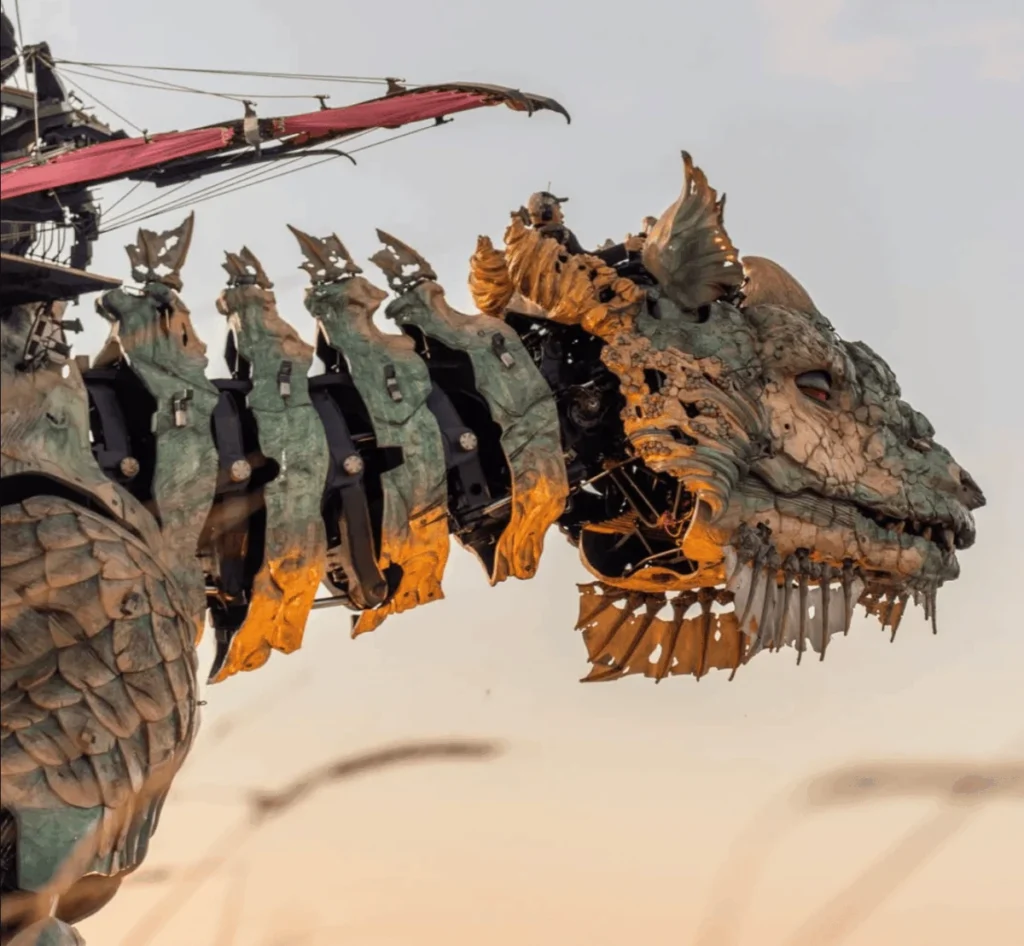
The event is anchored by the presence of the Compagnie du Dragon, the organization responsible for one of Calais’s most iconic landmarks: a massive, fire-breathing mechanical dragon sculpture. This feat of kinetic engineering serves as a backdrop for the fair’s cultural mediation efforts. Led by Director of Audience Development Carine Anot and her team, the event aims to demystify complex engineering for the public. By interacting with the mediators, visitors learn about the mechanics, hydraulics, and electronics required to operate large-scale sculptures, effectively bridging the gap between high-art and technical vocational training.

Waterloo, Canada: The "Silicon Valley of the North" Leverages Its Talent
The Waterloo Region in Ontario has established a global reputation as a hub for high-tech innovation, largely due to the presence of the University of Waterloo and the legacy of companies like BlackBerry. On September 13, the Waterloo Maker Faire will transform the Waterloo Public Square into a multi-disciplinary "playground" divided into six distinct maker zones: Science & Technology, Trades & Manufacturing, Arts & Culture, Food & Beverage, Sustainability, and Youth.

The Waterloo event is notable for the high caliber of technical projects on display. The University of Waterloo Rocketry Team will showcase "Polaris," a liquid bi-propellant rocket that recently set a world record for the highest amateur launch of its kind, reaching over 63,000 feet. This project highlights the fair’s ability to provide a platform for professional-grade engineering within a community setting.

Other standout participants include the Waterloo Aerial Robotics Group (WARG), which recently won a national competition for its autonomous wildfire response aircraft, and the UW Robotics Team, known for its Mars-inspired exploration vehicles. According to co-organizer Scott Patton, the primary goal of the Waterloo fair is to remind the community that innovation is not just the domain of large corporations, but is accessible to anyone with the "innate curiosity" to build.

Porto, Portugal: Innovation in a Historical Context
Maker Faire Porto brings the maker movement to one of Europe’s most storied cultural venues, the Alfândega do Porto. This 19th-century customs house, situated on the banks of the Douro River, provides a unique contrast between historical architecture and cutting-edge technology. The event is produced by the team behind VivaLab Porto, a year-round makerspace and innovation hub that has become a cornerstone of the city’s creative economy.

The Porto event is designed to be a "hands-on experience" where the boundaries between technology and the arts are blurred. Organizers have focused on the concept of "breaking and building" as a legitimate learning methodology. By encouraging visitors to tinker with electronics and experiment with new materials, the fair aims to stimulate critical thinking and practical skills in the Portuguese workforce. The event also serves as a networking platform for local educators and families, fostering a community that supports technical literacy outside of traditional classroom settings.

Brownsville, Texas: A Gateway to the Stars
The final inaugural event of the month takes place in Brownsville, Texas, a city that has undergone a radical transformation in recent years due to its proximity to SpaceX’s Starbase facility. Maker Faire Brownsville is being held in conjunction with the city’s annual SpaceFest, reflecting the region’s new identity as a center for aerospace exploration.

Held at the George Ramirez Performing Arts Academy in partnership with the Brownsville Public Library System, the fair leans heavily into the "Texas to the Stars" theme. The event includes a space-themed cosplay contest, robotics competitions, and an original artwork showcase. The Brownsville event illustrates how the maker movement can adapt to local economic shifts; as the city becomes a launchpad for orbital missions, the Maker Faire provides a way for local residents to engage with the technology and science that are now part of their daily lives.

Chronology of the September Maker Events
The rollout of these five inaugural events follows a tight schedule, demonstrating the logistical coordination required to launch the Maker Faire brand in new territories:

- Early September: Maker Faire Curitiba (Brazil) opens at Positivo University, focusing on digital fabrication and mainstreaming maker culture.
- September 11: Maker Faire Calais (France) hosts its "Education Day," prioritizing student engagement and mechanical art.
- September 13: Waterloo Maker Faire (Canada) takes over the Uptown district, showcasing record-breaking rocketry and autonomous robotics.
- Late September: Maker Faire Porto (Portugal) launches at the Alfândega do Porto, emphasizing the connection between innovation hubs and historical heritage.
- September 24–26: Maker Faire Brownsville (Texas) concludes the month’s inaugural circuit, integrating maker culture with the burgeoning aerospace industry in the Rio Grande Valley.
Broader Impact and Implications for Local Economies
The expansion of Maker Faire into these five diverse locations has several long-term implications for the global innovation landscape. First, these events act as "talent magnets," bringing together disparate groups of engineers, artists, and entrepreneurs who might otherwise work in silos. By facilitating these connections, the fairs often serve as the starting point for new startups and collaborative projects.

Second, the emphasis on youth engagement across all five locations addresses a critical gap in modern education. While many schools struggle to keep pace with rapid technological changes, Maker Faires provide a low-stakes environment for students to fail, iterate, and eventually succeed. This "maker mindset" is increasingly viewed by economists as a vital soft skill in a labor market that prizes adaptability and creative problem-solving.

Finally, the geographical diversity of this month’s events highlights the universal appeal of the maker movement. Whether in the industrial heartland of Ontario, the smart-city corridors of southern Brazil, or the aerospace frontiers of the Texas border, the desire to understand, create, and share technology remains a powerful force for community building. As these five cities conclude their inaugural celebrations, they join a global network that continues to redefine the relationship between people and the machines they build.