The fundamental behavior of matter is often defined by its phase. In the macroscopic world, the transition between solid, liquid, and gas is a staple of basic thermodynamics, exemplified by a glass of ice water where two distinct phases of H2O exist in a delicate, temperature-dependent balance. However, at the quantum level, the coexistence of different phases becomes significantly more enigmatic. MIT physicists have recently achieved a breakthrough in this field, uncovering the intricate mechanics of how two distinct forms of electronic organization emerge and interact within a single quantum material. This discovery, published in the journal Nature Physics, provides a new lens through which scientists can view the complex landscape of superconductivity, magnetism, and other exotic electronic states.
Led by Nuh Gedik, the Donner Professor of Physics at MIT, the research team focused their investigation on erbium tritelluride (ErTe3), a member of the rare-earth tritelluride family known for its unique quasi-two-dimensional properties. By utilizing advanced laser spectroscopy, the team was able to distinguish between two simultaneous "charge density wave" (CDW) phases, revealing that they form through entirely different physical mechanisms. The study’s findings suggest that the way these phases compete or cooperate could be the key to unlocking next-generation quantum devices that far surpass the capabilities of modern silicon-based electronics.
The Architecture of Charge Density Waves
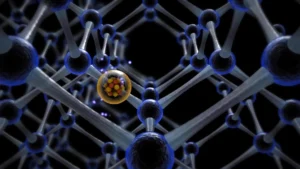
To understand the significance of the MIT study, one must first grasp the nature of a charge density wave. Under standard conditions, electrons in a metallic material are distributed with relative uniformity. However, in certain quantum materials, cooling the substance triggers a spontaneous reorganization. The electrons begin to settle into a periodic, wave-like pattern. This state is known as a charge density wave. In this configuration, the material develops "crests" of high electron density and "troughs" of low electron density, creating a stationary ripple of charge throughout the atomic lattice.
In erbium tritelluride, this phenomenon is particularly complex. When the material is cooled to approximately -8 degrees Celsius (265 Kelvin), a "dominant" CDW emerges, with the wave orientation following a specific axis of the crystal. As the temperature is lowered further to -113 degrees Celsius (160 Kelvin), a second, "subdominant" CDW appears, oriented perpendicularly to the first. The result is a sophisticated electronic "checkerboard" pattern at the atomic scale.
"Charge density waves are a collective phenomena where electrons move together in certain ways," explained lead author Yifan Su, a recent MIT PhD graduate. "The power of CDWs is that they are a much simpler form of matter compared to superconductivity. They offer a playground for fundamental understanding." This "playground" allows researchers to observe how multiple electronic orders can occupy the same space—a phenomenon that is central to the mystery of high-temperature superconductors, where magnetism and superconductivity often overlap in ways that remain poorly understood.
The Experimental Methodology: Shake and Listen
The challenge in studying erbium tritelluride lies in the fact that these electronic phases are deeply intertwined. Traditional equilibrium measurements, which involve slowly changing the temperature and observing the material, often fail to distinguish the individual dynamics of the two waves. To overcome this, the MIT team employed a "non-equilibrium" approach using ultra-fast laser pulses.
The experiment was conducted in Professor Gedik’s laboratory using a technique often referred to as "pump-probe" spectroscopy. The researchers began by cooling the ErTe3 samples—atomically thin sheets synthesized by collaborators at Stanford University—to a frigid -230 degrees Celsius. At this temperature, both the dominant and subdominant charge density waves are firmly established in their checkerboard configuration.
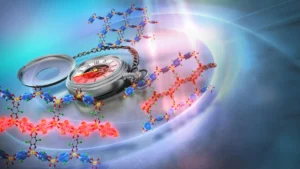
The team then applied a "pump" laser pulse to "shake" the system. This high-intensity pulse delivers a sudden burst of energy that disrupts the electronic order, effectively melting the CDW phases. Following this disruption, a second "probe" pulse, consisting of high-energy photons, was used to "listen" to the material. This probe pulse knocks electrons out of the sample through a process known as photoemission. By measuring the energy and momentum of these expelled electrons at various time intervals after the initial shake, the researchers were able to reconstruct a "movie" of the electronic phases as they attempted to reform.
"We see the destroying of these phases, and then if we wait long enough, they come back," Gedik explained. "And depending on how you hit them, the two phases respond differently."
A Tale of Two Transitions: First-Order vs. Second-Order
The most striking revelation of the study was the divergent recovery paths taken by the two CDW phases. The dominant wave, which appears at higher temperatures, demonstrated a recovery process that was gradual and uniform across the entire material. This behavior is characteristic of a "second-order" phase transition. In such a transition, the order parameter grows continuously from zero, much like the way a piece of iron slowly gains its magnetic properties as it cools below its Curie temperature.
In contrast, the subdominant wave—the one that completes the checkerboard pattern—behaved in a "first-order" fashion. Rather than appearing everywhere at once, it began in small, isolated pockets or "nuclei." These pockets then expanded and merged until the entire material was covered, a process analogous to the way ice crystals nucleate and grow in a pond of freezing water.
This distinction is crucial for condensed matter physicists. While the subdominant phase was previously known to exist, the mechanism of its emergence was a subject of intense debate. The MIT study provides definitive evidence that the second CDW forms via a nucleation-and-growth process, influenced by its interaction with the already-present dominant wave.
"The mechanism responsible for the emergence of this second phase has long been debated," said Gedik. "Our approach provides a powerful new way to uncover the hidden physics behind phase transitions in quantum materials."
Implications for the Future of Quantum Electronics
The ability to observe and eventually control these phase transitions has profound implications for the future of technology. For decades, the semiconductor industry has relied on the movement of individual electrons through silicon transistors. However, as transistors approach the atomic scale, the physical limits of silicon are becoming apparent. Quantum materials, which utilize the collective behavior of electrons, offer a potential path forward.
"People believe the cornerstone of replacing silicon lies in quantum materials that have multiple coexisting phases," said co-author Alfred Zong, now an assistant professor at Stanford University. "Our experiment provides a very neat way to study these multiple phases."
If researchers can learn to toggle between these electronic phases using light or electric fields, they could develop "quantum switches" that are significantly faster and more energy-efficient than current technology. Furthermore, understanding the competition between the checkerboard phases in ErTe3 provides a blueprint for understanding more complex systems, such as high-temperature cuprate superconductors. In those materials, the interplay between CDWs and superconductivity is believed to be the key to their ability to conduct electricity without resistance at relatively high temperatures.
Strategic Collaborative Research
The success of this study was the result of a multi-institutional collaboration. The samples of erbium tritelluride were grown at Stanford University, while the advanced spectroscopic measurements were conducted at MIT. The research team included several key contributors, including first authors Yifan Su and former postdoc Bai-Qing Lv, along with Dongsung Choi, Doron Azoury, and Masataka Mogi.
The project received significant backing from major scientific funding bodies, highlighting the strategic importance of quantum material research. Support was provided by the U.S. Department of Energy (DOE), the U.S. National Science Foundation (NSF), and the Gordon and Betty Moore Foundation’s EPiQS Initiative. These organizations have increasingly prioritized the study of "emergent phenomena"—properties of matter that arise from the collective interactions of many particles rather than the characteristics of individual atoms.
Conclusion: A Case Study for Complexity
The MIT research into erbium tritelluride serves as a vital case study for the broader field of physics. By isolating the dynamics of a quantum "checkerboard," the team has demonstrated that even within a single material, the laws of thermodynamics can manifest in vastly different ways.
As Gedik noted, the lessons learned from ErTe3 are intended to be universal. "In systems that are much more complex, like high-temperature superconductors, you see there are multiple phases—magnetism, superconductivity, charge density waves—and they all exist together. One of the theories is that the way they interact with each other is key for their exotic properties."
By refining the "shake and listen" technique, the MIT physicists have not only solved a specific puzzle regarding rare-earth materials but have also provided a new set of tools for the global scientific community. As the quest for room-temperature superconductivity and functional quantum computers continues, the ability to map the hidden landscapes of electronic phases will remain a cornerstone of modern scientific inquiry. The discovery marks a significant step toward a future where the quantum properties of matter are no longer just a subject of theoretical wonder, but the foundation of the next technological revolution.