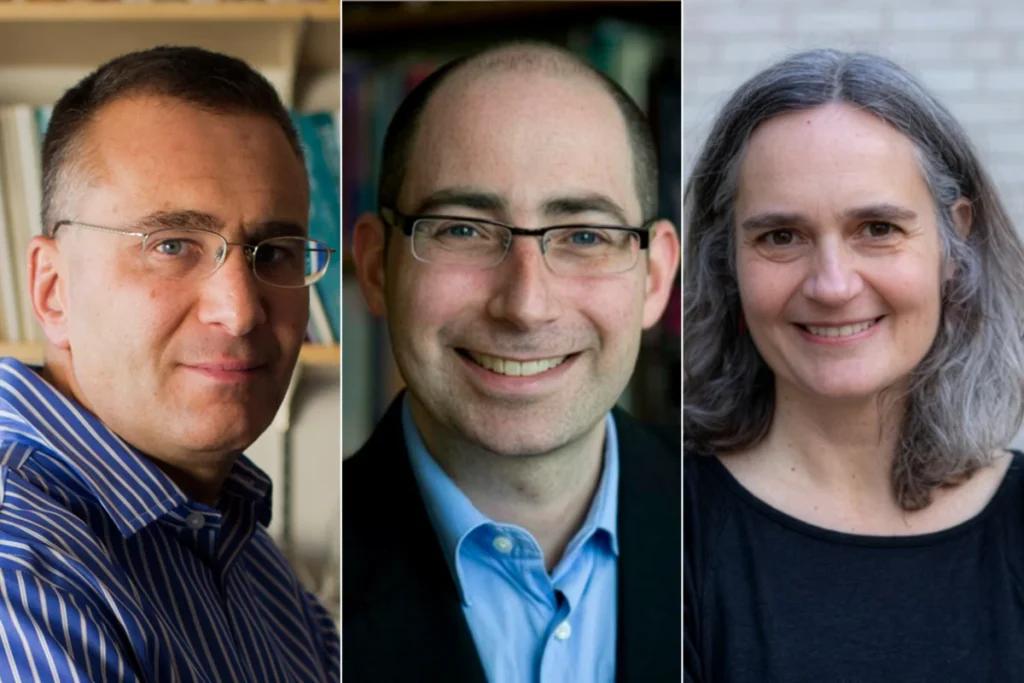
The Massachusetts Institute of Technology (MIT) is marking a significant milestone this month as its School of Humanities, Arts, and Social Sciences (SHASS) celebrates its 75th anniversary. Established in the wake of World War II, the school has evolved from a nascent collection of service departments into a cornerstone of the MIT experience, ensuring that the world’s leading technologists and scientists are also equipped with the critical thinking, cultural literacy, and ethical frameworks necessary to navigate a complex global landscape. To commemorate this diamond jubilee, MIT News recently convened a roundtable discussion featuring three of the school’s most distinguished faculty members: historian and physicist David Kaiser, anthropologist Heather Paxson, and economist Jonathan Gruber. Their conversation, alongside an upcoming two-day conference scheduled for September 24th and 25th, highlights the school’s pivotal role in transforming MIT from a specialized technical institute into a world-class comprehensive university.
The Lewis Report and the Post-War Mandate
The origins of SHASS are rooted in a period of profound global transition. Following the conclusion of World War II in 1945, the MIT faculty recognized that the rapid advancement of science and technology—epitomized by the Manhattan Project and the advent of nuclear weaponry—posed existential questions that technical expertise alone could not answer. In 1946, the Institute convened the Committee on Educational Survey, led by Professor Warren K. Lewis. This group spent three years conducting an exhaustive audit of MIT’s intellectual, social, and residential life.
The resulting "Lewis Report," published in 1949, became the founding charter for what would eventually become SHASS. David Kaiser, the Germeshausen Professor of the History of Science and a Professor of Physics, notes that the committee’s recommendations were radical for their time. The report argued that MIT should not merely house a few humanities departments but should establish a "co-equal school" to the Schools of Science and Engineering. The committee’s rationale was clear: the "new era" of the nuclear age required an informed leadership and citizenry capable of understanding not just neutron diffusion, but the flow of people, ideas, and political power.
Originally established as the School of Humanities and Social Sciences in 1950, the school formally added "Arts" to its name approximately 25 years ago to reflect the growing importance of creative expression within the Institute’s curriculum. Today, SHASS encompasses a wide array of disciplines, including linguistics, philosophy, political science, literature, history, and economics.
A Core Component of the Undergraduate Experience
One of the most striking features of an MIT education is the requirement that every undergraduate, regardless of their major, must spend at least a quarter of their academic time within SHASS. This translates to eight subjects over four years, a requirement designed to ensure that engineers and scientists are well-rounded individuals.
Jonathan Gruber, the Ford Professor of Economics and an MIT alumnus, recalls a time when the humanities were often viewed as "second-class citizens" on campus—a service organization that students utilized merely to fulfill requirements before returning to their "real" work. However, Gruber notes that the culture has shifted dramatically. "MIT is no longer a school that just competes with engineering schools," Gruber observed. "We’re a school that competes with all universities. And the only way to do that is a well-rounded education."
Gruber’s own career trajectory serves as a testament to the school’s impact. Arriving at MIT as a student who was "good at math but didn’t like math," he found his calling in an introductory economics course (14.01). The class revealed how mathematical models could be applied to solve real-world problems and influence public policy. Gruber has since become one of the most influential figures in U.S. healthcare policy, helping to architect the expansion of healthcare access.
The Breadth of Modern Inquiry: From AI Ethics to Opera
The contemporary scope of SHASS is immense, bridging the gap between traditional liberal arts and cutting-edge technology. Heather Paxson, the William R. Kenan, Jr. Professor of Anthropology and Associate Dean for Faculty in SHASS, emphasizes that the school’s unique position within a technical institute fosters collaborations that would be impossible elsewhere.
Current research within the school addresses some of the most pressing issues of the 21st century. For instance, political scientists Adam Berinsky and Charles Stewart are currently collaborating with operations research specialists from the Sloan School of Management to use artificial intelligence to study AI itself. Their research examines how AI chatbots provide information to voters and whether that information is biased or tailored in ways that could influence election outcomes.
Simultaneously, the school maintains a vibrant presence in the arts. Jay Scheib, head of Music and Theater Arts, recently returned from Germany where he staged a production of Wagner, illustrating that the "hand" (manus) in MIT’s motto Mens et Manus (Mind and Hand) applies as much to the stage and the violin as it does to the laboratory.
Interdisciplinary Synergy: The Case of "Hippy" Physics
David Kaiser’s career embodies the interdisciplinary spirit that SHASS encourages. Holding dual appointments in the Program in Science, Technology, and Society and the Department of Physics, Kaiser has demonstrated how historical inquiry can actually drive scientific progress.
His 2011 book, How the Hippies Saved Physics, explored the history of quantum mechanics through the lens of 1970s counterculture. The project began as a historical deep dive into dusty archives but eventually led to a five-year scientific adventure on the physics side. A postdoc who read the book was inspired to rethink certain aspects of quantum theory, leading to new research projects. Notably, some of the figures Kaiser wrote about—once considered on the "margins" of the field—went on to share the Nobel Prize in Physics in 2022.
"The boundaries are not actually that high between our various parts of campus," Kaiser said. "We really can just bring questions together without saying, ‘Oh, but you’re in that department, I’m in this department.’"
Teaching in the Age of Artificial Intelligence
The rise of generative AI has presented new challenges and opportunities for SHASS faculty. While there is a heightened focus on ensuring academic integrity, faculty members are leaning into the "hands-on" traditions of MIT to foster deeper learning.
Heather Paxson shared an example of an assignment in her "Art Craft Science" course where students were tasked with making mozzarella cheese using poorly written instructions. The exercise was designed to teach "tacit knowledge"—the skills and intuition that cannot be easily captured in a manual or by an AI. "That’s the kind of thing I think we’re all trying to reinvent now in the age of AI," Paxson noted.
Similarly, Kaiser emphasizes the importance of communication-intensive courses where physics majors must write coherent essays. By forcing students to articulate complex concepts like time dilation or quantum theory in prose, the faculty helps them move beyond rote calculation to true conceptual understanding. "Writing is thinking," Kaiser asserted, noting that many students only truly grasp a concept once they are required to defend it in an essay.
SHASS as a "Public Good"
As the school enters its 76th year, its faculty views its mission as more critical than ever. Jonathan Gruber framed the school’s role through the economic lens of the "public good"—an effort where one person’s contribution benefits the entire community. In an era of intense academic and professional pressure, SHASS serves as the space where students are encouraged to look beyond their private interests and consider their responsibilities to society.
"SHASS is the place at MIT that focuses students on the public good," Gruber said. "None of these challenges [we face today] will be solved by a technical fix alone."
The upcoming 75th-anniversary conference will showcase this commitment to the public good. The event will feature over 40 speakers, including early-career scholars, distinguished faculty, and alumni. The program includes academic panels on AI and governance, as well as a showcase of original musical compositions, dance performances, and a jazz ensemble.
Chronology of SHASS Evolution
- 1861: MIT is founded with a focus on industrial and technical education.
- 1945: The end of WWII prompts a reevaluation of the role of scientists in society.
- 1946: The Lewis Committee is convened to study the future of MIT’s curriculum.
- 1949: The Lewis Report is published, recommending a co-equal school for humanities and social sciences.
- 1950: The School of Humanities and Social Sciences is formally established.
- 1985: MIT establishes the Committee on the Undergraduate Program to further integrate diverse disciplines.
- 2000s: The school is renamed the School of Humanities, Arts, and Social Sciences (SHASS) to reflect its expanding artistic programs.
- 2022: Research originating from SHASS-influenced historical inquiry contributes to Nobel Prize-winning work in physics.
- 2024: SHASS celebrates 75 years with a global symposium focusing on the intersection of STEM and the humanities.
Implications for the Future of Higher Education
The success of SHASS offers a blueprint for other technical institutions grappling with the ethical and social implications of rapid innovation. By requiring a significant commitment to the humanities, MIT ensures that its graduates are not just "tool-builders" but "problem-solvers" who understand the human context of their work.
As AI continues to disrupt the labor market and the nature of information, the skills taught within SHASS—ethical reasoning, historical perspective, and effective communication—are becoming increasingly valuable. The school’s 75-year history demonstrates that the most effective way to advance science and technology is to deeply integrate them with the study of the human experience. Through its continued commitment to "participation" and "interdisciplinary synergy," SHASS remains a vital engine for both MIT and the broader global community.