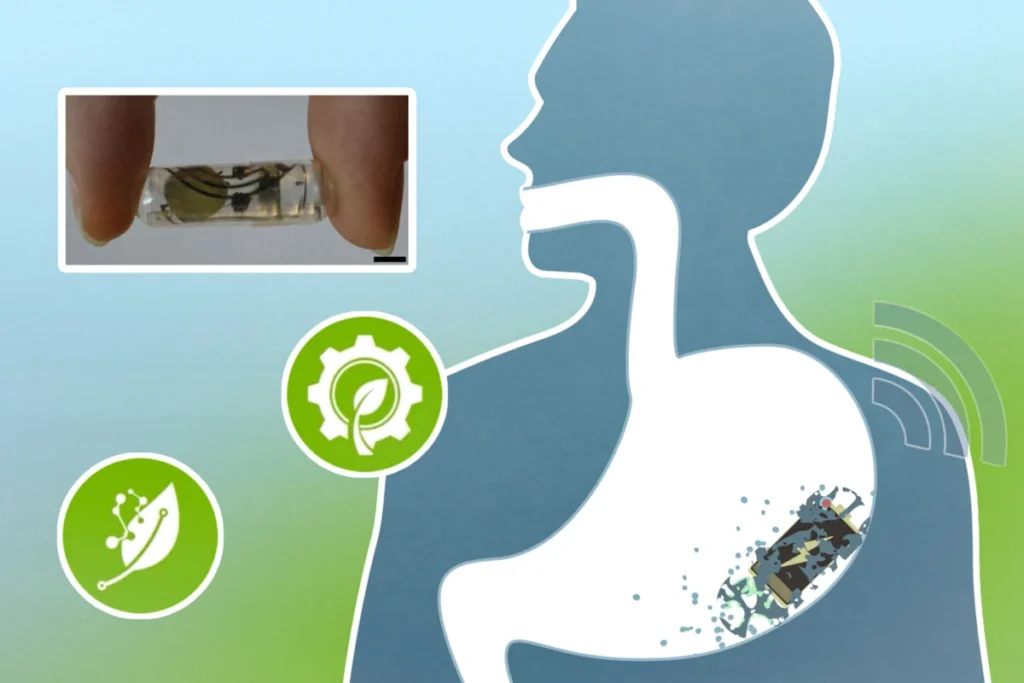
A groundbreaking development from researchers at MIT, Brigham and Women’s Hospital, and the Broad Institute of MIT and Harvard has unveiled the creation of fully bioresorbable batteries, a significant leap forward for ingestible medical technologies. Published today in Nature Chemical Engineering, this innovation addresses critical safety and environmental concerns associated with powering devices designed to operate within the human body, opening new frontiers for diagnostics, drug delivery, and patient monitoring. The research, led by Giovanni Traverso, a professor of mechanical engineering at MIT, a gastroenterologist at Brigham and Women’s Hospital, and an associate member of the Broad Institute, signals a paradigm shift from traditional, non-degradable power sources.
Addressing the Power Conundrum in Internal Medicine
The burgeoning field of ingestible electronics has long grappled with the challenge of sustainable and safe power. Devices ranging from miniature sensors that monitor vital signs to sophisticated capsules capable of targeted drug delivery or even detecting opioid overdoses, all require a reliable energy source. Historically, researchers have employed various strategies, including wireless power transmission from external sources, energy harvesting from the gastrointestinal (GI) tract itself, or the integration of small, conventional coin batteries. However, these traditional battery types, often containing lithium, silver oxide, or other heavy metals, present inherent risks. A breach in their protective coating during passage through the digestive system could lead to the release of potentially harmful substances, posing a safety hazard to patients.
"For many of the systems we’re developing, we need power, and we power the system through different ways," explains Giovanni Traverso, the senior author of the seminal paper. "Often, we use batteries, so the question here was: Could we develop a battery that was bioresorbable, and then apply that across a range of application areas?" This fundamental question has now been answered with a resounding affirmative. Mehmet Girayhan Say, a former MIT postdoc and the paper’s lead author, played a pivotal role in bringing this concept to fruition.
The Innovation: A Battery Designed for Dissolution
The core of this breakthrough lies in the selection of materials that are not only capable of generating electrical current but are also safe for human consumption in small quantities and fully degradable within the body. The researchers meticulously chose magnesium for the battery’s anode and molybdenum trioxide for the cathode. These materials are known for their relative biocompatibility and are already present in trace amounts within the human body, making them ideal candidates for ingestible applications.
"Those materials are known to be relatively safe. That was the biggest driver, thinking about materials that can be tolerated by humans," Traverso emphasizes. The battery design further incorporates an ionic liquid gel electrolyte, and the entire system is engineered to be bioresorbable – meaning it can be completely broken down and absorbed by the body without leaving behind any foreign residue.
Two distinct form factors were developed to suit various applications: a compact disc measuring 7.5 millimeters in diameter and a rectangular bar 24 millimeters long. This versatility allows for integration into a wide array of existing and future ingestible devices.
Rigorous Testing and Performance Validation
To ascertain the batteries’ behavior within the harsh environment of the GI tract, the research team subjected them to rigorous testing. Initial experiments involved exposing the batteries to a highly acidic solution designed to mimic gastric juice. The results were promising: the batteries maintained normal function for approximately three days, after which their performance gradually declined. Within a few weeks, the materials completely broke down, demonstrating their bioresorbable nature.
This controlled degradation profile is crucial. It ensures that the device can perform its intended function for a clinically relevant duration before safely dissolving, eliminating the need for retrieval or concerns about long-term presence within the body.
A Decade of Pioneering Ingestible Technology
The development of these bioresorbable batteries is not an isolated event but rather the culmination of over a decade of pioneering work by Traverso and his collaborators. Their lab has been at the forefront of ingestible technology, consistently pushing the boundaries of what is possible within the human digestive system.
- 2017: Engineers harness stomach acid to power tiny sensors, demonstrating early efforts in energy harvesting within the GI tract.
- 2018: An ingestible pill controlled wirelessly via Bluetooth is developed, showcasing advanced drug delivery capabilities.
- 2023: An ingestible capsule designed to stimulate hunger-regulating hormones is reported, laying the groundwork for therapeutic applications.
- 2024: An implantable sensor capable of detecting opioid overdoses is introduced, highlighting the potential for life-saving interventions.
- 2026 (January): The SAFARI system (Self-Activating ingestible Flexible Autonomous RFID-based Information System) is unveiled, using passive RFID tags for medication adherence, powered by harvested energy.
- 2026 (Today): The publication in Nature Chemical Engineering announces the breakthrough of fully bioresorbable batteries, providing a self-contained, safer power source for these advanced devices.
This chronological progression underscores a sustained commitment to creating safer, more effective, and increasingly sophisticated internal medical tools. The bioresorbable battery represents a critical missing piece in this intricate puzzle, enabling truly autonomous and transient systems.
From Concept to Clinical Relevance: Ghrelin Stimulation
One of the most compelling immediate applications for the new bioresorbable battery is in a degradable device first reported by Traverso’s lab in 2023. This device is engineered to deliver a small electrical current to the lining of the stomach. Earlier research had shown that such a targeted electrical jolt could stimulate endocrine cells in the stomach to produce ghrelin, often referred to as the "hunger hormone."
Stimulating ghrelin secretion holds significant promise for treating a range of conditions characterized by nausea or loss of appetite, such as cachexia. Cachexia is a debilitating syndrome marked by severe loss of body mass, muscle wasting, and fatigue, commonly observed in patients with advanced cancer, chronic kidney disease, heart failure, and other chronic illnesses. Current treatments for cachexia are limited, making this ingestible therapeutic device a potential game-changer.
The initial version of this ghrelin-stimulating device relied on two silver oxide coin batteries, similar to those found in many FDA-approved ingestible devices. By replacing these with the newly developed magnesium-molybdenum oxide batteries, the researchers achieved near-complete bioresorbability for the device, with the exception of a small printed circuit board. Any non-absorbable components are designed to safely pass through the GI tract and be excreted, minimizing any lingering presence.
In the new study, the researchers successfully demonstrated that the bioresorbable battery was robust enough to generate continuous electrical stimulation for up to three days. Further tests conducted in animal models yielded remarkable results: just 20 minutes of stomach stimulation could boost ghrelin levels by approximately 50 percent.
"What makes this work exciting is that we were able to show that a bioresorbable battery is not just a concept. It can actually power clinically relevant functions inside the gastrointestinal tract and then simply dissolve," Say affirms, highlighting the tangible therapeutic potential of this technology. This demonstration moves the bioresorbable battery from theoretical possibility to practical application, paving the way for human clinical trials.
Enhancing Medication Adherence: The SAFARI System
Beyond therapeutic stimulation, the bioresorbable battery also significantly enhances diagnostic and monitoring capabilities, particularly in the realm of medication adherence. The researchers integrated the disc-shaped bioresorbable battery into a redesigned RFID (Radio-Frequency Identification) device. This innovative capsule is engineered to transmit its location from within the GI tract using a bioresorbable RFID tag composed of molybdenum and cellulose.
An earlier iteration of this RFID system, known as SAFARI (Self-Activating ingestible Flexible Autonomous RFID-based Information System), was introduced by Traverso’s lab in January 2026. That system utilized passive RFID tags, which were powered by harvested energy. While groundbreaking, passive systems typically suffer from limited communication range and intermittent power availability, constraining their utility in real-world scenarios.
The integration of the active bioresorbable battery dramatically improves the SAFARI system’s performance. Animal tests confirmed that the disc-shaped battery could effectively power the RFID tags, enabling continuous transmission from within the GI tract. Crucially, the range of communication was extended significantly, reaching up to 1.5 meters. This enhanced range and continuous operation are vital for reliable medication adherence monitoring, allowing caregivers or automated systems to confirm that a patient has ingested their medication and that the pill is progressing as expected.
Medication non-adherence is a pervasive and costly problem in healthcare, leading to poorer patient outcomes, increased hospitalizations, and wasted resources. Estimates suggest that non-adherence contributes to hundreds of billions of dollars in healthcare costs annually and is responsible for a substantial number of preventable deaths. Systems like SAFARI, powered by these novel bioresorbable batteries, offer a discreet, objective, and accurate method to monitor adherence, potentially transforming chronic disease management and clinical trial oversight.
Beyond Patient Safety: Environmental Sustainability
The benefits of bioresorbable batteries extend beyond immediate patient safety to address broader environmental concerns. Traditional batteries, particularly the coin-cell types commonly used in small electronic devices, contain heavy metals and other chemicals that can be harmful if not disposed of properly. When ingestible devices containing these batteries are excreted, they eventually enter sewage systems and, ultimately, the environment. This creates a hidden stream of electronic waste that can contribute to soil and water pollution.
The bioresorbable nature of the new batteries offers a compelling solution to this emerging environmental challenge. Since the materials are designed to break down completely and be absorbed by the body, any components that are excreted will also degrade harmlessly in the environment.
"The benefits are twofold: one, the ability to be bioresorbable, but also the potential to minimize environmental impact because the materials will be degraded in the environment as well," Traverso states. This dual advantage positions the technology not only as a medical breakthrough but also as a step towards more sustainable healthcare practices, aligning with global efforts to reduce waste and pollution. The sheer volume of ingestible devices anticipated in the coming decades makes this environmental consideration increasingly critical.
The Road Ahead: Clinical Trials and Broader Impact
With the successful demonstration of both therapeutic and diagnostic applications in animal models, the researchers are now planning the next crucial phase: human clinical trials for the SAFARI system. These trials are anticipated to commence in approximately two years, marking a significant step towards translating this laboratory innovation into widespread clinical use.
The regulatory pathway for novel ingestible devices, particularly those with active components and new material compositions, involves stringent testing and review by bodies like the U.S. Food and Drug Administration (FDA). The biocompatibility and bioresorbability of the chosen materials (magnesium and molybdenum trioxide) are key advantages that may streamline this process, as these elements are already recognized for their safety profiles in biological systems.
The potential implications of bioresorbable batteries are vast. They could enable:
- Enhanced Drug Delivery Systems: More precise, localized, and time-controlled release of medications without the need for external intervention or concerns about residual hardware.
- Advanced Diagnostics: Fully ingestible capsules that can continuously monitor biomarkers, detect early signs of disease, or even perform biopsies without invasive procedures, all while safely dissolving afterwards.
- Personalized Medicine: Tailored therapeutic interventions that respond dynamically to physiological changes within the patient, powered by transient, intelligent systems.
- Minimally Invasive Surgery: Temporary devices that assist in surgical procedures or monitor post-operative healing, then disappear naturally.
The market for ingestible medical devices is projected to grow significantly in the coming years, driven by demand for less invasive procedures, home-based monitoring, and improved patient compliance. By removing the safety and environmental barriers posed by conventional batteries, this new technology is poised to accelerate this growth and enable a new generation of smart, transient medical tools. The collaborative nature of this research, drawing expertise from mechanical engineering, gastroenterology, and genomics, underscores the interdisciplinary approach necessary to solve complex challenges at the intersection of engineering and medicine.
Funding and Collaborative Efforts
This ambitious research project received substantial support from several key organizations, reflecting the broad interest and potential impact of the innovation. Funding was provided by Novo Nordisk, a global leader in diabetes care and other chronic diseases; the Karl van Tassel Career Development Professorship; MIT’s Department of Mechanical Engineering; the Brigham and Women’s Hospital Division of Gastroenterology; and the U.S. Advanced Research Projects Agency for Health (ARPA-H), a federal agency focused on accelerating biomedical and health breakthroughs. This diverse funding base highlights the project’s relevance across academic, industrial, and governmental sectors, all committed to advancing healthcare solutions for a healthier future.