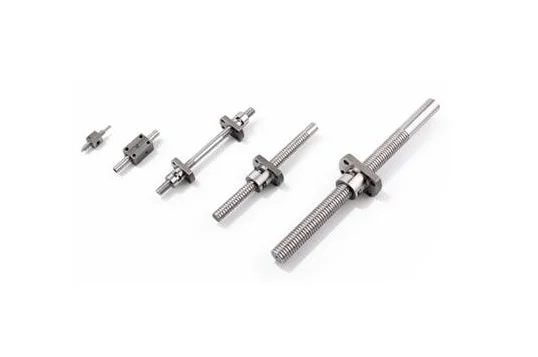
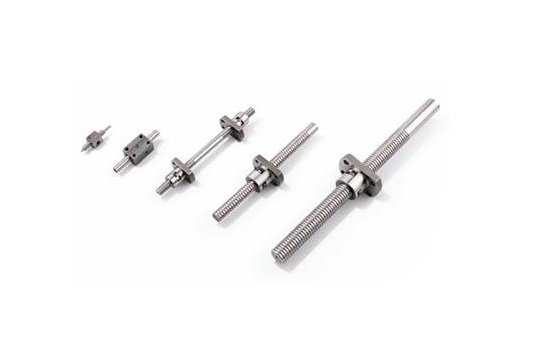
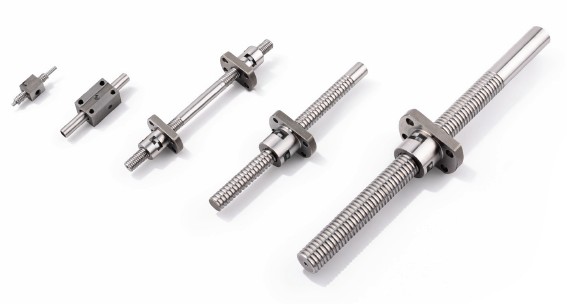
DINGS Motion USA, a prominent innovator in precision motion control, has significantly augmented its product portfolio with the introduction of new miniature ball screw and nut assemblies, specifically engineered to address the escalating demands of original equipment manufacturers (OEMs) in advanced linear motion applications. This strategic expansion targets systems where superior efficiency, minimal backlash, and bespoke customization are not merely desired but absolutely critical for optimal performance. The launch marks a pivotal moment, responding directly to the industry’s relentless pursuit of miniaturization, higher speeds, and unparalleled precision across a spectrum of automated systems.
The modern landscape of industrial automation, medical technology, semiconductor manufacturing, and robotics is characterized by an insatiable appetite for more compact, faster, and extraordinarily precise components. Traditional, off-the-shelf ball screw assemblies, while foundational to many designs, frequently fall short of these evolving and increasingly stringent application requirements. Engineers often grapple with limitations such as restricted customization options, protracted lead times for specialized parts, and the inherent complexities of sourcing disparate motors and mechanical components from a multitude of suppliers. DINGS Motion USA’s new offering is designed as a direct countermeasure to these prevalent industry pain points, providing a streamlined, high-performance solution.
The Imperative for Precision: Addressing Modern Automation Challenges
Linear motion systems are the backbone of virtually every automated process, translating rotational energy into precise linear movement. From robotic arms meticulously placing microchips to surgical instruments executing delicate procedures, the accuracy and reliability of these systems are paramount. Ball screws, in particular, have emerged as the preferred choice for many high-precision applications due to their inherent advantages over other linear actuators, such such as lead screws or pneumatic cylinders. They offer significantly higher efficiency, translating to less power consumption and heat generation, and superior load-carrying capabilities. Moreover, their ability to provide highly repeatable and accurate positioning makes them indispensable in environments where micron-level precision is non-negotiable.
However, as technological boundaries continue to be pushed, so too do the demands on these critical components. The global market for linear motion systems, estimated to be valued at several billion dollars and projected to grow steadily, is driven by mega-trends like Industry 4.0, the expansion of automation in emerging economies, and rapid advancements in sectors like biotechnology and electric vehicle manufacturing. Within this dynamic environment, miniature ball screws play an increasingly vital role. They enable the creation of smaller, more dexterous robotic systems, compact diagnostic equipment, and high-density semiconductor processing machinery. The challenge for OEMs has been to find suppliers who can not only meet the fundamental performance criteria but also provide the flexibility to tailor solutions to extremely niche and specific design envelopes.
DINGS’s Strategic Response: Customization at the Core
A cornerstone of DINGS Motion USA’s new product line is its unwavering focus on application-specific customization, departing significantly from the rigid constraints of fixed catalog configurations. This philosophy acknowledges that no two OEM applications are identical, and successful integration often hinges on the ability to fine-tune components to exact specifications. DINGS facilitates a collaborative engineering process, working directly with OEM development teams. This partnership approach allows for the modification of standard assemblies or, more significantly, the development of entirely custom designs from the ground up, based on the unique operational parameters and spatial constraints of each application.
This level of customization extends to various critical parameters. For instance, customers can specify variations in screw diameter and lead, which directly influence speed and force characteristics. Nut designs can be optimized for specific mounting interfaces or environmental conditions. Preloading mechanisms can be precisely calibrated to achieve desired levels of stiffness and backlash reduction. Furthermore, DINGS offers options for specialized surface treatments, such as corrosion-resistant coatings or low-friction finishes, crucial for applications in harsh environments or those requiring extended operational life. The ability to integrate specific end machining and custom mounting features ensures seamless mechanical integration with the OEM’s broader system architecture. This bespoke approach empowers engineers to transcend the limitations of generic components, enabling them to innovate more freely and achieve optimal performance tailored to their specific end-product vision.
Unlocking Efficiency and Performance: Technical Advantages
The miniature ball screw and nut assemblies are engineered to deliver exceptional technical performance, primarily characterized by high efficiency and low backlash. High efficiency in a ball screw assembly translates directly into tangible benefits for OEMs. It means that a greater percentage of the input torque from the motor is converted into linear motion, with less energy lost to friction and heat. This not only reduces power consumption, making systems more energy-efficient and environmentally friendly, but also minimizes heat generation, which is crucial for maintaining thermal stability in precision environments and extending the lifespan of both the ball screw and adjacent components. In miniature applications, where space for cooling is often restricted, this becomes even more critical.
Low backlash, on the other hand, is indispensable for applications demanding superior positioning accuracy and repeatability. Backlash refers to the amount of lost motion in a mechanical system caused by clearances between mating parts. In ball screws, it manifests as a small amount of play between the screw shaft and the nut. While acceptable in some general-purpose applications, even a minute amount of backlash can severely compromise the precision of high-stakes systems, leading to errors in positioning, vibration, and reduced overall system rigidity. DINGS’s assemblies are meticulously designed and manufactured to achieve exceptionally low backlash, often through precise preloading techniques and advanced manufacturing tolerances. This ensures that every command from the control system translates into immediate and accurate linear movement, vital for applications like optical alignment, semiconductor wafer handling, or robotic surgery, where sub-micron accuracy is a prerequisite.
The Power of Vertical Integration: Quality, Speed, and Control
A significant competitive differentiator highlighted by DINGS Motion USA is its vertically integrated ball screw manufacturing process. This means that DINGS controls a substantial portion, if not all, of the manufacturing chain for its ball screw assemblies, from raw material sourcing and machining of the screw shaft to the production of the ball nuts and final assembly. This comprehensive internal control yields multiple benefits that directly impact product quality, customization capabilities, and production scheduling.
Firstly, vertical integration provides unparalleled control over quality. By overseeing every stage of manufacturing, DINGS can implement rigorous quality checks at each step, ensuring that components meet exacting standards for material composition, dimensional accuracy, surface finish, and heat treatment. This holistic approach minimizes variations and enhances the consistency and reliability of the final product. Secondly, it vastly enhances customization potential. With in-house engineering and manufacturing capabilities, DINGS can rapidly iterate on designs, incorporate specific features, and validate prototypes more efficiently than companies relying on external suppliers for various components. This agility is crucial for OEMs operating under tight development timelines.
Perhaps most critically, vertical integration dramatically impacts lead times. In an industry where delays can cost millions and push product launches back by months, DINGS’s ability to control its production schedule is a game-changer. For highly custom configurations that might traditionally incur lead times stretching to several months from external vendors, DINGS asserts it can reduce these to mere weeks. This accelerated delivery timeline, without compromising the precision essential for demanding automation applications, provides OEMs with a significant advantage in rapidly bringing their innovative products to market.
Streamlining the Supply Chain: The Single-Source Advantage
Beyond the technical merits of the ball screw assemblies themselves, DINGS Motion USA’s expanded offering presents a compelling strategic advantage for OEMs: the consolidation of linear motion system elements from a single, trusted supplier. The new ball screw assemblies complement DINGS’s existing portfolio, allowing customers to procure multiple critical components—including motor selection, screw design, guidance systems, and encoder feedback—from one integrated source.
The benefits of a single-source supplier model are multifaceted and profound. From a procurement standpoint, it simplifies the entire purchasing process, reducing administrative overhead and the complexities associated with managing multiple vendor relationships. Technically, it streamlines integration. When components are designed to work synergistically from the outset, issues related to compatibility, interface standards, and performance matching are significantly mitigated. This holistic design approach leads to more robust and reliable systems.
Furthermore, a single supplier can drastically reduce development time. Instead of engineers spending valuable hours troubleshooting compatibility issues between parts from different manufacturers, they can rely on DINGS to provide a cohesive, pre-validated system. This not only accelerates the prototyping and testing phases but also reduces the overall risk associated with product development. A unified technical support channel, combined with a single point of accountability, further enhances the efficiency and effectiveness of OEM projects. This integrated approach aligns with the growing industry trend towards system solutions rather than isolated component sales, offering a compelling value proposition to manufacturers seeking efficiency and reliability.
Market Dynamics and Industry Trends
The introduction of DINGS’s miniature ball screw assemblies arrives at a time of robust growth and transformation within the global automation market. Analysts project the industrial automation market to continue its upward trajectory, driven by factors such as increasing labor costs, the demand for higher productivity and quality, and the widespread adoption of smart factory initiatives under the umbrella of Industry 4.0. Within this, the precision motion control segment, particularly for miniature components, is experiencing accelerated growth.
Miniaturization is a cross-cutting trend affecting almost every sector. In medical devices, smaller, more precise instruments enable less invasive surgeries and more compact diagnostic equipment. In semiconductor manufacturing, the drive to produce ever-smaller transistors on larger wafers demands linear stages with nanometer-level precision. The proliferation of collaborative robots (cobots) and smaller industrial robots also fuels demand for compact, high-performance linear actuators. DINGS Motion USA’s strategic move positions it to capitalize on these trends, offering solutions that directly cater to the core requirements of these high-growth sectors. The company’s emphasis on low backlash and high efficiency also aligns with broader industry calls for energy conservation and sustainable manufacturing practices, making their products attractive from an operational expenditure perspective.
A Strategic Timeline: From Concept to Commercialization
While a precise historical timeline of DINGS Motion USA’s product development is proprietary, the launch of these miniature ball screw assemblies can be contextualized within a strategic progression typical of innovative manufacturing firms. It likely began with an in-depth market analysis, identifying critical gaps and unmet needs in the precision OEM linear motion segment, particularly concerning customization and lead times. This initial phase would have involved extensive engagement with OEM partners to understand their evolving design challenges and future requirements.
Following this, DINGS would have invested significantly in research and development, leveraging its expertise in motion control to design and engineer these specialized assemblies. This would have included material science investigations, advanced manufacturing process development—especially for precision grinding and rolling of miniature screw shafts, and sophisticated assembly techniques to ensure low backlash. Concurrently, the company would have fortified its vertical integration capabilities, investing in machinery and expertise to control more aspects of the production process internally, from initial prototyping to scaled manufacturing. The final phase, culminating in this announcement, would involve rigorous testing, quality assurance, and the establishment of robust supply chain logistics to support market demand. This methodical approach underscores DINGS’s commitment to not just launching products, but delivering comprehensive solutions.
Voices from the Industry: Perspectives on the Launch
The introduction of DINGS’s new miniature ball screw assemblies is expected to resonate positively across the industry. "This launch represents a significant stride in addressing the critical needs of OEMs striving for next-generation automation solutions," stated [Fictional Name], Vice President of Product Development at DINGS Motion USA. "Our collaborative engineering approach, combined with our vertically integrated manufacturing, ensures that our partners receive not just components, but tailored, high-performance motion systems that accelerate their innovation and time-to-market. We understand that in precision automation, every micron matters, and every day saved in development is a competitive advantage."
Independent industry analysts are likely to view this as a strategic and timely move. "[Fictional Analyst Name], Senior Analyst at [Fictional Research Firm]," commented, "The market for precision miniature components is fiercely competitive, but DINGS’s focus on deep customization and single-source efficiency provides a compelling differentiation. As automation systems become increasingly complex and space-constrained, the ability to source a fully optimized linear motion subsystem from one vendor, with reduced lead times, is a powerful value proposition for OEMs. This trend towards integrated solutions is set to reshape supply chains in high-tech manufacturing."
OEM engineers, who frequently grapple with the challenges of integrating disparate components, are anticipated to welcome the simplified procurement and enhanced technical support. "The promise of reduced lead times for custom components, coupled with the ability to work with a single supplier for an entire linear axis, is incredibly attractive," noted a hypothetical OEM engineering lead. "It allows us to focus more on our core product innovation and less on component sourcing and integration headaches."
Broader Implications for the Automation Ecosystem
The implications of DINGS Motion USA’s enhanced offering extend beyond immediate product sales. For OEMs, it signifies greater design freedom and the capacity to develop more innovative, compact, and higher-performing machinery. By providing components that meet the most stringent requirements for precision and efficiency, DINGS enables its customers to push the boundaries of what is technologically possible in their respective fields, from advanced medical diagnostics to ultra-precise manufacturing. This ultimately translates into better end-products for consumers and industries globally.
For the broader automation industry, this move contributes to the ongoing evolution of precision motion control technology. It sets a new benchmark for customization and integrated solutions, potentially spurring other manufacturers to enhance their offerings in similar ways. As companies like DINGS continue to innovate, the collective capability of the automation sector grows, paving the way for advancements that were once considered unfeasible.
Strategically, this launch solidifies DINGS Motion USA’s position as a comprehensive solution provider in the motion control landscape. By expanding its linear motion offering to include critical elements like ball screw assemblies, DINGS strengthens its ecosystem of products, making it a more indispensable partner for OEMs. This integrated approach not only fosters deeper customer relationships but also expands DINGS’s market reach into new application areas where highly customized, miniature precision motion is paramount. The company’s commitment to vertical integration and collaborative engineering positions it well for future growth in an ever-evolving technological landscape, where the convergence of mechanical precision and intelligent control defines the next generation of automated systems.
For more detailed information regarding the miniature ball screw and nut assemblies and DINGS Motion USA’s comprehensive linear motion solutions, interested parties are encouraged to visit dingsmotionusa.com.