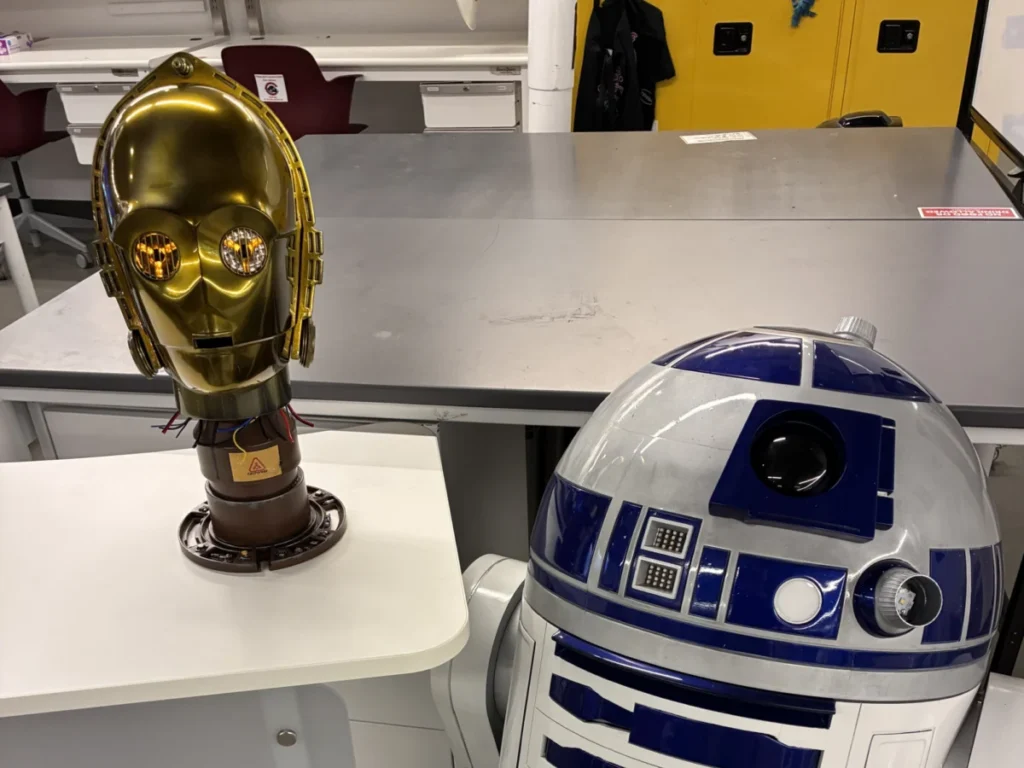
In an era saturated with digital chatbots, a student’s ambitious project has emerged, demonstrating the profound impact of physical embodiment on artificial intelligence. Sam Potozkin, a student at Chapman University, has meticulously engineered a life-like replica of the iconic Star Wars protocol droid, C-3PO, transforming it into a fully functional, conversational AI system. Dubbed "Threepio," this project transcends the typical chatbot experience by integrating sophisticated AI processing with a carefully crafted physical presence, exploring the intricate dynamics of human-AI interaction in a tangible form.
The ubiquitous nature of AI chatbots, often accessible via myriad digital platforms, has led to a certain commoditization of conversational AI. While custom hardware integrations for chatbots are less common, they consistently surface within the maker community. Potozkin’s Threepio, however, distinguishes itself through an extraordinary commitment to detail, aiming to replicate the beloved droid’s distinct personality, gleaming gold exterior, and, implicitly, its renowned capacity for millions of forms of communication. This endeavor is not merely a technological feat but also a profound academic exploration into how physical manifestation alters human perception and engagement with artificial intelligence.
The Genesis of Threepio: Bridging Fiction and Reality
Potozkin’s inspiration, as one might expect, originates from George Lucas’s original 1977 film, Star Wars: A New Hope, which introduced C-3PO to a global audience. The character, known for its polite demeanor, constant worrying, and linguistic prowess, has long served as a cultural touchstone for human-robot relations, often acting as a bridge between diverse species and cultures within the Star Wars universe. Potozkin sought to translate this fictional archetype into a real-world, interactive system, faithfully replicating the experience of conversing with the iconic protocol droid. His vision extended beyond mere functionality, encompassing the aesthetic and auditory elements crucial to the droid’s distinct identity.
The project involved a comprehensive approach to both hardware and software. Potozkin dedicated considerable effort to perfecting the 3D-printed case, ensuring a smooth, polished finish that mirrors C-3PO’s metallic sheen. Furthermore, intricate "greeblies"—small, aesthetic details often used in science fiction models to enhance realism—were added to the display stand, significantly contributing to the overall visual authenticity and immersing the observer in the Star Wars universe. This attention to visual fidelity underscores a central tenet of the project: that the physical form and appearance of an AI system are critical components in shaping human perception and interaction.
Technical Ingenuity: A Deep Dive into the Droid’s Architecture
At the heart of Threepio’s intelligence lies a Raspberry Pi 5, a powerful single-board computer, which locally processes the AI chat stack. This choice of local processing, as opposed to relying on cloud-based AI services, is significant. It grants the system a degree of autonomy and immediacy, reducing latency and enhancing the responsiveness of the conversations. The Raspberry Pi 5, known for its robust performance and compact size, is an ideal platform for such an embedded AI application, enabling complex computations within a confined space. Its capabilities allow for the execution of advanced language models, delivering a conversational flow that feels natural and engaging.
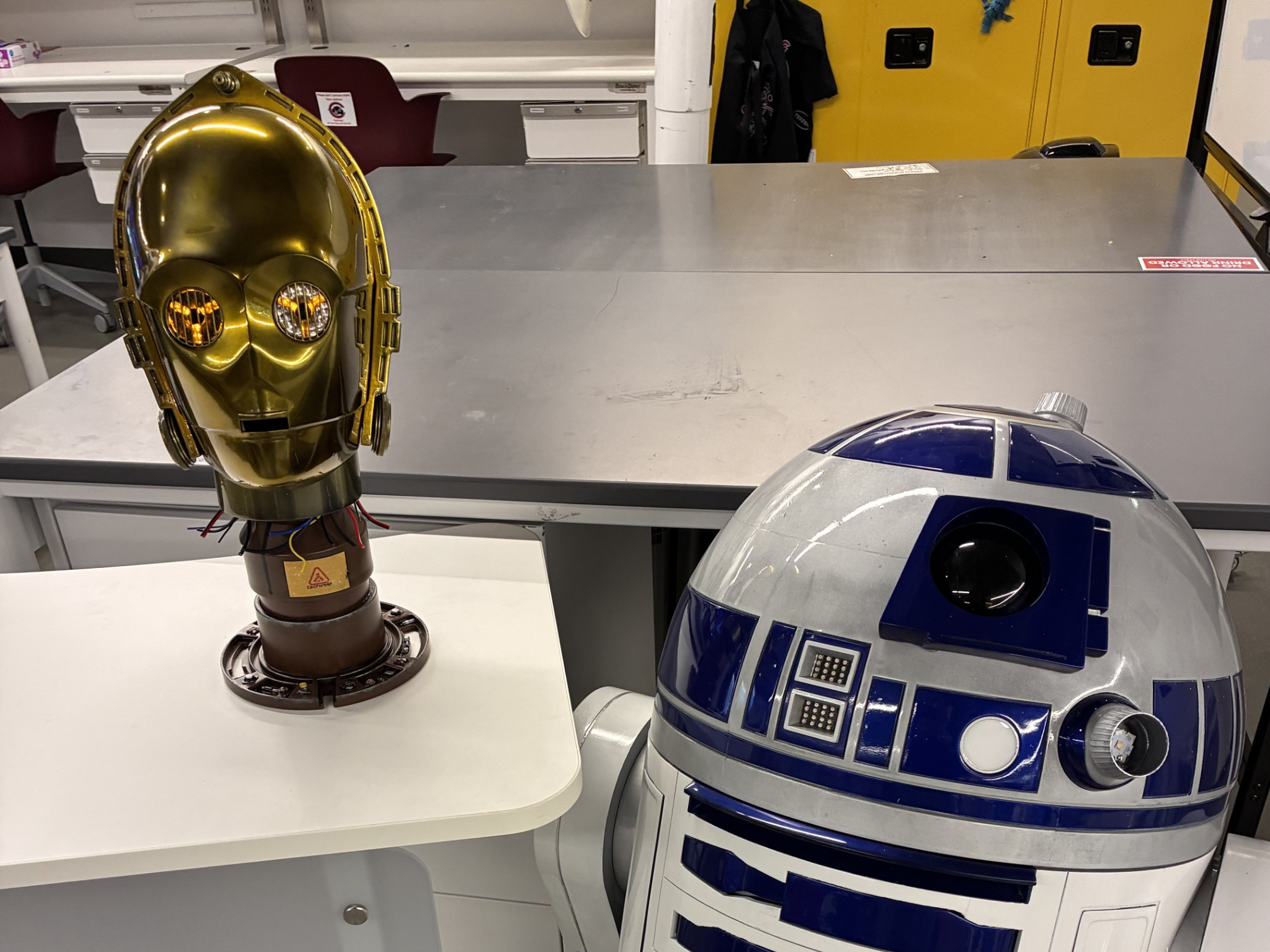
Beyond the computational core, Potozkin innovated in the realm of audio delivery. Instead of a conventional speaker, he integrated an exciter, a device that vibrates surfaces to produce sound. By attaching the exciter to the droid’s head, Potozkin achieved a unique auditory effect: the voice appears to emanate from the entire head, lending a realistic and uncanny quality to C-3PO’s speech. This technique significantly enhances the illusion of an embodied, speaking entity, further blurring the lines between a mere device and a sentient presence. Extensive refinement of these audio effects was undertaken to ensure the sound output was not only clear but also imbued with the distinctive timbre associated with the fictional droid. The meticulous tuning of voice modulation and spatial audio cues underscores the project’s dedication to creating an immersive and believable experience.
Academic Exploration: The Psychology of Human-AI Interaction
Potozkin’s Threepio is more than a sophisticated fan project; it is a platform for scientific inquiry. He authored a paper titled "Threepio: Embodied AI and Human-AI Interaction," which delves into the nuanced reasons why individuals react differently to modern, screen-based AI systems compared to an iconic, decades-old android like C-3PO. The paper posits that the familiarity and established personality of a character, especially one with such a rich fictional history, significantly influence human engagement and emotional responses. This research positions the project within the burgeoning field of Human-Robot Interaction (HRI), which studies the interfaces between humans and robots, aiming to understand and improve interaction dynamics.
Potozkin articulates the project’s academic objectives, stating: "This project explores the translation of a fictional character into a real-world, embodied AI system. Developing this system required translating and combining abstract concepts from both AI and communication theory into a functional, working architecture." He further elaborates on the core hypothesis: "The goal of the project was to explore what happens when conversational AI moves off the screen and into a physical, interactive system. Rather than treating AI as something purely digital, this build focuses on embodiment, giving the system a presence, voice, and personality that can be experienced in the real world."
This perspective aligns with established HRI theories that highlight the importance of embodiment. Research in HRI has consistently shown that physical presence can enhance trust, foster social interaction, and even evoke empathy in human users. The uncanny valley hypothesis, for instance, suggests that humanoids that are "almost" human but not quite can elicit feelings of unease, while characters like C-3PO, which are clearly robotic but possess human-like traits and established personalities, tend to be more readily accepted and even cherished. Potozkin’s project provides a compelling case study for these theories, demonstrating how a carefully designed physical form, coupled with a recognizable persona, can profoundly impact user engagement and perception of AI.
The Evolving Landscape of AI Chatbots and Embodied Systems
The global AI market is experiencing exponential growth, with projections estimating its value to reach trillions of dollars in the coming decade. A significant portion of this growth is attributed to conversational AI, driven by advancements in natural language processing (NLP) and machine learning. While most commercial applications remain screen-based, there’s a discernible shift towards embodied AI—systems that exist in the physical world, interacting with users through sensors, actuators, and physical forms. This trend is evident in the rise of social robots, smart home devices with personalities, and advanced humanoid research projects.
Potozkin’s Threepio project is a microcosm of this larger trend. It underscores the potential for AI to move beyond utilitarian functions into roles that foster companionship, provide information in a more engaging manner, and even serve as educational tools. By bringing AI off the screen, the project challenges the conventional understanding of AI as a purely digital construct, prompting users to interact with it as a distinct entity with its own presence and personality. This has significant implications for various sectors, from customer service, where embodied agents could offer more personalized interactions, to elder care, where companion robots could alleviate loneliness, and education, where interactive robots could make learning more engaging.

Challenges and Triumphs: The Maker’s Journey
The journey to create Threepio was fraught with challenges, a testament to Potozkin’s dedication and ingenuity. The project demanded a diverse skill set, ranging from mastering soldering for intricate circuit connections to refining complex audio effects. The 3D printing process itself presented hurdles, including the laborious task of sanding layer lines to achieve the desired smooth finish, and addressing issues like "orange peel" texture on the printed surfaces. Potozkin candidly recounts an incident where the droid’s head was accidentally dropped, requiring repairs and reaffirming the fragility of such intricate builds.
These trials are characteristic of ambitious DIY and maker projects, where theoretical knowledge must constantly contend with practical realities. Potozkin’s perseverance through these obstacles—learning new skills on the fly, troubleshooting unforeseen problems, and meticulously refining every detail—epitomizes the spirit of the maker movement. This iterative process of building, testing, failing, and improving is fundamental to innovation and problem-solving, both in academic research and practical engineering. The success of Threepio stands as a powerful endorsement of this hands-on approach to learning and creation.
The Open-Source Philosophy: Empowering Future Innovators
Crucially, Potozkin’s Threepio project embraces the open-source philosophy, making its design and code publicly available on GitHub. This decision is a significant contribution to the maker and AI communities, allowing others to customize, extend, and build upon his work. The open-source model fosters collaborative innovation, enabling hobbyists, students, and researchers worldwide to adapt the project to their specific needs, perhaps even adding the other "5,999,999 languages" C-3PO is famously programmed to speak.
The accessibility of such complex projects empowers a new generation of engineers and designers to engage with advanced AI and robotics without starting from scratch. It democratizes technology, transforming what might otherwise be an isolated academic achievement into a shared resource for learning and experimentation. This collaborative ecosystem is vital for accelerating progress in AI and robotics, as diverse minds contribute unique perspectives and solutions, pushing the boundaries of what’s possible.
Star Wars’ Enduring Influence on Technology and Culture
The Star Wars franchise has long transcended its cinematic origins to become a powerful cultural phenomenon, deeply influencing science, technology, and engineering. The droids of the Star Wars universe, from the brave R2-D2 to the articulate C-3PO, have inspired generations of builders, roboticists, and AI researchers. Projects like Threepio are direct descendants of this inspiration, illustrating how fictional concepts can spur real-world innovation. Makezine, a prominent publication for the maker community, has frequently featured Star Wars-inspired droid builds, highlighting the franchise’s enduring impact.

Experienced droid builders often advise beginners to start with the dome, particularly for projects like R2-D2 replicas, acknowledging the complexity and time investment involved in such detailed constructions. Potozkin’s Threepio, while focusing on a different droid, showcases a similar level of dedication and craftsmanship, proving that when one commits to building a sophisticated robot, ensuring it can communicate effectively is paramount to its appeal and functionality. The emotional connection users have with these fictional characters translates seamlessly into an enhanced appreciation for their real-world counterparts, making projects like Threepio particularly compelling.
Looking Ahead: The Future of Embodied AI
Sam Potozkin’s Threepio project represents a significant step forward in understanding and developing embodied AI. It offers compelling evidence that the physical form, personality, and established narrative of an AI system play a crucial role in how humans perceive, interact with, and ultimately accept artificial intelligence into their lives. As AI technology continues to advance, the insights gleaned from projects like Threepio will become increasingly vital.
The future of AI is likely to involve a hybrid approach, where cloud-based intelligence augments localized processing in physical systems. The implications are far-reaching: from more intuitive and personable virtual assistants inhabiting smart home devices, to advanced robotic companions providing assistance and social interaction in various settings, to educational robots that can adapt and teach in engaging, personalized ways. The ethical considerations surrounding increasingly realistic and emotionally engaging AI systems will also grow in importance, necessitating careful development that prioritizes user well-being and transparency.
Potozkin’s work serves as a powerful reminder that the most impactful technological advancements often emerge from a blend of scientific rigor, engineering prowess, and creative inspiration. By bringing a beloved fictional character to life as a sophisticated AI, he has not only created an impressive piece of engineering but also contributed valuable insights into the complex, evolving relationship between humans and artificial intelligence, paving the way for a future where AI might not just process information, but truly connect with us.