A seemingly minor train delay in Exeter, England, nearly 180 years ago, has inadvertently rewritten a key chapter in the scientific understanding of space weather. An international collaboration of researchers, by meticulously sifting through historical archives and scientific data, has corrected a significant historical error, pushing back the timeline of the earliest documented instance of solar activity interfering with human technology. This re-evaluation of a 178-year-old incident, initially reported as occurring in 1841, reveals that the disruption actually took place seven years later, in 1848, thereby adjusting the historical benchmark for the dawn of technological vulnerability to the Sun’s whims.
The incident, now pinpointed to October 18, 1848, involved the telegraph system of the Exeter-to-Starcross railway line. At a time when electric telegraph networks were rapidly expanding and revolutionizing long-distance communication, operators frequently encountered inexplicable electrical disturbances. Scientists now understand that many of these anomalies were direct consequences of solar activity, specifically geomagnetic storms, which subtly alter Earth’s magnetic field. The Exeter event, when accurately dated, remains a pivotal early example of this interaction, illustrating the burgeoning reliance on electrical technology and its nascent susceptibility to cosmic forces.
The Dawn of Technological Vulnerability to Solar Activity
The latter half of the 19th century was a period of profound technological advancement, particularly in the realm of electrical communication. The electric telegraph, a marvel of its time, enabled near-instantaneous communication across vast distances, fundamentally altering commerce, governance, and daily life. However, this newfound technological prowess came with an unforeseen vulnerability: the Sun.
While solar storms have always occurred, their impact was largely confined to natural phenomena like auroras. The advent of widespread electrical infrastructure, however, provided a new medium for these solar disturbances to manifest, disrupting human endeavors. The 1840s marked a critical intersection where the expanding technological landscape began to directly confront the unpredictable power of space weather.
One of the most dramatic and well-documented events of this era was the Carrington Event of 1859. This colossal solar storm, characterized by a massive solar flare and a subsequent coronal mass ejection (CME), unleashed an immense surge of charged particles and magnetic fields towards Earth. The consequences were spectacular and disruptive. Auroras, typically visible only at high latitudes, were observed as far south as the Caribbean and Hawaii, illuminating the night sky with an intensity that allowed people to read newspapers by their glow. Gold miners in the Rocky Mountains, mistaking the aurora for dawn, began their day’s work shortly after midnight.
The Carrington Event’s impact on telegraph systems was equally profound. Electrical surges, generated by the disturbed geomagnetic field, overloaded equipment, caused sparks to fly from telegraph wires, delivered electric shocks to operators, and even ignited fires. In some instances, the induced electrical currents were so powerful that telegraph lines continued to transmit messages even when disconnected from their power sources. This event served as a stark, albeit later, demonstration of the potential for solar activity to cripple modern technology.
The Exeter Mystery: A Case of Typographical Error
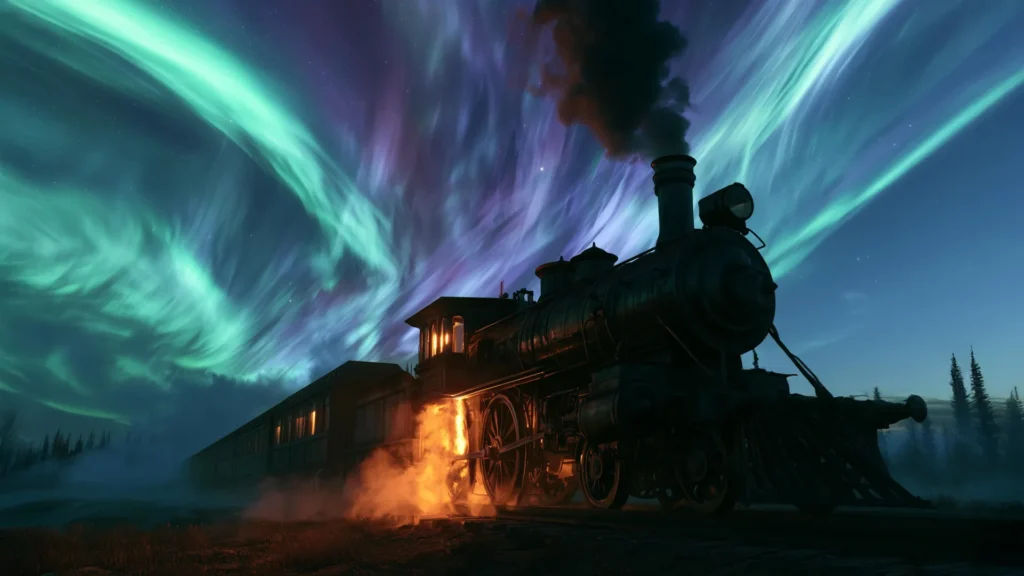
Prior to the accurate dating of the Exeter incident, the earliest known technological disruption attributed to space weather was detailed in a 1871 publication in the scientific journal Nature. An anonymous author described a "very intense magnetic disturbance" purportedly occurring on October 18, 1841. This disturbance, the report stated, interfered with railway signals in Exeter, England, causing a 16-minute delay to the 10:05 p.m. train departure. If this date had been accurate, it would have held the distinction of being the earliest recorded instance of space weather directly impacting human technology.
However, a recent investigation, published in the American Geophysical Union journal Space Weather, led by researchers from RMIT University and Lancaster University, along with collaborators from the British Geological Survey, Natural Resources Canada, and Baylor University, has meticulously debunked this long-held assumption. The team’s painstaking analysis revealed a significant historical inaccuracy within the 1871 Nature article.
Reconstructing the Past: A Detective’s Approach to Space Weather
The breakthrough in recalibrating the date of the Exeter incident came from Associate Professor Brett Carter, a space weather researcher at RMIT University, who spearheaded the historical investigation. During their review of the historical accounts, the team identified a critical anachronism that immediately cast doubt on the 1841 date.
"In this study, we effectively investigated what had to be a typo in a Nature paper from 1871," Associate Professor Carter explained. "We know it was a typo because the Exeter-to-Starcross train line mentioned in that paper didn’t exist until 1846, which is 5 years afterwards."
This crucial discrepancy—a railway line operating five years before its official opening—prompted the researchers to embark on a comprehensive reconstruction of the event. To establish the true timeline, the team meticulously cross-referenced a vast array of historical evidence. This included:
- Railway Timetables: Examining historical schedules for the Exeter-to-Starcross line and related services to identify operational periods and potential disruptions.
- Newspaper Archives: Scouring local and national newspapers from the mid-19th century for any mention of train delays, telegraph issues, or unusual atmospheric phenomena in the Exeter region.
- Aurora Observations: Consulting historical records and diaries that documented auroral displays, as these are often indicators of geomagnetic storms.
- Geomagnetic Field Measurements: Analyzing digitized records of Earth’s magnetic field from observatories operating in the mid-19th century to identify periods of significant disturbance.
By correlating these disparate data sources, the researchers were able to pinpoint a period of intense geomagnetic activity that aligned with the other anecdotal evidence. The overwhelming consensus from this multidisciplinary approach pointed to a revised date: October 18, 1848. This new timeline places the incident squarely within the operational history of the Exeter-to-Starcross railway and during a period of heightened solar activity.
The Revised Timeline and Its Implications
The correction of the Exeter incident’s date has significant implications for the historical understanding of space weather impacts. While the incident is no longer the earliest known case of technological disruption by solar activity, it remains one of the most compelling and well-documented early examples. The distinction of the absolute earliest known incident now falls to an earlier documented disruption of telegraph services on Britain’s Midland Railway in March 1847.
Professor Jim Wild of Lancaster University, who led the study, emphasized the importance of this recalibration. "What this research highlights is that space weather is not a new threat but a long-standing natural hazard. Society has been experiencing the effects of space weather on technology for almost as long as electrical technologies have existed," Professor Wild stated. "The Exeter train delay is a fascinating story because it sits right at the point where emerging technologies first began to encounter the realities of the space environment."
The 1848 date situates the Exeter incident during a critical phase of technological evolution. The telegraph was becoming increasingly integral to the functioning of railways, enabling more efficient scheduling and signaling. The disruption of these systems, even for a relatively short period, underscores the growing interdependence between technological infrastructure and the natural environment.
The Detective Work of Space Weather Science
Dr. Mike Hapgood, a Visiting Scientist and space weather expert at the UK’s national space laboratory, RAL Space, likened the research process to a detective investigation. "It highlights the importance of preserving these older records, which give us the evidence base we need to interpret past events and strengthen future predictions," Dr. Hapgood commented.
The successful reconstruction of the Exeter incident demonstrates the power of interdisciplinary collaboration and the value of meticulously combining historical archives with scientific data. This approach is crucial for understanding past space weather events, especially those that occurred before the advent of sophisticated modern monitoring instruments. By piecing together fragments of information—from railway timetables to newspaper clippings and magnetic field readings—scientists can reconstruct events that shaped our understanding of Earth’s dynamic relationship with the Sun.
Modern Technology and the Enduring Threat of Solar Storms
Nearly two centuries after the Exeter train delay, the threat posed by solar storms to critical infrastructure remains a pressing concern. While the technologies have evolved dramatically, from early telegraphs to today’s complex electrical grids, satellite networks, and digital communication systems, their fundamental susceptibility to space weather persists.
Modern society’s increasing reliance on interconnected electrical and space-based technologies has amplified the potential consequences of solar events. Geomagnetic storms can induce harmful currents in power grids, leading to blackouts. They can disrupt satellite operations, affecting everything from global positioning systems (GPS) to weather forecasting and communication. Railway signaling systems, while more robust than their 19th-century counterparts, can still be vulnerable to electromagnetic interference.
Scientists now possess advanced instruments and sophisticated forecasting models that were unimaginable in the 1840s. However, the scale and complexity of modern technological systems introduce new vulnerabilities. Understanding how past solar storms impacted earlier technologies provides invaluable context for assessing the risks posed by future events.
As we look forward to a decade of anticipated advancements in space exploration and satellite technology, coupled with the natural waxing and waning of solar activity, the lessons learned from historical events like the Exeter train delay are more relevant than ever. Dr. Hapgood underscored this point: "Deepening our understanding of these events is essential for preparing for, and mitigating, the impacts of space weather—especially as we look forward to a decade of exciting space developments that will face the challenge of a new solar cycle in the 2030s."
The ongoing research into historical space weather events serves not only to correct the record but also to fortify our preparedness for the enduring cosmic forces that continue to shape our technological world. The 178-year-old mystery of a delayed train, once a minor historical footnote, has now become a vital reminder of humanity’s ongoing dance with the powerful and unpredictable Sun.