The narrative surrounding electric vehicles (EVs) often paints a grim picture of battery obsolescence, suggesting that once a high-voltage pack fails, the repair costs are astronomical, rendering the entire vehicle economically unviable and destined for the scrapyard. However, a recent case involving a 2019 Chevrolet Bolt EV, with an astonishing 471,000 miles on its odometer, brought to the attention of Out of Spec Renew‘s workshop, is rewriting this script. This particular vehicle’s journey, and the recent repair it underwent, offers compelling data and a valuable counterpoint for both prospective used EV buyers and those tracking the long-term viability of electric vehicle technology.
A Near Half-Million-Mile Journey and a Cost-Effective Revival
The core of this story is remarkably straightforward, yet profoundly significant. The Bolt EV in question became inoperable, unable to engage its charging system or select drive and reverse gears. The diagnosis pointed to a failed high-voltage battery pack. The subsequent repair involved the installation of a used battery pack, a process that cost approximately $1,800, inclusive of delivery charges, and an additional sum for labor. For a vehicle that has traversed nearly half a million miles, this repair cost stands in stark contrast to the dire financial catastrophes often predicted by EV skeptics.
The Battery’s History: A Tale of Two Packs
It is crucial to note that the battery pack which ultimately failed was not the original unit installed in the 2019 Bolt EV. The vehicle’s first battery underwent replacement in 2022 as part of a widespread recall by General Motors, a recall that significantly impacted the company’s reputation within the automotive industry. At the time of this recall replacement, the odometer on the Bolt EV read approximately 138,000 miles.
The battery that eventually succumbed to wear and tear was, therefore, the recall replacement unit. This pack had impressively served the vehicle for over 330,000 miles before exhibiting signs of failure. Upon examination, the root cause of the malfunction was identified as widespread cell swelling across the battery modules. Diagnostic testing revealed significant voltage discrepancies within two of these modules. These imbalances were sufficient to trigger safety protocols, preventing the car from engaging its drive systems. Intriguingly, the electric motor of the Bolt EV, a component often speculated to have a shorter lifespan than its internal combustion engine counterparts, remains the original unit, testament to its durability even after accumulating such an immense mileage.
A Second Life for a Used Battery
The replacement battery pack that has now revitalized the Bolt EV is not a new unit. Instead, it was salvaged from a used 2017 Chevrolet Bolt EV. Further adding to the intricate history of this particular battery, the donor pack itself was a warranty replacement, meaning it was part of the same recall saga that affected other Bolt models. This battery, now residing in a second vehicle, is estimated to have accumulated between 10,000 and 15,000 miles, according to Out of Spec Renew.
The Economics of EV Battery Repair: Beyond the Manufacturer’s Price Tag
The key to the affordability of this particular repair lies in the strategic sourcing of a used battery pack. The reported $1,800 cost, including delivery, was facilitated through a discounted arrangement. For a standard customer approaching Out of Spec Renew for a battery replacement without such an arrangement, the estimated cost for a replacement pack would typically range from $2,500 to $3,000. This figure aligns with the broader expectations for a replacement battery for an average Chevrolet Bolt owner, based on industry data and previous reports.
The Repair Process: Demystifying the Procedure
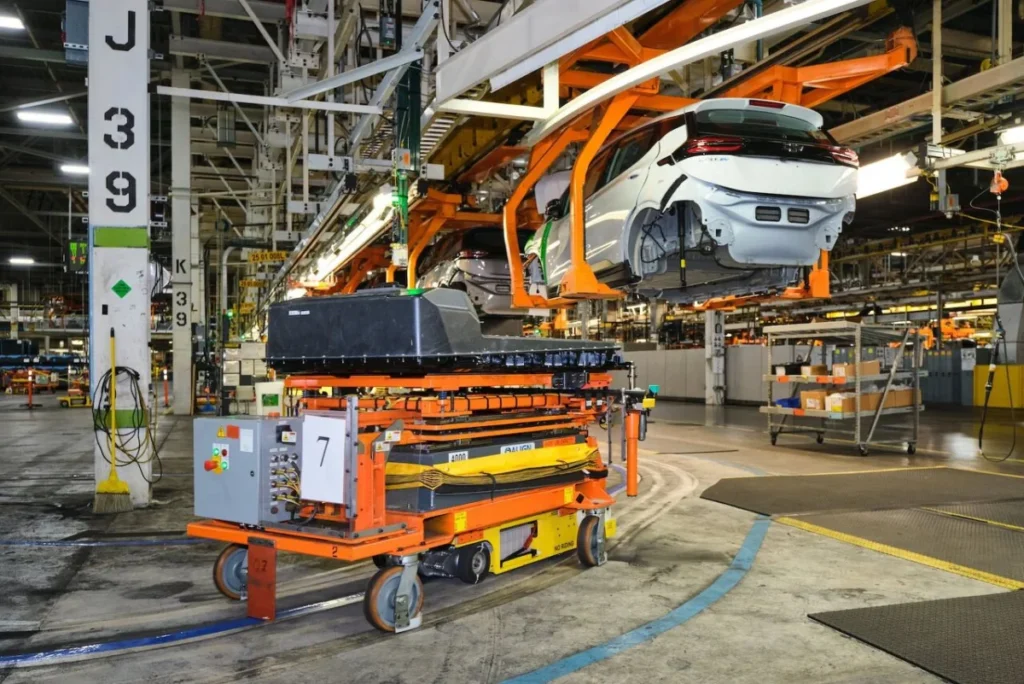
The physical act of replacing a high-voltage battery pack, while carrying significant implications, is described as a relatively straightforward procedure when undertaken by experienced technicians. The process involves the removal of approximately a dozen fasteners, disconnection of a handful of electrical connectors, and the draining and disconnection of two coolant hoses.
Safety protocols are paramount in such operations. Before any work commences on the high-voltage system, the vehicle’s 12-volt battery is disconnected. Subsequently, the high-voltage disconnect plug is disengaged, allowing technicians to safely handle the high-voltage cables and connectors without posing a risk of electrical shock. Once the old battery pack is removed and the replacement unit is installed, the cooling system undergoes a purging process to eliminate air pockets. Out of Spec Renew also indicated plans to re-inspect the coolant levels and ensure the battery is fully charged before returning the vehicle to its owner.
The entire physical swap, from start to finish, took approximately four and a half hours. The workshop’s labor estimate aligns closely with this timeframe, further demystifying the perceived complexity of EV battery servicing.
The Software Hurdle: The True Complexity of EV Battery Replacement
While the physical installation of a battery pack into a Bolt EV is described as relatively simple, the true challenge and a significant factor in the reputation of EV repair being "finicky" lies in the software integration. The process of "teaching" the car to recognize and trust the new battery pack consumed more time than the mechanical swap itself.
Programming and Calibration: The DIY Barrier
To enable the car to move again, software adjustments were required on two critical control modules. The access to programming for a single vehicle comes with a cost of $51. The initial attempts at programming were not seamless, with several failed attempts preceding the successful completion. This process also includes a vital battery capacity relearn function, which allows the vehicle’s onboard computer to recalibrate itself to the new pack’s actual state of charge and performance characteristics.
This programming requirement represents a significant barrier to potential DIY repairs of EV battery systems. While removing physical fasteners is within the capabilities of many vehicle owners, the intricate software access and the patient, iterative process of programming necessitate specialized knowledge and equipment, typically found in professional workshops.
The Total Cost of Revival
When all costs are aggregated, the repair of the 471,000-mile Bolt EV presents a clear financial picture. The used battery pack cost approximately $1,800. The labor at Out of Spec Renew amounted to slightly over $800, which is consistent with the general industry estimate that labor for Bolt battery replacements typically falls within the $800 to $1,000 range. This brings the total cost of this specific repair to just over $2,600.
A Realistic Benchmark for Major EV Repairs
Out of Spec Renew frames this entire repair exercise within the context of conventional internal combustion engine (ICE) vehicles, and the comparison proves illuminating. The cost of this battery replacement is comparable to the expense of fitting a replacement engine into a conventional gasoline-powered car. Engine swaps can range from $2,000 to $10,000, depending on the specific engine and the complexity of the labor involved. Viewed through this lens, a battery replacement that allows a vehicle with nearly half a million miles to continue its service is not an unusual or exorbitant expense; rather, it represents a normal, albeit significant, major repair.
Routine Maintenance for High-Mileage EVs
It is essential to acknowledge that a vehicle accumulating close to half a million miles would inevitably require substantial maintenance, irrespective of its powertrain. Prior to the battery issue, this particular Bolt EV had undergone routine high-mileage upkeep, including replacements of suspension components and wheel bearings – standard maintenance items for any vehicle of its age and mileage.
During the battery repair, the workshop also identified additional maintenance needs. These included a potential need for a gear reduction oil change and a leaking passenger-side axle seal, both of which require attention. These are not EV-specific issues but rather the routine upkeep expected of a vehicle that has been extensively used. This serves as a practical reminder that electric vehicles, like their gasoline counterparts, possess mechanical components that are subject to wear and tear over time.
The overarching lesson from this case is not that EV batteries are impervious to failure. This particular battery failed twice – once under the recall and again after accumulating over 330,000 miles. The crucial takeaway is that battery failure does not necessarily represent a terminal diagnosis for the vehicle or an insurmountable financial burden for the owner.
Implications for Used EV Buyers and the Future of EV Repair
For individuals considering the purchase of a used Chevrolet Bolt, understanding the potential costs associated with battery replacement is prudent. Budgeting between $2,500 and $3,000 for a replacement pack, in addition to $800 to $1,000 for labor, represents a realistic worst-case scenario planning. This approach allows for informed financial planning rather than relying on speculation. The availability of used battery packs, as demonstrated in this case, can significantly reduce these costs, provided they can be sourced reliably.
Navigating the EV Battery Landscape
A critical piece of advice for potential used EV buyers is to confirm whether the recall battery has already been installed in the vehicle. For this specific 2019 Bolt EV, the recall battery was installed around the 138,000-mile mark. It is reasonable to assume that a recall replacement battery is more likely to provide extended service life. Beyond this consideration, EV batteries should be viewed as major components with a finite lifespan, akin to combustion engines or transmissions. While they eventually wear out, their replacement cost is becoming increasingly comparable to traditional powertrain repairs, with the added benefit of a cleaner end-of-life process.
The continued evolution of EV technology, coupled with the increasing availability of independent repair shops specializing in EVs, suggests a future where battery replacements become more accessible and cost-effective. The resilience demonstrated by this 2019 Chevrolet Bolt EV, achieving nearly half a million miles with a relatively affordable battery revival, serves as a powerful testament to the growing maturity and long-term viability of electric vehicle technology. It challenges the preconceived notions of obsolescence and paints a more optimistic picture for the future of sustainable personal transportation.