Cambridge, MA – In a development that blurs the lines between the fantastical worlds of Disney films and the tangible realities of engineering, scientists at the Massachusetts Institute of Technology’s Computer Science and Artificial Intelligence Laboratory (CSAIL), in collaboration with Tianjin University (TJU) in China, have introduced a groundbreaking technology that imbues inanimate objects with a form of self-awareness and responsiveness. This innovation, dubbed "X-Hinges," leverages advanced 3D printing techniques to create interactive items capable of perceiving and reacting to human motion to perform specific tasks, heralding a new era of smart, adaptable physical objects.
The core of this advancement lies in the ability to precisely embed multiple conductive materials within 3D-printed objects, differentiating between the highly emissive materials used for sensors and the less interfering materials designated for conductive traces, akin to internal wiring. This distinction, previously a significant hurdle, addresses the challenge of signal interference that plagued earlier attempts. Historically, fabricating both sensor and trace components from the same material resulted in a confounding mix of signals, akin to trying to discern two radio stations broadcasting simultaneously. This signal ambiguity made it difficult for devices, such as a glove designed to guide a robotic hand, to accurately interpret user intent, leading to errors in motion detection and task execution. The X-Hinges software meticulously manages this complexity, enabling the creation of objects that can reliably distinguish and interpret nuanced human movements.
A Leap Forward in Interactive Fabrication
The genesis of this research can be traced back to the long-held human fascination with objects that possess life and agency, a theme deeply embedded in popular culture, most notably in animated films where everyday items like teacups and toys engage in dynamic interactions with their human counterparts. While these cinematic portrayals are rooted in magic, the CSAIL and TJU team’s work represents a scientific endeavor to replicate and enhance such capabilities through sophisticated engineering. Their X-Hinges software allows users to intricately customize designs, with the system automatically integrating two distinct materials during the 3D printing process. One material is optimized for sensors, designed to transmit the strongest possible signal, while the other serves as conductive pathways, minimizing interference. This precise material differentiation ensures that interactive commands are not lost in translation, paving the way for objects that respond in real-time to a wide array of applications, from miniature robots and smart home décor to sophisticated object-detection systems and interactive toys.
The X-Hinges interface offers a user-friendly platform where individuals can assemble interactive items by selecting and connecting various geometric shapes. Crucially, users can define how specific parts of the object should move. Unlike previous methods that were often limited to a single axis of motion, X-Hinges allows for up to three distinct "axes" of movement: compression, vertical (up and down), and lateral (side to side). For instance, when designing a robotic hand, a user can specify that the fingertips should move both vertically and laterally. The software then intelligently embeds sensors at the object’s joints, the natural points of articulation, to capture motion data from all designated angles. This multi-axis sensing capability allows the fabricated device to possess a far richer understanding of user interactions and respond with greater dynamism.
"It’s kind of like adding a conscious element to everyday objects," explains Jiaji Li, an MIT electrical engineering and computer science (EECS) postdoctoral fellow and CSAIL researcher, who is a senior author on the paper introducing this work. "What you get is objects that better understand how they’re being used and have more ways to respond. In the same way an AI agent is programmed to make certain decisions based on our instructions, these creations have built-in sensing to adaptively react to human touch." This sentiment underscores the project’s ambition to imbue static objects with a form of physical intelligence, enabling them to interpret and act upon their environment and user interactions.
Demonstrating the Power of X-Hinges: From Smart Gloves to Adaptive Lighting
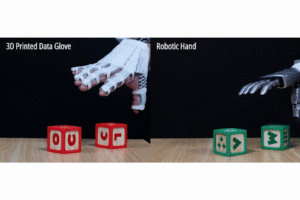
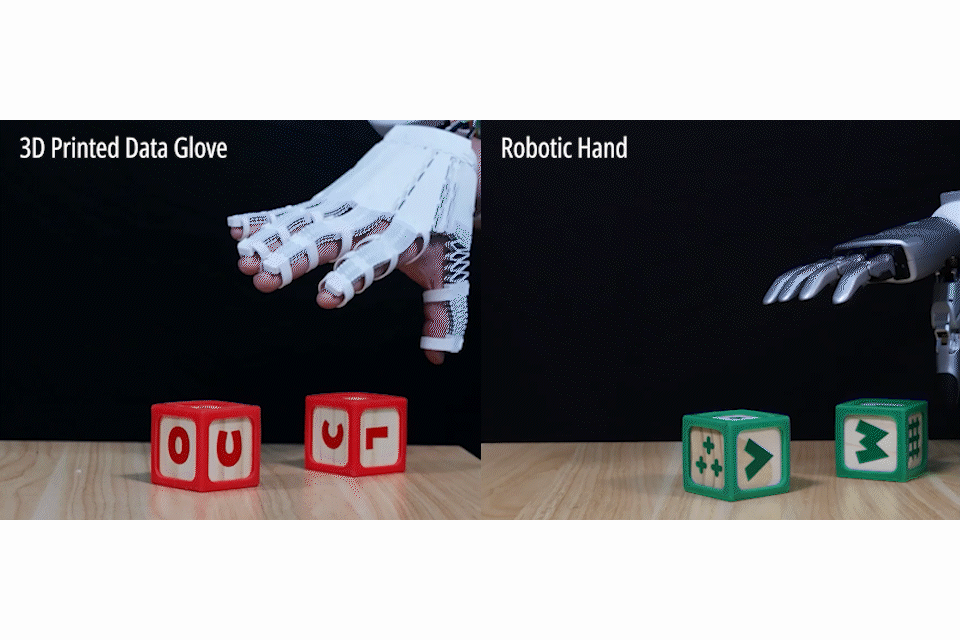
The practical applications of X-Hinges have been vividly demonstrated through a series of innovative prototypes developed by Jiaji Li and lead author Xiang Chang, a TJU PhD student and visiting researcher at CSAIL. Among these creations is a glove designed to teach robots how to grasp objects. This glove precisely calibrates to the user’s hand size and then meticulously records the bending angles of the finger joints via its integrated sensors. This motion data is then rapidly transmitted to a humanoid robotic hand, enabling it to accurately mimic the human grasp. Such a capability holds significant promise for industries like manufacturing and logistics, where robots often need to quickly learn and adapt to new object manipulation tasks. The ability to "teach" robots through direct human demonstration, captured by responsive wearable technology, could dramatically accelerate training processes and improve operational efficiency.
Another compelling example is a compact, origami-inspired lamp. This adaptive lighting device senses when it is pinched closed and adjusts its brightness accordingly. When activated, the lamp unfolds from a seemingly simple folded paper form into a functional light source, showcasing an elegant integration of aesthetics and interactive technology. This type of adaptive lighting could find applications in personal spaces, enhancing user comfort and convenience through intuitive physical interaction.
The X-Hinges technology also extends to object recognition systems. Researchers demonstrated a device capable of identifying objects placed upon it with remarkable speed. For instance, when a banana is placed on its surface, the device recognizes the fruit almost instantaneously by analyzing the tactile data captured by its sensors. This level of physical awareness has far-reaching implications for security and retail environments, potentially enabling more sophisticated detection systems in airports, grocery stores, and other public spaces. Imagine a smart shelf that can automatically log inventory or a luggage scanner that can confirm the contents of a bag through tactile analysis.
The design process facilitated by X-Hinges is as user-centric as the resulting objects are interactive. The software features an intuitive interface that guides users through the creation of interactive objects from the ground up. Users can define the visual appearance and the movement capabilities of each component of their design. For instance, the researchers recreated the distinctive look of a cartoon shark for a video game controller. They selected from four fundamental shapes provided by the software—a custom option, cylinder, rectangle, and thin outline—and then opted for a custom shape to achieve the shark’s tail. They then specified the desired movement for the tail, enabling it to move up and down, much like a joystick. The program then automatically embedded the necessary sensors at the appropriate locations within the tail structure, after which the device was 3D-printed.
Addressing Challenges and Charting the Future
A key differentiator of X-Hinges, as highlighted by Xiang Chang, is its capacity for multi-axis motion. "Most methods only allow for one axis of motion, often due to signal interference," Chang notes. "X-Hinges enables your 3D-printed item to move from three angles. Ultimately, you get a design with the intended movement you want. It also records motion data in each of those areas at the same time, making the device responsive to different kinds of interactions." This multi-dimensional responsiveness opens up a vast landscape of possibilities for creating more sophisticated and intuitive interactive devices.
The researchers envision a future where everyday objects transcend their singular, predetermined functions and evolve into versatile, interactive gadgets. Just as chatbots leverage digital intelligence to respond to textual prompts, objects equipped with X-Hinges could utilize a form of "physical intelligence" to execute tasks in response to physical interactions. This could revolutionize how we interact with our environment, transforming mundane objects into dynamic extensions of our will and intent.
However, the path forward is not without its challenges. A significant hurdle currently faced by X-Hinges is a calibration bottleneck. The inherent variability in the electrical element layout during the 3D printing process means that two outwardly identical devices may produce different sensor readings. This lack of precise consistency is problematic for applications requiring accurate and repeatable measurements, such as a deformable fitness glove intended for use by multiple individuals. To address this, Chang and Li have developed a computer vision system capable of recalibrating outputs to ensure data accuracy across identical items. Their long-term goal, however, is to develop an integrated, built-in signal recalibration mechanism to streamline this process.
The ambition driving Jiaji Li’s research extends to enabling actuation and sensing to "grow" directly within a 3D-printed object, rather than being added as separate components post-fabrication. This philosophy aligns with his previous work on tendon-driven mechanisms, which endowed objects with the ability to move. X-Hinges represents a significant step in building upon this capability by integrating sensing. The ultimate next step, as Li articulates, is to combine actuation and sensing within a single printing process. This fusion would represent a paradigm shift, giving rise to novel physical platforms for embodied intelligence and AI agents, where the physical form and its interactive capabilities are intrinsically linked from their inception.
The research paper detailing X-Hinges was authored by Jiaji Li, Xiang Chang, MIT associate professor of EECS and CSAIL principal investigator Stefanie Mueller, and recent TJU graduate Haiyang Yan. Their groundbreaking work received partial support from a postdoctoral research fellowship from Zhejiang University and the MIT-GIST Program. The team is slated to present their findings at the ACM Symposium on User Interface Software and Technology in early November, where they anticipate further discussion and potential collaborations that could accelerate the adoption of this transformative technology. The implications of X-Hinges are profound, suggesting a future where our physical world becomes more intuitive, responsive, and seamlessly integrated with our digital lives.