In a significant development underscoring the U.S. Department of Defense’s increasing reliance on advanced manufacturing technologies, Nikon Advanced Manufacturing (Nikon AM) has secured a contract from the Pentagon to deliver specialized additive manufacturing (AM) systems. While not directly tied to the production of solid rocket motors (SRMs), a critical area where 3D printing faces its first major scaling challenge within the U.S. defense sector, this agreement signals a broader optimism within the military regarding the potential of 3D printing to bolster domestic production capabilities and accelerate the delivery of vital munitions.
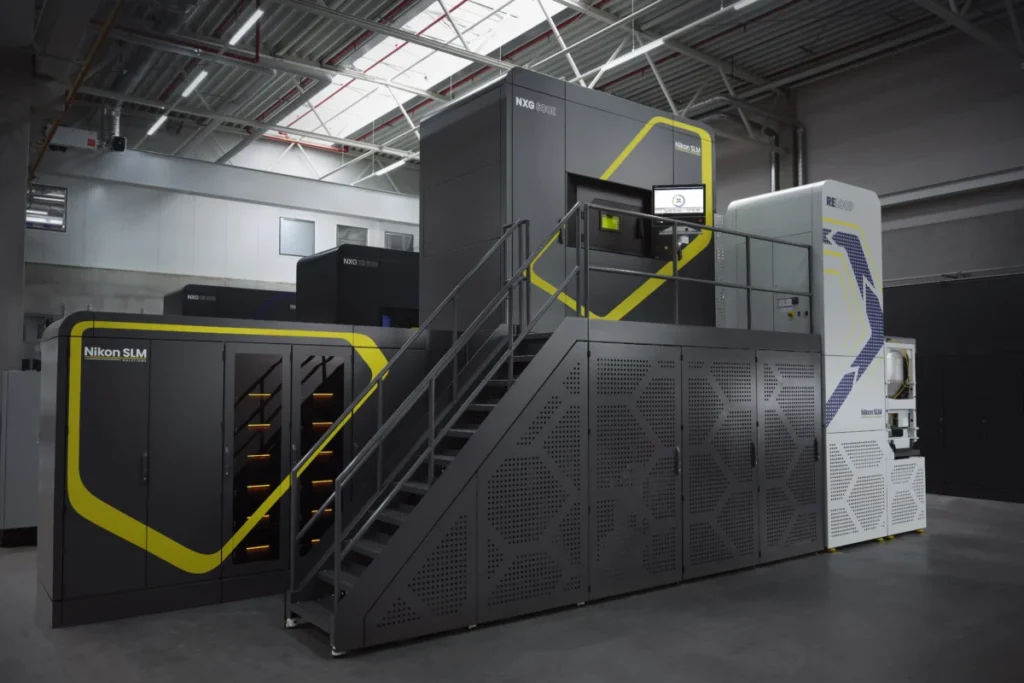
The contract mandates that Nikon AM will develop and supply multiple units of its Nikon SLM Solutions NXG-E system, notably customized with an extended two-meter z-height. These state-of-the-art machines are slated for the production of mid-bodies for Tomahawk Land Attack Missiles (TLAMs). This strategic investment suggests a forward-looking approach by the Pentagon, not only to address current munition delivery bottlenecks caused by protracted lead times but also to explore the broader applicability of these advanced AM systems for future defense applications.
A Strategic Framework for Production Readiness
Nikon AM’s contract falls under the Cornerstone Other Transaction Agreement (COTA) framework, a specialized subset of the broader Other Transaction Authority (OTA) mechanism. Established in 2018, the OTA is a unique governmental tool that empowers the U.S. military to engage in business arrangements outside the traditional budgetary and procurement processes, thereby facilitating agility and innovation. The COTA category, managed under the Industrial Base Analysis and Sustainment (IBAS) program, is specifically designed to streamline the pathway to production-readiness for strategically critical infrastructure and supply chains. This designation indicates the Pentagon’s urgent need to establish and enhance domestic manufacturing capabilities for key defense components.
The decision to invest in large-format metal AM for Tomahawk missile components is not arbitrary. In a previous interview, Hamid Zarringhalam, CEO of Nikon AM, highlighted Tomahawks as prime candidates to benefit from the expansion of "large-format metal AM" within the U.S. defense sector. This perspective aligns with the current contract, further reinforcing the notion that the Pentagon views this technology as a critical enabler for modernizing its arsenal and supply chains.
Bridging the Gap: From SRMs to Missile Components
The author’s prior assertion that solid rocket motors represent the initial significant scaling challenge for 3D printing in real-world military production environments is crucial context for understanding the implications of this new contract. While Tomahawk missiles do not solely rely on SRMs, they are integral to the missile’s initial launch sequence. The military’s focused efforts on developing 3D printing for the SRM supply chain, primarily involving polymer machines for propellant production, are well-documented. However, the Nikon AM contract signifies a parallel and complementary effort to ramp up metal AM production for other critical missile components.
This dual approach underscores a layered strategy by the Department of Defense. It suggests a strong belief that the AM-enabled build-up for SRMs will prove successful. It would be counterintuitive for the Pentagon to pursue AM for even more complex missile components if it lacked confidence in its ongoing AM adoption strategy. The production of mid-bodies for Tomahawks, which are arguably more intricate to manufacture than propellant grains, demonstrates a significant leap in perceived AM maturity and reliability within the defense industrial base.
Data and Trends in Additive Manufacturing for Defense
The global additive manufacturing market, particularly in the aerospace and defense sector, has witnessed substantial growth. Market research indicates a Compound Annual Growth Rate (CAGR) of over 20% for metal AM in defense applications over the past five years. This growth is driven by the demand for faster production cycles, reduced part costs, enhanced design flexibility, and the ability to create complex geometries not achievable with traditional manufacturing methods.

Specifically for missile systems, AM offers advantages such as:
- Reduced Lead Times: Traditional manufacturing of complex missile components can take months or even years. AM can significantly shorten this timeline, allowing for more rapid deployment and replacement of critical assets.
- Weight Reduction: AM enables the creation of lighter components by optimizing designs and using advanced materials, which can improve missile range, payload capacity, and overall performance.
- Part Consolidation: Complex assemblies can often be redesigned as single, monolithic parts through AM, reducing assembly time, the number of potential failure points, and overall system complexity.
- On-Demand Production: AM facilitates distributed manufacturing and the ability to produce parts on-demand, reducing the need for large inventories and mitigating supply chain vulnerabilities.
Accelerating Munitions Delivery: The Pentagon’s Imperative
The long lead times associated with traditional manufacturing have been a persistent challenge for the U.S. military, particularly in the current geopolitical climate. The Pentagon’s investment in Nikon AM’s large-format SLM systems directly addresses this imperative. The customized NXG-E machines, with their extended z-height, are capable of producing larger components, which are essential for systems like the Tomahawk.
The urgency implied by the COTA designation suggests that the military anticipates relatively quick delivery of these systems. This aligns with the broader national security objective of strengthening the domestic industrial base and ensuring the availability of critical defense systems. The move towards AM for missile components is not merely about technological advancement; it is a strategic imperative to ensure national security and maintain a technological edge.
Broader Implications for the Defense Supply Chain
The implications of this contract extend far beyond the immediate production of Tomahawk mid-bodies. It signals a significant step towards integrating additive manufacturing into the core of the U.S. defense supply chain for one of its most sought-after weapon systems. This transition has the potential to:
- Enhance Competitiveness: A more agile and efficient AM-enabled supply chain can reduce costs and improve the overall competitiveness of U.S. defense manufacturing.
- Foster Innovation: The adoption of AM encourages innovation in material science, design, and manufacturing processes, leading to the development of next-generation defense capabilities.
- Strengthen Alliances: As the U.S. allies increasingly seek advanced weaponry like the Tomahawk, the ability to leverage AM for production can streamline international cooperation and support.
Global Reach and Distributed Manufacturing
The strategic importance of the Tomahawk missile system is evident in its limited availability to allied nations, with only four U.S. allies currently capable of acquiring it. Recent agreements with Japan and the Netherlands to purchase Tomahawks will undoubtedly place additional strain on existing supply chains. Furthermore, nations like Ukraine have expressed interest in acquiring these advanced missiles, highlighting the growing global demand.
The Nikon AM contract also touches upon the critical concept of distributed manufacturing, a key advantage of additive manufacturing. If allied nations, such as Japan, were to begin producing components domestically for the Tomahawks they acquire from the U.S., the involvement of Nikon AM – a U.S. subsidiary of a major Japanese conglomerate – could foster greater trust and collaboration among all parties. This potential for localized production, facilitated by advanced AM capabilities, offers a more resilient and responsive supply chain solution for international defense partnerships.
A Glimpse into the Future of Defense Manufacturing
The Pentagon’s investment in Nikon AM’s advanced metal 3D printing technology represents a tangible commitment to modernizing its defense industrial base. This contract for Tomahawk missile components, while distinct from SRM production, serves as a powerful indicator of the military’s burgeoning confidence in additive manufacturing’s ability to deliver at scale. By embracing large-format metal AM, the U.S. is not only addressing immediate production challenges but also laying the groundwork for a more agile, innovative, and resilient future in defense manufacturing, with implications that resonate across its domestic capabilities and international alliances. The ability to produce complex, critical components like missile mid-bodies through AM signifies a significant maturation of the technology and its integration into the very fabric of national security.