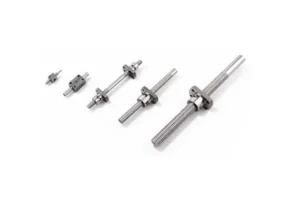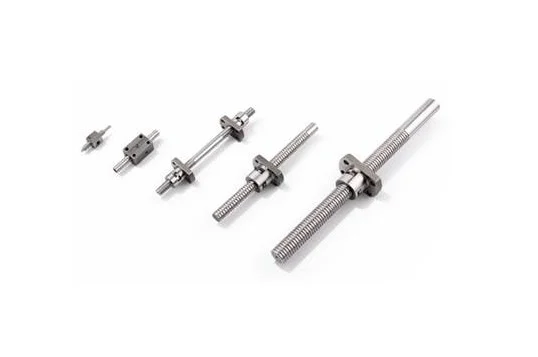
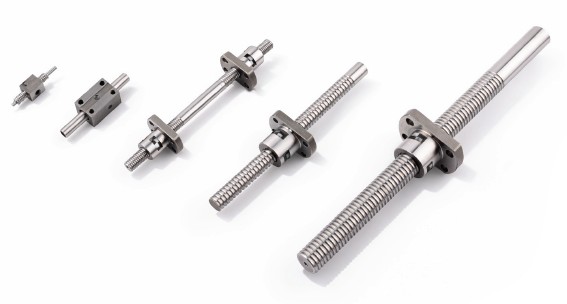
DINGS Motion USA has strategically expanded its comprehensive precision motion control portfolio with the introduction of new miniature ball screw and nut assemblies, specifically engineered to meet the demanding requirements of Original Equipment Manufacturers (OEMs) in advanced linear motion applications. This significant product line enhancement is designed to cater to systems that necessitate exceptional efficiency, minimal backlash, and a high degree of application-specific customization, thereby addressing critical gaps in the rapidly evolving industrial automation landscape.
The Strategic Expansion: DINGS’s Vision in Precision Motion
The launch of these miniature ball screw assemblies marks a pivotal moment for DINGS Motion USA, a company with a long-standing reputation for innovation in motion control solutions. Established with a commitment to delivering high-performance components, DINGS has consistently focused on supporting industries where precision, reliability, and custom engineering are paramount. This latest offering underscores the company’s forward-thinking approach, recognizing the accelerating trend towards smaller, faster, and more precise automation systems across various sectors. The decision to invest in miniature ball screw technology stems from a thorough analysis of current market needs and anticipated future demands, positioning DINGS as a key enabler for next-generation automated machinery.
The development process for these new assemblies, while not explicitly detailed in its entirety, is understood to have spanned several years, involving extensive research and development. Drawing upon DINGS’s deep expertise in motor technology and linear mechanics, the engineering teams have meticulously designed these components to overcome common limitations associated with standard, off-the-shelf ball screw solutions. The timeline of such a product development typically involves stages from conceptualization and material selection to prototyping, rigorous testing, and ultimately, market introduction. While the precise launch date for these specific assemblies is anticipated in mid-2026, the strategic groundwork has been laid well in advance, reflecting a proactive response to industry shifts.
Addressing Evolving OEM Demands in Precision Automation
The modern industrial landscape is characterized by an insatiable demand for enhanced automation, driven by factors such as increasing labor costs, the need for higher throughput, and the pursuit of unparalleled product quality. This push for automation is particularly pronounced in industries like semiconductor manufacturing, medical device fabrication, laboratory automation, robotics, and precision assembly. In these fields, the physical footprint of machinery is shrinking, while the required accuracy and speed of movement are simultaneously increasing. This dichotomy presents a significant challenge for OEMs who often find that conventional linear motion components fall short of meeting the stringent requirements of their innovative designs.
Engineers in these advanced sectors frequently encounter limitations with standard ball screw assemblies. These challenges manifest in several critical areas:
- Limited Customization: Off-the-shelf components often come in fixed configurations, offering little flexibility to optimize for specific load conditions, travel distances, or environmental factors. This forces OEMs to compromise on design or undertake costly and time-consuming modifications.
- Extended Lead Times: Sourcing highly specialized or customized components can lead to protracted waiting periods, delaying product development cycles and time-to-market for new machines. In fast-paced industries, such delays can translate into significant competitive disadvantages.
- Fragmented Sourcing: The necessity to procure motors, mechanical components, and control systems from multiple different suppliers introduces complexities in supply chain management, integration challenges, and potential compatibility issues. This multi-vendor approach can inflate costs, increase administrative overhead, and extend troubleshooting times.
DINGS Motion USA’s new miniature ball screw assemblies directly confront these challenges by offering a solution rooted in flexibility and integrated design.
The Criticality of Miniature Ball Screw Assemblies
Ball screws are fundamental components in linear motion systems, converting rotary motion into precise linear motion with high efficiency and accuracy. They are preferred over lead screws in many applications due to their lower friction, higher load capacity, and superior positioning accuracy. In miniature applications, these characteristics become even more critical.
The "miniature" aspect refers to the smaller diameters and pitches of these screws, typically ranging from a few millimeters up to approximately 16mm. Despite their small size, they must maintain exceptional performance metrics:
- High Efficiency: Crucial for reducing power consumption and heat generation, particularly in battery-powered or energy-sensitive applications. Ball screws achieve efficiencies of over 90% due to the rolling contact of the balls, significantly surpassing the sliding friction of lead screws.
- Low Backlash: Backlash, the play or lost motion between the screw and nut, is detrimental to positioning accuracy. Miniature applications, by their very nature, demand ultra-high precision. DINGS’s assemblies are engineered to minimize backlash, often through preloading mechanisms, ensuring repeatable and accurate positioning down to micron levels.
- Application-Specific Customization: This is perhaps the most defining feature. It acknowledges that a one-size-fits-all approach is no longer viable for cutting-edge automation. Customization allows OEMs to tailor parameters such as screw diameter, lead, nut design, material, surface treatments, and end machining to perfectly match the application’s unique force, speed, accuracy, and environmental requirements.
These features are not merely desirable; they are often prerequisites for breakthrough innovations in miniaturized automation, enabling devices that are more compact, consume less power, and operate with unprecedented precision.
Engineering for Customization: A Collaborative Approach
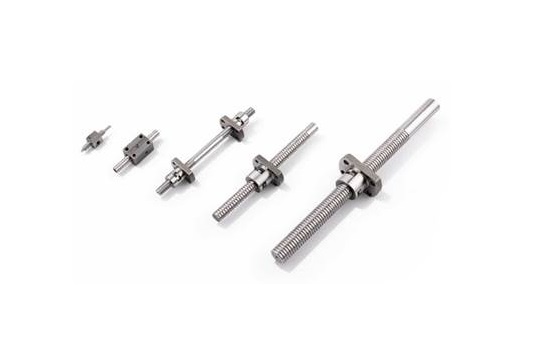
At the heart of DINGS’s new offering is its philosophy of application-specific customization, moving away from the limitations of fixed catalog configurations. This approach is not simply about offering a few variations; it’s about a deep engineering collaboration with OEM partners.
DINGS’s process typically involves:
- Detailed Requirements Gathering: Working closely with OEM engineering teams to understand the specific performance criteria, environmental conditions, duty cycle, load profiles, and space constraints of their application.
- Design Modification or New Development: Based on these requirements, DINGS engineers either modify existing standard assembly designs or embark on developing entirely custom solutions. This could involve altering the ball screw’s pitch for specific speed-to-force ratios, adjusting the screw diameter for rigidity or space, or designing a unique nut geometry for specialized mounting or load distribution.
- Material and Coating Selection: Beyond geometry, customization extends to material science. High-grade stainless steels, for example, might be chosen for medical or corrosive environments. Specialized coatings (e.g., hard chrome, DLC – diamond-like carbon) can be applied to enhance wear resistance, reduce friction, or improve corrosion protection.
- End Machining and Integration Features: The ends of the ball screw are precisely machined to integrate seamlessly with bearings, motor couplings, and other components of the linear axis. This includes features like journals, keyways, and threads, all tailored to the OEM’s design.
This collaborative engineering model ensures that the miniature ball screw assembly is not just a component, but an optimized part of a larger, integrated motion system, leading to superior overall performance and reliability for the OEM’s final product.
Vertical Integration: A Foundation for Quality and Efficiency
A key differentiator highlighted by DINGS is its vertically integrated ball screw manufacturing process. Vertical integration, in this context, means that DINGS controls a significant portion, if not all, of the manufacturing steps, from raw material procurement to final assembly and testing. This contrasts sharply with companies that outsource various stages of production.
The benefits of DINGS’s vertical integration are multifaceted and profound:
- Enhanced Quality Control: By overseeing every step of the manufacturing process, DINGS can implement stringent quality checks at each stage. This minimizes variations, ensures adherence to tight tolerances, and guarantees the consistent performance characteristics required for precision applications. For miniature components, where tolerances are often measured in microns, this level of control is indispensable.
- Greater Customization Flexibility: Having in-house control over manufacturing processes allows for rapid adjustments and modifications to designs. This agility is crucial when developing application-specific solutions, as it enables DINGS to experiment with different geometries, materials, and processes without relying on external vendors.
- Optimized Production Scheduling: Vertical integration provides DINGS with superior control over its production timelines. This ability to manage the entire manufacturing flow internally significantly reduces dependency on external supplier lead times, which are often unpredictable.
- Reduced Lead Times: For custom configurations, this internal control can dramatically shorten lead times from what might typically be months down to a matter of weeks. This acceleration is a critical advantage for OEMs facing aggressive development schedules and pressure to bring new products to market quickly.
- Cost Efficiency: While initial investment in vertical integration can be substantial, it often leads to long-term cost efficiencies through optimized processes, reduced waste, and elimination of markups from external suppliers. These savings can sometimes be passed on to OEM partners.
This integrated approach not only reinforces DINGS’s commitment to quality but also positions it as a highly responsive and reliable partner for OEMs seeking customized, high-performance linear motion solutions.
The Advantage of a Unified Linear Motion System
Beyond individual components, DINGS is promoting a holistic view of linear motion, emphasizing the benefits of a complete system approach. The addition of ball screw assemblies significantly expands DINGS’s linear motion offering, allowing OEMs to source multiple critical system elements from a single, trusted supplier. This integrated offering typically includes:
- High-Performance Motors: Stepper motors, servo motors, or specialized linear motors tailored for precise control and dynamic performance.
- Ball Screw Assemblies: The newly introduced miniature components, customized for specific applications.
- Linear Guides/Bearings: Components that provide rigid and accurate support for linear movement, complementing the ball screw.
- Encoder Feedback Systems: High-resolution encoders (rotary or linear) that provide precise position feedback for closed-loop control, essential for accuracy and repeatability.
- Control Electronics: Drive systems and controllers that interface with the motor and encoder to execute precise motion profiles.
The advantages of sourcing these interconnected components from a single supplier are substantial:
- Simplified Integration: Components are designed to work seamlessly together, minimizing compatibility issues and reducing the engineering effort required for integration. This translates to faster development cycles and fewer unforeseen problems during commissioning.
- Reduced Development Time: With pre-validated component compatibility and unified technical support, OEMs can accelerate their product development timelines compared to the complexities of coordinating multiple vendors.
- Optimized Performance: DINGS’s engineering team can optimize the entire linear axis as a system, ensuring that each component contributes to achieving the desired overall performance (speed, accuracy, life) rather than optimizing individual parts in isolation.
- Streamlined Supply Chain: Consolidating suppliers reduces procurement complexity, administrative overhead, and inventory management challenges.
- Unified Support and Troubleshooting: A single point of contact for technical support simplifies troubleshooting and maintenance, ensuring faster resolution of any issues that may arise.
This comprehensive approach allows OEMs to focus on their core product innovation, offloading the complexities of motion system design and integration to a specialist like DINGS.
Market Context: The Growing Need for Precision
The global market for linear motion systems is robust and expanding, projected to reach over $10 billion by 2028, growing at a compound annual growth rate (CAGR) of approximately 6-7%. This growth is largely fueled by the relentless march of industrial automation, Industry 4.0 initiatives, and the increasing adoption of robotics. Within this broader market, the miniature and precision linear motion segment is experiencing even more rapid expansion.
Key drivers for this demand include:
- Miniaturization Trend: Products across industries, from consumer electronics to medical devices, are becoming smaller and more complex, requiring equally compact and precise manufacturing equipment.
- Higher Throughput: Factories demand faster cycle times without compromising accuracy, necessitating high-speed, high-precision motion components.
- Enhanced Accuracy and Repeatability: Applications like semiconductor lithography, DNA sequencing, and micro-assembly require positioning accuracies in the sub-micron range, pushing the boundaries of mechanical engineering.
- Energy Efficiency: The drive for sustainable manufacturing and reduced operational costs puts pressure on components to be highly efficient, minimizing energy consumption and heat generation.
- Customization for Competitive Edge: OEMs are constantly seeking to differentiate their products, and customized motion solutions allow them to achieve unique performance characteristics that standard components cannot offer.
DINGS’s introduction of miniature ball screw assemblies is perfectly timed to capitalize on these market dynamics, offering solutions that are directly aligned with the most pressing needs of advanced manufacturing.
Industry Applications: Where Precision Matters Most
The applications for DINGS’s new miniature ball screw assemblies are diverse and critical, spanning industries where precision and reliability are non-negotiable:
- Medical Devices: Surgical robotics, diagnostic equipment, laboratory automation, liquid handling systems, and drug delivery mechanisms all require extremely precise and reliable linear motion in compact footprints.
- Semiconductor Manufacturing: Equipment for wafer handling, inspection, bonding, and testing relies on ultra-high precision linear stages to ensure the integrity of microscopic features.
- Robotics: Small collaborative robots (cobots), inspection robots, and pick-and-place systems benefit from compact, high-performance linear actuators.
- Laboratory Automation: Automated microscopes, sample preparation systems, and analytical instruments demand precise positioning for repeatable experimental results.
- Aerospace & Defense: Miniaturized sensors, targeting systems, and optical alignment equipment often operate in demanding environments where custom precision is vital.
- Precision Metrology: Measuring instruments and calibration equipment require highly accurate and stable linear motion to ensure measurement integrity.
- 3D Printing & Additive Manufacturing: High-resolution 3D printers and additive manufacturing systems rely on precise linear motion for layer deposition and build accuracy.
In each of these sectors, the ability to tailor linear motion components to exact specifications, coupled with high efficiency and low backlash, provides a significant competitive advantage to OEMs.
Expert Perspectives and Market Implications
While direct quotes from industry analysts are not available for this specific announcement, the implications are clear. An industry expert might observe that "DINGS Motion USA’s move to strengthen its miniature ball screw offering is a strategic imperative in today’s precision-driven market. By focusing on customization and vertical integration, they are directly addressing the pain points of OEMs who are constantly pushing the boundaries of miniaturization and performance. This approach not only shortens development cycles but also enables the creation of truly differentiated products."
From a competitive standpoint, this move positions DINGS as a formidable player in the high-precision linear motion segment, challenging competitors who may rely more on standard product lines or fragmented supply chains. It also signals a broader industry trend where suppliers are increasingly offering integrated solutions rather than just discrete components, recognizing the value of simplified engineering and supply chain management for their customers. The commitment to reducing lead times from "months to weeks" for custom configurations is particularly impactful, as time-to-market is a critical factor in many high-tech industries.
Looking Ahead: DINGS’s Role in Future Automation
DINGS Motion USA’s expansion into miniature ball screw and nut assemblies is more than just a product launch; it represents a strategic commitment to enabling the next generation of industrial automation. By providing OEMs with highly customizable, vertically integrated, and precisely engineered linear motion solutions, DINGS is poised to play a crucial role in the development of more compact, efficient, and accurate automated systems across a multitude of industries. The company’s focus on collaborating with engineering teams to optimize the full axis rather than just a single component demonstrates a deep understanding of the systemic challenges faced by manufacturers. As automation continues its rapid evolution, solutions that offer both granular customization and integrated performance will be indispensable, and DINGS appears well-positioned to meet this escalating demand.
For further information on DINGS Motion USA’s expanded portfolio of precision motion solutions and their new miniature ball screw assemblies, interested parties are encouraged to visit dingsmotionusa.com.