BRISBANE, Australia – Emesent, a pioneering Australian company at the forefront of autonomous mapping technology, has successfully secured $17 million in new funding. This significant capital injection is earmarked to substantially expand the manufacturing capacity of its cutting-edge autonomous mapping systems and to accelerate the development of its artificial intelligence (AI)-powered robotics technology. The announcement marks a pivotal moment for the Queensland-based firm, positioning it for amplified global reach and deeper penetration into critical industrial sectors.
The company has confirmed that a primary allocation of this investment will bolster manufacturing capabilities at its production facility located in Wacol, Queensland, Australia. Concurrently, a substantial portion will be directed towards advancing Emesent’s proprietary Cortex AI autonomy platform and its Aura cloud software. These technological platforms are central to the company’s offerings, enabling sophisticated autonomous operation and data management in complex, GPS-denied environments.
The Strategic Investment and Its Immediate Objectives
The $17 million funding round represents a robust vote of confidence from investors in Emesent’s innovative technology and its market potential. Charles Miller, CEO of Emesent, articulated the profound impact of this financial boost, stating, “This investment accelerates everything we’re building at Emesent. We can scale our manufacturing, push our AI and autonomy capabilities further, and deepen our presence in the sectors that matter most to Australia’s future, including mining, defense, and critical infrastructure.” Miller’s statement underscores the multi-faceted strategy behind the investment: enhancing production, driving technological innovation, and consolidating market position within key industries vital to national economic and strategic interests.
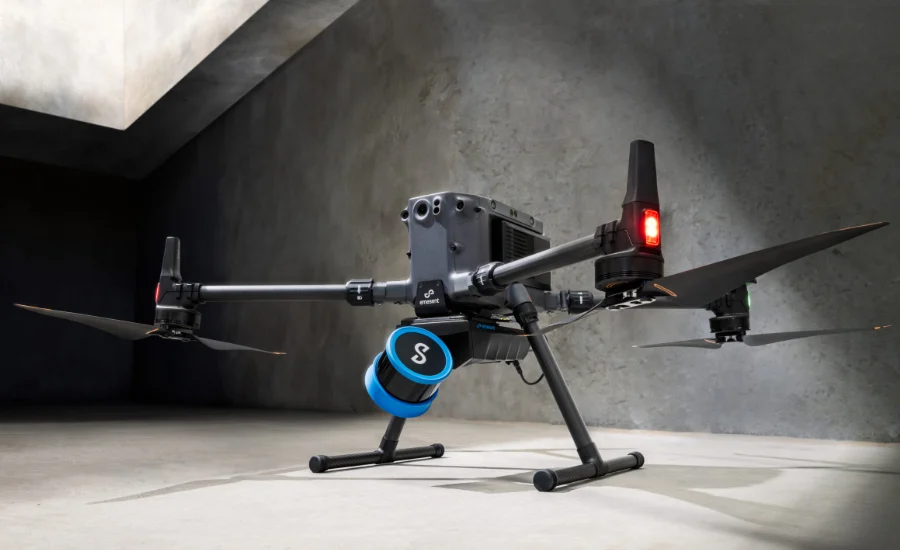
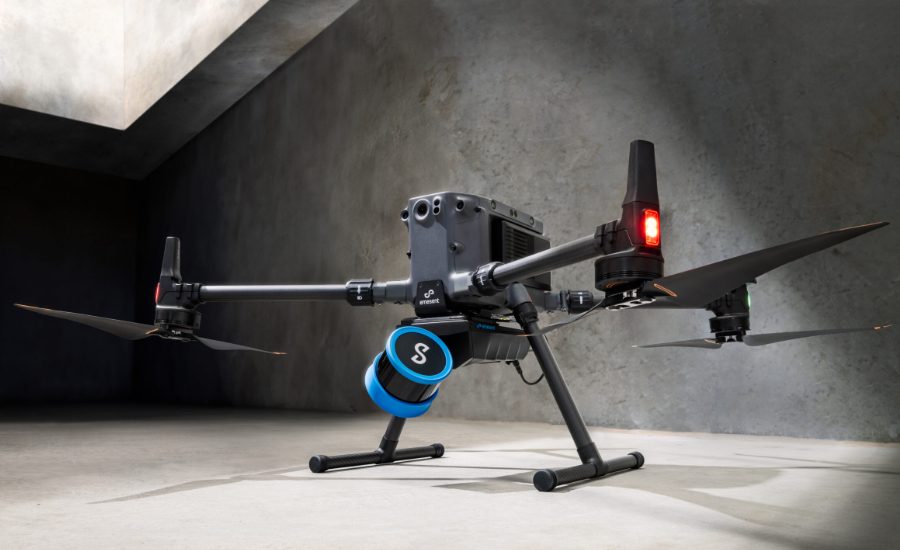
The immediate objectives are clear: ramp up production to meet escalating global demand for its robotics platforms, particularly the Hovermap STX LiDAR payload and GX1 scanner. This expansion is not merely about increasing output but also about optimizing supply chains and manufacturing processes to ensure efficiency and quality at scale. Furthermore, the accelerated development of the Cortex AI and Aura cloud platforms will enable Emesent to offer even more sophisticated, intelligent, and integrated solutions to its clientele, pushing the boundaries of what autonomous systems can achieve in challenging operational landscapes.
Emesent’s Journey: From Innovation to Global Deployment
Emesent’s roots trace back to the pioneering research conducted within CSIRO’s Data61 robotics and autonomous systems group, Australia’s national science agency. Spun out as a commercial entity in 2018, Emesent quickly emerged as a leader in creating advanced robotic solutions for mapping and navigation in challenging environments. This genesis from a world-renowned research institution provided a strong foundation of scientific rigor and innovation that has underpinned its rapid ascent.
The company’s flagship product, Hovermap, was commercially launched in 2019, quickly gaining traction for its unique ability to combine simultaneous localization and mapping (SLAM) technology with autonomous operation. This fusion allows the system to build accurate 3D maps while simultaneously navigating complex, often hazardous, and GPS-denied areas. Early adoption in the mining sector proved its value, demonstrating significant improvements in safety, efficiency, and data quality. The milestone of Hovermap being deployed at over 200 mining sites worldwide within a few years of its launch stands as a testament to its effectiveness and market acceptance. This trajectory from academic innovation to widespread industrial deployment highlights Emesent’s capacity to translate cutting-edge research into practical, high-value solutions.
Powering Autonomy: Understanding Hovermap and Cortex AI
At the core of Emesent’s success are its sophisticated technological platforms. The Hovermap system, featuring the STX LiDAR payload and GX1 scanner, exemplifies the company’s engineering prowess. LiDAR, or Light Detection and Ranging, technology uses pulsed laser light to measure distances and create precise 3D representations of an environment. Unlike traditional mapping methods, LiDAR can penetrate dust, smoke, and operate effectively in low-light conditions, making it ideal for subterranean mining operations or complex infrastructure inspections.
Simultaneous Localization and Mapping (SLAM) is the algorithmic backbone that allows Hovermap to build a map of an unknown environment while simultaneously keeping track of its own location within that map. This capability is crucial for autonomous navigation in areas where GPS signals are unavailable or unreliable, such as underground mines, dense urban canyons, or inside buildings. The system’s ability to operate autonomously in these conditions drastically reduces the risks to human personnel, minimizes operational downtime, and gathers data with unparalleled accuracy and density.
The Cortex AI autonomy platform acts as the "brain" of Emesent’s systems, enabling intelligent decision-making, obstacle avoidance, and mission planning in real-time. This AI layer allows the robotic systems to adapt to dynamic environments, perform complex tasks with minimal human intervention, and learn from collected data to improve performance over time. Complementing this, the Aura cloud software provides a robust framework for data processing, visualization, and management, allowing users to efficiently extract insights from the vast amounts of 3D data collected by Hovermap. Together, these technologies form a powerful ecosystem that redefines the capabilities of autonomous mapping and inspection.
Industry Impact: Revolutionizing Mining, Defense, and Infrastructure
Emesent’s technologies are not merely incremental improvements; they represent a paradigm shift in how industries operate, particularly in sectors characterized by hazardous conditions, vast scales, and the need for precision data. The mining industry, in particular, has been a significant beneficiary. Traditional manual surveying in underground mines is time-consuming, dangerous, and often provides less comprehensive data. Hovermap’s ability to autonomously map active mine fronts, inaccessible stopes, and post-blast environments transforms safety protocols and operational efficiency. It enables miners to gain rapid insights into geological structures, monitor progress, and ensure structural integrity without exposing personnel to risk. The deployment at over 200 mining sites globally underscores the industry’s widespread recognition of this value proposition.
Beyond mining, Emesent’s systems are finding critical applications in architecture, engineering, and construction (AEC). For instance, accurate 3D models of existing structures or construction sites are invaluable for planning, progress monitoring, and quality control. In defense, autonomous mapping offers strategic advantages for reconnaissance, intelligence gathering, and securing critical assets in complex or contested environments. For critical infrastructure — such as tunnels, bridges, power plants, and utilities — Emesent’s technology allows for detailed inspections, condition monitoring, and asset management, ensuring the longevity and safety of vital public services. The ability to collect high-resolution data quickly and safely in these diverse sectors positions Emesent as a key enabler of digital transformation and operational resilience.
The global market for autonomous mobile robots (AMRs) and LiDAR technology is experiencing exponential growth, driven by increasing automation across industries. Reports suggest the global LiDAR market could reach tens of billions of dollars within the next decade, with industrial applications forming a substantial segment. Similarly, the market for robotics in mining and construction is projected for significant expansion. Emesent’s investment in scaling production and advancing AI places it firmly to capitalize on these burgeoning market opportunities, further solidifying Australia’s reputation as an innovator in robotics and resource technology.
Voices on the Investment: Leadership and Industry Perspectives
The enthusiasm surrounding Emesent’s funding round extends beyond the company’s leadership. While the investors remain unnamed, their decision to inject $17 million reflects a strong belief in Emesent’s robust business model, technological superiority, and the expansive market potential of its autonomous solutions. Industry analysts suggest that such investments are indicative of a maturing market for industrial robotics, where proven technologies capable of delivering tangible ROI are attracting significant capital.
From a regional perspective, the investment is a boon for Queensland’s growing technology and advanced manufacturing sectors. It is expected to create high-skilled jobs in engineering, AI development, and manufacturing, contributing to the local economy and fostering a vibrant innovation ecosystem. Government bodies focused on technological advancement and job creation would likely view this as a positive development, reinforcing Australia’s position on the global tech stage. Customers, both existing and prospective, stand to benefit from the expansion as well. Increased manufacturing capacity means better availability of Emesent’s products, while accelerated AI development promises more advanced features, improved performance, and enhanced support, ensuring that clients can continue to push the boundaries of their operations with reliable and cutting-edge tools.
Broader Implications for Australia and the Global Tech Landscape
The $17 million investment in Emesent carries broader implications, extending beyond the immediate operational enhancements for the company. For Australia, it underscores the nation’s burgeoning capability in robotics and AI, particularly in applications relevant to its strong resource sector. As Australia seeks to diversify its economy and strengthen its advanced manufacturing base, companies like Emesent serve as exemplars of how local innovation can achieve global impact. This investment can attract further capital and talent to the Australian tech sector, fostering a virtuous cycle of growth and innovation.
Globally, Emesent’s expansion signals a continued shift towards automation and intelligent systems across heavy industries. The ability of autonomous platforms to operate safely and efficiently in environments that are dangerous or difficult for humans is becoming indispensable. This trend is not only about cost reduction but also about enhancing safety, improving data quality, and enabling entirely new operational paradigms. As Emesent scales its manufacturing and refines its AI, it contributes to the global discourse on ethical AI, autonomous system reliability, and the future of work in an increasingly automated world. The company’s focus on sectors like defense also highlights the strategic importance of sovereign capabilities in advanced robotics for national security and resilience.
In conclusion, Emesent’s successful funding round is more than just a financial transaction; it is a strategic maneuver that will accelerate its journey as a global leader in autonomous mapping and robotics. By strengthening its manufacturing base in Queensland and deepening its investment in AI and autonomy platforms, Emesent is poised to meet the escalating demand for its transformative technologies. The ripple effects will be felt across the mining, defense, and infrastructure sectors, fostering greater safety, efficiency, and data intelligence, while also solidifying Australia’s position as a hub for cutting-edge technological innovation. The future of autonomous operations looks brighter with Emesent at the helm of its continued evolution.