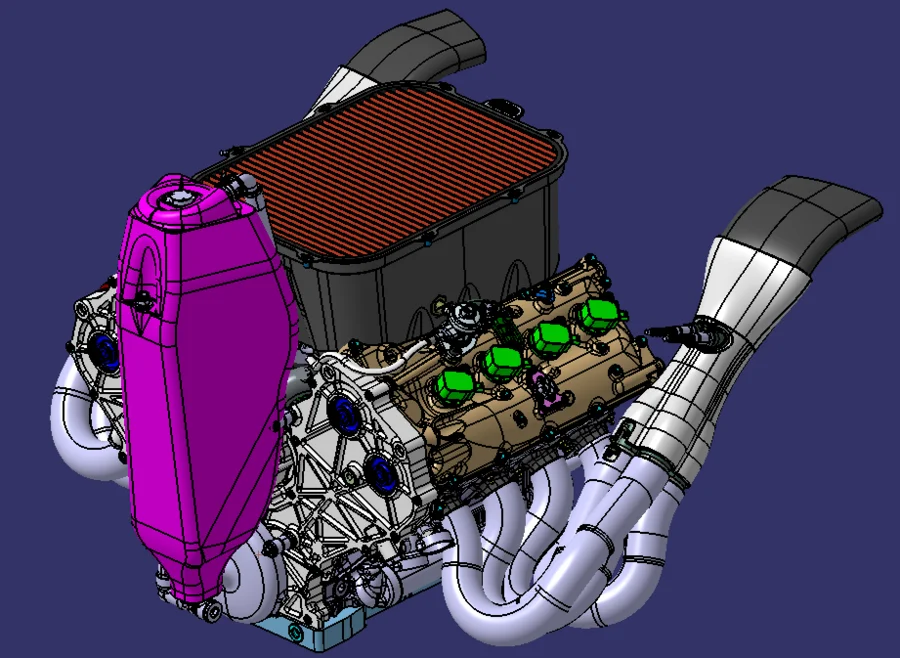
Ford is accelerating its ambitious campaign to reclaim Le Mans glory, with the roaring heart of its new hypercar – a potent 5.4-litre naturally aspirated V8 – now a reality. This significant milestone, marked by the successful first firing of the prototype engine, signals Ford’s determined stride towards its first outright victory at the iconic 24 Hours of Le Mans in 58 years. The project, officially announced last year for entry into the FIA World Endurance Championship (WEC) in 2027, has now confirmed the formidable engine choice: the renowned ‘Coyote’ V8, a powerplant already proving its mettle in the Mustang GT3 racer.
The Genesis of a Legend: Echoes of 1966
The decision to harness the power of the Coyote V8 is more than just an engineering choice; it is a deliberate connection to Ford’s storied past at Le Mans. The iconic GT40s that dominated the French endurance classic in the 1960s, securing four consecutive victories, were all powered by V8 engines. The original triumphant machines of 1966 and 1967 featured a thunderous 7.0-litre V8, a behemoth of an engine that defined an era of motorsport. Subsequent rule changes necessitated a smaller, yet still potent, 4.9-litre V8 for the victories in 1968 and 1969.
Dan Sayers, Ford Racing’s hypercar boss, articulated the philosophy behind this choice, stating, “When you have an engine this iconic in your arsenal, you don’t look for alternatives.” He further emphasized the commitment to the brand’s heritage, adding, “You lean into your DNA.” Sayers eloquently described the V8 as a “bridge between the legends of 1966 and the future of 2027,” a sentiment that resonates deeply with motorsport enthusiasts and encapsulates Ford’s strategic vision for this new era of endurance racing. This choice not only leverages proven Ford technology but also taps into the emotional resonance of its most celebrated racing lineage.
A Glimpse into the Future: The Prototype Engine Ignites
The recent firing of the prototype engine, a 5.4-litre naturally aspirated V8, marks a pivotal moment in the development of Ford’s LMDh hypercar. While the exact specifications of the racing variant are still under wraps, the choice of the Coyote engine, known for its robust performance and distinctive soundtrack, promises an exciting auditory experience for fans. The video released by Ford, capturing the visceral sound of the V8 coming to life, has already generated significant buzz within the motorsport community. This initial fire-up is a crucial step, allowing engineers to begin real-world testing and calibration of the engine’s performance and reliability.
The development of this bespoke V8 is a collaborative effort, rooted deeply within Ford’s engineering prowess. Sayers confirmed that the engine is being developed in-house by a dedicated team of engineers at Ford headquarters in Michigan. Crucially, this internal development is benefiting from the cutting-edge expertise of engineers involved in the nascent Red Bull Ford Powertrains Formula 1 project. This cross-pollination of knowledge and technology between Ford’s Formula 1 ambitions and its Le Mans hypercar program underscores the manufacturer’s serious commitment to high-level motorsport and the pursuit of technological excellence across different disciplines.
The Road to 2027: A Rigorous Testing Schedule
The next phase of development will see the full hypercar prototype undergo rigorous testing, commencing next month. Ford has outlined an ambitious testing itinerary, with the car slated to visit several European circuits. The primary objectives of these tests are multifaceted: to meticulously validate the car’s overall performance, assess its long-term reliability under demanding endurance racing conditions, integrate and fine-tune the hybrid system, and optimize aerodynamic efficiency.
The LMDh (Le Mans Daytona h) regulations, which govern this new breed of hypercars, provide a framework for manufacturers to compete effectively. A key aspect of these regulations is the chassis mandate, requiring manufacturers to select from a pool of four approved constructor partners. Ford has chosen French constructor Oreca, a highly respected name in endurance racing, for its chassis. This allows Ford to focus its resources on developing its bespoke powertrain and unique bodywork, adhering to the LMDh philosophy of shared chassis components to control costs while encouraging distinct manufacturer identity.
The hybrid system employed in LMDh cars is a standardized unit, ensuring a level playing field in terms of electrical assistance. However, manufacturers retain the freedom to develop their own internal combustion engines. The combined power output for LMDh cars is capped at 671 bhp, with all competitors adhering to a rear-wheel-drive configuration. These regulations are designed to foster intense competition while managing development costs, making the series attractive to a wide range of manufacturers.
Assembling a Championship-Caliber Driver Lineup
Ford has also made significant strides in assembling a formidable driver lineup for its Le Mans assault. The highly anticipated roster includes Sebastian Priaulx, Mike Rockenfeller, and Logan Sargeant.
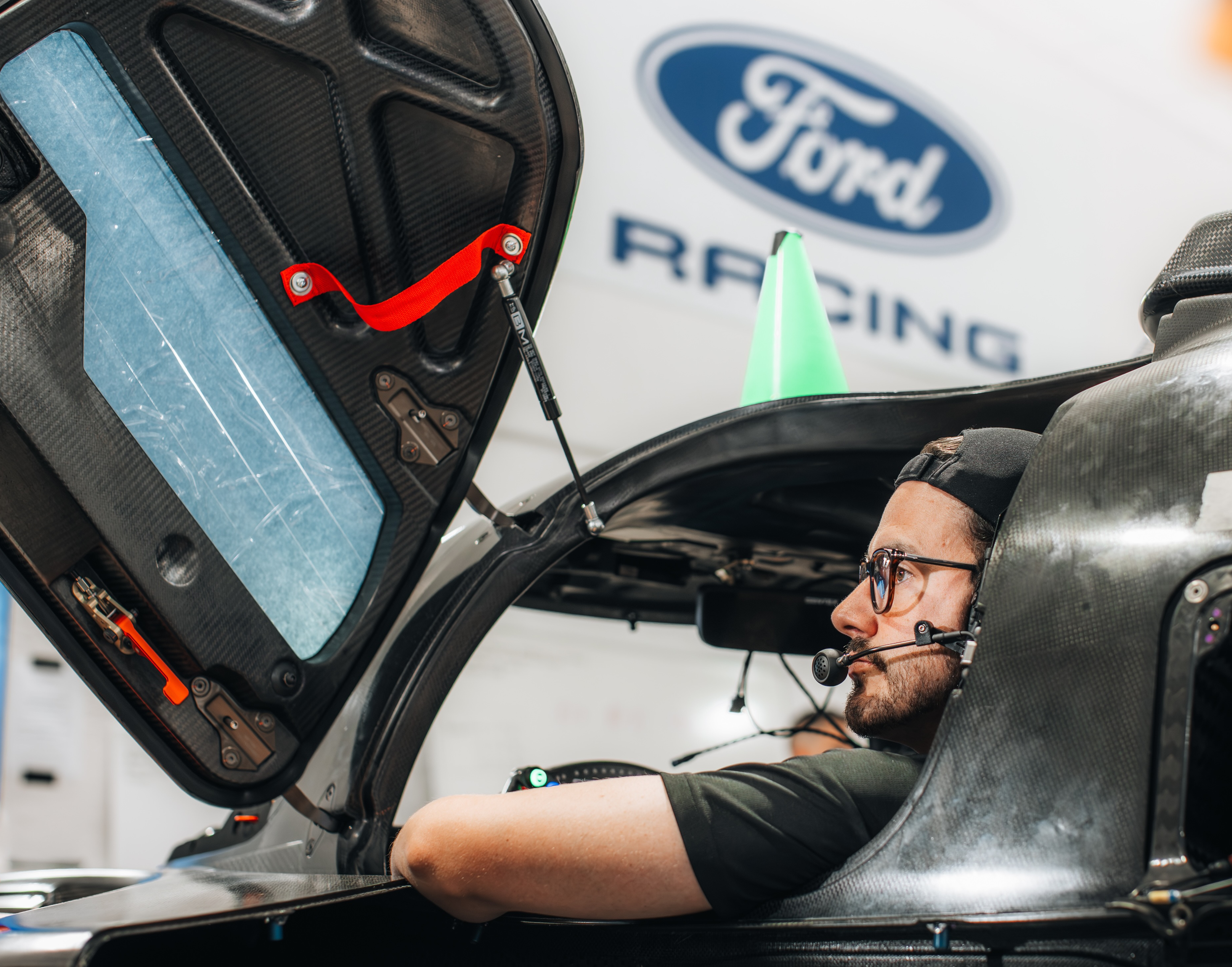
Sebastian Priaulx, a promising British talent, and Mike Rockenfeller, a seasoned German driver and 2010 Le Mans winner with Audi, are transitioning from their roles racing a Ford Mustang GT3 in the US-based IMSA Sportscar Championship last year. Their experience in top-tier sports car racing, particularly Rockenfeller’s proven Le Mans pedigree, will be invaluable.
Logan Sargeant, an American driver who has previously competed in Formula 1 with Williams, brings a different but equally valuable skillset to the team. His experience in the pinnacle of motorsport, with its emphasis on precision driving and technical feedback, will undoubtedly contribute to the development and performance of the hypercar.
Currently, Priaulx and Rockenfeller are actively gaining valuable track time and honing their skills in a Ford-run Oreca LMP2 prototype competing in the ACO European Le Mans Series this year. This parallel campaign provides them with crucial race experience in a competitive environment, allowing them to adapt to the nuances of European endurance racing and further develop their synergy as teammates, all while providing critical feedback that can be fed back into the hypercar program.
The Strategic Significance of Ford’s Le Mans Ambition
Ford’s return to the forefront of endurance racing with a dedicated hypercar program is a strategic masterstroke, resonating with the brand’s heritage and its future vision. The 24 Hours of Le Mans is not merely a race; it is a global showcase of automotive innovation, engineering prowess, and the sheer indomitable spirit of competition.
Background Context of the Event:
The 24 Hours of Le Mans, first held in 1923, is the oldest active endurance race in the world and is considered one of motorsport’s "Triple Crown" events, alongside the Indianapolis 500 and the Monaco Grand Prix. Its grueling nature, testing both machine and driver over a 24-hour period on the iconic Circuit de la Sarthe, has cemented its legendary status. For Ford, the race holds particular significance due to its historic rivalry with Ferrari in the 1960s, a period immortalized by the GT40’s triumphs. The company’s return to compete for outright victory is a clear signal of its intent to recapture that winning spirit and demonstrate its technological leadership on the world stage.
Supporting Data and Market Trends:
The resurgence of manufacturer interest in top-tier endurance racing, particularly with the advent of the LMDh and Le Mans Hypercar (LMH) regulations, has revitalized the sport. This renewed competition is driven by a confluence of factors: the desire to showcase advanced hybrid and sustainable powertrain technologies, the cost-containment measures inherent in the LMDh rules, and the global appeal of endurance racing as a platform for brand building and technological development. The LMDh platform, in particular, allows manufacturers to leverage existing chassis suppliers while focusing their investment on unique powertrains and aerodynamic designs, making it an attractive proposition for brands like Ford seeking to make a significant impact.
Analysis of Implications:
Ford’s investment in an LMDh hypercar program for Le Mans and the WEC carries significant implications beyond the race track.
- Technological Advancement: The development of a competitive hybrid powertrain and advanced aerodynamics for the hypercar will undoubtedly lead to technological spin-offs that can benefit Ford’s road car production, particularly in areas of electrification and efficiency.
- Brand Reinforcement: A strong performance at Le Mans can significantly enhance Ford’s brand image, associating it with cutting-edge technology, endurance, and winning performance. This can translate into increased brand loyalty and attract new customer segments.
- Motorsport Ecosystem Engagement: By participating in the WEC and LMDh, Ford is actively contributing to the health and growth of the global motorsport ecosystem, fostering innovation and providing opportunities for drivers, engineers, and teams.
- Competitive Landscape: The presence of Ford alongside other major manufacturers in the LMDh class is set to intensify the competition, promising thrilling racing and pushing the boundaries of automotive engineering. The rivalry at the top tier of endurance racing is expected to be fierce and captivating for fans worldwide.
Timeline and Chronology of Key Events:
- Last Year (2023): Ford officially announces its intention to enter the FIA World Endurance Championship with an LMDh hypercar in 2027.
- Earlier This Year (2024): Ford confirms the use of the ‘Coyote’ V8 engine, derived from its Mustang GT3 racer, for its Le Mans hypercar.
- Recent Event: The prototype hypercar engine, a 5.4-litre naturally aspirated V8, is fired up for the first time.
- Next Month (July 2024 onwards): Full-scale testing of the Ford hypercar prototype commences at various European circuits.
- 2025-2026: Continued development, testing, and refinement of the hypercar, including homologation processes.
- 2027: Ford officially enters the FIA World Endurance Championship with its new LMDh hypercar, aiming for outright victory at the 24 Hours of Le Mans.
Ford’s journey back to the pinnacle of Le Mans is a meticulously planned endeavor, blending historical reverence with a forward-looking technological vision. The thundering V8 heart of its new hypercar is not just an engine; it’s a promise of renewed glory and a testament to Ford’s enduring legacy in motorsport. As the testing intensifies and the 2027 deadline approaches, the motorsport world watches with bated breath, anticipating the return of a legend to its rightful place on the grandest stage of endurance racing.