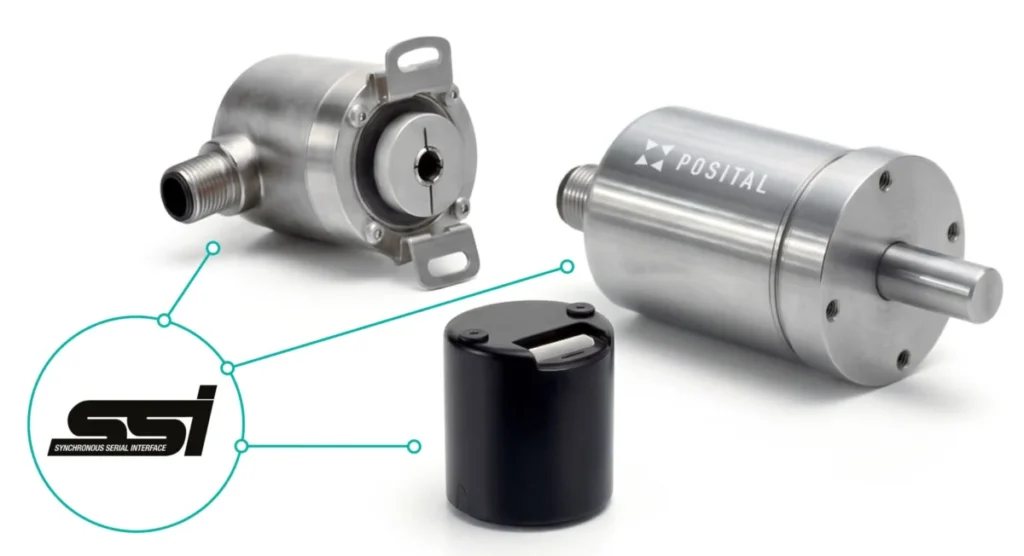
POSITAL, a leading global manufacturer of high-precision position and motion sensors, has significantly broadened its product portfolio by integrating Synchronous Serial Interface (SSI) communication capabilities across an extensive range of its IXARC absolute rotary encoders. This strategic enhancement encompasses both the company’s modular kit encoders and its robust industrial-grade encoder series, critically including their innovative new 20 mm miniature form factor. This move underscores a concerted effort to meet the evolving demands of industrial automation, where reliable, compact, and efficient data transmission is paramount for diverse applications ranging from sophisticated robotics to intricate machine tools.
The expansion of SSI options within the IXARC family is a testament to POSITAL’s commitment to offering versatile solutions that cater to specific operational requirements without compromising on performance or reliability. For industrial applications necessitating larger, more rugged designs, POSITAL continues to offer SSI interfaces across several established mechanical configurations. These include highly compact 36 mm models designed for space-constrained installations, durable 58 mm versions engineered to withstand challenging industrial environments, and specialized 78 mm explosion-proof models that boast ATEX certification, making them suitable for hazardous locations such as those found in the oil and gas, chemical, or mining industries. In these larger form factors, customers retain the flexibility to select between advanced magnetic and high-precision optical measurement technologies, allowing for tailored solutions based on the application’s specific accuracy and environmental resilience needs.
The Enduring Relevance of Synchronous Serial Interface (SSI)
Synchronous Serial Interface (SSI) stands as a cornerstone in industrial sensor communication, lauded for its simplicity, robustness, and direct point-to-point communication. Developed in the early 1980s by Siemens, SSI quickly became a de facto standard for connecting absolute encoders and other sensors directly to digital programmable logic controllers (PLCs) or microcontrollers. Its enduring popularity stems from its ability to provide highly reliable, interference-resistant data transmission over considerable distances, a critical attribute in many industrial settings.
Unlike more complex industrial Ethernet or fieldbus networks, SSI offers a straightforward, low-overhead communication method. It operates on the RS-422 standard, which specifies electrical characteristics of a digital signaling circuit, enabling high transmission rates and impressive connection distances of up to 1,200 meters. This makes SSI particularly well-suited for smaller, dedicated control systems or applications where the added complexity, cost, and latency of network protocols are unnecessary or undesirable. For instance, in a single-axis positioning system, a direct SSI connection can offer real-time, precise position data without the need for network stacks or extensive configuration, simplifying system architecture and reducing potential points of failure. The widespread support for SSI by virtually all major PLC manufacturers further solidifies its position as a universally accepted and readily integrable communication standard in the automation landscape. Its synchronous nature, where the master (e.g., PLC) controls the clock signal, ensures reliable data acquisition, preventing data corruption often associated with asynchronous methods in noisy industrial environments.
Innovation in Form Factor: The 20 mm Miniature Encoder
The introduction of SSI options in POSITAL’s new 20 mm miniature form factor IXARC encoders represents a significant leap forward in the realm of compact automation. Miniaturization in industrial components is a pervasive trend, driven by the increasing demand for smaller, more agile machines, robots, and integrated systems. Applications in areas such as collaborative robotics, medical devices, semiconductor manufacturing equipment, and compact pick-and-place systems require motion control components that can fit into extremely confined spaces without sacrificing performance or reliability.
The 20 mm form factor directly addresses this need, offering absolute position feedback in an exceptionally small footprint. By integrating SSI into these miniature devices, POSITAL empowers designers to create more compact, streamlined, and efficient systems. This is particularly crucial for multi-axis robots where numerous encoders are required, and every millimeter of space saved contributes to a more compact and lighter robot arm, improving speed, payload capacity, and energy efficiency. The ability to obtain absolute position data directly via SSI from such a small sensor eliminates the need for homing routines after power cycles, thereby increasing operational uptime and reducing commissioning times for these compact machines.
Advancements in Sensor Technology: TMR and Wiegand
At the heart of many POSITAL IXARC magnetic encoders lies Tunneling Magnetoresistance (TMR) sensor technology, representing a significant advancement over earlier Hall-effect sensors. TMR sensors operate on the principle of quantum mechanical tunneling, where electrons tunnel through a thin insulating barrier between two ferromagnetic layers. The resistance of this barrier changes significantly based on the relative magnetization of the ferromagnetic layers, allowing for highly sensitive detection of magnetic fields.
Compared to traditional Hall-effect sensors, TMR sensors offer a multitude of advantages critical for high-performance industrial applications. These include demonstrably greater stability over time and varying operational conditions, significantly lower temperature sensitivity ensuring consistent performance across wide thermal ranges, and a superior response to minute changes in magnetic fields, leading to higher accuracy and resolution. Furthermore, TMR sensors boast improved energy efficiency, a crucial factor in reducing overall power consumption in industrial systems, contributing to lower operational costs and enhanced system sustainability. This technological superiority translates directly into more precise, reliable, and durable encoders that can maintain their performance in demanding industrial environments.
For multiturn versions of the IXARC encoders, POSITAL incorporates an ingenious Wiegand energy-harvesting sensor system for rotation counting. The Wiegand effect is a phenomenon where a specially processed ferromagnetic wire, when subjected to a changing magnetic field, rapidly reverses its magnetic polarity, generating a sharp voltage pulse. This pulse is then harvested to power the rotation counting circuitry. The profound advantage of this technology is its ability to record each shaft rotation in non-volatile memory, critically including rotations that occur even when the main system power is unavailable. This eliminates the dependency on backup batteries, which are often a point of failure, require periodic replacement, and contribute to environmental waste. The Wiegand system provides a truly maintenance-free solution for absolute multiturn position tracking, ensuring that the encoder always knows its exact position, even after prolonged power outages or during transportation, significantly improving system reliability and reducing total cost of ownership over the product’s lifespan.

Hybrid Communication Interfaces: A Bridge to Future Flexibility
Recognizing the diverse needs of industrial control systems, POSITAL also offers IXARC encoders equipped with a hybrid communication interface that seamlessly supports both absolute (SSI) and incremental measurements. This innovative approach provides control system designers with unparalleled flexibility, particularly in scenarios where evolving system requirements might necessitate a transition between different types of position feedback.
Absolute measurement, facilitated by SSI, is inherently well-suited for a wide array of precise positioning tasks, where the exact position of a shaft must be known at all times, such as in robotics, CNC machines, and material handling systems. Absolute encoders provide a unique position value for each shaft angle, eliminating the need for a reference run or homing procedure upon system startup or after a power interruption.
Conversely, incremental encoders are typically employed for monitoring rotational speed and direction due to their excellent dynamic response. They generate a series of pulses as the shaft rotates, and the control system counts these pulses to determine relative movement. Applications like motor speed control, conveyor belt monitoring, and flow rate measurement often leverage incremental feedback.
By combining both functions within a single device, POSITAL empowers designers to future-proof their systems. An application might initially require only incremental feedback for speed monitoring. However, as the system evolves or new functionalities are added, the absolute position capability can be activated via SSI without needing to replace the encoder hardware. This not only reduces hardware inventory and complexity but also offers a cost-effective pathway for system upgrades, allowing for greater adaptability to changing operational demands and potentially extending the lifecycle of machinery.
Programmability and the UBIFAST Tool: Tailored Performance
A key feature enhancing the utility and flexibility of POSITAL encoders with SSI interfaces is their inherent programmability. Many critical operating parameters can be precisely configured and updated through software, utilizing POSITAL’s proprietary UBIFAST programming tool. This capability transforms a standard encoder into a highly customizable component, allowing it to be finely tuned to the specific requirements of a given application.
The UBIFAST tool enables users to adjust various parameters such as resolution, count direction, zero point, and even certain diagnostic functions. This on-the-fly programmability offers significant advantages for machine builders and system integrators. For instance, a single encoder model can be stocked and then programmed as needed for different machine variants, significantly reducing inventory complexity and costs. Furthermore, in-field updates and recalibrations can be performed easily, streamlining maintenance procedures and minimizing downtime. This level of user-defined configurability ensures that POSITAL encoders can be optimally integrated into a wide range of control architectures, providing precise and reliable feedback tailored to the exact needs of the application.
Industry Impact and Future Outlook: Driving Automation Forward
The expansion of SSI options across POSITAL’s IXARC encoder range, particularly the integration into miniature form factors and the combination with advanced sensor technologies, is a significant development with broad implications for the industrial automation sector. Dr. Elena Petrova, Head of Product Management for Encoders at POSITAL, articulated the strategic vision behind this initiative: "Our goal is to provide system designers with the most flexible, reliable, and compact position feedback solutions available. The enhanced SSI offering, especially with our new 20 mm miniature encoders and the battery-free multiturn functionality, directly addresses critical market demands for increased precision, reduced maintenance, and seamless integration into the next generation of smart factories and robotic systems. This move is a clear commitment to supporting the ongoing evolution of Industry 4.0, where robust and precise sensor data forms the backbone of operational intelligence and efficiency."
This strategic enhancement positions POSITAL strongly within a competitive landscape increasingly focused on high-performance, compact, and maintenance-free components. The demand for reliable position feedback is continuously growing, driven by the proliferation of automation in diverse industries such as logistics, packaging, material handling, renewable energy, and medical technology. By offering a comprehensive range of SSI-enabled encoders—from miniature to explosion-proof, and with both magnetic and optical options—POSITAL provides a robust toolkit for engineers.
The implications extend beyond mere product features. The battery-free multiturn capability, enabled by Wiegand technology, directly contributes to sustainable manufacturing practices by eliminating the need for hazardous battery disposal and reducing lifetime maintenance costs. The programmability via UBIFAST enhances operational efficiency by allowing for rapid deployment and adaptation. The hybrid SSI and incremental interface offers an intelligent pathway for system evolution, supporting both current and future operational needs within a single hardware platform.
As industries continue their journey towards greater automation, digitalization, and the Internet of Things (IoT), the quality and reliability of sensor data become increasingly critical. POSITAL’s latest expansion of SSI options for its IXARC encoders is not just a product update; it represents a foundational step in empowering system integrators and machine builders to design more intelligent, efficient, and resilient automation solutions, further solidifying the company’s role as a key innovator in industrial sensing technology.