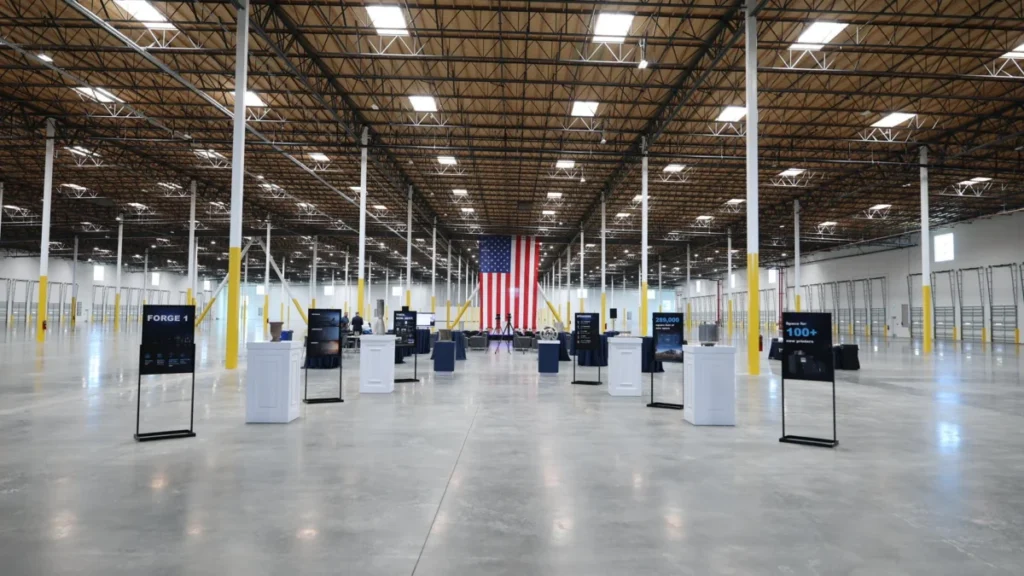
The Forge 1 campus encompasses approximately 270,000 square feet dedicated to production, initially equipped to support the operation of more than 40 large-format metal additive manufacturing systems. Velo3D has articulated ambitious plans to systematically expand this capacity, projecting an eventual deployment of over 100 systems within the Livermore site. When this substantial new capacity is integrated with the company’s existing Fremont headquarters, Velo3D anticipates achieving a combined operational capability of up to 125 systems across its two California campuses. This consolidated infrastructure is poised to establish one of North America’s most extensive and integrated environments for metal additive manufacturing, providing an unparalleled ecosystem for the development and large-scale production of complex metal components.
The Ascendance of Industrial Additive Manufacturing
The opening of Forge 1 arrives at a transformative period for additive manufacturing (AM), often referred to as 3D printing. What was once primarily a technology for rapid prototyping has matured into a sophisticated industrial process capable of producing end-use parts with unparalleled complexity and performance characteristics. Metal additive manufacturing, specifically utilizing laser powder bed fusion technology, has emerged as a particularly disruptive force. This method involves precisely melting layers of metal powder with a high-power laser, building components layer by layer from a digital design. Its advantages are manifold: enabling intricate geometries previously impossible with traditional subtractive manufacturing, reducing material waste, consolidating multi-part assemblies into single components, and significantly shortening lead times for complex parts.
The global additive manufacturing market is experiencing exponential growth, driven by increasing adoption across various industries. Reports indicate the market, valued at approximately $15 billion in 2022, is projected to reach over $70 billion by 2030, with a compound annual growth rate exceeding 20%. This growth is predominantly fueled by sectors like aerospace and defense, which leverage AM for lightweighting components, optimizing designs for performance, and reducing inventory through on-demand production. The energy sector utilizes AM for specialized parts requiring high temperature resistance and complex internal structures, while medical and automotive industries also find increasing applications. Velo3D, with its focus on large-format, high-precision metal parts, has positioned itself at the forefront of this industrial shift, addressing the stringent quality and scale requirements of these demanding sectors.
Forge 1: An Integrated Manufacturing Powerhouse
Forge 1 is more than just an assembly plant; it is conceived as a comprehensive, vertically integrated manufacturing campus designed to streamline the entire production lifecycle under a single roof. This ambitious setup encompasses every critical stage: from the precise assembly of Velo3D’s advanced additive manufacturing machines to large-scale metal printing, subsequent post-processing, rigorous inspection, stringent quality assurance protocols, and final customer acceptance testing. This holistic approach is a direct response to the industry’s need for greater efficiency and reliability in scaling additive manufacturing programs.
The strategic rationale behind this integration is profound. By consolidating these diverse manufacturing stages, Velo1D aims to drastically shorten the notoriously lengthy timeframes typically required to transition a new component from its initial development phase into repeatable, high-volume production. Furthermore, this integrated ecosystem offers a distinct advantage to customers: they can develop and scale their additive manufacturing programs within a consistent and controlled environment, eliminating the complexities and risks associated with transferring designs and processes between disparate facilities or multiple suppliers. This continuity ensures greater process control, reduces variability, and ultimately accelerates market entry for critical applications.
This new production-focused campus perfectly complements Velo3D’s existing Fremont headquarters. While Forge 1 handles the heavy lifting of scaled production, the Fremont facility will continue to serve as the company’s innovation hub, concentrating on core research and development, advanced applications engineering, meticulous process development, collaborative customer engagement, and rigorous part qualification. This clear division of labor creates a powerful synergy: Fremont pioneers and refines the technologies and applications, while Forge 1 provides the robust, industrial-scale capacity needed to bring those innovations to market, ensuring a seamless journey from concept to mass production.
Strengthening Domestic Supply Chains and National Security
The establishment of Forge 1 is deeply intertwined with broader national strategic imperatives to bolster domestic production capabilities and fortify supply chains, particularly within critical sectors. In an increasingly volatile global landscape, the lessons from recent disruptions – ranging from the COVID-19 pandemic to geopolitical tensions – have underscored the vulnerability of reliance on overseas manufacturing for essential components. For industries like aerospace and defense, the ability to manufacture complex metal parts within national borders is not merely an economic advantage but a vital component of national security.
Arun Jeldi, Chief Executive Officer of Velo3D, articulated this vision clearly, stating, “Forge 1 is much more than a new production facility. It represents our commitment to helping customers and our nation build a stronger, more resilient manufacturing foundation. Our customers need more than innovative technology. They need a trusted American partner capable of taking critical programs from qualification to production while strengthening supply chains and supporting national security. Forge 1 is how we deliver on that commitment.” This statement encapsulates the strategic intent behind the investment, positioning Velo3D not just as a technology provider but as a critical enabler of national industrial resilience.
The facility’s focus on large-format metal additive manufacturing systems, developed and manufactured in the United States, directly supports the government’s push for "reshoring" and "friendshoring" initiatives. These efforts aim to bring manufacturing back to the U.S. or to allied nations, reducing dependence on potentially unstable or adversarial supply routes. Velo3D’s systems are deployed across the U.S., allied nations, and other trusted international markets, ensuring that advanced manufacturing capabilities are accessible to strategic partners while reinforcing domestic control over critical production technologies. This alignment with national security objectives positions Velo3D as a key player in the ongoing effort to secure America’s industrial base.
Economic Impact and Livermore’s Role in Advanced Industry
The inauguration of Forge 1 represents a significant economic injection into the Livermore region and the broader California economy. While specific job creation numbers were not detailed in the initial announcement, a facility of this scale, encompassing machine assembly, extensive manufacturing operations, and advanced engineering, will undoubtedly generate a substantial number of high-skilled jobs in manufacturing, engineering, quality control, and logistics. These direct jobs will also create a multiplier effect, stimulating growth in supporting industries and local services.
Livermore Mayor John Marchand welcomed the new campus, stating, “Livermore is proud to welcome Velo3D and celebrate the opening of Forge 1. This new production campus reflects the kind of bold investment that continues to shape Livermore as a destination for advanced industry. We are excited to partner with Velo3D as they strengthen American manufacturing and build the next generation of technologies right here in Livermore.” The Mayor’s statement highlights Livermore’s strategic position as a hub for advanced technology and scientific innovation, home to institutions like the Lawrence Livermore National Laboratory. This established ecosystem provides Velo3D with access to a skilled workforce, research partnerships, and a supportive local government, making Livermore an ideal location for such a sophisticated manufacturing operation.
The investment by Velo3D reinforces California’s role as a leader in technological innovation and advanced manufacturing. It also signals a broader trend of manufacturing reshoring to states with strong innovation economies and access to talent. As governments and manufacturers globally prioritize resilient supply chains, facilities like Forge 1 become crucial infrastructure for high-value applications, demonstrating that advanced manufacturing can thrive domestically, creating economic prosperity while enhancing strategic capabilities.
Velo3D’s Strategic Vision and Future Outlook
The timing of Forge 1’s opening is particularly opportune. The demand for large-format metal additive manufacturing is escalating as industries move beyond prototyping to serial production of highly critical components. Traditional manufacturing methods often struggle with the complexity, lead times, and material waste associated with these parts, making AM an increasingly attractive alternative. Velo3D’s focus on laser powder bed fusion systems, known for their precision and ability to produce complex geometries without the need for support structures in many cases (a hallmark of Velo3D’s technology, though not explicitly detailed in the original article, it’s a key differentiator), positions it uniquely to capitalize on this demand.
The new facility is expected to commence operations in phases, with manufacturing systems being installed and qualified progressively. This phased approach allows Velo3D to scale its capacity responsibly, aligning with evolving customer demand and ensuring that quality and operational excellence are maintained throughout the ramp-up process. This measured expansion strategy is critical for a sector dealing with high-value, mission-critical parts where reliability is paramount.
Looking ahead, Forge 1 is not merely a factory for producing machines or parts; it represents a comprehensive solution designed to integrate machine production with the rigorous printing and qualification of parts. This integrated approach offers customers a clear, scalable pathway to adopt and expand additive manufacturing for their most demanding, high-value applications. As industries continue to innovate and require ever more complex, high-performance components, Velo3D’s investment in Forge 1 positions it as a foundational enabler for the next generation of industrial manufacturing, solidifying America’s leadership in advanced production technologies and reinforcing the nation’s strategic autonomy. The campus signifies a tangible step forward in bridging the gap between innovative AM technology and its full industrial potential, promising a future where critical components are made faster, more efficiently, and more securely on domestic soil.