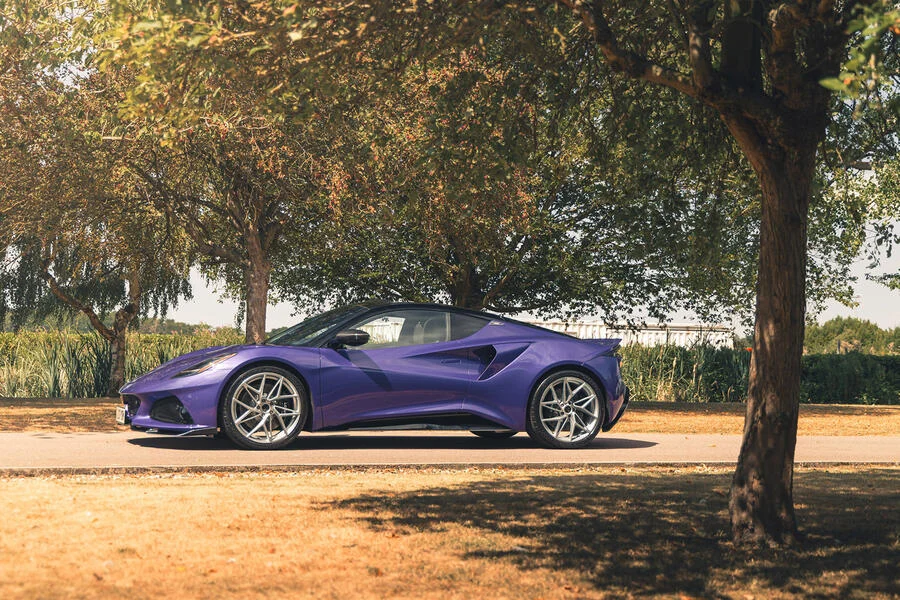
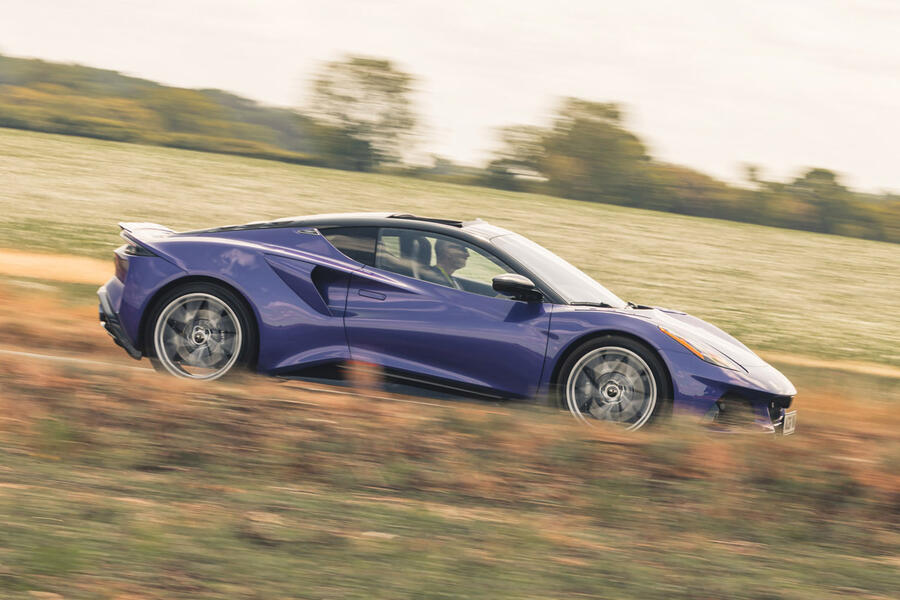
The latest iteration of the Lotus Emira, the 420 Sport, aims to refine the already lauded driving experience of the British sports car. This new model introduces a series of targeted enhancements, focusing on both performance gains and a more engaging connection between driver and machine. While the Emira has consistently impressed with its handling prowess, the 420 Sport seeks to elevate this by offering a more focused and track-capable package, without sacrificing its road-going usability. The introduction of this variant underscores Lotus’s enduring commitment to its core philosophy of lightweight engineering and pure driving pleasure.
Powertrain Enhancements and Performance Gains
At the heart of the Emira 420 Sport lies the familiar Mercedes-AMG-sourced 2.0-litre turbocharged four-cylinder engine. However, for this specific application, the powerplant has undergone a significant software recalibration. This digital "tickle" has resulted in an uplift in both power and torque. The 420 Sport now produces a formidable 416bhp, an increase of 16bhp over the previously cited Emira Turbo SE. Torque also sees a modest but impactful boost, reaching 369lb ft, an enhancement of 15lb ft. These figures position the Emira 420 Sport firmly within the performance arena, offering a potent response that promises exhilarating acceleration and a compelling driving experience, particularly when the engine is operating within its optimal power band.
The audible experience of the powertrain has also been a focal point for the 420 Sport. The new exhaust system, a key component of the optional Lightweight Handling Pack, contributes to a more evocative sound. On the overrun, particularly in the Sport and Track driving modes, the exhaust system delivers satisfying pops and cracks, adding a layer of aural excitement that complements the car’s performance credentials. While the engine’s performance on boost is described as "devastating," capable of providing more speed than one would typically need on public roads, its character at lower revs is noted as being less distinct. Throttle response, while improved with the software updates, is still described as lacking the immediate, instinctive precision found in other aspects of the car’s controls.
Chassis and Suspension Refinements
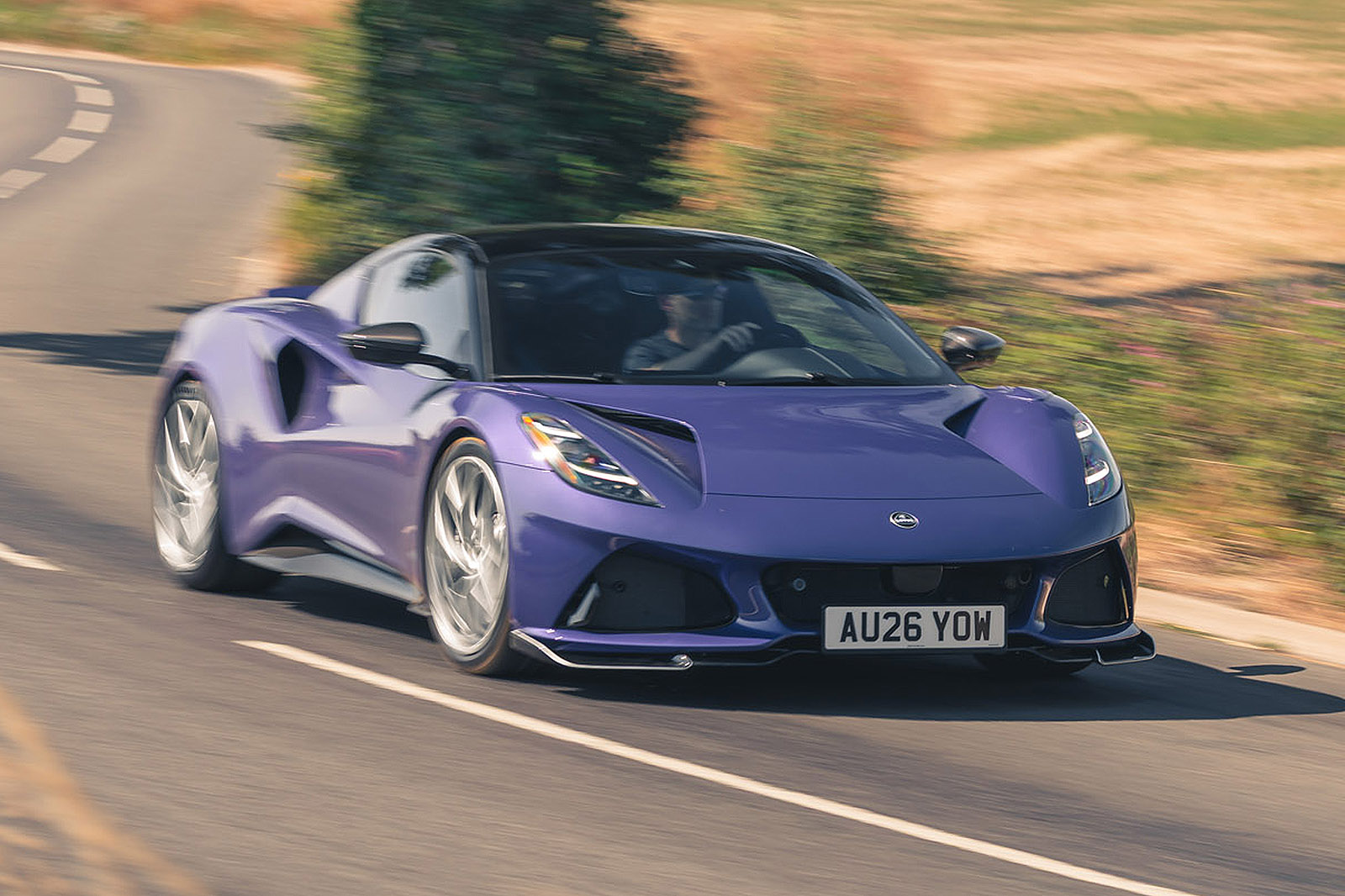
The most significant character-defining changes in the Emira 420 Sport are found beneath its sculpted bodywork, particularly in its suspension and chassis tuning. As standard, the car is equipped with bespoke Bilstein dampers, a hallmark of Lotus’s commitment to sophisticated ride and handling. Furthermore, the ride height has been lowered by 5mm, contributing to a more planted stance and a reduced center of gravity, which directly benefits cornering stability and agility.
However, the test cars available at the launch event were predominantly fitted with the optional Lightweight Handling Pack. This pack is not merely an aesthetic upgrade; it represents a substantial engineering effort to reduce the Emira’s overall weight. A saving of 25kg over the standard Emira is achieved through the integration of several high-performance, lightweight components. These include a titanium exhaust system, a lithium-ion battery, and a carbonfibre louvred engine cover. The cumulative effect of these weight-saving measures is a more nimble and responsive vehicle, enhancing its agility and performance envelope.
Crucially, the Lightweight Handling Pack also introduces Multimatic dampers. These are not ordinary dampers; they feature advanced spool valve technology. This trick valving allows for a greater degree of precision in damping control, enabling the suspension to react more effectively to varying road surfaces and dynamic forces. The adjustability offered by these dampers is also a significant factor, with 11 distinct clicks of adjustment available. This level of fine-tuning allows drivers to tailor the car’s ride and handling characteristics to their specific preferences and driving conditions, whether on a demanding circuit or a winding country road.
A More Connected Driving Interface
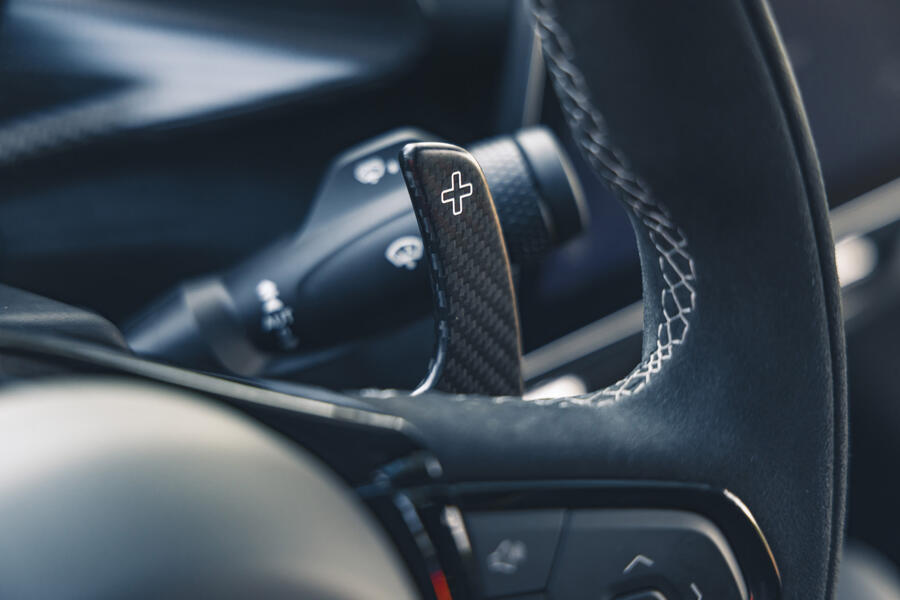
The interior of the Emira 420 Sport, while retaining the snug and richly finished ambiance of the standard model, features subtle yet impactful upgrades designed to enhance driver engagement. Bespoke trim materials are evident throughout the cabin, contributing to a sense of occasion and exclusivity. However, the most appreciated tactile upgrade is undoubtedly the new, longer gearshift paddles. Crafted from carbonfibre, these paddles offer a more positive and satisfying "click-clack" action. This directness in engagement is crucial for drivers who value precise gear changes, particularly during spirited driving and on track.
The inclusion of a removable glass roof panel, a feature designed for more relaxed driving, adds a layer of versatility. This panel can be quickly detached and stowed behind the seats, allowing occupants to enjoy an open-air driving experience. This duality in its design – offering both a focused performance machine and a more leisurely cruiser – highlights the Emira’s broad appeal.
On-Track Dynamics: Precision and Poise
Testing the Emira 420 Sport on the Hethel test track provided an immediate and vivid demonstration of its capabilities. With the dampers set to a firm setting (nine on the adjustment scale), the car exhibited remarkable cornering prowess, maintaining a remarkably flat attitude through turns. Crucially, this composure did not come at the expense of feedback. The suspension allowed for just enough body movement to provide the driver with an accurate and intuitive understanding of the available grip levels.
The hydraulically assisted steering remains a standout feature. It is characterized by its speed and directness, yet it avoids any hint of flightiness or nervousness. The weighting is expertly judged, striking an ideal balance between providing satisfying heft and delivering exquisite tactility. This allows the driver to feel connected to the road surface, sensing every nuance of the tire’s interaction with the asphalt.
The 420 Sport feels demonstrably sharper than the standard Emira, but this increased acuity is not achieved through an aggressive or uncompromising setup. Instead, it maintains the Emira’s signature delightful poise and its inherent ability to communicate its limits to the driver. This characteristic allows for a progressive exploration of the available grip, even when equipped with optional sticky Michelin Cup 2 tires, as was the case with the test cars.
The car’s approachable nature means that drivers can choose their preferred cornering style. Whether opting for a more direct, point-and-squirt approach or employing more expressive, drift-oriented angles, the Emira 420 Sport remains a confidence-inspiring and rewarding machine. This blend of performance and accessibility is a testament to Lotus’s engineering philosophy.
Braking Performance and Road Manners
The braking system on the Emira 420 Sport is robust and effective under demanding conditions. When subjected to hard use, the brakes are strong and exhibit a progressive feel, providing reliable stopping power. However, a degree of sensitivity is required during gentler applications. The article notes that "limo stops are out of the question," suggesting that the brake pedal might be overly keen for very smooth, low-speed maneuvers, a common characteristic of high-performance braking systems.
Despite its track-focused enhancements, the Emira 420 Sport proves surprisingly capable and biddable on the road. It flows through corners with an effortless lack of inertia, a characteristic that is an inimitable part of the Lotus DNA. This ability to transition smoothly and efficiently from one corner to the next, maintaining composure and driver engagement, is a key differentiator.
The ride quality, even with the dampers dialed back to a more compliant setting (five), is described as surprisingly firm. However, this firmness never crosses the line into harshness. The suspension demonstrates an impressive ability to absorb imperfections in the road surface, soaking up bumps that might easily deflect less track-biased machines, thus maintaining the car’s line and the driver’s composure. This balance between a firm, controlled ride for performance and the ability to absorb road imperfections is a delicate act that Lotus appears to have mastered with the Emira.
The Powertrain: A Slight Disconnect
While many aspects of the Emira 420 Sport receive high praise, the powertrain, in certain situations, is identified as a point where the car’s overall excellence is not fully matched. As previously mentioned, when the engine is operating under boost, its performance is undeniable, providing ample acceleration for any road scenario. The updated exhaust system also contributes positively to the auditory experience.
However, in more general driving conditions, the engine is characterized as being "a fairly characterless companion." The article points to a noticeable lag at lower revs, and the throttle response, while improved, still falls short of the instinctive precision that defines the rest of the car’s controls. This suggests that while the engine delivers potent performance when pushed, its refinement and responsiveness in everyday driving situations could be further enhanced to align with the exceptional standards set by the chassis and handling.
Context and Implications
The launch of the Emira 420 Sport at the Hethel test track underscores Lotus’s strategic direction in its sports car offerings. By introducing more focused variants, Lotus caters to a segment of the market that prioritizes ultimate driving engagement and track capability. This approach allows Lotus to leverage its heritage in motorsport and performance engineering, appealing to both seasoned enthusiasts and those seeking a more dynamic driving experience.
The emphasis on lightweight construction, exemplified by the optional pack’s titanium exhaust, lithium-ion battery, and carbonfibre components, aligns with Lotus’s long-standing commitment to minimizing mass. This philosophy is not just about raw performance figures; it’s about enhancing agility, responsiveness, and driver feedback. The adoption of advanced damping technologies like Multimatic’s spool valving further demonstrates Lotus’s willingness to incorporate cutting-edge engineering to refine its vehicles.
The reception of the Emira 420 Sport suggests that Lotus is successfully striking a balance between its track-focused heritage and the demands of a modern sports car. The car’s ability to perform exceptionally on a circuit while remaining usable and engaging on public roads is a significant achievement. The minor critiques regarding the powertrain’s low-rev character and throttle response, while valid, do not overshadow the car’s overall compelling proposition.
The future implications of such models for Lotus are significant. As the automotive landscape evolves, with increasing electrification and autonomous driving technologies, the Emira 420 Sport represents a strong statement of intent for traditional internal combustion engine sports cars. It demonstrates that there is still a significant market for finely honed driving machines that prioritize driver involvement and visceral feedback. This focus on driving dynamics could serve as a crucial differentiator for Lotus as it navigates the transition to future powertrain technologies, potentially influencing the development of its upcoming electric models by ensuring that the core Lotus DNA of lightweight agility and driver engagement is carried forward. The 420 Sport, therefore, is not just a car; it’s a reaffirmation of Lotus’s identity and its enduring appeal in the performance automotive sector.