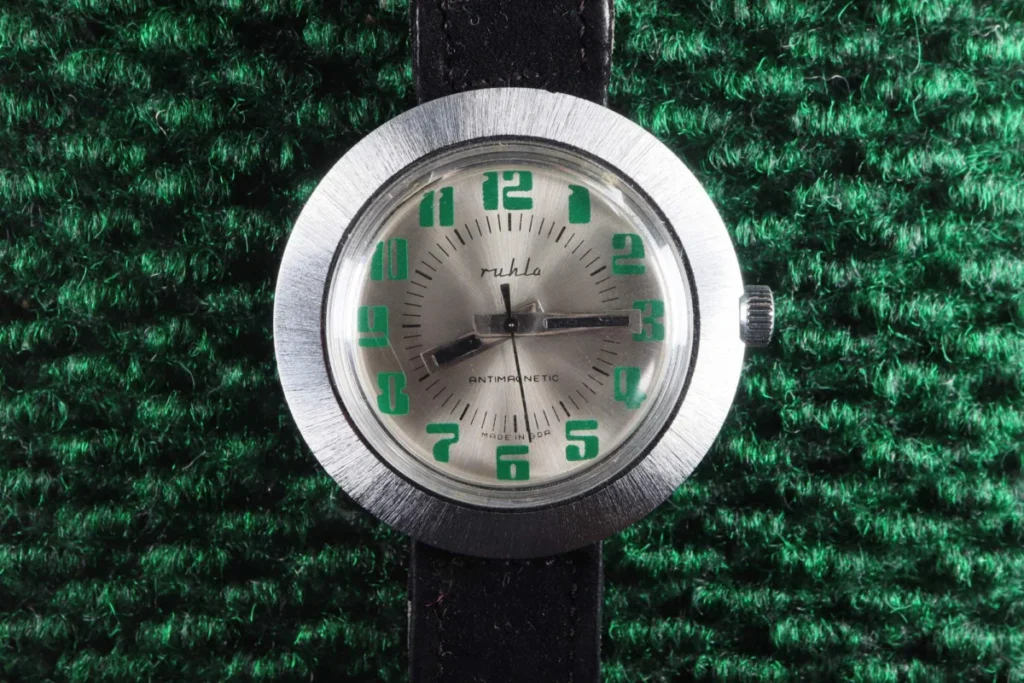
The mid-20th century was an era defined by audacious design and technological ambition, a period when the burgeoning Space Race fueled a fascination with the futuristic, manifesting in everything from automotive design to household appliances. This spirit of innovation also permeated the world of horology, giving rise to a distinctive category of wristwatches characterized by their unconventional shapes and striking proportions. Among these, the "UFO" or "Flying Saucer" case design emerged as a particularly popular motif, adopted by numerous brands across the globe. While iconic models from Omega, Timex, Zenith, Gruen, and Ruhla all contributed to this trend, a particular example from Ruhla, a brand often overlooked in contemporary horological discourse, stands out as a compelling testament to the era’s design ethos and the industrial prowess of East Germany.
A Legacy Forged in Precision: The Genesis of Ruhla Timepieces
Ruhla’s origins trace back to 1892, when it was established as Gebrüder Thiel GmbH. The company quickly made its mark on the nascent watchmaking industry by launching the "Fearless" pocket watch, recognized as the first mass-produced timepiece to enter the market. This early success laid the groundwork for decades of manufacturing expertise. The pivotal transformation occurred in 1952 when the company was rebranded as Uhren und Maschinenfabrik Ruhla, or simply Ruhla. This renaming coincided with a strategic focus on expanding its watch production for both the domestic East German market and international export.
The post-war period saw Ruhla ascend to become one of the world’s largest watchmaking factories. Its production facilities in Ruhla, Thuringia, were a hub of industrial activity, churning out millions of timepieces and movements. By 1963, the distinct Ruhla logo, a stylized "R," became the official emblem adorning all domestic models, a mark that would remain until the brand’s eventual closure in 1991. The brand’s historical significance extends beyond its sheer production volume; Ruhla watches even made a mark in space exploration, a testament to their reliability and the technological capabilities of East German engineering. For those seeking a deeper dive into Ruhla’s rich history, the extensive research by Grigory Zabelin and the insightful articles by Blake Z. Rong offer invaluable perspectives on the brand’s monumental achievements, which have, regrettably, been largely understated in modern watch collecting circles.
The "UFO" Enigma: Design, Production, and Historical Context
The specific Ruhla UFO model under examination is believed to have been produced between the late 1960s and mid-1970s. While the Ostalgie-Ruhla Watches of the GDR Database suggests a production year of 1976, definitive confirmation through contemporary catalogs or advertisements remains elusive. This period was characterized by a global surge in "space-age" aesthetics, heavily influenced by the ongoing Space Race and a broader mid-century modernist design movement that embraced futuristic forms and bold experimentation. Brands worldwide capitalized on this trend, introducing watches with designs that evoked flying saucers, rockets, and other celestial or futuristic imagery.
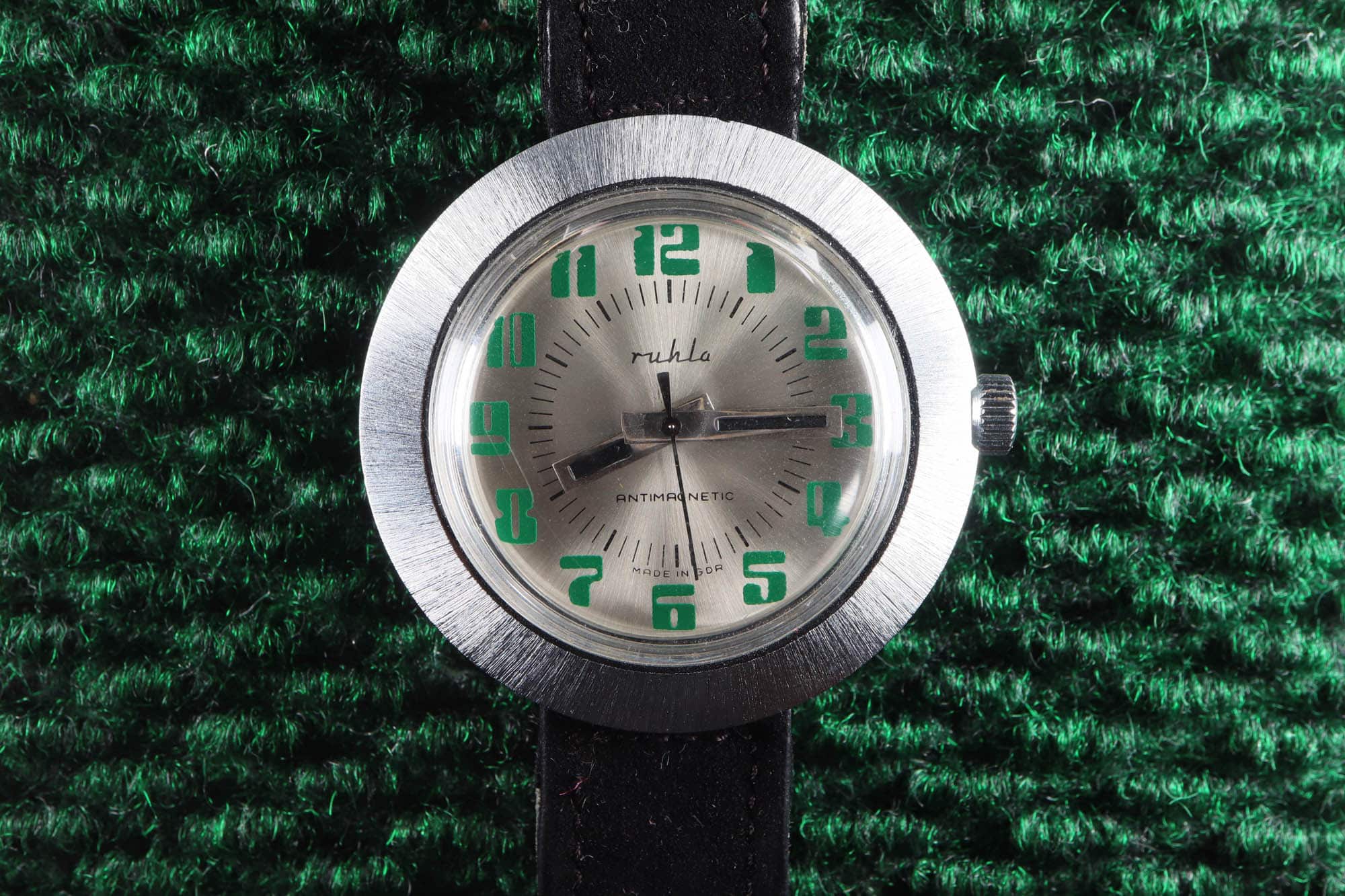
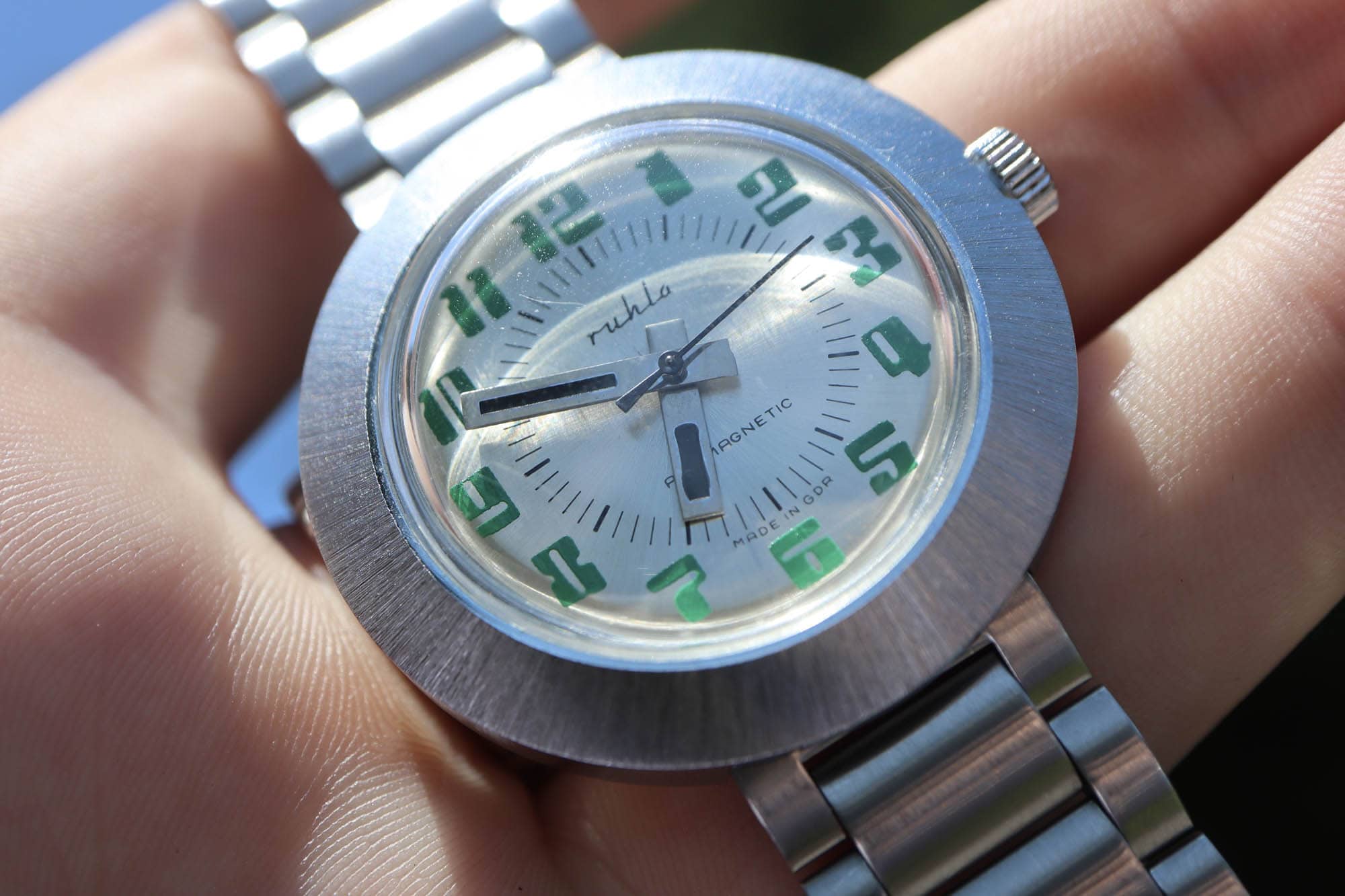
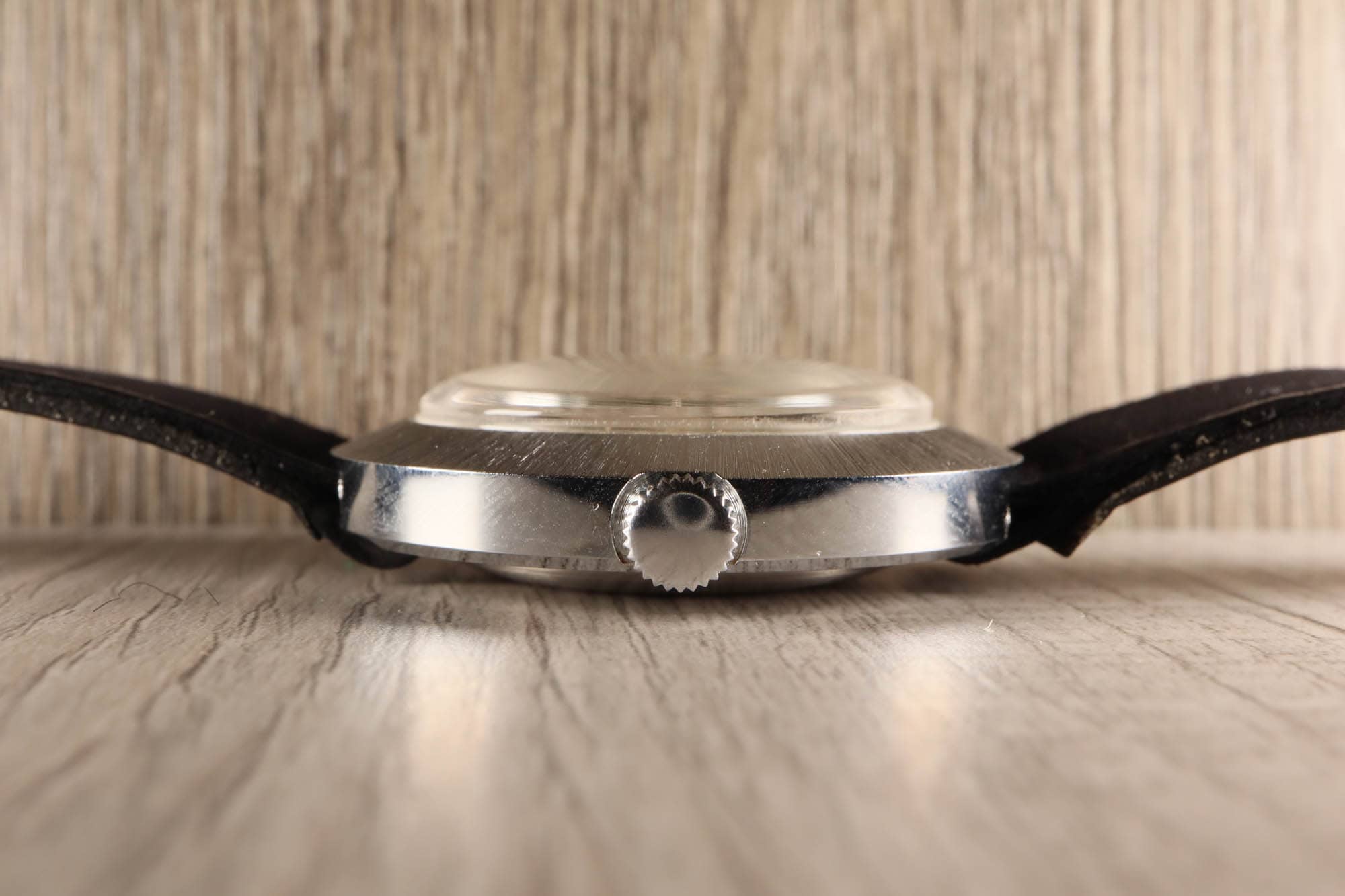
The Ruhla UFO exemplifies this design trend with its distinctive, saucer-like case. Measuring a modest 36mm in diameter with a lug-to-lug span of also 36mm and an 18mm lug width, the watch offers an exceptionally comfortable fit on a variety of wrist sizes. The case itself is constructed from chrome-plated base metal, a common material for watches of this era aimed at affordability and mass production. While this material can be prone to wear and cosmetic damage over time, examples in good condition, like the one pictured, often retain their original radial burst finishing on the bezel, a subtle yet elegant detail that enhances the case’s visual appeal.
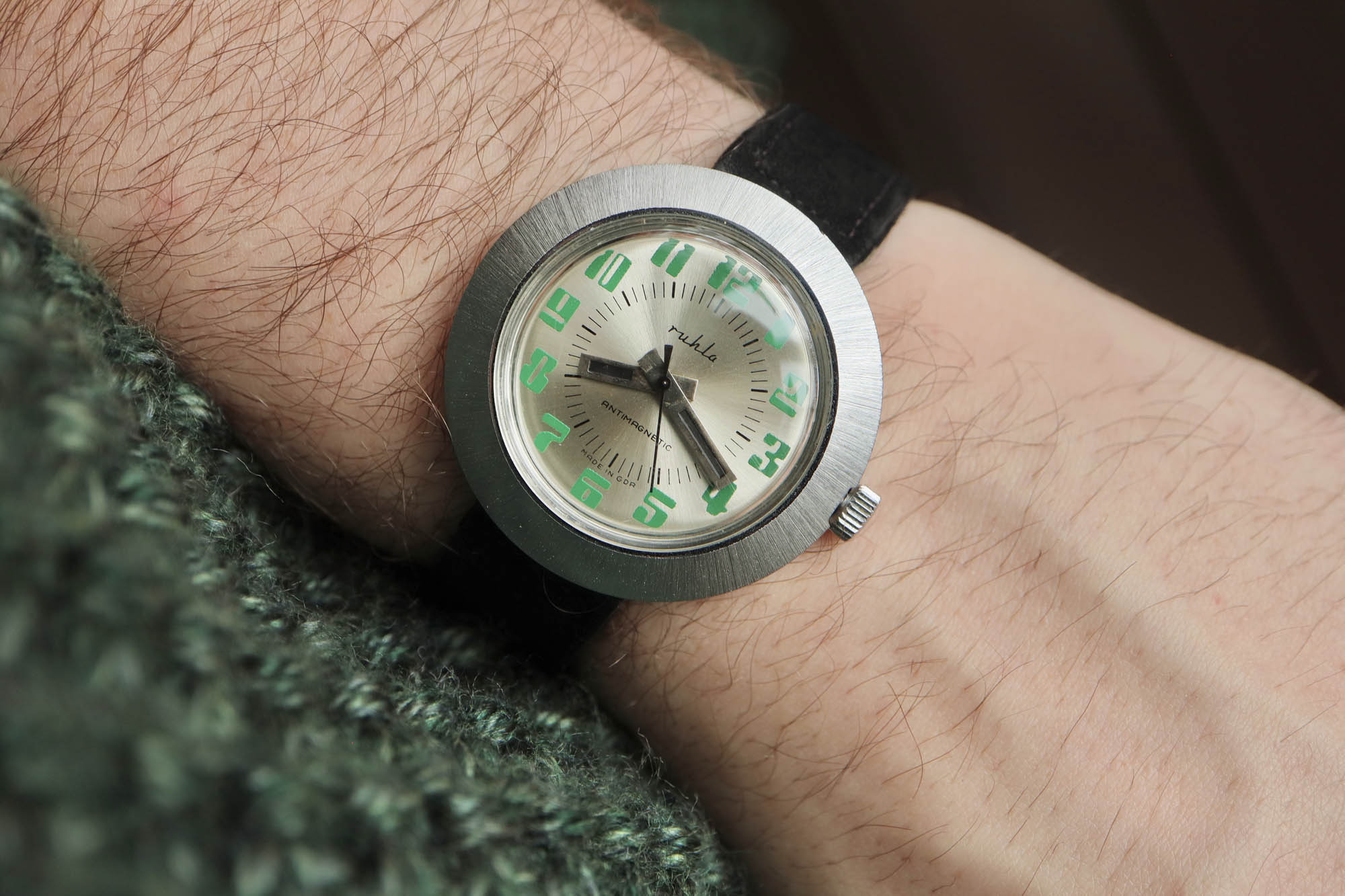
The aesthetic of the Ruhla UFO is a captivating blend of futuristic flair and utilitarian functionality, reflecting its East German origins. The dial is a vibrant canvas, dominated by bright green numerals that exude a decidedly mid-century science fiction sensibility. This bold color choice conjures images of space-age bachelor pads and futuristic cinematic landscapes, making the watch a veritable time capsule of its era. This vivid pop of color is deliberately contrasted by the utilitarian, blocky handset and a slender black seconds hand, creating a visual tension that is both striking and harmonious. The dial also bears the "Ruhla" branding, along with indications of its "anti-magnetic" properties and its proud "Made in GDR" origin. The interplay of different fonts used for these various inscriptions, while seemingly disparate, coalesces into a well-executed and visually engaging dial design.
The Heart of the Machine: The Caliber 24 Movement
At the core of the Ruhla UFO lies the Caliber 24, a movement that served as a workhorse for Ruhla throughout much of its production history, finding its way into dozens of models manufactured between the 1960s and 1980s. This robust and easily mass-producible movement was a cornerstone of Ruhla’s manufacturing strategy. It features a power reserve of approximately 35 hours and a beat rate of 18,000 vibrations per hour (vph). Its design, characterized by a low-grade pin pallet escapement and a lack of shock protection, prioritized cost-effectiveness and ease of assembly, enabling Ruhla to produce and sell an estimated 150 million of these movements for use in both their own timepieces and those of other brands internationally.
While the Caliber 24 might not boast the precision of haute horlogerie movements, its rated accuracy of +240 to -120 seconds per day was considered acceptable for its intended market and price point. It represented an accessible and readily replaceable timekeeping solution within the German Democratic Republic (GDR). The widespread adoption of the Caliber 24 across Ruhla’s diverse catalog underscores the brand’s commitment to producing reliable and affordable timepieces for a broad consumer base. The presence of this movement in the UFO model further solidifies its identity as a product of Ruhla’s efficient industrial ecosystem.
The Mod Aesthetic and East German Culture
The Ruhla UFO’s pronounced futuristic design, particularly its vibrant green dial and saucer-shaped case, evokes a strong "Mod" aesthetic. The Mod movement, originating in Great Britain in the late 1950s and reaching its zenith in the 1960s, celebrated contemporary style, music, and youth culture. This association raises an intriguing question regarding the UFO’s potential 1976 production date. If accurate, it suggests either a delayed adoption of prevailing pop culture trends in East Germany or, perhaps more plausibly, a sustained interest in the futuristic design language that characterized the earlier Mod era. It’s a fascinating intersection of industrial production, cultural trends, and the unique socio-economic landscape of East Germany during the Cold War.
Broader Implications and Collector’s Appeal
The Ruhla UFO, despite its modest price point (typically found for under $100 on auction sites) and lack of extreme rarity, possesses a unique appeal for watch enthusiasts and collectors. It represents more than just a timekeeping instrument; it is a tangible artifact of a bygone era, embodying the optimism and forward-looking spirit of mid-20th century design. The brand’s historical significance, from being the first to mass-produce a timepiece to its contributions to space exploration, further elevates its status.
In a contemporary watch collecting landscape often dominated by luxury brands and established heritage houses, Ruhla offers a refreshing counterpoint. Its extensive catalog and often overlooked historical achievements deserve greater recognition. Watches like the UFO provide an accessible entry point into exploring the rich tapestry of horological history beyond the usual suspects. They are conversation starters, offering insights into industrial design, cultural movements, and the geopolitical context of their creation.
The Ruhla UFO is not a watch for every collector, nor is it likely to be a daily wear for those accustomed to high-end timepieces. However, its distinct character, historical resonance, and affordability make it a compelling proposition for anyone seeking to understand a broader spectrum of watchmaking history. It stands as a testament to the ingenuity and design capabilities that existed even behind the Iron Curtain, offering a unique glimpse into a period of unparalleled technological and aesthetic ambition. The enduring appeal of the UFO lies in its ability to transport the wearer back to an era of bold experimentation and futuristic dreams, a truly captivating piece that perfectly encapsulates a significant chapter in history.