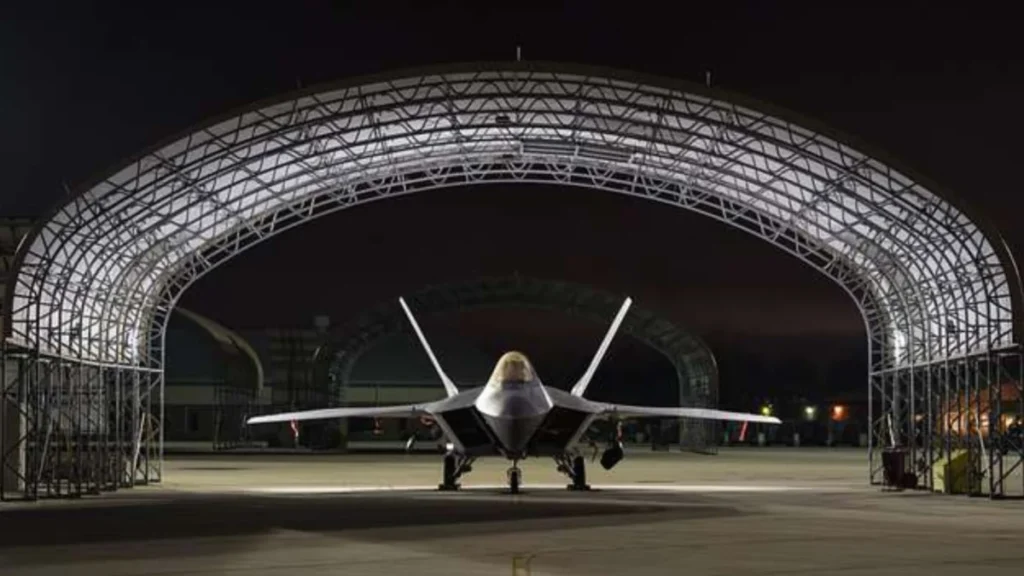
For nearly two decades, the Lockheed Martin F-22 Raptor has unequivocally served as the benchmark for air superiority, representing a pinnacle in aeronautical engineering and strategic military capability. Conceived with the singular mission to dominate adversarial fighters before their presence is even registered, this aircraft seamlessly integrates an unparalleled combination of stealth, blistering speed, extreme agility, and highly advanced sensor systems. This synergy of cutting-edge technologies has allowed the F-22 to maintain an unchallenged position in the operational fighter landscape, distinguishing it from virtually all other combat aircraft.
Despite the subsequent introduction of newer fifth-generation platforms such as the Lockheed Martin F-35 Lightning II, China’s Chengdu J-20 Mighty Dragon, and Russia’s Sukhoi Su-57 Felon, the F-22 continues to be widely regarded by defense analysts and pilots alike as the world’s premier dedicated air-superiority fighter. Its unique design philosophy, prioritizing air-to-air combat dominance above all else, sets it apart. Intriguingly, this technological marvel also holds the distinction of being among the most expensive operational fighter aircraft ever developed and fielded. This substantial cost is a direct consequence of its revolutionary, cutting-edge technology, its strictly limited production run, and the ambitious, protracted development program that brought it into existence.
The Genesis of Air Dominance: Born from the Cold War Imperative
The F-22 Raptor traces its formidable lineage back to the Advanced Tactical Fighter (ATF) program, an ambitious initiative launched by the U.S. Air Force in the early 1980s. At the zenith of the Cold War, American strategic planners faced an urgent requirement to develop a successor to the venerable F-15 Eagle. This new aircraft needed to possess capabilities far exceeding those of existing platforms to effectively counter and defeat the sophisticated emerging Soviet fighter aircraft, such as the Sukhoi Su-27 Flanker and the Mikoyan MiG-29 Fulcrum, while simultaneously being capable of surviving and operating within increasingly dense and sophisticated Soviet air defense networks. The ATF program’s objectives were audacious: to achieve a revolutionary leap in fighter aircraft performance, integrating stealth, supercruise (sustained supersonic flight without afterburners), super-maneuverability, and highly integrated avionics.
The competition for the ATF contract was fierce, pitting two formidable prototypes against each other: Lockheed’s YF-22 and Northrop’s YF-23. Both contenders pushed the boundaries of aeronautical design, incorporating stealth features and advanced engines. Ultimately, Lockheed’s YF-22 prototype emerged victorious in 1991, primarily due to its perceived lower development risk and superior maneuverability, particularly at high angles of attack. This decision propelled the YF-22 into full-scale engineering and manufacturing development, leading to the F-22 Raptor we know today. Although the geopolitical landscape dramatically shifted with the collapse of the Soviet Union before the aircraft even reached operational service, the fundamental design principles and technological advancements forged during the Cold War era proved enduringly relevant. The Raptor officially entered service with the U.S. Air Force in December 2005, bringing together a suite of technologies that were years, if not decades, ahead of their time. Unlike multi-role fighters, the F-22 was meticulously optimized for a singular, paramount mission: establishing and maintaining absolute control of the skies.
A Chronology of Development and Service
The journey of the F-22 Raptor from a conceptual blueprint to an operational warplane is marked by several key milestones:
- 1981: The U.S. Air Force initiates the Advanced Tactical Fighter (ATF) program.
- 1986: Lockheed/Boeing/General Dynamics and Northrop/McDonnell Douglas consortia are awarded demonstration/validation contracts.
- 1990: First flight of the YF-22 prototype (September 29) and the YF-23 prototype (August 27).
- 1991: The YF-22 is selected as the winner of the ATF competition (April 23).
- 1997: First flight of the F-22 production model (September 7). The aircraft is officially named "Raptor."
- 2003: First F-22 delivered to the U.S. Air Force.
- 2005: The F-22 Raptor achieves Initial Operational Capability (IOC) with the 1st Fighter Wing at Langley Air Force Base, Virginia (December 15).
- 2009: U.S. Secretary of Defense Robert Gates announces the decision to cap F-22 production at 187 operational aircraft.
- 2011: The final F-22 Raptor is delivered to the U.S. Air Force (May 2).
Unpacking the Raptor’s Edge: A Synergy of Advanced Technologies
The F-22 Raptor’s profound effectiveness stems not from any single standalone capability, but from the harmonious integration and synergistic interplay of several highly advanced technologies. This "first-look, first-shot, first-kill" philosophy defines its operational doctrine.
-
Unparalleled Stealth (Very Low Observable – VLO): Perhaps its most renowned attribute is its advanced stealth technology. Unlike conventional fighter aircraft that typically carry their armaments externally beneath their wings, which significantly increases their radar cross-section, the F-22 ingeniously stores all its weapons within internal bays. This design choice dramatically reduces its detectability. Coupled with meticulously shaped aerodynamic surfaces, such as its canted vertical stabilizers and blended wing-body design, and the extensive application of radar-absorbing materials (RAM) across its airframe, the F-22 presents an exceptionally small radar signature. This makes the aircraft exceedingly difficult to detect, track, and target by enemy radar systems, affording it the critical advantage of engaging hostile aircraft long before its own presence is compromised. This allows for a decisive "first shot" opportunity, often without the adversary even realizing they are under attack.
-
Supercruise: Sustained Supersonic Dominance: Another revolutionary feature is the F-22’s ability to "supercruise." While most fighter aircraft are compelled to engage fuel-hungry afterburners to exceed the speed of sound, the F-22 can maintain sustained supersonic flight, cruising at speeds of approximately Mach 1.5 (roughly 1,140 miles per hour) without the need for afterburner engagement. This extraordinary capability is powered by its twin Pratt & Whitney F119-PW-100 turbofan engines, which deliver an impressive 35,000 lbf (156 kN) of thrust each. The strategic advantages of supercruise are manifold: it significantly extends the aircraft’s operational range, reduces its infrared signature (as afterburners generate considerable heat), and crucially, allows the F-22 to reach combat areas more quickly while conserving vital fuel for combat maneuvers or extended patrols. This sustained high-energy maneuvering capability grants the Raptor a substantial tactical advantage over adversaries forced to cycle between subsonic and afterburner-dependent supersonic flight.
-
Thrust Vectoring: The Art of Aerobatic Superiority: The Raptor is one of the select few operational fighters equipped with two-dimensional thrust-vectoring nozzles. This innovative system allows the aircraft to direct its engine exhaust upwards or downwards by up to 20 degrees, independent of the aircraft’s aerodynamic control surfaces. This capability provides unprecedented control authority, enabling the F-22 to perform extreme maneuvers, such as post-stall maneuvers and very high angle-of-attack (AoA) flight, even when traditional aerodynamic controls become less effective at low speeds or high AoA. In the rare event that a dogfight becomes unavoidable, this super-maneuverability gives the F-22 a decisive advantage, allowing it to rapidly gain positional superiority over its opponent, making it an incredibly difficult aircraft to target and defeat in close-quarters combat.
-
Sensor Fusion: The Integrated Battlefield Picture: A truly revolutionary feature at the time of its development, and now a hallmark of fifth-generation fighters, is the F-22’s advanced sensor fusion. Rather than overwhelming the pilot with disparate information streams from multiple, independent sensors, the F-22’s sophisticated avionics integrate and combine data from its AN/APG-77 Active Electronically Scanned Array (AESA) radar, its ALR-94 passive electronic warfare system, and other onboard sensors into a single, cohesive, and highly intuitive tactical picture. This integrated display presents the pilot with a comprehensive understanding of the battlespace, reducing cognitive load and allowing for faster, more informed decision-making. This capability, often referred to as the "quarterback" role, allows the F-22 to act as a command and control node, sharing its fused sensor data with other allied aircraft, significantly enhancing overall situational awareness for the entire strike package.
-
Weaponry: The F-22’s internal weapons bays are designed to carry a potent array of air-to-air missiles. Its primary armament typically includes six AIM-120 AMRAAM (Advanced Medium-Range Air-to-Air Missile) missiles for beyond-visual-range engagements and two AIM-9 Sidewinder missiles for close-range combat. While primarily an air superiority fighter, the F-22 also has a limited ground-attack capability, being able to carry two 1,000-pound GBU-32 Joint Direct Attack Munitions (JDAMs) in its internal bays, though this is not its primary role.
The Price of Perfection: Analyzing the F-22’s Exorbitant Cost
The F-22 Raptor’s reputation as one of the world’s most expensive fighter aircraft is well-earned and stems from a complex interplay of factors beyond just its advanced technology. The total program cost, encompassing research, development, and procurement, has been estimated to exceed US$67 billion. When calculated per aircraft, depending on the methodology and what costs are included (R&D spread across the fleet, flyaway cost, or total program cost), the figures vary significantly. The unit procurement cost was around US$150 million, but the total program cost per aircraft, including R&D, is frequently cited as exceeding US$300 million.
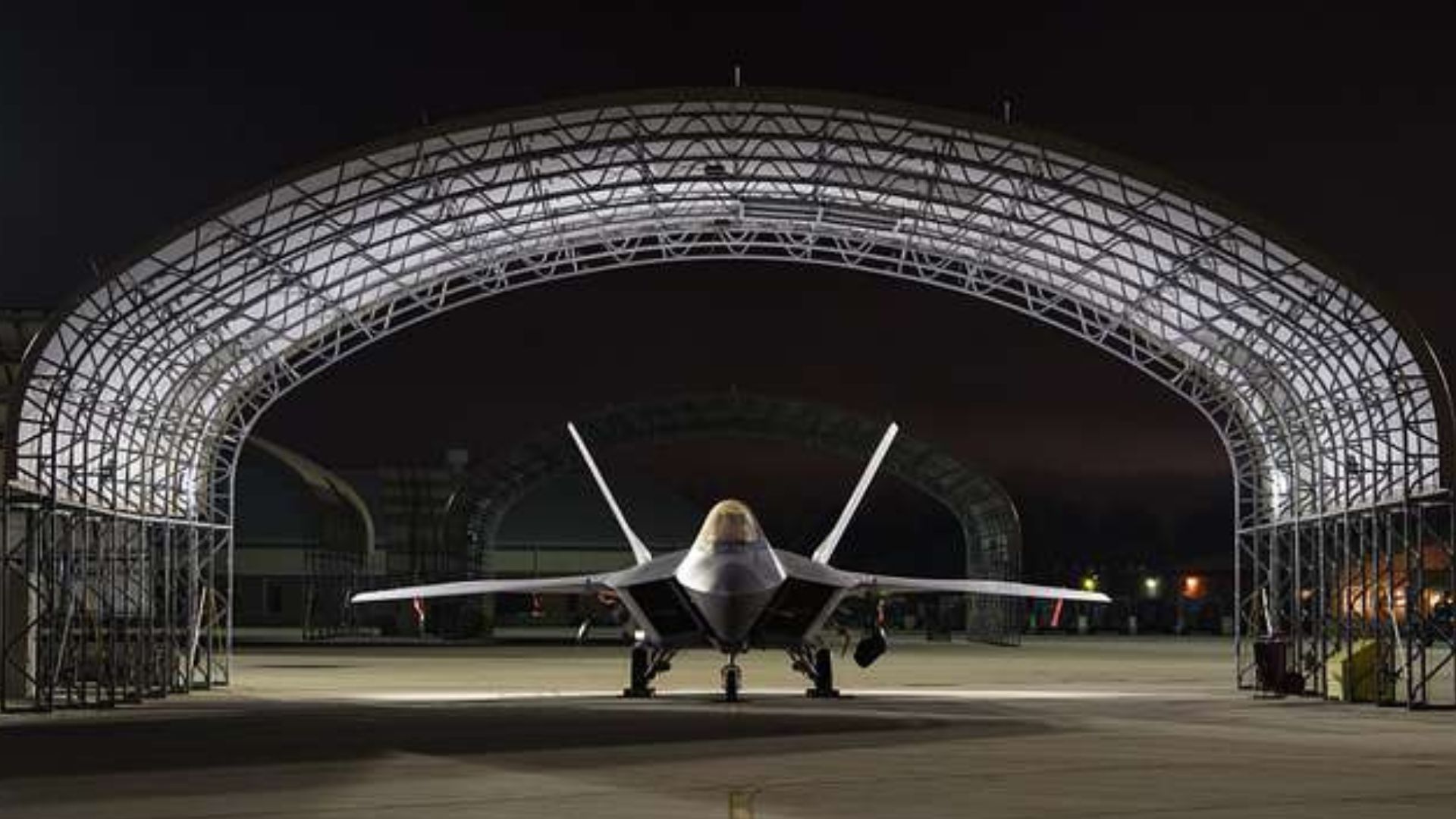
A primary contributor to this astronomical cost was the significantly limited production run. Originally, the U.S. Air Force envisioned procuring 750 ATF aircraft. This number was progressively reduced over the years, eventually settling on a figure of 187 operational F-22s before the program was curtailed in 2009, with final production ceasing in 2011. Spreading billions of dollars in highly specialized research and development costs across a relatively small fleet inherently drove the overall cost per aircraft dramatically higher. Each F-22 essentially bore a larger share of the initial investment.
The sophisticated stealth coatings, intricate advanced avionics, the powerful AN/APG-77 AESA radar, and the deeply integrated mission systems all represent bleeding-edge technology that was exceptionally costly to develop and manufacture. Furthermore, the F-22’s maintenance and sustainment costs are also substantial. Its stealth features require specific, labor-intensive care, and its advanced systems demand highly specialized technicians and expensive spare parts. According to some reports, the F-22’s operating cost per flight hour can range from US$30,000 to over US$60,000, making it one of the most expensive aircraft to operate in the U.S. inventory.
The decision to curtail F-22 production was a highly debated political and strategic choice. In the post-Cold War landscape, with the perceived absence of a peer adversary and the rising demands for counter-insurgency and asymmetrical warfare capabilities, defense budgets shifted. Secretary of Defense Robert Gates argued that the F-22 was a "single-mission" aircraft ill-suited for the evolving threats, and that resources should be redirected towards the more versatile, multi-role F-35, which also offered significant export potential. While the decision saved money in the short term, many critics argued it left the U.S. Air Force with an insufficient number of dedicated air superiority fighters, a sentiment that has gained traction with the re-emergence of near-peer competition.
An Exclusive Arsenal: Why the F-22 Remains Solely American
Unlike the F-35 Lightning II, which was specifically designed from its inception as a multinational program with export in mind, the F-22 Raptor has never been exported to any other nation. This exclusivity is not due to a lack of interest from allies but is primarily mandated by U.S. law, specifically the Obey Amendment. This legislation, passed by the U.S. Congress, explicitly prohibited the export of the aircraft to safeguard its highly classified technologies.
American officials harbored profound concerns that the Raptor’s groundbreaking stealth design, its sophisticated electronic warfare capabilities, its advanced radar systems, and its proprietary mission software could be compromised, reverse-engineered, or potentially fall into adversarial hands if the aircraft were sold overseas. The strategic advantage conferred by these technologies was deemed too critical to risk through proliferation, even to the closest of allies.
Consequently, close strategic partners including Japan, Australia, and Israel, all of whom expressed significant interest in acquiring the F-22 to bolster their own air defense capabilities, were ultimately unable to do so. Japan, for instance, considered the F-22 as a potential cornerstone for its future air force but was denied access, eventually opting for a substantial order of F-35s. Australia and Israel faced similar denials. As a direct result of this policy, the F-22 remains an exclusive asset of the U.S. Air Force, making it one of the rarest and most strategically guarded fifth-generation fighters in operational service globally. This policy underscores the U.S. commitment to maintaining a qualitative military edge by retaining absolute control over its most advanced air superiority technologies.
Operational Footprint and Enduring Relevance
Despite its relatively limited production numbers and the conclusion of its manufacturing more than a decade ago, the F-22 Raptor continues to be a cornerstone of American air superiority doctrine. Its primary role, as envisioned, is to serve as an air dominance fighter, establishing and maintaining control of the airspace in potential high-intensity conflicts. Due to its specialized nature and the absence of direct peer-on-peer air-to-air engagements in recent conflicts, the F-22 has seen limited direct combat. Its most notable combat deployments involved operations over Syria against ISIS targets, where it primarily conducted ground attack missions using JDAMs – a role for which it was not primarily designed, highlighting its adaptability but also its underutilization in its intended capacity.
The F-22’s true value lies in its deterrent capability and its role in maintaining a qualitative edge in exercises and potential flashpoints. It regularly participates in major exercises, demonstrating its formidable capabilities and serving as a crucial component in maintaining the U.S.’s global power projection. Its presence alone significantly complicates enemy air defense planning and operations.
Maintaining such a specialized and aging fleet presents ongoing challenges. The U.S. Air Force continuously invests in modernization and sustainment programs for the F-22, including software upgrades to keep its avionics relevant, structural repairs to extend its service life, and enhancements to its AN/APG-77 radar. The unique stealth coatings require meticulous and frequent maintenance, contributing to the aircraft’s high operational costs and maintenance demands.
When compared to other fifth-generation fighters, the F-22 maintains a distinct niche. The F-35, while also stealthy and highly advanced, is a multi-role strike fighter designed for versatility across air-to-ground and air-to-air missions, often at a lower cost per unit. The F-22, conversely, is singularly focused on air superiority, offering unmatched speed, agility, and stealth for air-to-air engagements. China’s J-20 Mighty Dragon and Russia’s Su-57 Felon are still evolving platforms, and while they incorporate some stealth features and advanced avionics, their overall integration, stealth characteristics, and engine performance are generally considered by Western analysts to lag behind the mature F-22 design. The F-22’s full integration of "super-capabilities" (stealth, supercruise, super-maneuverability, sensor fusion) remains unparalleled.
The Raptor’s Legacy and the Future of Air Combat
Despite the cessation of its production, the F-22 Raptor’s influence on the design philosophy and strategic requirements of newer combat aircraft remains profound and indelible. Its pioneering combination of stealth, supercruise, super-maneuverability, and comprehensive sensor fusion not only set the standard but effectively defined what constitutes a fifth-generation fighter. Every subsequent advanced fighter program has had to contend with the bar set by the Raptor.
As the U.S. Air Force looks to the future, programs such as the Next Generation Air Dominance (NGAD) initiative are poised to eventually succeed the F-22. NGAD represents an ambitious leap towards a "system-of-systems" approach, envisioning a network of manned and unmanned platforms, advanced sensors, and sophisticated data fusion, rather than a single aircraft. Yet, even these nascent sixth-generation programs draw heavily on the lessons learned and the technological precedents established by the F-22. The Raptor’s legacy is not just in its individual capabilities but in its holistic approach to air combat dominance.
Nearly two decades after its operational debut, the Lockheed Martin F-22 Raptor continues to be celebrated as one of the most capable, formidable, and influential fighter aircraft ever conceived and brought into service. It stands as a testament to audacious engineering, strategic foresight, and the enduring quest for absolute air superiority, securing its place as an icon in the annals of aviation history.






