HANOVER, Md. – The U.S. Navy has taken a monumental leap in modernizing its fleet sustainment and expeditionary operations capabilities with the deployment of 24 advanced manufacturing systems. This strategic initiative, centered on a combination of hybrid and additive manufacturing technologies, is designed to equip sailors with the crucial skills needed to fabricate and repair vital components at sea or in forward-deployed environments, thereby drastically reducing reliance on traditional, often time-consuming, supply chains. This expansion marks a pivotal moment in the Navy’s commitment to embracing cutting-edge technology for enhanced operational readiness and self-sufficiency.
Background: The Imperative for On-Demand Manufacturing
The U.S. Navy operates a global fleet, often far from established repair facilities and traditional supply depots. This distributed operational model, increasingly emphasized in modern naval doctrine, presents significant logistical challenges. The availability of spare parts, particularly for aging platforms or specialized components, can often be a bottleneck, leading to extended repair times, increased costs, and potential mission delays. Historically, the military supply chain has been characterized by long lead times, complex inventory management, and a vast global logistics network, all of which are susceptible to disruption.
For years, the Department of Defense (DoD) has been exploring and investing in additive manufacturing (AM), commonly known as 3D printing, as a transformative solution. The vision is to enable "parts closer to the point of need," a concept that aims to decentralize manufacturing capabilities and empower warfighters with the ability to produce critical items on-site. This not only reduces the logistical footprint and associated costs but also significantly enhances operational agility and resilience in contested environments. The Navy, in particular, has been at the forefront of this exploration, conducting numerous pilot programs and installing smaller-scale AM systems on various vessels and shore facilities over the past decade. These early efforts, while valuable, often focused on prototyping or non-critical components. The current deployment signifies a substantial escalation, moving towards production-ready manufacturing for critical applications.
A Dual Approach: Hybrid and Composite Technologies
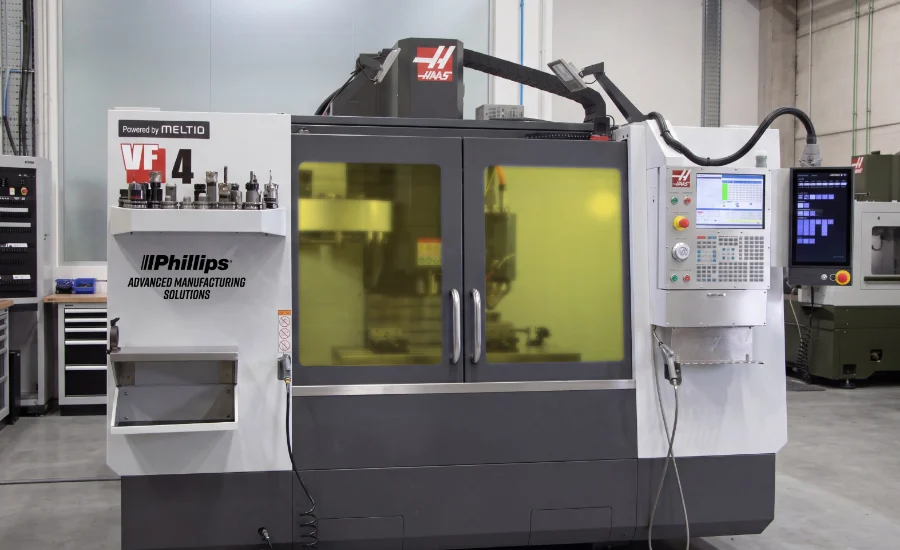
The substantial investment includes 12 Phillips Hybrid Manufacturing Systems and 12 Markforged X7 composite additive manufacturing systems. This dual deployment strategy provides a comprehensive manufacturing toolkit, allowing sailors to tackle a wide array of repair and production tasks. The new equipment has been strategically installed at the Navy’s Schoolhouse in Danville, Virginia, where it will serve as the cornerstone of the Navy’s Afloat Training Program, providing sailors with indispensable hands-on experience.
The Phillips Hybrid Manufacturing Systems represent a sophisticated fusion of traditional and advanced manufacturing techniques. These systems combine Computer Numerical Control (CNC) machining with Meltio’s directed energy deposition (DED) technology. CNC machining provides the precision and material removal capabilities of conventional manufacturing, ideal for finishing parts to exact specifications or machining complex geometries. The DED technology, on the other hand, is an additive process where a focused energy source (such as a laser or electron beam) melts wire or powder material as it is deposited, building up a part layer by layer. This hybrid approach offers unparalleled versatility. According to Phillips Federal, these systems enable operators to not only manufacture entirely new components from scratch but also to repair worn or damaged parts, restore high-value assets, and add material precisely where needed. This capability is particularly critical for expensive, long-lead-time components that would otherwise require extensive repair processes or complete replacement. For instance, instead of scrapping a large, complex metal component with localized wear, DED can be used to rebuild the worn area, followed by CNC machining to restore it to its original specifications, thereby extending its service life and saving significant resources.
Complementing the hybrid systems are the 12 Markforged X7 composite additive manufacturing systems. These machines specialize in printing strong, lightweight parts using continuous carbon fiber and other advanced composites. While metal AM excels at structural and high-stress applications, composite AM shines in creating tooling, fixtures, prototypes, and replacement parts that require high strength-to-weight ratios, durability, and resistance to harsh environments. The ability to rapidly produce custom jigs, fixtures, and other manufacturing aids on demand can dramatically streamline repair processes and improve efficiency. Furthermore, printing replacement parts from composites for non-metallic or less structurally critical applications can be achieved quickly and cost-effectively, reducing the need to carry extensive inventories of such items. The synergy between these two distinct yet complementary technologies ensures that the Navy’s manufacturing capabilities are robust, adaptable, and capable of addressing a broad spectrum of operational needs.
Empowering Sailors: The Danville Schoolhouse and Training Curriculum

The choice of the Navy’s Schoolhouse in Danville, Virginia, as the central training hub underscores the Navy’s commitment to foundational education in these advanced technologies. This dedicated facility will provide a structured and controlled environment for sailors to gain proficiency in operating, maintaining, and troubleshooting these complex systems. The Afloat Training Program is designed to imbue sailors with practical, production-ready manufacturing skills.
The training curriculum is expected to be comprehensive, covering not just the mechanics of operating the machines but also the broader principles of additive and hybrid manufacturing. This includes material science relevant to different printing processes, design for additive manufacturing (DfAM) principles, post-processing techniques, quality control, and safety protocols. Sailors will learn how to interpret engineering drawings, prepare CAD models for printing, select appropriate materials, optimize print parameters, and perform necessary post-print finishing operations. Emphasis will be placed on real-world scenarios, simulating the types of parts and repairs sailors would encounter aboard a naval vessel or in an expeditionary setting. This hands-on approach ensures that graduates of the program are not merely machine operators but skilled technicians capable of independent problem-solving and innovative application of these technologies. Ultimately, the goal is to cultivate a cadre of "digital artisans" who can leverage these tools to maintain mission readiness under any circumstances.
Operational Impact: "Parts Closer to the Point of Need" in Action
The deployment of these systems directly supports the Navy’s broader strategy of producing parts closer to the point of need. This strategy has profound implications for naval operations, particularly in an era of distributed maritime operations (DMO) and great power competition. By enabling shipboard or forward-deployed manufacturing, the Navy can:
- Reduce Logistics Tail: Less reliance on a lengthy and vulnerable supply chain means fewer cargo ships, fewer aircraft, and fewer personnel dedicated to transporting spare parts, freeing up valuable resources.
- Enhance Operational Readiness: Faster repair times mean less downtime for critical assets. A ship that can print a broken part in hours or days, rather than waiting weeks or months for resupply, remains mission-capable for longer.
- Improve Resilience: In contested environments, traditional supply lines can be targeted. On-demand manufacturing provides a vital layer of redundancy and self-sufficiency, ensuring that forces can sustain operations even when isolated.
- Cost Savings: While the initial investment in AM systems is significant, the long-term savings from reduced inventory, fewer expedited shipping costs, and extended equipment life can be substantial.
- Foster Innovation: Empowering sailors with manufacturing capabilities encourages a culture of innovation and problem-solving, as they can rapidly prototype and implement solutions to unforeseen challenges.
The shipboard production of a replacement sprayer plate aboard the USS Bataan stands as a compelling example of this technology’s operational utility. While the specific details of the incident are not fully public, such a scenario typically involves a critical component failing, which, if not replaced, could impair the vessel’s operations. Traditionally, procuring such a part might involve identifying the correct component, ordering it through a complex supply chain, waiting for it to be shipped (potentially across oceans), and then installing it. This process could take days, weeks, or even longer, depending on the part’s rarity and the ship’s location. By manufacturing the sprayer plate on board using additive technology, the USS Bataan likely circumvented these delays, restored full functionality much faster, and continued its mission without significant interruption. This single instance demonstrates the tangible benefits of reducing a logistical problem to an engineering challenge solvable within the operational footprint.
Statements and Future Outlook
While specific official statements from Navy leadership regarding this particular deployment were not provided in the original brief, it can be logically inferred that this initiative aligns perfectly with the Navy’s stated goals for technological modernization and warfighter empowerment. Navy officials have consistently emphasized the strategic importance of additive manufacturing in enhancing fleet readiness, reducing logistics burdens, and fostering innovation. Leaders would likely highlight how this investment is a critical step towards creating a more resilient and self-sufficient naval force, capable of operating effectively across the globe. They would underscore the commitment to equipping sailors with the advanced skills necessary to meet future challenges.
Representatives from Phillips Federal and Markforged would undoubtedly express pride in their role in supporting national defense. They would likely emphasize the robustness and reliability of their systems, designed to perform in challenging maritime environments, and their dedication to providing comprehensive training and support to ensure the Navy maximizes the utility of these technologies.
Looking ahead, this deployment is likely just one phase in a broader, long-term strategy. The Navy will continue to refine its AM capabilities, exploring new materials, developing more advanced design and simulation tools, and expanding the range of parts that can be manufactured at the point of need. Challenges remain, including the rigorous qualification of additively manufactured parts for critical applications, intellectual property concerns, and ensuring widespread adoption across the fleet while maintaining consistent quality standards. However, by investing in comprehensive training at institutions like the Danville Schoolhouse, the Navy is building the human capital necessary to overcome these hurdles. This strategic move is not just about installing machines; it’s about transforming the culture of maintenance and logistics within the Navy, preparing it for an increasingly complex and demanding operational landscape. It represents a significant stride towards a future where naval forces are not only powerful but also inherently agile, adaptable, and self-reliant.