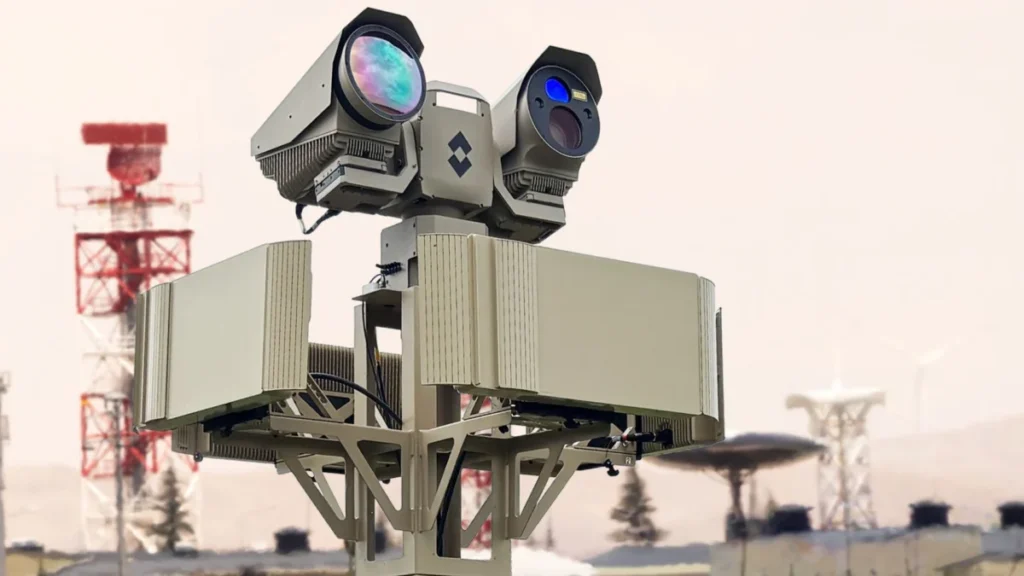
The U.S. Air Force is significantly enhancing its domestic counter-unmanned aircraft system (C-UAS) capabilities through a strategic delivery order that integrates Teledyne FLIR Defense’s cutting-edge Argus XL platform into AeroVironment’s Titan Multi-Sensor (Titan MS) counter-unmanned aircraft system. This critical development falls under a robust three-year, $500 million Indefinite Delivery, Indefinite Quantity (IDIQ) contract, specifically designed to bolster the Joint Interagency Task Force 401 (JIATF 401) Domestic Shield Program. The program’s overarching mission is to safeguard military installations, critical infrastructure, and sensitive government facilities across the United States from the ever-evolving spectrum of aerial threats posed by unmanned aircraft. This latest integration marks a pivotal step in establishing a more resilient and responsive defense network against illicit drone activity.
The Evolving Threat Landscape: Drones and National Security
The proliferation of unmanned aerial systems (UAS), commonly known as drones, has dramatically reshaped the security landscape globally. What began as a technological marvel for hobbyists and commercial applications has, in recent years, become a significant concern for national security agencies worldwide. The ease of access, relatively low cost, and increasing sophistication of drones—ranging from commercially available quadcopters to purpose-built, weaponized platforms—present a formidable challenge. These devices can be employed for a myriad of illicit activities, including espionage, smuggling, reconnaissance, or even direct attacks, posing risks to personnel, disrupting operations, and potentially causing extensive damage to critical infrastructure.
Military bases, government facilities, power plants, airports, and other high-value assets are particularly vulnerable. Small and micro-drones, often difficult to detect due to their size, low radar cross-section, and acoustic signatures, can evade traditional security measures. Their ability to fly at low altitudes, in cluttered environments, and with enhanced endurance and range exacerbates the detection challenge. Incidents involving unauthorized drone flights near sensitive sites have become increasingly common, underscoring the urgent need for advanced, multi-layered defensive systems capable of identifying, tracking, and neutralizing these threats before they can cause harm. The U.S. Air Force’s investment in the Titan MS with Argus XL is a direct response to this escalating and dynamic threat.
JIATF 401 and the Domestic Shield Program: A Shield Against Aerial Incursion
The Joint Interagency Task Force 401 (JIATF 401) operates at the nexus of military and interagency cooperation, focusing on securing domestic assets from emerging threats. While specific details of JIATF 401’s structure and operations are often classified for security reasons, such task forces are typically established to address complex security challenges that transcend the capabilities of a single agency or military branch. Their mandate often involves coordinating intelligence, surveillance, and reconnaissance (ISR) efforts, sharing threat data, and deploying integrated defensive solutions.
The Domestic Shield Program, under the purview of JIATF 401, is a critical initiative designed to implement robust, persistent C-UAS coverage across vital domestic locations. Its establishment reflects a strategic shift towards proactive defense, acknowledging that passive security measures are insufficient against sophisticated aerial threats. The program emphasizes a layered defense approach, aiming to create multiple echelons of detection and response around protected areas. This strategy is crucial because no single sensor or countermeasure is foolproof; a combination of technologies significantly increases the probability of early detection and successful interdiction. The $500 million IDIQ contract signifies a long-term commitment to evolving and enhancing these protective measures as drone technology continues its rapid advancement.
Technological Synergy: Argus XL and Titan Multi-Sensor Architecture
At the heart of this enhanced C-UAS capability lies the synergistic integration of Teledyne FLIR Defense’s Argus XL platform with AeroVironment’s Titan Multi-Sensor architecture. The Argus XL is not merely a component; it forms the very sensing backbone of the Titan MS system, providing the comprehensive situational awareness necessary for effective counter-drone operations.
The Argus XL platform is engineered to combine multiple advanced sensing modalities and sophisticated command-and-control (C2) software. Its core technologies include:
- Radar: The radar component extends surveillance capabilities over longer distances, acting as the primary long-range detection system. It is designed to pick up the signatures of even small and micro-drones, which can be challenging for other sensor types. Radar provides crucial initial detection and tracking data, especially in adverse weather conditions where optical sensors might be limited.
- Electro-Optical (EO) Imaging: High-resolution visible light cameras provide crucial visual identification and classification of detected targets. Once a drone is detected by radar, the EO cameras can zoom in to provide clear imagery, allowing operators to determine the drone’s type, size, and potential payload, which is vital for threat assessment.
- Infrared (IR) Imaging: Thermal cameras are indispensable for round-the-clock surveillance, particularly in low-light or no-light conditions, as well as through obscurants like fog or smoke. IR sensors detect heat signatures, making them highly effective at identifying drones that might otherwise be visually obscured or camouflaged. This capability ensures continuous situational awareness, irrespective of environmental factors.
- Integrated Command-and-Control (C2) Software: This proprietary software is the brain of the system, fusing data streams from all integrated sensors into a single, cohesive operating picture. This unified display provides operators with real-time, comprehensive information about the airspace around sensitive sites. The C2 software also facilitates rapid decision-making by correlating sensor inputs, reducing false positives, and prioritizing threats. Furthermore, the system archives operational data, enabling post-mission analysis, threat pattern identification, and continuous improvement of defensive protocols.
AeroVironment’s Titan Multi-Sensor architecture, with Argus XL as its core, is designed for fixed-site deployment, providing hemispherical detection coverage. This means it can monitor the entire surrounding airspace, eliminating blind spots that could be exploited by adversaries. The system’s ability to identify multiple airborne targets simultaneously and maintain surveillance continuously, even in demanding weather, is a testament to its robust design and the effectiveness of multi-sensor fusion.
Strategic Advantages: Layered Defense and Open Architecture
The selection of the Titan Multi-Sensor system by JIATF 401 underscores a commitment to a sophisticated, layered defense network. A layered approach is paramount in C-UAS strategy because it leverages the strengths of diverse technologies while mitigating individual weaknesses. For instance, radar excels at long-range detection but may struggle with precise identification, where EO/IR cameras excel. By combining these, the system achieves both broad coverage and granular detail. This layered defense significantly improves response times by providing operators with a clearer, more complete picture of aerial activity, allowing for earlier threat assessment and the deployment of appropriate countermeasures.
A key strategic advantage highlighted by officials is the platform’s open architecture. This design philosophy allows for the seamless integration of third-party radio-frequency (RF) sensors and various defeat systems. This flexibility is crucial in a rapidly evolving threat landscape. As new drone technologies emerge and new countermeasure solutions are developed, the Titan MS system can adapt without requiring a complete redesign or costly overhaul. This "plug-and-play" capability ensures the system remains relevant and effective over its operational lifespan, offering military users the agility to evolve their defensive posture. For example, if a new type of jamming or kinetic interdiction system becomes available, it can be integrated into the existing architecture, enhancing the overall C-UAS capability. This forward-thinking design significantly reduces the total cost of ownership and maximizes the return on investment.
Industry Perspectives and Collaborative Innovation
The collaboration between Teledyne FLIR Defense and AeroVironment exemplifies the critical partnerships required to address complex national security challenges. Dr. JihFen Lei, president of Teledyne Defense and Aerospace Group and senior vice president of Teledyne Technologies, emphasized the importance of this joint effort: “We are proud to collaborate with AV to deliver advanced counter-drone technology that enables the U.S. military to detect, classify, track, and respond to increasingly complex unmanned aerial threats.”
Dr. Lei further elaborated on the foundational role of reliable detection in any successful C-UAS operation. "Systems such as Argus XL and Cerberus XL provide mission-ready capabilities that serve as key elements of the Titan solution," he stated. "Successful counter-drone operations begin with reliable detection because operators cannot stop threats they fail to locate." This statement succinctly captures a core truth in security: visibility is the prerequisite for action. The investment in robust detection capabilities like Argus XL ensures that military operators have the necessary intelligence to make informed decisions and deploy countermeasures effectively. This integrated approach, combining advanced sensors with sophisticated software, represents a significant leap forward from earlier, often ad-hoc, C-UAS solutions.
Broader Implications for National Security and the Future of C-UAS
The latest delivery order under the Domestic Shield Program signifies more than just a technological upgrade; it reinforces the U.S. Air Force’s strategic effort to field persistent, layered protection against evolving unmanned aerial threats. This move sets a precedent for how critical infrastructure and military assets will be defended in the coming decades.
The implications for national security are substantial:
- Enhanced Force Protection: By mitigating the threat of unauthorized drones, the system directly enhances the safety and security of military personnel and assets on domestic bases.
- Operational Continuity: Preventing drone incursions safeguards critical operations from disruption, ensuring mission readiness and continuity.
- Intelligence Gathering and Threat Analysis: The system’s ability to archive operational data provides invaluable intelligence for understanding evolving drone tactics, techniques, and procedures (TTPs), allowing for proactive adjustments to defensive strategies.
- Deterrence: A visibly robust C-UAS capability acts as a deterrent to potential adversaries or malicious actors contemplating drone-based attacks or surveillance.
- Standardization and Interoperability: The deployment of a standardized, open-architecture system across multiple sites can foster greater interoperability and shared best practices among different military units and interagency partners.
Looking ahead, the field of counter-UAS technology is expected to continue its rapid evolution. Future advancements may include even more sophisticated artificial intelligence and machine learning algorithms for autonomous threat identification, enhanced swarm defense capabilities, and the integration of non-kinetic and kinetic effectors tailored to specific threat profiles. The current investment in the Titan MS with Argus XL positions the U.S. Air Force at the forefront of this evolution, establishing a scalable and adaptable foundation for future C-UAS innovations. This strategic move ensures that the nation’s critical assets remain protected against the ever-present and continually advancing threat of unmanned aerial systems.






