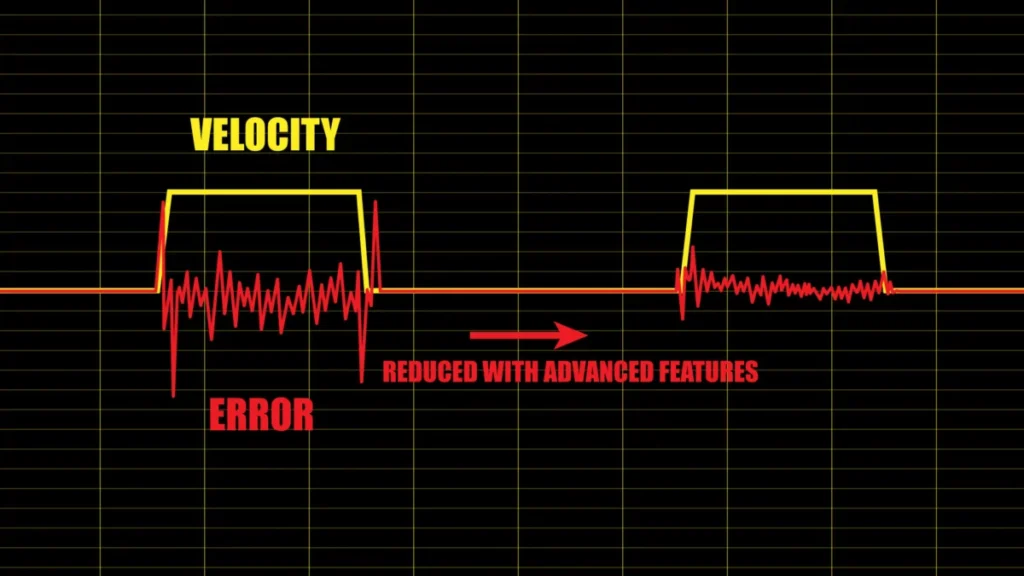
In the intricate landscape of high-precision manufacturing and automation, achieving truly exemplary motion control transcends the mere summation of individual component specifications. While mechanical actuators are frequently assessed by fundamental metrics such as repeatability, accuracy, and load capability—a sufficient approach for many standard applications—the pursuit of ultimate precision demands a far more nuanced and integrated understanding of the entire motion control ecosystem. This holistic perspective, championed by industry experts like Corey Foster, Director of Automation Sales & Application Engineering at Valin Corporation, highlights the indispensable role of drives and controls as the intellectual core orchestrating precision movement.
This article, the third installment in a comprehensive series, delves into the critical contributions of drives and controls to overall system performance. The preceding articles established foundational insights, with the first examining the mechanics and often-overlooked factors like bearing deflection, body stiffness, and structural smoothness. The second part meticulously explored motors, dissecting their designs, construction, and quality. Now, the focus shifts to the sophisticated designs and features of drives and controls, revealing how these electronic brains dictate the success or failure of high-performance expectations, particularly as systems push beyond micron-level accuracy. In such demanding environments, traditional specifications often lose their conventional relevance, making meticulous engineering decisions paramount for engineers, designers, and system integrators.
The Evolving Landscape of Precision Motion Control
The journey towards modern precision motion control has been one of continuous technological advancement. Early industrial applications relied on rudimentary electrical systems where power was directly applied to motors, resulting in simple, often uncontrolled, rotational or linear motion. The advent of drives marked a significant leap, introducing electronic power conditioning to regulate voltage and current, thereby enabling smoother and more efficient motor operation. Controllers subsequently added layers of intelligence, transforming simple movement into programmed motion profiles with defined acceleration, velocity, and positioning.
This evolution from basic electrical switches to sophisticated digital control systems has been largely driven by the burgeoning demands of industries requiring ever-increasing precision. From the micron-level accuracy required in semiconductor fabrication and medical device manufacturing to the intricate choreography of robotics in aerospace and automotive production, the need for precise, repeatable, and adaptable motion has become a cornerstone of modern industrial capability. The global motion control market, valued at over $15 billion in 2023, is projected to grow significantly, underscoring the continuous innovation in this field, particularly in advanced drives and controls that can meet the escalating demands for higher speeds, greater accuracy, and enhanced flexibility.
Drives and Controls: The Orchestrators of Movement
Corey Foster’s framework categorizes motion control performance into three general tiers: basic, specification-level, and pushing-beyond-the-specifications. This categorization is equally applicable to the design and implementation of drives and controls, illustrating how their capabilities must align with the application’s precision requirements.
1. Basic Applications: Foundational Compatibility
At the most fundamental level, electric motor applications require little inherent intelligence. Power is applied, and the motor simply turns. For such basic tasks, the primary role of drives is to ensure efficient and smooth power delivery, while controllers might offer rudimentary functions like on/off switching or simple speed adjustments. In these scenarios, the main requirement for the electronics is compatibility with the motor, ensuring reliable operation. Tuning features, if available, are often left at their default settings, as the performance demands do not necessitate fine-grained optimization. Examples include conveyor belts, simple pumps, or fans where precise positioning or dynamic response is not critical. The market for these basic components remains substantial, forming the bedrock of industrial automation.
2. Specification-Level Applications: Unlocking Performance Through Tuning
As applications demand tighter control, the inherent features of drives and controllers become increasingly vital. This tier encompasses scenarios where specific performance metrics—such as precise speed regulation, controlled acceleration/deceleration, or basic positioning—are essential. Here, tuning features move from optional conveniences to critical necessities. Proper adjustment of parameters like proportional-integral-derivative (PID) gains, feedforward terms, and filters is crucial to achieve the desired motion profile and sequence of actions.
Industry data suggests that a significant percentage of performance issues in this tier stem from improper setup or missing settings. These issues, ranging from slow and unresponsive motion to overly aggressive and unstable oscillations, are often a direct result of inadequate training or a superficial understanding of control system tuning. A common pitfall in this segment is the attempt to pair a high-performance motor with lower-performance electronics. While this might suffice in less demanding situations, it invariably leads to suboptimal performance, making the system challenging to tune and often failing to meet its potential. Manufacturers consistently emphasize the importance of matching the control electronics’ capabilities with the motor’s performance potential to avoid these common pitfalls, stressing that a well-integrated system often outperforms a collection of individually high-spec components.

3. Pushing Beyond the Specifications: The Realm of Ultra-Precision
The most demanding applications, those requiring accuracy beyond typical datasheet specifications (e.g., sub-micron positioning, ultra-smooth velocity control, or high-speed contouring), necessitate a profound investment in advanced drives and controls. In these scenarios, the electronics are not merely support systems but active determinants of overall system performance. The distinction between merely functioning and truly excelling lies in the sophistication of the control algorithms and hardware.
Advanced Features: Unlocking New Capabilities
High-performance applications require a suite of advanced capabilities embedded within the drives and controllers:
- Dynamic and Adaptable Gains: Unlike fixed PID loops, advanced controllers feature algorithms that can dynamically adjust gains based on load changes, speed variations, or external disturbances. This includes adaptive control, gain scheduling, and model-predictive control, which ensure optimal response across a wide range of operating conditions, critical for applications with varying payloads or highly dynamic movements.
- Multi-axis Synchronization: For complex multi-axis mechanics such as gantries, Cartesian robots, or parallel kinematics, precise coordination between axes is paramount. Advanced controllers offer sophisticated interpolation capabilities, path planning algorithms, and synchronized motion profiles, ensuring that multiple motors move in perfect harmony. This is vital in processes like 3D printing, laser cutting, or semiconductor wafer handling, where even slight desynchronization can lead to catastrophic errors.
- Fast Update Rates: The speed at which the controller processes feedback and updates control commands directly impacts precision and responsiveness. High-performance systems demand fast servo sampling and update rates (often in the kilohertz range) for tight current and voltage control, minimizing ripple, improving stiffness, and enabling rapid disturbance rejection. This rapid feedback loop is essential for maintaining stability and accuracy in highly dynamic environments.
- High-Speed Processors and Real-time Operating Systems: To handle complex algorithms, execute multi-axis synchronization, and process real-time sensor data without lag, advanced controllers are equipped with powerful processors and optimized real-time operating systems. This computational horsepower prevents bottlenecks in command processing, ensuring deterministic and responsive control, a non-negotiable requirement for high-speed, high-precision operations.
- Environmental Adaptability and Disturbance Rejection: Real-world industrial environments are rarely sterile or perfectly stable. External factors such as electrical noise, mechanical vibrations, temperature fluctuations, or even proximity to other machinery (e.g., arc-welders, forklifts) can significantly degrade motion performance. Advanced drives and controls incorporate tools to mitigate these disturbances.
- Notch Filters: These are crucial for suppressing specific resonant frequencies that can cause unwanted vibrations in the mechanical system, often without impacting the overall system bandwidth.
- Dynamic Tuning Parameters: The ability to adjust tuning parameters on-the-fly or based on pre-programmed conditions allows the system to adapt to changing environmental factors or load characteristics, maintaining optimal performance.
- Advanced Disturbance Observers: These algorithms estimate and compensate for external forces or torques acting on the system, further enhancing robustness.
An illustrative case involved an OEM whose precision tool performed flawlessly in its isolated laboratory environment. However, upon deployment to a real-world factory floor, replete with electrical interference from arc-welders and mechanical vibrations from heavy machinery, the tool’s controls proved inadequate. Lacking features like adaptive notch filters and dynamic tuning parameters, the system struggled to maintain precision, necessitating a costly upgrade to a more robust control platform capable of real-time environmental adaptation.
Beyond the Datasheet: Critical Overlooked Factors
Even with advanced features, several critical factors often go unnoticed on standard datasheets but profoundly influence the final system performance:
- "Auto-tuning" as a Starting Point, Not a Silver Bullet: While many modern drives offer auto-tuning functionalities, these are best understood as intelligent starting points rather than definitive solutions. Auto-tuning algorithms can quickly generate initial control parameters, significantly reducing commissioning time. However, for applications pushing the boundaries of precision, manual fine-tuning by an experienced engineer remains indispensable. This expert intervention allows for nuanced adjustments that account for specific load characteristics, resonance frequencies, and desired dynamic responses that generic auto-tuning might miss, optimizing the system for peak performance and stability.
- Encoder Resolution and Compatibility: The feedback loop, crucial for closed-loop control, relies heavily on encoders. The encoder’s resolution must be meticulously matched to both the application’s precision goal and the electronics’ processing capabilities. A high-resolution encoder is useless if the controller cannot process its signals at a sufficient rate or if its internal resolution for position calculation is lower. Conversely, a low-resolution encoder will inherently limit the achievable precision, regardless of how sophisticated the drive and controller are. Considerations include incremental vs. absolute encoders, the interpolation capabilities of the drive, and the noise immunity of the encoder signal.
- Fieldbus Communication Protocols: In multi-axis systems or integrated automation architectures, the speed, determinism, and coordination offered by the communication protocol are critical. Standard industrial Ethernet protocols might offer high bandwidth, but their real-time performance can vary significantly. High-performance applications demand dedicated real-time Ethernet protocols such as EtherCAT, PROFINET IRT, or SERCOS III. These protocols are designed for deterministic communication, ensuring that control commands and feedback data are exchanged with minimal latency and jitter, which is essential for synchronized motion and rapid response across multiple axes. The choice of protocol directly impacts the system’s ability to coordinate complex movements and react to events in real-time.
Industry Implications and Future Outlook
The relentless pursuit of precision in motion control has profound implications across various industries. In semiconductor manufacturing, the ability to position wafers with nanometer accuracy directly translates to higher chip yields and the production of smaller, more powerful transistors. In medical devices, ultra-precise motion enables robotic surgery with enhanced dexterity and minimally invasive procedures. Additive manufacturing relies on precise control of deposition heads to create intricate geometries with superior surface finish and material properties. The aerospace sector leverages advanced motion control for automated assembly of large structures and precise control of testing equipment.
Industry leaders consistently emphasize that the future of automation hinges on the seamless integration of mechanics, motors, and intelligent controls. Manufacturers like ACS Motion Control, whose ECM series exemplifies high-performance controllers with integrated drives, are at the forefront of this trend. Their platforms leverage powerful servo control algorithms, fast sampling rates, and advanced power electronics to deliver unparalleled precision, featuring capabilities like advanced motion profile generation, flexible real-time multi-threaded programming, and motion-to-process event synchronization.
Looking ahead, the demand for ultra-precision is only set to intensify. Future advancements will likely include greater integration of artificial intelligence and machine learning for predictive maintenance, adaptive control systems that can self-optimize in real-time, and further convergence of hardware and software to create even more intelligent and flexible motion solutions. The concept of "digital twins," where a virtual model of the physical system allows for simulation and optimization, is also gaining traction, promising further enhancements in design and operational efficiency.
Ultimately, achieving precision motion is not merely about effectively controlling a motor; it is a sophisticated art of harmonizing information from the target, the environment, and the inherent variables of the mechanics and motors themselves. The most robust hardware cannot compensate for an inadequate control loop or a poorly integrated system. As industries continue to demand higher levels of accuracy and throughput, the strategic selection and meticulous implementation of drives and controls will remain paramount, serving as the critical bridge between mechanical potential and realized performance.
This comprehensive series aims to equip engineers, designers, and system integrators with the knowledge necessary to navigate these complexities, underscoring the profound importance of every decision in crafting a truly high-precision motion system. The journey through the layers of performance—from mechanics to motors, and now to the intelligent core of drives and controls—illuminates the path toward unprecedented precision and innovation in the world of motion control.






