The landscape of materials science is undergoing a fundamental transformation as an international research collective, led by Aalto University, demonstrates how machine learning can bypass decades of traditional laboratory trial and error. By integrating advanced artificial intelligence with the principles of quantum geometry, scientists have successfully identified and synthesized new superconducting materials, marking a critical milestone in the quest for energy-efficient technology. This breakthrough, spearheaded by the SuperC consortium, provides a scalable blueprint for discovering substances that can conduct electricity with zero resistance, potentially solving one of the most persistent challenges in modern physics.
Superconductivity represents a state of matter where electrical resistance vanishes, allowing current to flow indefinitely without energy loss. Since its discovery in 1911, the phenomenon has promised to revolutionize power grids, transportation, and computing. However, the practical application of superconductors has been severely limited by temperature. Most known superconductors function only at temperatures near absolute zero—roughly -273 degrees Celsius—requiring expensive and bulky cooling systems utilizing liquid helium or nitrogen. The discovery of a "room-temperature" superconductor would eliminate these barriers, ushering in an era of lossless power transmission and ultra-powerful, compact electronic devices.
The SuperC Consortium and the 2033 Vision
The SuperC consortium was established in 2023 to address this challenge through a concentrated, global effort. Led by Professor Päivi Törmä of Aalto University, the group comprises leading physicists, chemists, and data scientists from around the world. Their mission is as ambitious as it is specific: to discover a practical, room-temperature superconductor by the year 2033.
The consortium operates on the philosophy that the climate crisis requires a radical rethinking of how energy is managed. By utilizing quantum physics as a tool for environmental sustainability, the SuperC team aims to mitigate the carbon footprint of the information and communication technology (ICT) sector. Professor Törmä emphasizes that the transition from traditional conductors to superconductors in data centers alone could slash global energy consumption, as these facilities currently expend a massive portion of their power on cooling systems designed to counteract the heat generated by electrical resistance.
Machine Learning: From Serendipity to Algorithmic Precision
Historically, the discovery of superconductors has been characterized by serendipity rather than systematic prediction. Over the last century, researchers have identified approximately 7,000 superconducting materials. However, the vast majority of these were found through accidental observations or exhaustive, manual experimentation. The computational power required to simulate the quantum mechanical behavior of every possible elemental combination is so immense that, until recently, theorists had only been able to accurately predict the viability of about 20 of these materials.
The introduction of machine learning changes the mathematics of discovery. Instead of performing exhaustive quantum calculations on every possible compound—a process that could take centuries of computing time—the SuperC team employs a specialized AI algorithm to act as a high-speed filter. This algorithm is trained to recognize the "fingerprints" of superconductivity within the chemical structures of billions of potential material combinations.
The AI performs a pre-screening phase, narrowing down a nearly infinite field of candidates to a manageable shortlist of high-probability materials. Only after this list is generated do the researchers apply detailed, resource-intensive quantum mechanical simulations to verify the electronic properties of the candidates. This two-tier approach—combining the speed of AI with the precision of quantum physics—represents a paradigm shift in how materials are engineered for the future.
The Geometry of the Kagome Lattice
The recent success of the SuperC team centers on two newly identified superconductors: YRu3B2 (Yttrium-Ruthenium-Boron) and LuRu3B2 (Lutetium-Ruthenium-Boron). These materials were not chosen at random; they were identified because of their unique internal geometry, known as a kagome lattice.
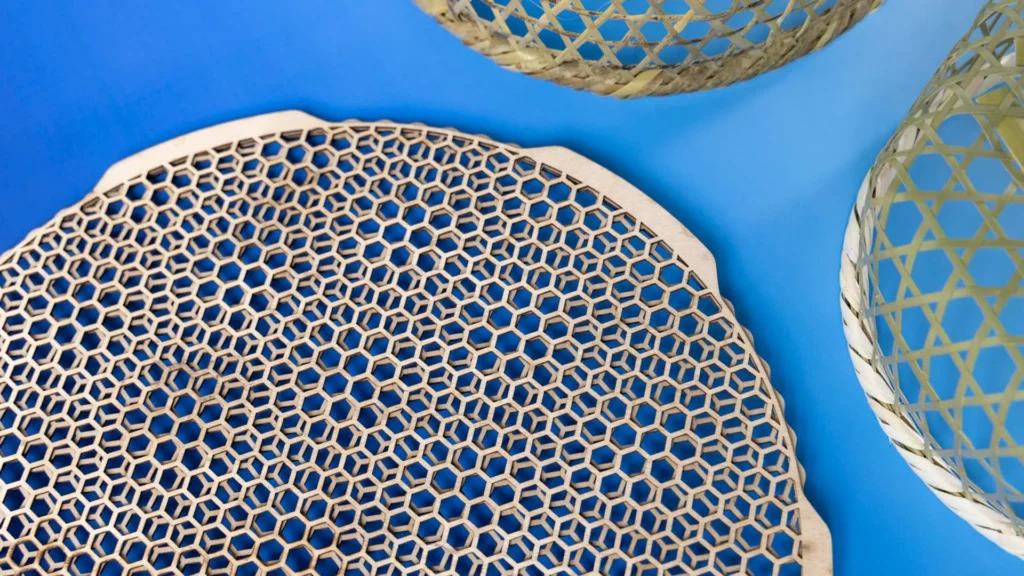
Named after a traditional Japanese basket-weaving pattern, the kagome lattice consists of a series of corner-sharing triangles arranged in a hexagonal pattern. In the world of quantum physics, this specific geometric arrangement causes electrons to behave in unusual ways. Specifically, it can lead to the formation of "flat bands" in the material’s energy spectrum.
In most materials, electrons move at varying speeds and energies. In a flat band, however, the kinetic energy of the electrons is suppressed, forcing them to interact more strongly with one another. This heightened interaction is a primary driver of superconductivity. By focusing their AI search on materials that exhibit these flat bands within kagome structures, the researchers were able to target substances where the quantum conditions for zero-resistance flow were most likely to occur.
Experimental Validation at Rice University
The journey from a digital prediction to a physical material requires a bridge between theory and laboratory synthesis. Once the AI and quantum calculations identified YRu3B2 and LuRu3B2 as prime candidates, the data was passed to collaborators at Rice University in the United States.
Led by Professor Emilia Morosan, a specialist in the synthesis of complex materials, the Rice team undertook the task of creating these compounds from scratch. This involves chemically combining constituent elements under precise conditions to form new crystals. The synthesis process is often the "bottleneck" of materials science, as many theoretically promising materials prove too unstable or difficult to manufacture in the real world.
However, the AI’s predictions held true. The Rice University team successfully synthesized the materials and experimentally verified their superconducting properties. While these specific materials still require cooling to function, their discovery serves as a vital proof of concept. It proves that the AI-driven methodology can accurately predict new superconductors, validating the consortium’s strategy for the decade ahead.
A Chronology of Superconductive Milestones
To understand the magnitude of this AI-driven approach, one must look at the slow progression of the field prior to the integration of machine learning:
- 1911: Heike Kamerlingh Onnes discovers superconductivity in solid mercury cooled to 4.2 Kelvin (-269°C).
- 1933: Discovery of the Meissner effect, where superconductors expel magnetic fields.
- 1957: The BCS Theory (Bardeen, Cooper, and Schrieffer) provides the first microscopic explanation of how "Cooper pairs" of electrons move without friction.
- 1986: Bednorz and Müller discover "high-temperature" superconductivity in cuprate (copper-oxide) materials, which function at temperatures reachable with liquid nitrogen (-196°C).
- 2008: Discovery of iron-based superconductors, opening a new class of materials.
- 2023: Establishment of the SuperC consortium to formalize AI and quantum geometry as the primary tools for discovery.
- 2024: Successful synthesis of YRu3B2 and LuRu3B2 via AI pre-screening.
The gap between major discoveries in the 20th century was often measured in decades. The SuperC team intends to compress this timeline into months or years.
Economic and Environmental Implications
The implications of finding a room-temperature superconductor extend far beyond the laboratory. Currently, the global energy grid loses between 5% and 10% of all generated electricity simply through the heat generated by transmission lines. In a world powered by superconducting cables, these losses would drop to zero, effectively increasing the world’s energy supply without burning a single additional ton of carbon.
In the technology sector, the impact would be equally transformative. Modern data centers are among the largest consumers of electricity on the planet, with a significant portion of that energy used to power cooling fans and air conditioning units to prevent servers from melting. Superconducting processors would generate no heat, allowing for computers that are thousands of times faster and more energy-efficient than current silicon-based models.
Furthermore, the medical and transportation fields would see a democratization of advanced technology. MRI machines, which currently require expensive liquid helium to cool their superconducting magnets, could become smaller, cheaper, and more portable. Maglev trains, which use magnetic levitation to travel at high speeds without touching the tracks, could be implemented more widely if the cost of maintaining ultra-low temperatures was eliminated.
Analysis of the Road Ahead
While the discovery of YRu3B2 and LuRu3B2 is a triumph of methodology, the path to 2033 remains fraught with challenges. Professor Törmä notes that even when a material is found to be a superconductor, it must also possess mechanical properties that make it useful. It must be ductile enough to be drawn into wires, stable enough to withstand environmental exposure, and capable of being produced at an industrial scale.
The SuperC consortium’s next phase involves scaling their AI models to process even larger datasets. By moving from millions to billions of potential material combinations, the team hopes to find the "needle in the haystack"—a compound that remains superconducting at 20 degrees Celsius (68 degrees Fahrenheit) and under ambient pressure.
The research has already garnered significant attention from the philanthropic and scientific communities. Funding for the SuperC consortium is provided by a diverse group of supporters, including The Kavli Foundation, Klaus Tschira Stiftung, and the Jane and Aatos Erkko Foundation, among others. This financial backing underscores the global recognition that superconductivity is a "frontier" science with the potential to redefine the 21st-century economy.
The public will have the opportunity to engage with these findings in 2026, when the SuperC research will be a centerpiece of Aalto University’s "Designs for a Cooler Planet" exhibition. This event, scheduled to take place in the Greater Helsinki area, will showcase how the marriage of AI and quantum physics is not just an academic exercise, but a practical necessity for a sustainable future.
As the SuperC team continues to refine their algorithms, the scientific community watches with cautious optimism. The transition from serendipitous discovery to AI-led engineering marks the beginning of a new chapter in physics—one where the materials of tomorrow are designed by code and verified by the fundamental laws of the quantum world.