PHILADELPHIA – Temple University and Demco Automation, a leading systems integrator, have jointly secured a substantial grant to spearhead an innovative initiative exploring the transformative potential of artificial intelligence (AI) in revolutionizing the design and construction of automated manufacturing systems. This collaborative endeavor, funded through Pennsylvania’s Manufacturing PA Innovation Program, is poised to not only push the boundaries of industrial AI application but also to cultivate a cutting-edge curriculum for Temple engineering students, providing them with invaluable hands-on experience in addressing real-world manufacturing challenges.
The partnership represents a strategic convergence of academic research and industry expertise, aiming to position Pennsylvania at the forefront of advanced manufacturing. The initial grant award, totaling $69,530 from the Pennsylvania Department of Community and Economic Development (DCED), is part of a broader commitment that includes a significant in-kind donation from Demco Automation. Stephen Maund, president and CEO of Demco and a distinguished 1999 alumnus of Temple’s College of Engineering, has pledged equipment and staff mentorship hours valued at over $94,000. This brings the total value of the initiative to an impressive figure exceeding $163,000, underscoring the deep commitment from both the public and private sectors to this groundbreaking project.
The Collaborative Initiative: Core Objectives and Funding Details
At its heart, this initiative seeks to harness the power of AI to streamline the intricate processes involved in developing automated assembly systems. The project will see Temple engineering students working directly with a Pennsylvania-based consumer products manufacturer. Their mission will be to design and build a robotic manufacturing cell meticulously tailored to the specific operational needs of the business. This direct engagement with an active manufacturing environment is designed to ensure that the academic exploration remains grounded in practical utility and immediate industry relevance.
The grant was awarded through the Manufacturing PA Innovation Program, a statewide initiative designed to foster innovation by pairing Pennsylvania’s graduate and undergraduate students with local manufacturers. The program’s objective is to facilitate the development of new technologies and advance innovation across the Commonwealth, thereby strengthening its industrial base and creating a pipeline of skilled talent. This particular project is one of 47 initiatives across Pennsylvania to receive funding, highlighting its significance within the state’s broader economic development strategy.
Driving Force: The Role of AI and Automation in Modern Manufacturing
The integration of AI and automation is widely recognized as a critical factor for competitive advantage in the modern industrial landscape. Stephen Maund articulates this vision clearly, stating, "AI and automation really go hand-in-hand. Utilizing AI in custom automation applications and rapidly deploying automation tailored specifically for a business or factory can be a true competitive advantage." His perspective is not just theoretical; it stems from years of experience at the helm of Demco Automation, a company deeply involved in custom automation solutions. This sentiment is echoed across the manufacturing sector, where AI is increasingly seen as a catalyst for enhanced efficiency, precision, and adaptability.
According to various industry reports, the global market for AI in manufacturing is projected to grow significantly, with some estimates placing its value at over $16 billion by 2029, up from approximately $2 billion in 2022. This growth is driven by the potential of AI to optimize supply chains, predict equipment failures, enhance quality control through computer vision, and enable more flexible and responsive production lines. For regions like Pennsylvania, which boasts a rich manufacturing heritage, embracing these advanced technologies is not merely an option but a strategic imperative to maintain and expand its industrial footprint in an increasingly globalized and competitive economy.
A Partnership Forged in Innovation: Temple University and Demco Automation
The synergy between Temple University and Demco Automation is particularly potent due to the deep-rooted connections between the institutions. Dr. Li Bai, Ph.D., professor of electrical and computer engineering and associate dean for research, graduate studies, and faculty affairs at Temple’s College of Engineering, is leading the university’s side of the partnership. He highlights Maund’s enduring dedication to his alma mater, noting, "Steve is a dedicated alum who has been on our Board of Visitors for many years, and he understands that robotic technology will be a big driving force to keep manufacturing happening in Pennsylvania." This long-standing relationship has fostered a fertile ground for collaboration, built on mutual trust and a shared vision for the future of manufacturing in the state.
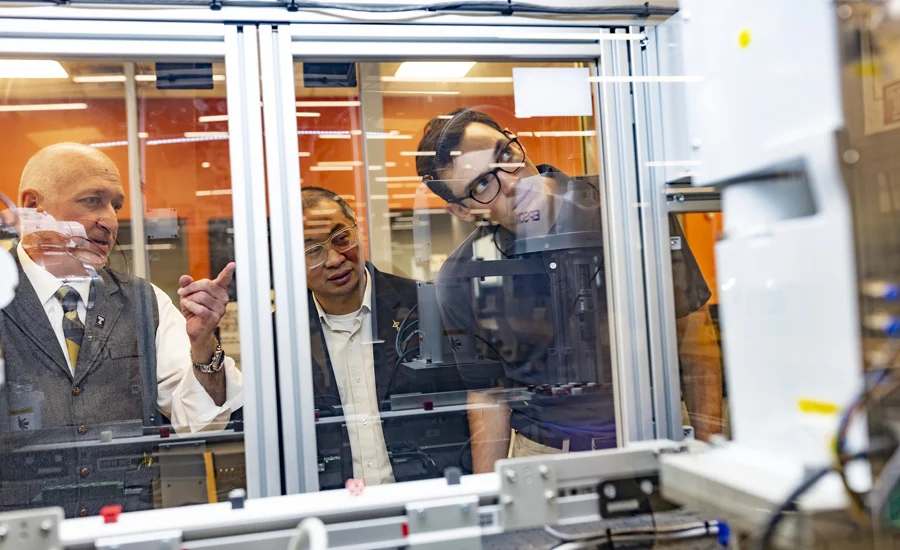
Demco Automation’s involvement extends beyond financial contributions; Maund and his team of experienced engineers will provide invaluable mentorship and industry-relevant feedback to the Temple students. This direct interaction with seasoned professionals is crucial for students to refine their designs and technological advancements, bridging the gap between theoretical knowledge acquired in the classroom and the practical exigencies of industrial application. Such mentorship is a cornerstone of effective workforce development, ensuring that graduates are not just academically proficient but also industry-ready.
Curriculum Development and Experiential Learning: Preparing the Next Generation
A key outcome of this partnership will be the creation of new knowledge that Temple University’s College of Engineering will leverage to develop a modern curriculum. This curriculum is specifically designed to meet the evolving needs of the manufacturing industry, ensuring that Temple engineering graduates remain highly competitive in a job market increasingly demanding expertise in AI, robotics, and advanced automation. Dr. Bai emphasizes the practical benefits for students: "The students will learn this technology and how to design and build robotic cells for customers. When they graduate, the students will have the hands-on skills to be hired directly by a business that needs to maintain their robotic cell."
The initiative directly addresses the critical skills gap identified by numerous industry reports. As manufacturing processes become more complex and reliant on sophisticated technologies, there is a growing demand for engineers who possess not only theoretical understanding but also practical experience in deploying and managing these systems. By integrating real-world problem-solving into the academic framework, Temple University is proactively equipping its students with the competencies required to excel in the advanced manufacturing sector, thereby contributing to a robust talent pipeline for Pennsylvania businesses.
Student Spotlight: Bridging Academia and Industry
The practical application of academic learning is already underway for students like Kyle McGinley, an electrical and computer engineering major from the class of 2027. McGinley has spent his summer interning at Demco Automation in preparation for the official commencement of the grant work in August. His experience exemplifies the initiative’s core objective of bridging the gap between classroom theory and industrial practice. "The people here at Demco have been very helpful in teaching me the process of identifying and solving manufacturing problems," McGinley states, highlighting the contrast between fundamental engineering concepts taught in school and their real-world implementation. "In school they teach you the fundamentals—the basic engineering concepts. But putting those into place here has been really helpful."
McGinley’s involvement is further underscored by his recognition as a recipient of the Dr. Brian and Susan Butz Term Scholarship for Electrical and Computer Engineering. This scholarship specifically supports students interested in software development, AI development systems, health education software, or similar fields, demonstrating a broader institutional commitment to fostering expertise in these critical areas. His early engagement with Demco provides a tangible example of how the partnership is designed to cultivate talent from the ground up, providing students with a significant head start in their careers.
Broader Economic and Industrial Implications for Pennsylvania
Beyond its immediate impact on Temple students, the initiative is poised to deliver significant benefits to Pennsylvania businesses with manufacturing needs. Stephen Maund asserts that automation is absolutely crucial for maintaining a strong manufacturing presence not just in the country, but specifically within Pennsylvania. "There’s just no way that manufacturing would be competitive without having the automated manufacturing option available to various companies, especially in advanced technology sectors," he explains. This underscores the strategic importance of such initiatives in preventing manufacturing exodus and encouraging reshoring efforts within the state.
Maund, who also serves as a member of the Bucks County Workforce Development Board, emphasizes the initiative’s potential to stimulate regional economic growth. By strengthening the manufacturing base through advanced automation, the project is expected to foster the creation of new, high-skilled jobs and increase the overall manufacturing presence in the state. This ripple effect extends to ancillary industries and services, contributing to a more vibrant and resilient regional economy. The long-term implications include enhanced state competitiveness, attracting further investment, and solidifying Pennsylvania’s reputation as a hub for advanced manufacturing innovation.
The Manufacturing PA Innovation Program: A State-Wide Strategy
The Manufacturing PA Innovation Program, under which this grant was awarded, is a cornerstone of Pennsylvania’s economic development strategy. Since its inception, the program has played a vital role in connecting the state’s robust academic research capabilities with its diverse manufacturing sector. By funding projects that bridge the gap between cutting-edge research and practical industrial application, the program aims to accelerate technological adoption, enhance product development, and ultimately create and retain jobs across the Commonwealth. The sheer number of projects funded—47 across Pennsylvania—demonstrates a comprehensive approach to fostering innovation and ensuring that the state’s manufacturers remain competitive on a national and global scale.
This strategic investment recognizes that a thriving manufacturing sector is essential for a healthy state economy. It also acknowledges the unique role that universities play as engines of research and talent development. By facilitating direct collaboration between students, faculty, and industry, the Manufacturing PA Innovation Program ensures that academic endeavors are directly aligned with industry needs, producing tangible results that benefit businesses, students, and the broader economy.
The Future Landscape of Manufacturing and Workforce Development
The Temple University-Demco Automation partnership serves as a potent model for future collaborations between academia and industry, particularly in the rapidly evolving fields of AI and automation. As these technologies continue to mature, their ethical implications, workforce displacement versus augmentation, and the continuous need for upskilling will become increasingly pertinent discussions. Initiatives like this, which proactively prepare the next generation of engineers, are crucial in navigating these complexities responsibly. They ensure that technological advancements are accompanied by robust educational frameworks that empower individuals to adapt and thrive in new economic realities.
The long-term vision extends beyond specific projects, aiming to cultivate an ecosystem where innovation is a constant, and the workforce is perpetually prepared for the demands of the future. By investing in research, curriculum development, and experiential learning, Pennsylvania is not just reacting to technological shifts but actively shaping its future, ensuring that its manufacturing sector remains a source of prosperity and opportunity for generations to come. This initiative marks a significant step forward in realizing that vision, cementing the state’s commitment to technological leadership and economic resilience.