While millions flock to Coachella for its iconic music and star-studded performances, a less visible, yet equally impactful, aspect of the festival is its evolving landscape of experiential design. This year, a notable shift occurred not on the main stages, but within the exclusive SKYLRK OASIS installation, where Justin Bieber’s brand SKYLRK collaborated with design and production studio Decibel Made and Italian robotic manufacturing company Caracol to unveil a collection of 30 large-scale, 3D printed benches. This project marks a significant mainstream moment for 3D printing, showcasing its potential beyond traditional manufacturing and into the realm of high-profile entertainment and celebrity branding.
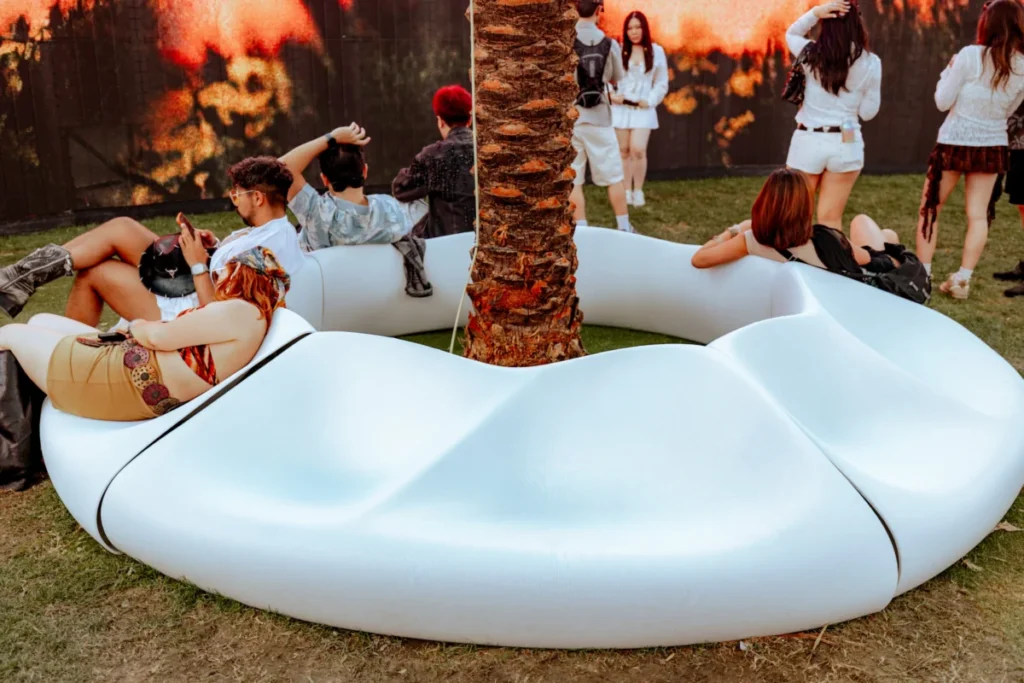
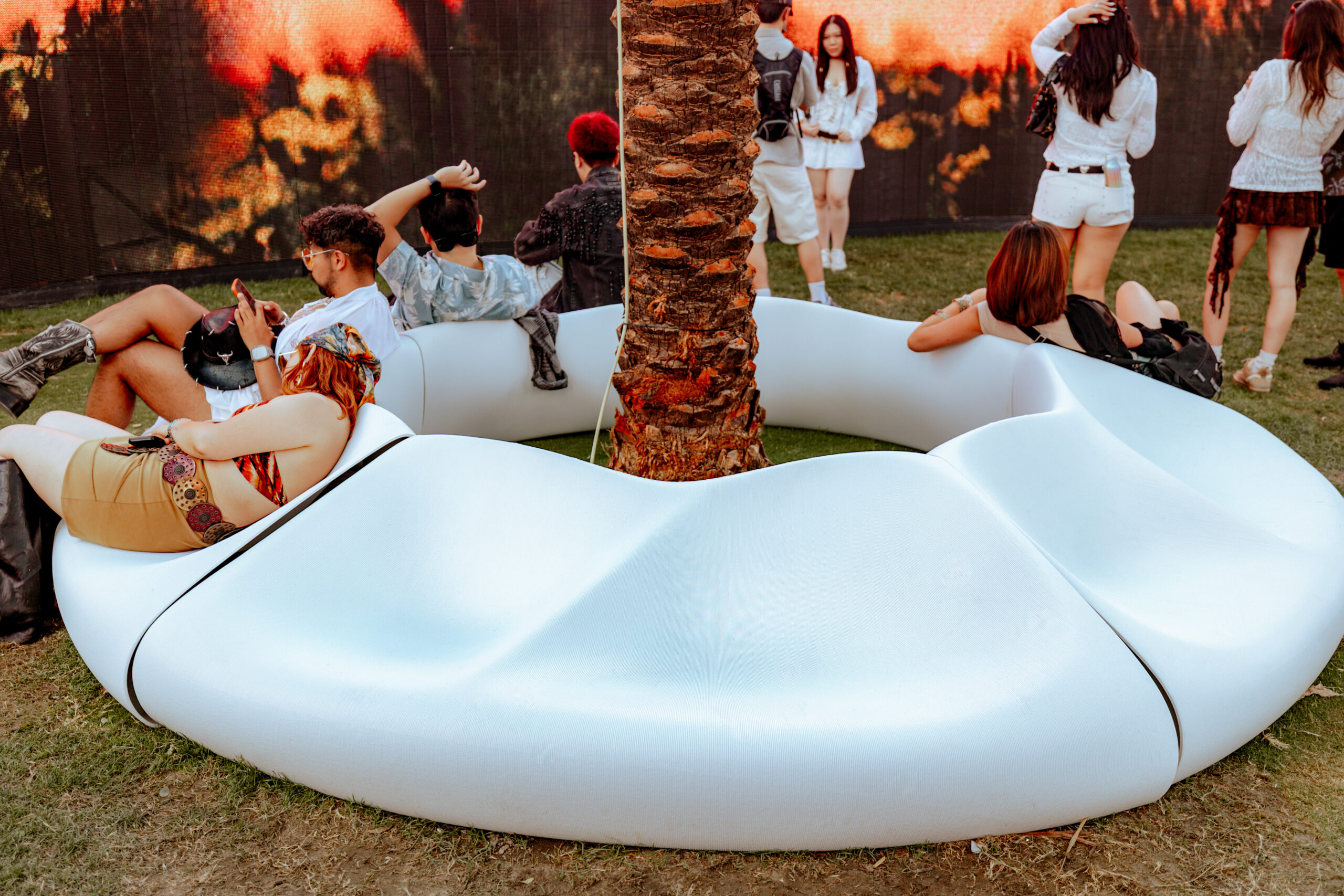
The creation of these bespoke seating elements underscores a growing trend: brands are increasingly leveraging immersive physical spaces to forge deeper connections with their audiences. SKYLRK, Justin Bieber’s multi-faceted brand that extends beyond music into fashion and product design, utilized the Coachella installation as a prime example of this strategy. The SKYLRK OASIS provided an intimate, invite-only environment where guests could gather and engage with the brand in a uniquely designed space. The 3D printed benches, each nearly seven feet long and arranged in contemplative circular groupings around palm trees within a 360-degree immersive screen environment, were not merely functional furniture but integral components of the installation’s sculptural aesthetic. They seamlessly blended into the overall design language, creating an otherworldly atmosphere that captivated attendees.
A Timeline of Innovation: From Concept to Coachella
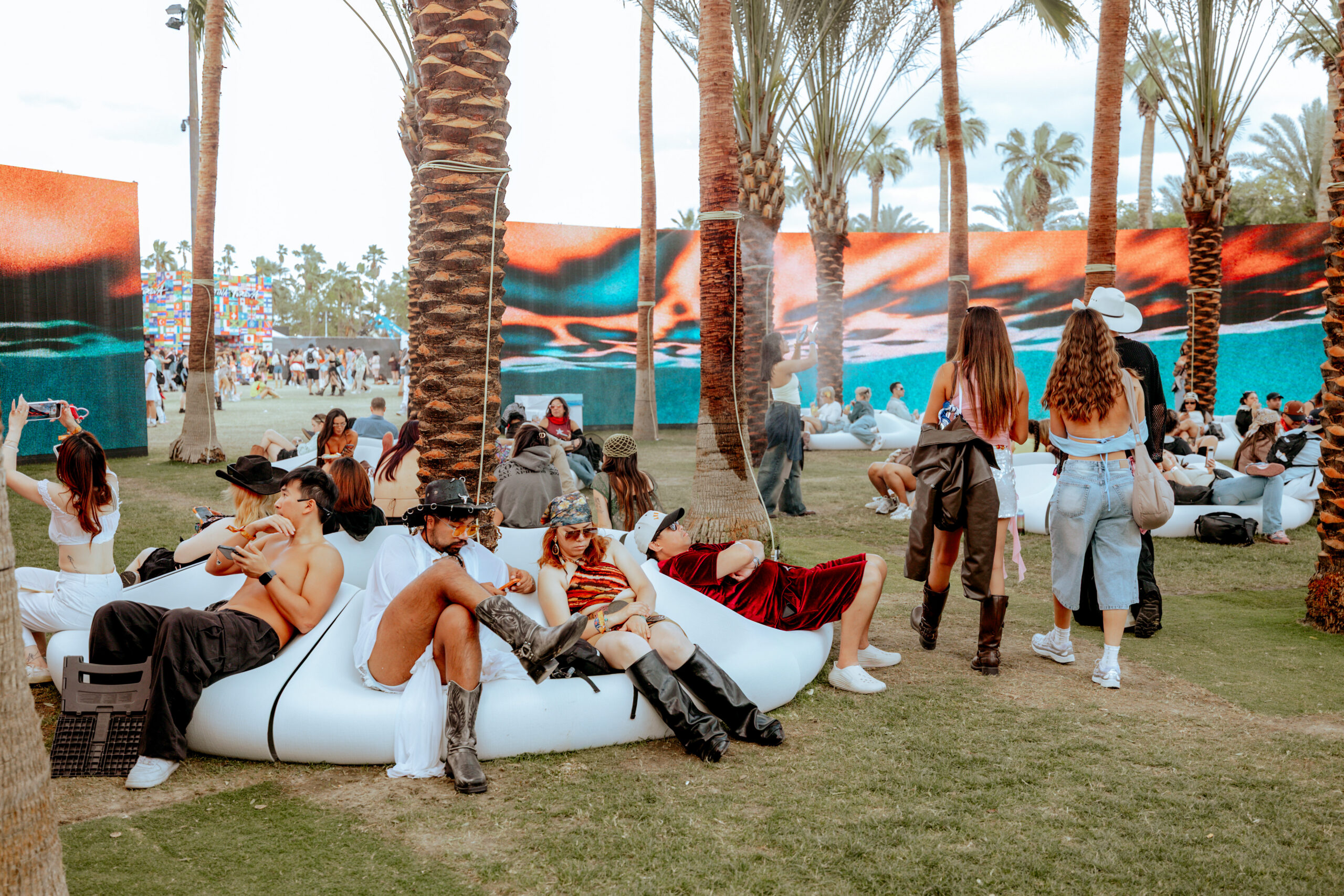
The rapid turnaround time required for such a high-profile event highlights why 3D printing is emerging as a practical and indispensable solution for custom projects with tight deadlines. According to Adam Hecht, co-founder of Decibel Made, the design process and initial prototyping for the SKYLRK benches commenced in early March. Astonishingly, over the subsequent two and a half weeks, Decibel Made and Caracol successfully produced all 30 custom benches. This feat is nearly impossible to achieve with traditional fabrication methods, such as fiberglass or concrete, especially when dealing with fully customized designs.
Hecht emphasized that conventional manufacturing simply would not have met the project’s stringent timeline. The urgency was so critical that the SKYLRK team had a clear directive: if the bespoke seating could not be produced in time for Coachella, they would opt for no seating at all rather than compromise the brand’s identity with generic alternatives. This commitment to authenticity and unique brand representation was a driving force behind the adoption of advanced manufacturing techniques.
Redefining Experiential Design with 3D Printing
The SKYLRK OASIS project transcends the notion of simply creating furniture faster. It represents a paradigm shift in how brands can conceptualize and realize physical spaces, fostering environments that might not have existed otherwise. The benches, designed by the SKYLRK team and engineered by Decibel Made, were not intended to resemble conventional outdoor furniture. Instead, they were conceived as elements that would contribute to a continuous sculptural landscape, harmonizing with the installation’s immersive visual elements. This approach allowed for a level of design freedom that traditional manufacturing struggles to replicate.
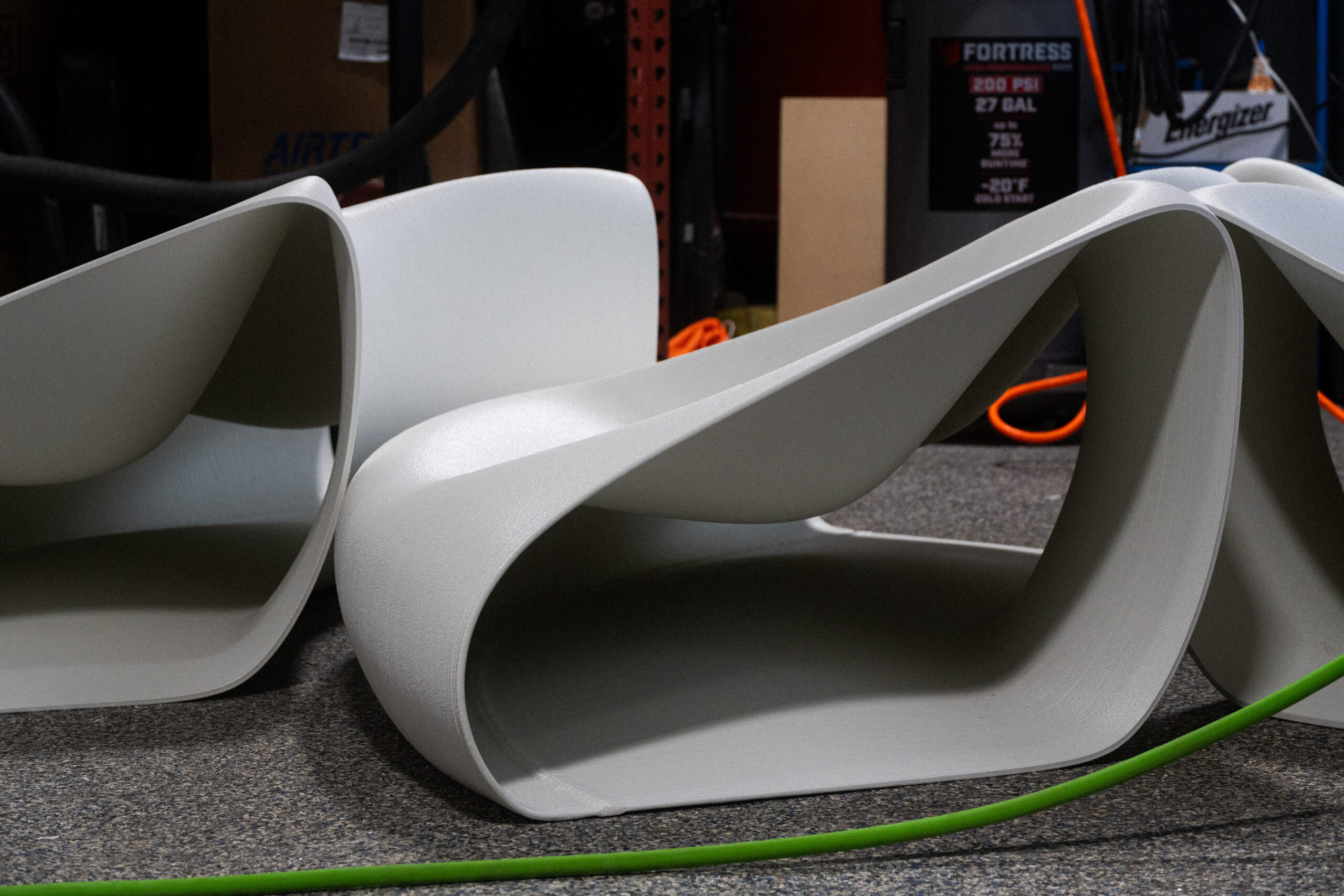
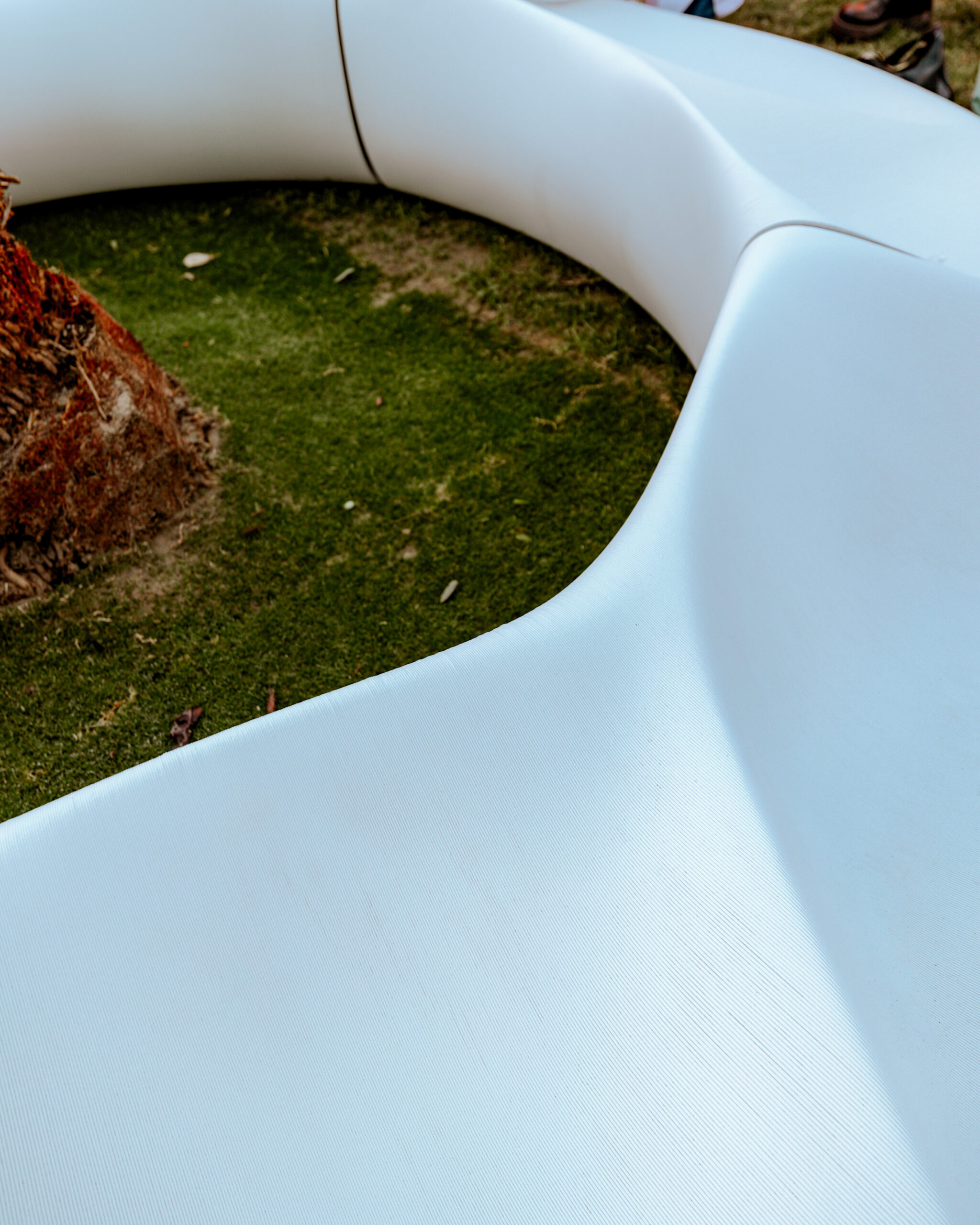
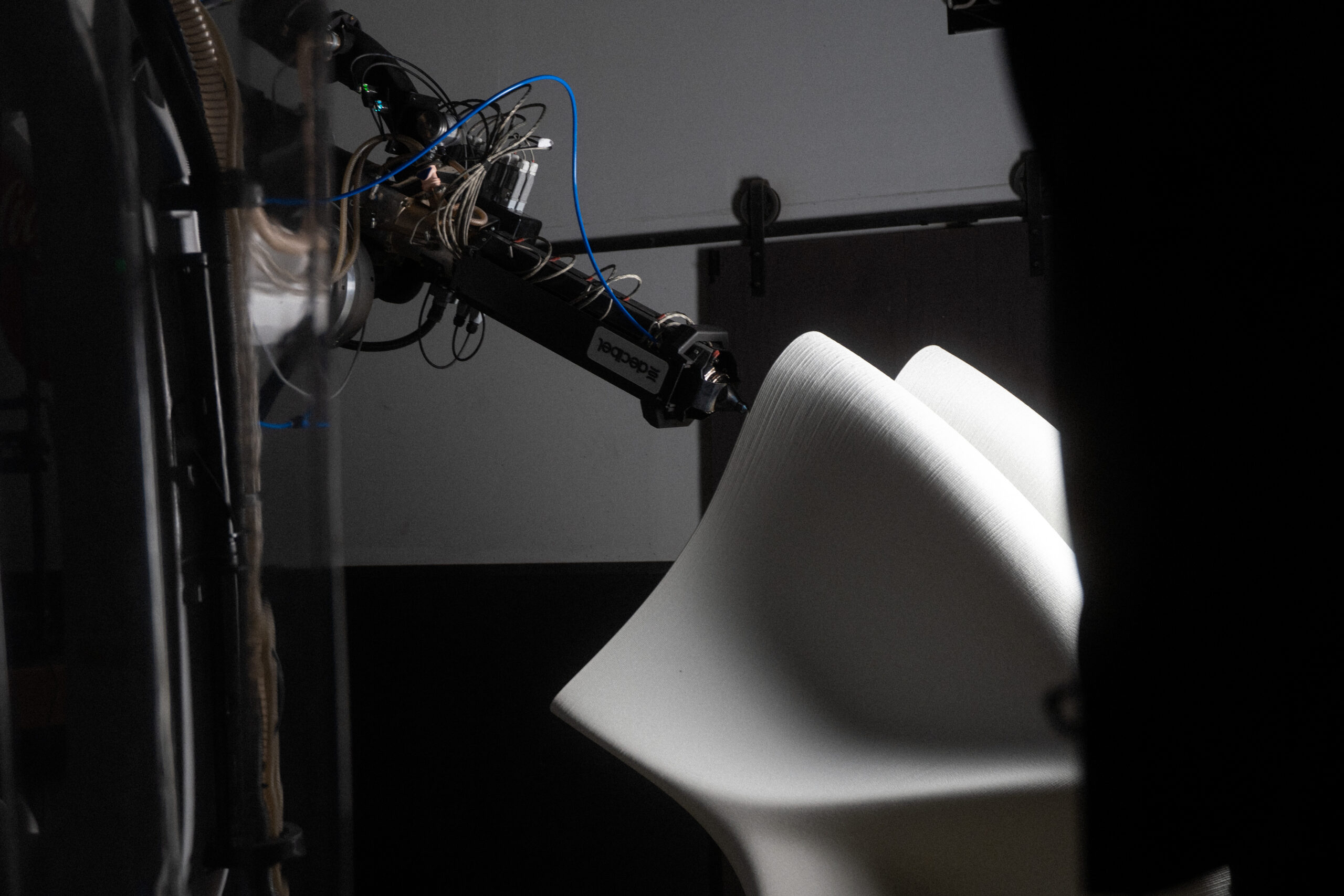
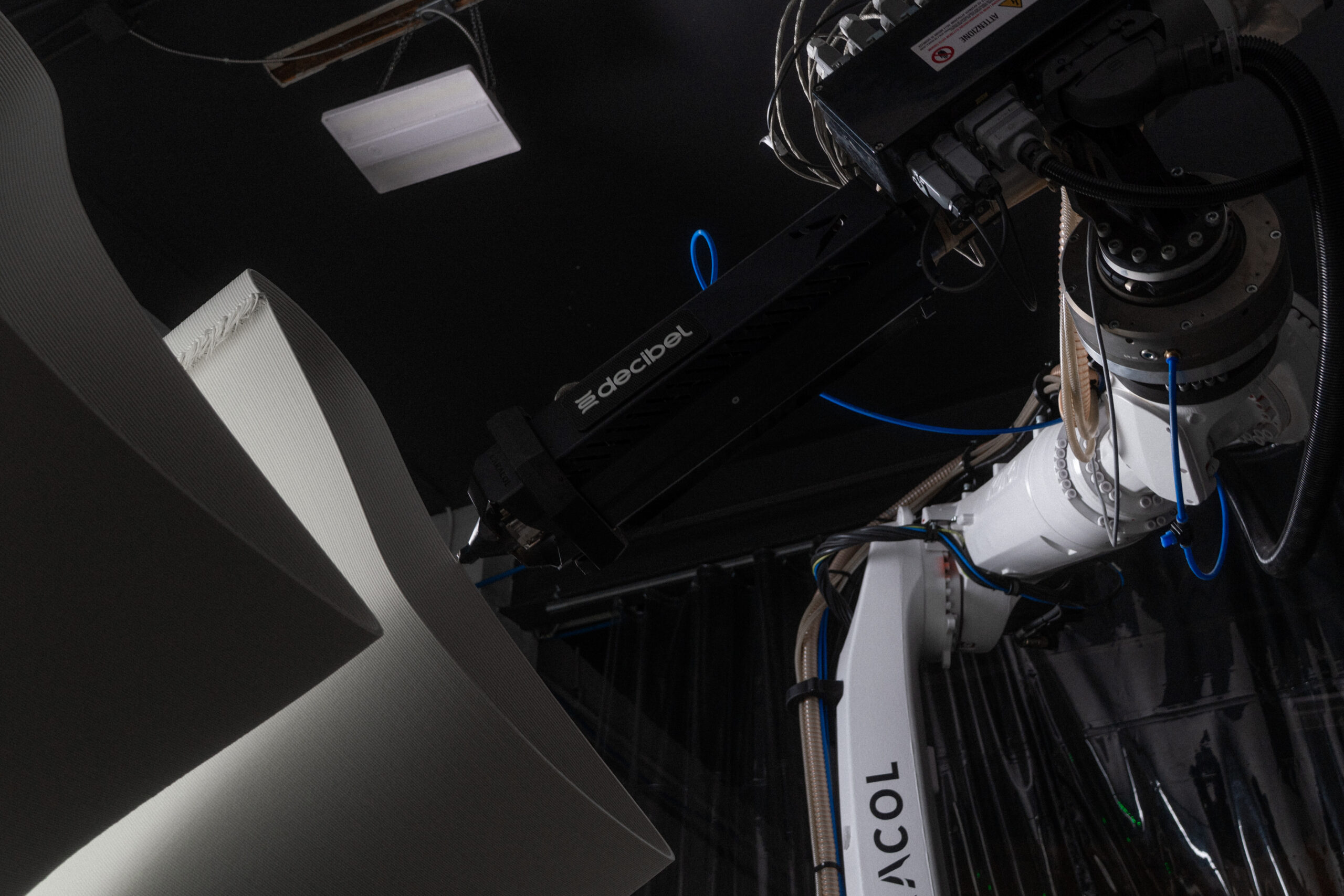
The collaborative effort between Decibel Made and Caracol leveraged Caracol’s expertise in robotic large-format additive manufacturing (AM). This technology enabled the fabrication of complex, organic geometries that would have been prohibitively difficult and expensive to produce using traditional molding or subtractive manufacturing techniques. The resulting benches, while hollow and lightweight, were engineered to be robust, capable of withstanding long-term outdoor use and the significant pedestrian traffic characteristic of a major festival like Coachella.
The Power of Distributed Manufacturing
Meeting the demanding Coachella deadline necessitated an innovative manufacturing strategy beyond simply scaling up production. Decibel Made and Caracol implemented a distributed manufacturing model. Instead of consolidating all production in a single facility, the manufacturing process was split between Decibel’s base in New Jersey and Caracol’s operations in Texas. This parallel production allowed for the simultaneous creation of half the benches in one location and the other half in another, significantly accelerating the overall timeline. The completed components were then transported to California for final assembly and installation.
This distributed approach offers significant advantages. It minimizes the need for shipping heavy tooling or relocating entire production teams. The digital design files were transmitted, and manufacturing occurred concurrently in geographically dispersed facilities. This model of localized production, where manufacturing happens closer to the point of need, is a key aspect of the future of additive manufacturing, offering flexibility and efficiency that centralized factories cannot match.
Francesco De Stefano, CEO and Co-founder of Caracol AM, commented on the significance of this approach: "What made this project truly remarkable was the distributed manufacturing model we deployed: 30 geometrically complex, custom benches produced across New Jersey and Texas in just a few weeks, under demanding timelines. Coachella is where music, design and culture collide at the highest level. There is no better stage to show how robotic large-format additive manufacturing is redefining what the creative industry can build – with full geometric freedom, on demand, at scale."
A Commitment to Sustainability and Circularity
Beyond the speed and design flexibility, the SKYLRK project also championed sustainability. The benches were printed using Airtech’s recycled PETG GF, a material derived from industrial waste streams. This choice aligns with a growing demand for eco-conscious materials in large-scale installations and consumer products. According to Decibel Made, the printed pieces are not only UV-stable and weather-resistant but also fully circular. This means that at the end of their lifecycle, they can be repurposed—shredded and reprinted into new products—rather than contributing to landfill waste.
This focus on circularity builds upon Decibel Made’s earlier explorations. The company previously showcased similar principles with its PORTAL installation during Milan Design Week 2025. There, they demonstrated localized production and circular materials by printing chairs live within an abandoned factory, offering a public glimpse into the potential of distributed manufacturing. The SKYLRK project at Coachella represented the practical application of these concepts on a much larger and more public stage.
Adam Hecht elaborated on this progression: "PORTAL was where we first explored this idea publicly, printing chairs live in an abandoned factory during Milan Design Week, but this project put it into practice. The SKYLRK team had a clear vision for the benches, and there really wasn’t much room for delay. Being able to split production across two sites gave us the speed we needed while still preserving the design intent."
The Evolving Role of Brands in Physical Spaces
The SKYLRK installation at Coachella is a potent illustration of how brands are reimagining the utility and impact of physical spaces. In an era where celebrity engagement extends far beyond traditional media, Justin Bieber, through SKYLRK, exemplifies a new wave of brand building. This involves curating immersive experiences that resonate with consumers on multiple levels. The Coachella installation served as a tangible manifestation of the SKYLRK brand, offering a memorable encounter for attendees and generating significant social media buzz.
Hecht further explained the collaborative process: "Justin Bieber, like many of our other clients, has their own product brand, their own designers. We take that, modify it, make it printable, and get it into production." This integrated approach allows brands to maintain creative control while leveraging advanced manufacturing capabilities to bring their visions to life.
The project’s design was inherently geared towards visual appeal and shareability. Hecht noted, "We’re creating things that are meant to be seen. The built environment is the perfect example of that. Instead of focusing on hidden components, Decibel is targeting spaces people interact with directly, like retail stores, installations, and now festivals." This strategic focus on direct interaction and visual impact is crucial for brands seeking to differentiate themselves in a crowded marketplace.
Agility in Design and Production
One of the inherent advantages of 3D printing, particularly in the context of large-format additive manufacturing, is its inherent design agility. Unlike traditional manufacturing, where design decisions are often locked in early due to the substantial costs associated with tooling and molds, 3D printing allows for continuous iteration and refinement throughout the production process.
Hecht highlighted this iterative workflow: "We print a new version every day, refine it, tweak it. At a certain point, they say, ‘This is good enough,’ and we run production. That workflow is fundamentally different from traditional manufacturing, where design decisions are often locked in early due to tooling costs." This flexibility enables teams to respond to feedback, optimize designs based on real-world testing, and ensure the final product perfectly aligns with the brand’s evolving vision and the specific demands of the environment.
The Broader Implications for the Future of Manufacturing
While the SKYLRK OASIS installation at Coachella was a temporary presence, the manufacturing methodologies employed signal a lasting shift in the industry. As brands increasingly seek custom-built spaces that can be realized with speed and precision, large-format 3D printing is emerging as a compelling alternative to conventional manufacturing processes. Its ability to deliver complex geometries, rapid prototyping, distributed production capabilities, and sustainable material options positions it as a key enabler for future experiential design and brand activations. The success of this project at one of the world’s most prominent cultural events demonstrates that 3D printing is no longer a niche technology but a powerful tool shaping the future of how we design, build, and interact with the physical world. The fusion of celebrity branding, cutting-edge technology, and a commitment to sustainability at Coachella has set a new precedent for what is possible in experiential design.