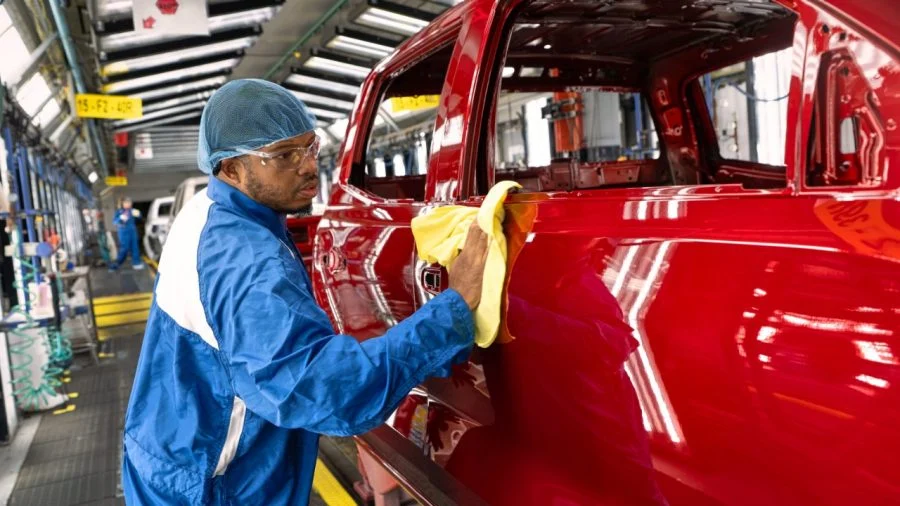
General Motors (GM) has announced a significant investment of $157 million to upgrade its assembly plant in Wentzville, Missouri, a strategic move aimed at enhancing the facility’s long-term competitiveness and efficiency. The substantial capital injection will primarily target the modernization of the plant’s paint shop, including the installation of advanced equipment and a 28,000-square-foot expansion. This investment underscores GM’s commitment to its traditional internal combustion engine (ICE) vehicle segments, particularly the highly profitable mid-size pickup trucks and full-size vans that are critical components of its North American portfolio. The 43-year-old facility, situated northwest of St. Louis, is a cornerstone of GM’s manufacturing operations, responsible for producing popular models such as the Chevrolet Colorado and GMC Canyon mid-size pickup trucks, as well as the Chevrolet Express and GMC Savana full-size vans. The automaker stated that the project’s overarching goal is to ensure the Wentzville plant remains modern and competitive for the foreseeable future, thereby reinforcing its vital role within GM’s extensive global manufacturing footprint.
Deep Dive into the Wentzville Investment
The core of GM’s $157 million investment in Wentzville is dedicated to a comprehensive overhaul of the plant’s paint shop. This critical section of any automotive assembly plant is responsible for applying protective and aesthetic coatings to vehicle bodies, a process that significantly impacts product quality, durability, and customer satisfaction. The planned upgrades will introduce state-of-the-art painting technologies and machinery, which are expected to improve paint finish quality, increase process efficiency, and potentially reduce environmental impact through more optimized material usage and lower emissions. The 28,000-square-foot expansion will likely accommodate new equipment lines, additional drying ovens, or advanced robotic application systems, all designed to streamline the painting process and enhance throughput.
Investing in a paint shop is a complex endeavor that goes beyond mere aesthetics. Modern automotive painting processes involve multiple layers – from electrocoat for corrosion protection to primer, base coat (color), and clear coat – each applied with precision and cured under controlled conditions. Advanced paint shops integrate sophisticated automation, including robotic arms for consistent application, and utilize data analytics to monitor quality and efficiency in real-time. This modernization initiative positions the Wentzville plant to meet increasingly stringent quality standards and consumer expectations for vehicle finish, while also potentially improving operational sustainability by reducing volatile organic compound (VOC) emissions and optimizing energy consumption associated with heating and ventilation. For a plant that has been in operation for over four decades, such an upgrade is not merely incremental but rather a foundational step towards securing its relevance and technological edge in a rapidly evolving manufacturing landscape.
The Enduring Appeal of Wentzville’s Product Lineup
The vehicles produced at the Wentzville assembly plant – the Chevrolet Colorado, GMC Canyon, Chevrolet Express, and GMC Savana – represent critical segments for General Motors. Mid-size pickup trucks have experienced a resurgence in popularity over the past decade, driven by consumers seeking more maneuverable and fuel-efficient alternatives to full-size trucks, without sacrificing utility. The Colorado and Canyon offer a compelling blend of capability, versatility, and modern features, appealing to a diverse customer base ranging from outdoor enthusiasts to small business owners. Their success in a competitive market segment, which includes rivals like the Ford Ranger, Toyota Tacoma, and Nissan Frontier, underscores their importance to GM’s overall sales and market share.
Similarly, the full-size commercial van segment, dominated by the Chevrolet Express and GMC Savana, remains a robust and indispensable market for businesses across various industries. From delivery services and trade professionals to shuttle operations and fleet managers, these vans provide essential cargo capacity, upfit flexibility, and robust powertrains. While newer, more technologically advanced competitors have emerged, the Express and Savana continue to hold a significant share, particularly due to their proven reliability, strong dealer network support, and competitive pricing. The continued investment in the Wentzville plant, therefore, signals GM’s unwavering commitment to these established and profitable product lines, acknowledging their ongoing demand and strategic value, even as the company pivots towards an electric future. This dual strategy allows GM to capitalize on current market strengths while simultaneously developing its next generation of electric vehicles.
A Legacy of Production: The Wentzville Plant’s History
The General Motors Wentzville Assembly Plant has a rich history spanning over four decades, marking it as a long-standing pillar of industrial activity in Missouri. The facility first opened its doors in 1980, initially producing a range of passenger cars including the Chevrolet Celebrity, Pontiac 6000, and Oldsmobile Cutlass Ciera. Its establishment brought significant economic development to the St. Charles County region, creating thousands of jobs and fostering a robust ecosystem of suppliers and ancillary businesses.
Over the years, the plant demonstrated remarkable adaptability, evolving its production capabilities to meet changing market demands and GM’s strategic objectives. In the early 2000s, it transitioned to producing larger SUVs and minivans, including the Chevrolet Venture, Pontiac Montana, and Oldsmobile Silhouette. A pivotal moment came in the early 2010s when GM announced a substantial investment to retool the plant for truck and van production. This transformation, completed by 2014, marked the beginning of its current role as a dedicated hub for mid-size pickups and full-size vans. The introduction of the Chevrolet Colorado and GMC Canyon, alongside the long-standing Express and Savana lines, solidified Wentzville’s position as a critical facility within GM’s North American manufacturing network. Through these transitions, the plant has consistently maintained a large workforce, often employing between 3,500 and 4,000 hourly and salaried employees, many of whom are members of the United Auto Workers (UAW) union. Each shift in production represented not just a change in vehicles but also a significant commitment to retraining the workforce and upgrading infrastructure, ensuring the plant remained at the forefront of automotive manufacturing technology. This latest $157 million investment continues this legacy of continuous improvement and strategic adaptation.
Strategic Rationale: Modernization in a Dynamic Industry
General Motors operates in an intensely competitive and rapidly transforming global automotive industry. The decision to invest $157 million in the Wentzville plant’s paint shop is not an isolated event but rather a calculated move within GM’s broader manufacturing strategy. While the company has made massive investments in electric vehicle (EV) production, battery technology, and autonomous driving capabilities, it also recognizes the critical importance of maintaining the competitiveness and profitability of its existing ICE vehicle lines. These traditional segments, particularly trucks and SUVs, continue to generate significant revenue and cash flow, which in turn helps fund the ambitious transition to an all-electric future.
Modernizing an existing facility like Wentzville offers several advantages. Firstly, it leverages existing infrastructure and a skilled workforce, minimizing the need for entirely new construction and training programs. Secondly, it signals long-term commitment to the plant’s employees and the local community, fostering stability and morale. Thirdly, in an era of supply chain complexities, optimizing and solidifying domestic production capabilities for high-demand vehicles is a prudent strategy. The phrase "help keep Wentzville modern and competitive over the long term" directly addresses the need for continuous improvement in manufacturing processes to contend with global rivals, who are also constantly upgrading their facilities. This includes not only direct competitors like Ford and Stellantis but also international players such as Toyota and Nissan, all vying for market share in the lucrative truck and van segments. By investing in critical areas like the paint shop, GM ensures that the quality, efficiency, and environmental footprint of its Wentzville-produced vehicles remain world-class, reinforcing their market appeal.
Technological Advancements in Automotive Paint and Finishing
The modernization of an automotive paint shop represents a significant leap in manufacturing technology and environmental stewardship. A state-of-the-art paint facility is far more than just a place to apply color; it’s a highly automated, climate-controlled environment designed for precision, efficiency, and sustainability. Key advancements often include:

- Robotic Application: Advanced robots with highly precise nozzles ensure uniform paint thickness and coverage, minimizing waste and achieving superior finish quality compared to manual application.
- Waterborne Paints: A shift from solvent-based to waterborne paints significantly reduces Volatile Organic Compound (VOC) emissions, aligning with stricter environmental regulations and corporate sustainability goals. This often requires new application equipment and curing processes.
- Integrated Paint Systems: Modern systems can apply multiple coats (primer, base coat, clear coat) in a single, continuous process, reducing drying times and energy consumption.
- Electrostatic Application: This technique charges paint particles and the vehicle body, creating an attraction that results in higher transfer efficiency, meaning more paint adheres to the vehicle and less is wasted.
- Advanced Curing Technologies: Energy-efficient ovens, including potentially infrared or UV curing, accelerate the drying process, reduce energy consumption, and improve paint durability.
- Automated Inspection Systems: High-resolution cameras and sensors scan painted surfaces for imperfections, ensuring consistent quality control at speeds impossible for human inspection.
- Closed-Loop Filtration and Waste Management: Systems designed to capture and recycle overspray, manage sludge, and treat wastewater contribute to a cleaner and more resource-efficient operation.
The 28,000-square-foot expansion suggests room for new paint booths, additional drying tunnels, or dedicated areas for specialized finishes. These enhancements translate directly into tangible benefits: superior corrosion resistance, a more durable and aesthetically pleasing finish for customers, reduced environmental impact for the community, and enhanced operational efficiency for GM.
Economic Ripple Effects and Community Impact
The $157 million investment in the Wentzville Assembly Plant is not merely a corporate expenditure; it represents a substantial economic injection into the local and regional economy of Missouri. With thousands of employees, the plant is one of the largest employers in St. Charles County, and this investment directly contributes to job security and stability for its workforce. By ensuring the plant’s long-term viability, GM safeguards well-paying manufacturing jobs that support families and contribute significantly to the local tax base through income and property taxes.
Beyond direct employment, the investment creates a ripple effect throughout the supply chain. Upgrades to the paint shop will likely necessitate new equipment from various industrial suppliers, potentially creating jobs or increasing demand for services from Missouri-based companies. The continued operation and modernization of such a large facility also support a network of local businesses, from restaurants and retail establishments to housing and service providers, all of whom benefit from the economic activity generated by the plant and its employees. Missouri has a notable automotive manufacturing presence, and this investment reinforces the state’s position as a key player in the North American automotive sector. State and local economic development agencies often work closely with major employers like GM to facilitate such investments, recognizing their profound positive impact on regional prosperity and industrial competitiveness.
Official Perspectives and Stakeholder Reactions
While specific statements from GM leadership were not provided in the original brief, the company’s stated goal of keeping Wentzville "modern and competitive over the long term" reflects a consistent corporate strategy. A hypothetical statement from a GM manufacturing executive would likely emphasize the company’s unwavering commitment to quality, efficiency, and its dedicated workforce. "This significant investment in our Wentzville facility is a testament to the hard work and dedication of our team members," such an executive might say. "It ensures that we can continue to deliver the high-quality trucks and vans our customers demand, produced with the most advanced manufacturing processes available. This is about securing Wentzville’s future as a cornerstone of GM’s North American production."
The United Auto Workers (UAW), representing many of the plant’s hourly employees, would undoubtedly welcome the news. A UAW spokesperson would likely highlight the investment’s role in job security and reinforcing American manufacturing. "This investment is a victory for our UAW members in Wentzville," a union official might comment. "It shows GM’s commitment to good-paying union jobs and ensures our members have the cutting-edge tools and training to build world-class vehicles. We look forward to working with GM to implement these upgrades, further strengthening the future of this vital plant."
Local and state officials in Missouri would also express enthusiasm. The Mayor of Wentzville, or a representative from the Missouri Department of Economic Development, would emphasize the positive impact on the community. "We are thrilled by General Motors’ continued investment in Wentzville," a local official might state. "This $157 million commitment not only secures thousands of jobs but also reinforces Wentzville’s reputation as a prime location for advanced manufacturing. We deeply value our partnership with GM and their contribution to our local economy." These reactions, while inferred, align with typical responses to major industrial investments that bring stability and growth to a region.
Beyond the Paint Shop: Broader Implications for GM
The $157 million investment in Wentzville carries broader implications for General Motors’ overall strategy and market positioning. Firstly, it signals that while GM is heavily investing in its EV future, it is not abandoning its profitable ICE vehicle segments. This balanced approach is crucial for maintaining financial stability during the transition phase, leveraging current strengths to fund future innovations. The continued demand for trucks and vans, particularly in North America, means that optimizing their production remains a top priority.
Secondly, the modernization of the paint shop contributes directly to GM’s overarching quality objectives and brand reputation. A superior paint finish is a visible indicator of quality and craftsmanship, directly influencing customer perception and resale value. By enhancing this critical aspect, GM reinforces its competitive edge against rivals who are also continuously striving for manufacturing excellence.
Thirdly, the investment aligns with corporate sustainability goals. Modern paint shops are designed to be more environmentally friendly, consuming less energy and emitting fewer pollutants. This helps GM meet its environmental targets and respond to increasing pressure from regulators, investors, and consumers for more sustainable manufacturing practices.
Finally, the project contributes to workforce development. Implementing new equipment often requires retraining and upskilling existing employees, fostering a more adaptable and technologically proficient workforce. This investment in human capital is just as important as the investment in physical assets, ensuring the plant remains productive and innovative for decades to come.
In conclusion, General Motors’ $157 million investment in its Wentzville Assembly Plant is a multi-faceted strategic move. It is a testament to the enduring importance of its mid-size truck and full-size van segments, a commitment to maintaining a world-class manufacturing footprint, and a proactive step towards ensuring the plant’s long-term competitiveness and sustainability. By focusing on critical areas like the paint shop, GM is not just upgrading machinery; it is investing in quality, efficiency, environmental responsibility, and the thousands of jobs that define its legacy in Missouri.