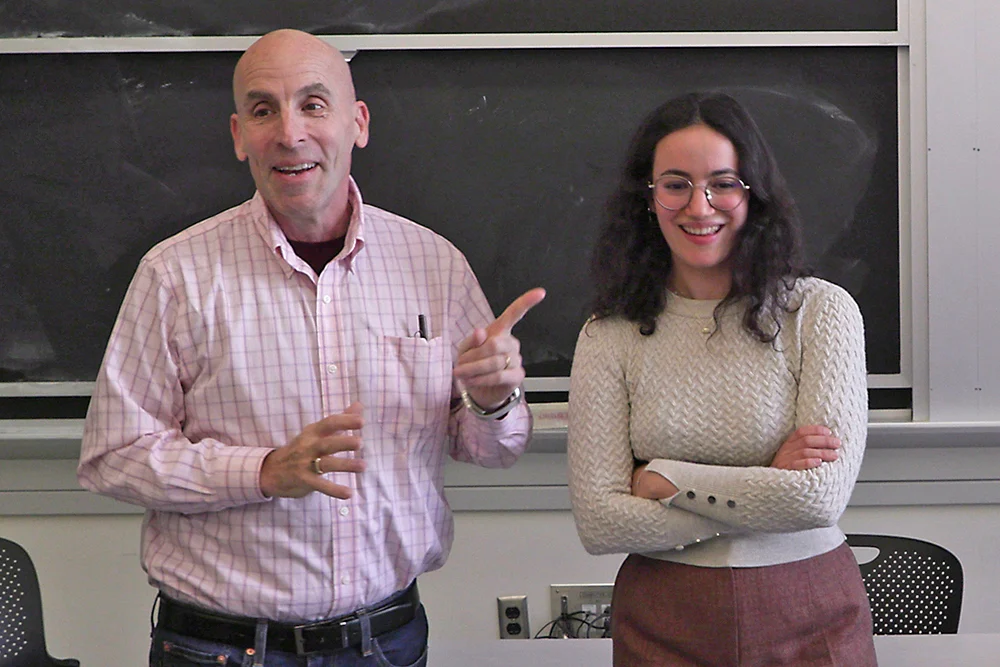
The rigorous and often unpredictable path to launching and scaling a successful startup is a journey fraught with unique challenges, demanding resilience, ingenuity, and strategic foresight. For aspiring entrepreneurs navigating this complex landscape, the invaluable wisdom gleaned from those who have already traversed this terrain can serve as both a practical guide and a profound source of inspiration. Recognizing this critical need, the Massachusetts Institute of Technology’s Department of Mechanical Engineering (MechE) has inaugurated a pioneering new course designed to bridge the gap between academic theory and real-world entrepreneurial practice, leveraging its unparalleled network of successful alumni founders.
The Genesis of an Entrepreneurial Vision
At the heart of this innovative initiative is a commitment to cultivating a vibrant entrepreneurial spirit within the student body and the broader MIT community. John Hart, the esteemed Class of 1922 Professor and head of the Department of Mechanical Engineering, articulated the department’s strategic imperative. "There are so many amazing entrepreneurial stories among our alumni. We want to bring those stories to our students and our community and build networks with our incredible alumni founders," Professor Hart stated. He emphasized the dual goals of the program: to ignite student interest in entrepreneurship and to accelerate the translation of "MechE-born technologies to the world." This vision underscores MIT’s long-standing dedication to not only advancing scientific and engineering knowledge but also ensuring its practical application for societal benefit.
The launch of programs like the "Founder’s Journey" class marks a deliberate expansion of opportunities, aiming to systematically impart the nuanced lessons of startup creation and growth. This proactive approach acknowledges that while the fundamental principles of innovation are taught within MIT’s classrooms and labs, the specific competencies required to navigate market entry, fundraising, and scaling a business are best learned from those who have firsthand experience.
A Well-Trodden Path: Course Structure and Philosophy
The inaugural offering of Class 2.S977/2.S979, titled "Founder’s Journey: Launching and Scaling Hardware Startups," debuted in spring 2025. This specialized course delves into the intricate, real-life challenges inherent in building and expanding companies focused on hardware technologies. The curriculum is meticulously structured to "find and activate their entrepreneurial energy" among students by examining the multifaceted hurdles faced by founders and their teams across various stages of company development. These challenges span a broad spectrum, from the critical initial phase of securing venture capital and developing a compelling product to the complexities of supply chain management, manufacturing, and market penetration.
Marina Hatsopoulos SM ’93, a co-leader of the class and the founding CEO of Z Corp., an early trailblazer in 3D printing, highlighted a core philosophical underpinning of the course. "So much of this has been done before. I want them to understand that this is a well-trod path," she explained. Her insight aims to demystify the entrepreneurial process, reassuring students that while innovation is key, they do not need to "reinvent everything." Instead, they can learn from established patterns, common pitfalls, and successful strategies employed by their predecessors.
The weekly structure of the class is designed for maximum engagement and practical learning. Each session focuses on a specific, critical challenge faced during the lifecycle of a hardware startup, presented by the course instructors and a rotating roster of distinguished guest speakers. These speakers, all accomplished founders from diverse sectors such as robotics, energy, advanced manufacturing (including 3D printing), consumer products, and other frontier technologies, share their personal narratives, strategic decisions, and hard-won lessons. Students actively participate by preparing targeted questions for the speakers, engaging in vibrant follow-on discussions, and undertaking reflective exercises throughout the semester, thereby internalizing the entrepreneurial mindset. The course was co-led by Hatsopoulos and Ken Zolot, a senior lecturer at MIT, and developed in collaboration with Professor Hart, who also contributed as an alumni speaker, sharing his experiences as co-founder of VulcanForms alongside Martin Feldmann MEng ’14.
MIT’s Unparalleled Entrepreneurial Legacy
The "Founder’s Journey" class is not an isolated endeavor but rather a deliberate reinforcement of MIT’s deeply ingrained entrepreneurial culture. The Institute’s impact on the global economy is nothing short of monumental. A comprehensive 2015 report on MIT’s global entrepreneurial footprint revealed that more than 30,000 active companies had been founded by MIT alumni worldwide. These ventures collectively employed an astounding 4.6 million people and generated annual revenues estimated at nearly $2 trillion, a figure comparable to the GDP of a major global economy. While more recent comprehensive reports are continually compiled, this data point firmly establishes MIT as an unparalleled engine of innovation and economic growth. The ongoing success of its alumni across every conceivable industry sector underscores the enduring value of an MIT education combined with an ecosystem that actively fosters entrepreneurship.
The roster of alumni speakers in the inaugural "Founder’s Journey" class reads like a who’s who of modern technological innovation, embodying the breadth and depth of MIT’s impact. Beyond Hart, Hatsopoulos, and Zolot, the lineup included: Mick Mountz (Kiva/Amazon), Jon Hirschtick (Solidworks/Onshape), Max Lobovsky (Formlabs), Elise Strobach (Aeroshield), Greg Mark (Markforged), Seemantini Nadkarni (Coalesenz), Eran Egozy (Harmonix), Renuka Babu (DOTS Technology), Davide Marini (Inkbit), Loewen Cavill (Amira), and Colin Angle (iRobot). Each of these individuals represents a unique journey of transforming groundbreaking ideas into market-leading companies, offering an invaluable mosaic of experiences for the students.
Voices from the Forefront: Alumni Founders Share Their Journeys
The guest speakers provided candid insights into their entrepreneurial paths, offering both inspiration and practical wisdom.
Colin Angle: Pioneering Robotics with iRobot
Colin Angle ’89, SM ’91, co-founder and former CEO of iRobot, and now CEO and co-founder of Familiar Machines and Magic, articulated a lifelong passion for creation. "This idea that you can create something from nothing, that you can have an idea and not just draw it, but build it and make it real, is something I’ve always loved," he shared. Angle credited MIT’s "strong, hands-on ethos" as powerfully resonating with this innate drive. His early exposure to entrepreneurship at the Alpha Delta Phi Fraternity house, where he witnessed several multi-million-dollar companies germinate among his fraternity brothers, played a crucial role in demystifying the process for him.
Angle famously started iRobot in his living room, driven not by an immediate product concept but by a grand, almost philosophical vision. "We’re supposed to have robots. So, if not us, who? And if not now, when? It was a magical day," he recounted. This audacious belief in a future shaped by robotics propelled iRobot to develop iconic products like the Roomba, the autonomous robotic vacuum cleaner that revolutionized home cleaning. Beyond consumer robotics, iRobot also made significant contributions in defense, deploying Pack Bot tactical mobile robots in Afghanistan, which saved thousands of lives, and even explored the Great Pyramid in Giza live on National Geographic. Angle underscored the profound satisfaction derived from his entrepreneurial journey: "The joy I have taken from my entrepreneurial journey has been the ability to build bigger things, from building teams to building a company capable of building something far beyond what I could have ever imagined doing myself… we created inventions that no one thought possible, simply because we believed we could." iRobot’s journey exemplifies the power of a bold vision coupled with relentless execution, demonstrating how deep technological expertise can lead to both commercial success and significant societal impact across diverse sectors.
Elise Strobach: Innovating Sustainable Materials with AeroShield
Elise Strobach SM ’17, PhD ’20, CEO and co-founder of AeroShield Materials, presented a compelling case study of transforming academic research into a climate-tech venture. AeroShield, co-founded with Kyle Wilke PhD ’19 and Aaron Baskerville-Bridges SM ’20, MBA ’20, develops super-insulating transparent window inserts. This technology is rooted in transparent silica aerogels that Strobach developed during her PhD research in Professor Evelyn Wang’s lab. Reflecting on her origins, Strobach noted, "I wasn’t thinking of myself as an entrepreneur at that time, but looking back, that’s definitely where that seed was planted." She highlighted the unique freedom entrepreneurs possess: "We have the… freedom to find the best problem to solve and to continue to seek the best way to solve that problem."
Aerogels, first invented nearly a century ago and initially commercialized by NASA for space equipment insulation, traditionally suffered from a hazy blue tint that severely limited their widespread applications. The breakthrough material developed by Strobach and her team is completely transparent, unlocking a vast array of new everyday uses, particularly in energy-efficient building materials. This innovation has significant implications for reducing energy consumption and carbon emissions in buildings. The company recently achieved a notable milestone, with their groundbreaking work showcased at the Smithsonian National Air and Space Museum, underscoring the scientific and cultural significance of their invention. Strobach’s journey provides a powerful lesson in deep tech entrepreneurship, emphasizing that "You don’t have to know everything to start. You just have to know that this is what you want to do and just get started." Her story illustrates the critical role academic research plays in seeding disruptive technologies and the potential for scientific breakthroughs to address pressing global challenges like climate change.
Maxim Lobovsky: Democratizing 3D Printing with Formlabs
Maxim Lobovsky SM ’11, CEO and co-founder of Formlabs, shared his experience of disrupting the 3D printing industry. Lobovsky was already immersed in 3D printing before arriving at the MIT Media Lab. As he neared the completion of his master’s degree, he identified a significant market opportunity. Alongside fellow Media Lab graduates David Cranor SM ’11 and Natan Linder SM ’11, Lobovsky founded Formlabs, a company dedicated to developing and manufacturing professional-grade 3D printing technology. Their audacious goal was to create a 3D printer that was not only professional-level but also drastically more affordable and user-friendly than the existing market offerings, which often cost upwards of $100,000. Formlabs launched its product at around $3,000.
"We definitely built Formlabs in a classic, disruptive innovation path," Lobovsky asserted. This disruption was achieved through a combination of ingenuity and strategic component sourcing. They replaced outdated 1980s technology with modern consumer electronics components, such as the laser diodes originally developed for Blu-ray Disc players, combined with "a lot of clever engineering." Lobovsky recounted the "long grind" to secure their initial round of funding, including participation in MIT’s prestigious 100K competition and numerous pitches to skeptical investors. Their pivotal break came through an unexpected, serendipitous encounter. Lobovsky, an admitted "naturally introverted, shy engineer," highlighted a crucial lesson: "Sometimes, you can get lucky… Sometimes talking loudly at a restaurant is actually a good way to get things going." While dining with a potential investor, their conversation was overheard by Mitch Kapor, the founder of Lotus Software and an early pioneer in the PC industry. Kapor, intrigued by their vision, ultimately led Formlabs’ first round of funding. Today, Formlabs stands as the world’s largest supplier of professional stereolithography and selective laser sintering 3D printers, a testament to their disruptive strategy and the power of persistence and serendipity. Their story underscores the transformative potential of making advanced technologies accessible to a broader user base, accelerating innovation across countless industries.
Jon Hirschtick: Building the Tools for Creation with SolidWorks and Onshape
Jon Hirschtick ’83, SM ’83, co-founder of SolidWorks and Onshape, reflected on his earliest inclinations towards entrepreneurship, which emerged during his undergraduate years. "I had heard about startups, and it sounded like a lot of things that I was drawn to… a sense of being able to realize your vision, express yourself; a sense of excitement, of making money, and even the idea of a chaotic environment," he recalled. Hirschtick has dedicated over four decades to the field of computer-aided design (CAD) software, beginning as an intern at MIT in 1981. His work is driven by a conviction that "the world could use this software. It’ll be a better place with the software that I envisioned."
He characterizes CAD as a "meta product design" – the act of "designing a product that other people use to design products," a concept he finds profoundly engaging. "I think startups just fit me," Hirschtick remarked, citing the excitement, and the constant need to solve multiple problems simultaneously. He noted, "MIT is a place of problem-solving… and a startup is a place where there’s lots of problems to solve." While established companies certainly innovate, Hirschtick highlighted that "startups are always doing things," operating with an inherent dynamism. He emphasized the ubiquitous impact of CAD, stating that virtually every manufactured product today is first modeled in CAD. For those passionate about product development, building a CAD system offers a unique opportunity to "get involved in the world’s product development." Hirschtick concluded with a sobering but realistic assessment of entrepreneurship: "Nobody knows for sure when they start a company whether it’s going to be successful or not. If it were, if there was a way of knowing for sure, then there wouldn’t be all these classes in entrepreneurship. They’d just tell you the secret. There’s always risk. Visions and hallucinations, they look and feel the same. You only find out which is which once you really try to realize them." His dual success with SolidWorks, a dominant force in desktop CAD, and Onshape, a pioneering cloud-native CAD platform, illustrates his ability to anticipate and shape the future of design tools, significantly influencing how products are conceived, engineered, and brought to market globally.
The Broader Ecosystem: Cultivating Future Innovators
The "Founder’s Journey" course integrates seamlessly into MIT’s expansive entrepreneurial ecosystem, which is designed to support students at every stage of their innovation journey. Beyond formal coursework, this ecosystem includes resources like the Martin Trust Center for MIT Entrepreneurship, the MIT Sandbox Innovation Fund, and the renowned MIT 100K Entrepreneurship Competition, where Formlabs, among countless other successful startups, honed its initial pitch. These programs collectively provide mentorship, seed funding, networking opportunities, and a vibrant community where ideas can be tested, refined, and ultimately launched.
The Mechanical Engineering department’s specific focus on hardware startups within this broader context is particularly significant. Hardware ventures, unlike software-only companies, often entail higher upfront capital requirements, longer development cycles, and more complex supply chain and manufacturing challenges. By bringing experienced hardware founders to the classroom, MechE directly addresses these unique complexities, preparing students for the distinct realities of building tangible products. This specialized focus ensures that the next generation of engineers is not only adept at inventing novel technologies but also skilled in translating those inventions into commercially viable and impactful products that can tackle real-world problems.
Looking Ahead: Impact and the Future of Hardware Innovation
The launch of the "Founder’s Journey" class represents a strategic investment by MIT’s Mechanical Engineering Department in the future of innovation. By fostering direct connections between current students and a lineage of accomplished alumni founders, the program aims to demystify entrepreneurship, impart critical practical knowledge, and inspire a new generation to embrace the challenges and rewards of startup creation. The ripple effect of such initiatives is profound, contributing to sustained economic growth, job creation, and the advancement of technology across diverse sectors.
As Professor Hart articulated, the ultimate goal is to "cultivate interest in entrepreneurship among our students and expand opportunities to bring MechE-born technologies to the world." This commitment ensures that MIT remains at the forefront of global innovation, continuously nurturing the visionary engineers and entrepreneurs who will shape the products, industries, and solutions of tomorrow. The lessons learned in the "Founder’s Journey" course, illuminated by the candid experiences of those who have paved the way, will undoubtedly empower students to embark on their own entrepreneurial quests, transforming audacious visions into tangible realities and further enriching MIT’s enduring legacy as a crucible of world-changing ideas.
A version of this story appears in the 2026 issue of MechE Connects, the Department of Mechanical Engineering’s magazine.






