MUNICH — Artificial intelligence, long a transformative force on the factory floor, is now making a profound shift into the engineering office, where manufacturers are increasingly leveraging its capabilities to accelerate product design, automate complex simulation workflows, and meticulously preserve critical engineering knowledge. This strategic evolution marks a new frontier for AI, moving beyond operational improvements to fundamentally reshape how products are conceived and developed.
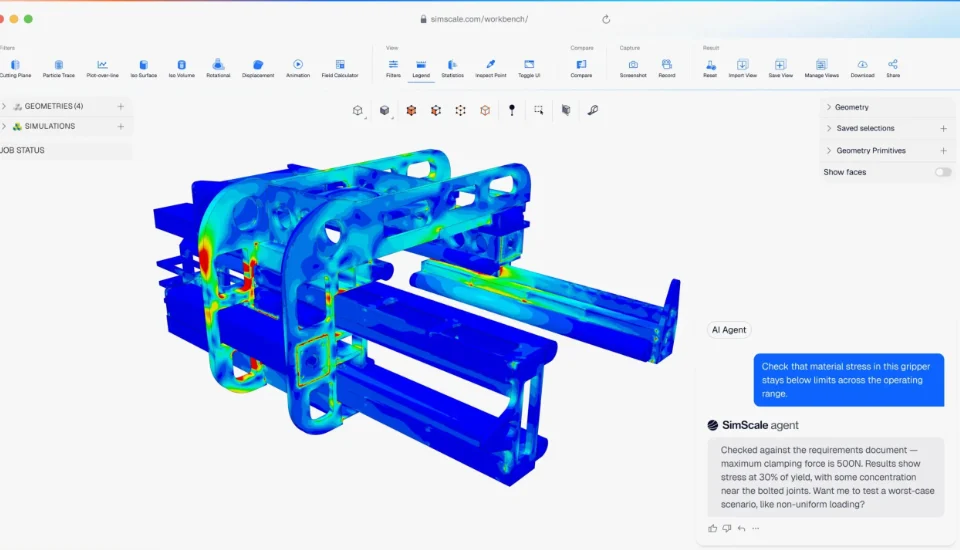
This significant trend is vividly exemplified by robotics developer Dexory, which has strategically deployed SimScale’s advanced Engineering AI platform. This integration is designed to empower Dexory’s engineers to more efficiently identify the root causes of structural component failures, explore and evaluate a greater number of design alternatives through sophisticated simulation, and streamline the automation of essential engineering documentation. The move signals a broader industry recognition of AI’s potential to enhance not just the "how" robots operate, but crucially, the "how" they are designed and built.
The Evolution of AI in Manufacturing: From Factory Floor to Design Studio
For years, artificial intelligence has been a common and indispensable tool within the manufacturing sector, particularly in enhancing operational efficiencies. Its applications have spanned a wide array of areas, from optimizing robot navigation systems and refining vision systems for quality control to enabling autonomous decision-making in production lines. These applications primarily focused on improving the performance, speed, and accuracy of existing manufacturing processes and robotic operations. The deployment of AI in these contexts has led to significant gains in productivity, reduction in errors, and increased automation, laying the groundwork for what many termed Industry 4.0.
However, the growing role of AI within mechanical engineering, specifically in the realm of product design and development, represents a distinct and equally impactful new frontier. This iteration, often referred to as "Engineering AI," is not merely about refining how robots or machines operate; it is fundamentally designed to improve the very process of how these complex systems are conceptualized, engineered, and brought to life. It tackles challenges upstream in the product lifecycle, where decisions have cascading effects on cost, performance, and market readiness.
Dexory’s Strategic Imperative: Accelerating Innovation and Ensuring Reliability
Dexory, a prominent player in the robotics development landscape, faces the dual pressures common to high-tech manufacturing: the relentless demand for shorter product development cycles and the unwavering necessity of maintaining peak performance and reliability in its sophisticated robotic systems. The company’s adoption of SimScale’s Engineering AI platform directly addresses these critical business imperatives.
The technology is poised to deliver several key benefits. According to Dexory, it will enable engineers to automate simulation reporting, significantly reducing the manual effort and time traditionally associated with generating comprehensive performance analyses. Furthermore, the platform facilitates sophisticated parameter sweeps, allowing engineers to evaluate multiple design variables simultaneously. This capability is crucial for optimizing complex designs, identifying ideal configurations, and understanding the sensitivity of performance to various design choices—a task that would be prohibitively time-consuming and resource-intensive using conventional methods.
Perhaps one of the most transformative aspects of this deployment is the ability to build a searchable knowledge base from previous engineering projects. This addresses a pervasive challenge in many engineering organizations: the loss of institutional knowledge when experienced engineers retire or move on, and the difficulty in efficiently retrieving insights from past successes and failures. By codifying and making accessible the vast trove of data generated during design, simulation, and testing phases, Dexory can ensure that valuable lessons learned are preserved and leveraged for future projects, fostering continuous improvement and reducing the likelihood of repeating past mistakes. This digital repository becomes a living archive, empowering new engineers to quickly onboard and contribute effectively, while seasoned professionals can access historical context with unprecedented ease.
Transforming Product Development Cycles and Engineering Workflows
The pressures on modern engineering teams are immense. Global competition, rapid technological advancements, and increasing customer expectations for innovative, reliable, and cost-effective products necessitate a paradigm shift in how design and development are approached. Traditional iterative design processes, which often involve manual adjustments, sequential simulations, and extensive physical prototyping, are becoming increasingly untenable in the face of these demands.
"Engineering teams face increasing pressure to shorten product development cycles while maintaining performance and reliability," Dexory stated, underscoring the core challenge the SimScale partnership aims to tackle. This sentiment resonates across the manufacturing industry, where the race to market is often a determinant of success.

SimScale emphasizes that this initiative will fundamentally alter how Dexory’s engineers allocate their time and expertise. By automating routine, data-intensive tasks such as investigating structural component failures, engineers will be freed from the more laborious aspects of problem-solving. This reallocation of effort means they can dedicate more time and cognitive energy to higher-value activities: evaluating design improvements, exploring innovative solutions during critical stages of product development, and engaging in more creative and strategic engineering work. This shift not only boosts efficiency but also enhances job satisfaction and fosters a culture of innovation.
The "Blank Sheet of Paper" Problem and the Future of Engineering
Calum MacDougall, Senior Mechanical Design Engineer at Dexory, eloquently articulated the nascent stage of AI’s integration into core engineering functions: "AI has a ‘blank sheet of paper’ problem in engineering because we’re still discovering where it can create the greatest value." This statement highlights the experimental, yet profoundly promising, nature of Engineering AI. It’s not merely about applying a known solution to a known problem, but rather about exploring uncharted territory to uncover new paradigms of efficiency and innovation.
MacDougall further elaborated on the strategic intent behind Dexory’s pilot program: "This pilot isn’t just about solving today’s engineering challenges. It’s about understanding how AI will reshape engineering over the coming years and helping us discover where it can genuinely transform the way engineers work." This forward-looking perspective indicates that Dexory views this not just as a tool adoption, but as an investment in future-proofing its engineering capabilities and maintaining a competitive edge in a rapidly evolving technological landscape.
Broader Industry Implications and Market Trends
The deployment at Dexory reflects a much broader and accelerating shift within the manufacturing sector. Companies globally are exploring and implementing AI not only to optimize their production environments but also to integrate it deeply throughout the entire product development lifecycle, from initial conceptualization and detailed design to sophisticated simulation and rigorous engineering analysis.
According to various industry reports, the market for AI in manufacturing and engineering design is projected to experience significant growth in the coming decade. Analysts predict that AI-driven design tools, generative design capabilities, and intelligent simulation platforms will become standard components of modern engineering workflows. The benefits cited include reductions in product development time by 20-50%, significant cost savings through optimized material usage and reduced prototyping, and substantial improvements in product quality and performance due to more thorough design exploration. For instance, a report by MarketsandMarkets projected the AI in manufacturing market size to grow from USD 8.7 billion in 2021 to USD 80.9 billion by 2027, at a compound annual growth rate (CAGR) of 45.4%, driven in part by increasing adoption in product design and development.
This widespread adoption is fueled by several factors: the increasing complexity of modern products, the need for rapid iteration to meet market demands, the availability of vast amounts of design and performance data, and advancements in AI algorithms and computational power. Companies that embrace Engineering AI early are likely to gain a significant competitive advantage, enabling them to bring more innovative, reliable, and cost-effective products to market faster than their peers.
The Path Forward for Mechanical Engineering
The integration of AI into mechanical engineering signifies a paradigm shift from traditional, often manual, and iterative design processes to more data-driven, predictive, and optimized approaches. Engineering AI promises to transform several critical areas:
- Generative Design: AI algorithms can autonomously generate numerous design options based on specified parameters, material constraints, and performance objectives, far exceeding what human engineers could conceive in the same timeframe.
- Predictive Analytics for Failure Prevention: By analyzing historical data from simulations, tests, and field performance, AI can predict potential failure points in designs before physical prototypes are even built, allowing for proactive design adjustments.
- Optimized Material Usage: AI can suggest designs that minimize material waste while maximizing structural integrity, leading to significant cost savings and environmental benefits.
- Accelerated Simulation and Testing: AI can intelligently manage and accelerate complex simulations, identifying critical scenarios and potentially reducing the number of physical prototypes required.
- Knowledge Democratization: Creating accessible, searchable databases of engineering knowledge ensures that insights gained from every project contribute to the collective intelligence of the organization.
However, the transition also presents challenges. It necessitates significant investment in AI infrastructure, data governance strategies to ensure data quality and accessibility, and, critically, the upskilling of the engineering workforce. Engineers will need to evolve from purely design-centric roles to become proficient in guiding and interpreting AI-generated insights, focusing on higher-level problem-solving and strategic decision-making. The human element remains indispensable, with AI acting as a powerful augmentative tool rather than a replacement.
In conclusion, Dexory’s strategic embrace of SimScale’s Engineering AI platform is more than just a technological upgrade; it is a clear indicator of the profound transformation underway in product design and development across the manufacturing industry. As AI continues to mature and integrate deeper into the engineering workflow, it promises to unlock unprecedented levels of innovation, efficiency, and reliability, fundamentally reshaping the future of how products are engineered and brought to the world.