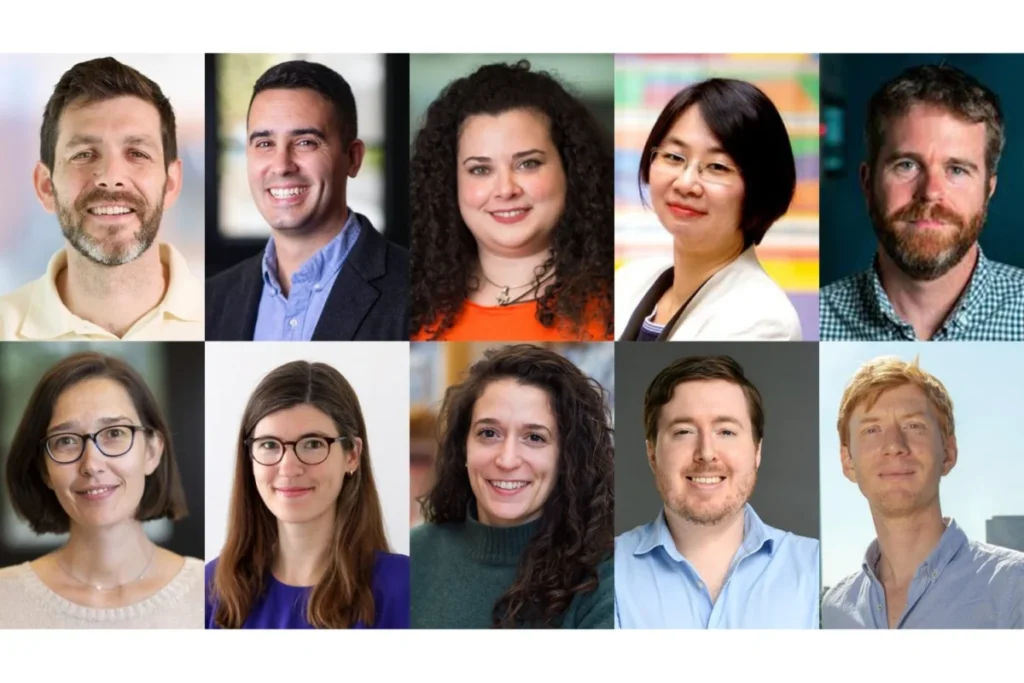
In a significant move reinforcing its preeminence in global engineering and scientific innovation, the Massachusetts Institute of Technology (MIT) announced in 2026 the granting of tenure to 10 distinguished faculty members within its School of Engineering. This cohort of newly tenured engineers represents a broad spectrum of critical disciplines, holding appointments across the departments of Aeronautics and Astronautics, Civil and Environmental Engineering, Electrical Engineering and Computer Science (EECS) — which uniquely reports jointly to the School of Engineering and the MIT Schwarzman College of Computing — and Mechanical Engineering, as well as within the esteemed Institute for Medical Engineering and Sciences (IMES). This announcement marks a pivotal moment for the careers of these academics and for the strategic direction of MIT’s research and educational endeavors, ensuring the institution remains at the forefront of tackling some of humanity’s most pressing challenges.
The Significance of Tenure at MIT: A Benchmark of Academic Excellence
The granting of tenure at an institution like MIT is not merely a promotion; it is a profound declaration of confidence in a faculty member’s sustained intellectual contributions, teaching prowess, and future potential. It represents the culmination of years of rigorous research, innovative teaching, and dedicated service, undergone by a select few. The tenure process at MIT is notoriously stringent, involving multiple layers of review that scrutinize every aspect of a candidate’s academic career. This typically begins with a comprehensive departmental review, assessing research impact, publications in top-tier journals, success in securing competitive grants, and demonstrated commitment to undergraduate and graduate education and mentorship. Following departmental approval, the case proceeds to a school-wide committee, then to the Academic Council, and finally requires approval from the MIT President. This multi-stage evaluation ensures that only individuals who have unequivocally demonstrated exceptional scholarship and a long-term commitment to MIT’s mission of advancing knowledge and educating students are granted this ultimate academic security.
For the faculty members, tenure provides academic freedom and the stability necessary to pursue high-risk, high-reward research projects that may take decades to bear fruit, unencumbered by the pressures of short-term publication cycles or grant funding anxieties. For MIT, it secures the intellectual capital of leading minds, allowing them to shape the institution’s future through their research agendas, curriculum development, and mentorship of future generations of engineers and scientists. The 2026 cohort, therefore, represents a strategic investment by MIT in its core mission and its vision for global leadership in engineering innovation.
A New Cohort of Engineering Leaders: Individual Profiles and Impact
The 10 faculty members awarded tenure in 2026 embody the interdisciplinary and forward-thinking spirit of MIT. Their diverse fields of expertise promise to drive advancements across artificial intelligence, sustainable energy, advanced materials, biomedical engineering, and fundamental scientific understanding.
Jacob Andreas, now an Associate Professor in EECS and affiliated with the Computer Science and Artificial Intelligence Laboratory (CSAIL), has made significant strides in natural language processing (NLP) and the broader field of artificial intelligence (AI). His research is dedicated to deciphering the computational underpinnings of language learning, pushing the boundaries of how intelligent systems can comprehend and generate human language. Andreas’s work is crucial for developing AI systems that can interact more naturally and effectively with humans, impacting areas from advanced virtual assistants and intelligent tutoring systems to sophisticated data analysis and automated content generation. His contributions are vital as AI continues to integrate more deeply into daily life and complex decision-making processes.
Zachary Cordero, the Esther and Harold E. Edgerton Associate Professor in the Department of Aeronautics and Astronautics and Associate Director of the MIT Gas Turbine Laboratory, focuses on enabling frontier aviation and space platforms through cutting-edge materials, manufacturing processes, and structural designs. His particular emphasis on high-temperature systems is critical for the next generation of aerospace propulsion and spacecraft, which demand materials capable of withstanding extreme conditions. Cordero’s research is instrumental in developing more efficient, durable, and safer aircraft and spacecraft, directly contributing to advancements in sustainable aviation and ambitious space exploration initiatives.
Christina Delimitrou, the KDD Career Development Professor in Communications and Technology and an Associate Professor in EECS, also affiliated with CSAIL, operates at the intersection of computer architecture and computer systems. She is recognized as a pioneer in applying machine learning techniques to address design and management challenges within cloud computing environments. As cloud infrastructure becomes the backbone of modern digital economies, Delimitrou’s work in optimizing its performance, efficiency, and reliability through AI-driven insights is indispensable. Her innovations promise to enhance the speed, cost-effectiveness, and environmental sustainability of data centers worldwide.
Sili Deng, the Doherty Career Development Professor in Ocean Utilization and an Associate Professor in the Department of Mechanical Engineering, leads a group that develops scientific machine learning and experimental approaches to understand, predict, and engineer chemically reacting systems. Her research is pivotal for sustainable energy solutions, advanced materials manufacturing, and climate-resilient technologies. By unlocking new insights into chemical reactions, Deng’s work can accelerate the development of cleaner fuels, more efficient energy conversion systems, and novel materials that can withstand harsh environmental conditions, addressing urgent global needs in energy and climate change.
David Des Marais, the Amgen Career Development Professor in the Department of Civil and Environmental Engineering, leads a lab focused on understanding the intricate mechanisms of plant-environment interaction. Utilizing tools from molecular, quantitative, and population genetics, his research aims to identify the physiological basis of plant responses to environmental cues. In an era of climate volatility and increasing food security concerns, Des Marais’s work is fundamental to developing more resilient crops, improving agricultural productivity, and understanding ecological systems, contributing directly to global food security and environmental conservation efforts.
Carmen Guerra-Garcia, the Esther and Harold E. Edgerton Associate Professor in the Department of Aeronautics and Astronautics and Director of the Aerospace Plasma Group, bridges aerospace engineering, low-temperature plasma technologies, and gas discharge physics. Her research directly addresses two critical aviation challenges: reducing emissions and ensuring the safety of next-generation aircraft. Through advancing the fundamental science of electrical discharges in flowing gases, applying this science to plasma-assisted combustion and chemical conversion, and developing physics-based approaches to lightning protection, Guerra-Garcia is paving the way for more environmentally friendly and safer air travel. Her innovations are vital for the aviation industry’s transition to sustainable practices.
Laura Lewis, the Athinoula A. Martinos Associate Professor in EECS and IMES, is dedicated to developing methods for analyzing and interpreting multi-modal neuroimaging data. Her goal is to enable the measurement of previously undetectable aspects of brain function, with a particular interest in fast fMRI, EEG, and PET, and their application to the study of sleep. Lewis’s groundbreaking work promises to revolutionize our understanding of brain health and disease, offering new diagnostic tools and insights into neurological conditions, particularly those related to sleep disorders which have widespread health implications.
Tami Lieberman, the Hermann L. F. von Helmholtz Career Development Professor in the Department of Civil and Environmental Engineering and IMES, leads a lab investigating how ecology and evolution shape the personalized communities of the human microbiome. Her research explores the critical role of this personalization in human health. Lieberman’s work is at the forefront of personalized medicine, seeking to understand how our unique microbial ecosystems influence susceptibility to disease, drug metabolism, and overall well-being. This research holds immense potential for developing targeted therapies and preventative strategies based on individual microbiome profiles.
Kevin O’Brien, an Associate Professor in EECS and a member of the Research Laboratory of Electronics, leads the Quantum Coherent Electronics Group. His research focuses on developing tools, techniques, and devices to enhance the measurement of quantum systems, most notably superconducting quantum computers. As the world races towards quantum computing, O’Brien’s contributions are fundamental to building stable, reliable, and scalable quantum hardware. His work directly impacts the advancement of quantum information science, which promises to revolutionize computation, cryptography, and materials science.
Wim van Rees, an Associate Professor in the Department of Mechanical Engineering and the Leonardo Career Development Professor in Engineering, specializes in advancing high-order, high-fidelity numerical methods for efficiently simulating interactions between fluid flows and moving or deforming bodies. His methodologies span diverse applications, from wake vortex dynamics to bio-inspired propulsion and morphing structures. Van Rees’s research is critical for optimizing the design of aircraft, underwater vehicles, and even robotic systems inspired by biological movement, leading to more efficient, agile, and robust engineered systems.
Dean Hammond’s Vision and MIT’s Strategic Direction
Dean of Engineering Paula T. Hammond ’84, PhD ’93, an Institute Professor and Professor of Chemical Engineering, expressed profound delight in congratulating the newest tenured faculty. Her statement underscores the multi-faceted criteria for tenure at MIT: "I’m delighted to congratulate the 10 newest tenured faculty members in the School of Engineering. This major career milestone reflects not only their impact and excellence in research, but their deep commitment to education and mentoring the next generation of engineers. I am so excited to see what new developments, innovations, and technologies will come next from this incredibly accomplished group."
Dean Hammond’s remarks highlight MIT’s enduring commitment to a holistic view of academic contribution, where groundbreaking research is inseparable from dedicated teaching and mentorship. The inclusion of faculty members from EECS, which reports jointly to the School of Engineering and the MIT Schwarzman College of Computing, further exemplifies MIT’s strategic recognition of computing as an essential interdisciplinary foundation across all fields of engineering and science. This organizational structure allows for a seamless integration of computational thinking and resources, fostering innovation at the nexus of traditional engineering and emerging digital frontiers. The appointments reflect a deliberate strategy to invest in areas poised for transformative impact, aligning with MIT’s mission to address global challenges through scientific and technological leadership.
Broader Implications for Research, Education, and Global Impact
The tenure of these 10 faculty members in 2026 carries significant implications for MIT and the broader scientific community. For MIT, it ensures a continued infusion of vibrant intellect and cutting-edge research, solidifying its position as a global leader in engineering education and innovation. These individuals will not only continue their impactful research but will also serve as pillars of their respective departments, shaping curriculum, guiding doctoral students, and fostering a culture of intellectual curiosity and excellence. Their diverse expertise, spanning AI, sustainable technologies, aerospace, biomedical science, and quantum computing, directly addresses pressing global issues such as climate change, healthcare, national security, and digital transformation.
The stability afforded by tenure will enable these professors to undertake ambitious, long-term projects that might not yield immediate results but promise revolutionary breakthroughs. This strategic investment in fundamental and applied research ensures that MIT continues to be a fertile ground for the innovations that will define the 21st century. Furthermore, their presence will attract top-tier graduate students and postdoctoral researchers, creating a dynamic ecosystem of learning and discovery. The cross-departmental and inter-school affiliations, particularly with the Schwarzman College of Computing and IMES, underscore a growing trend towards interdisciplinary collaboration, recognizing that complex global problems require solutions that transcend traditional academic boundaries. This cohort is poised to not only advance their individual fields but also to catalyze new synergistic research initiatives across MIT, ultimately contributing to a better, more sustainable, and technologically advanced world.