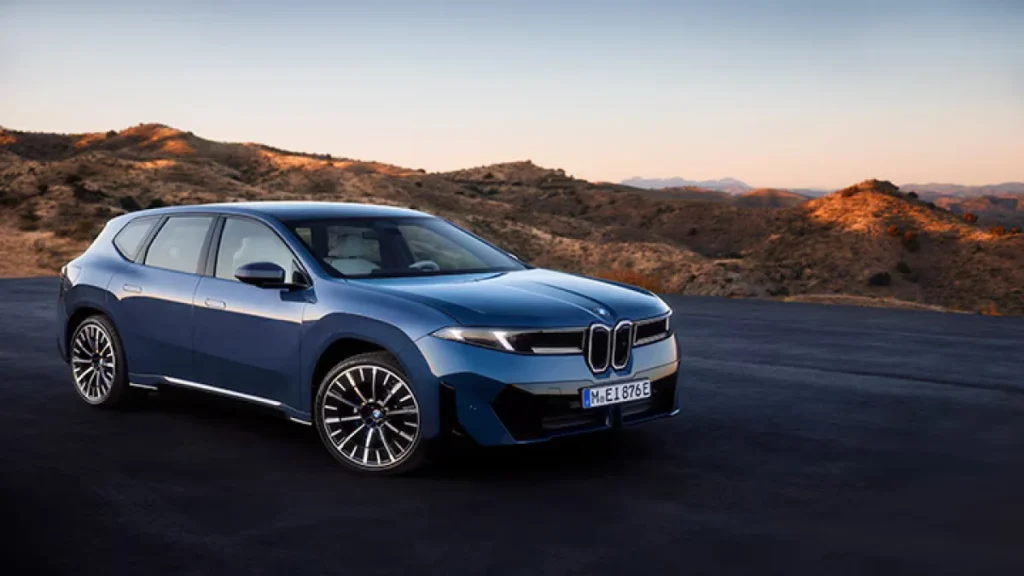
Eindhoven, Netherlands – NXP Semiconductors has announced a significant strategic partnership with the BMW Group, revealing that its advanced Trimension NCJ29D6 ultra-wideband (UWB) family will be integrated across BMW’s future vehicle fleet, commencing with selected 2026 vehicle programmes. This deployment marks a pivotal moment in automotive technology, signaling a broad industry shift towards UWB as a foundational technology for both enhanced convenience and critical safety applications. The NXP solution, lauded for its unique combination of secure fine-ranging and short-range radar capabilities within a single-chip architecture, is poised to redefine how drivers interact with their vehicles and how vehicles protect their occupants.
The Dawn of a New Era in Automotive Access and Safety
The automotive industry is undergoing a profound transformation, driven by advancements in connectivity, autonomy, and electrification. Central to this evolution is the need for highly secure, precise, and reliable wireless communication technologies. Ultra-Wideband (UWB) emerges as a frontrunner, offering unparalleled accuracy in distance and direction measurement, coupled with robust security features. NXP’s Trimension NCJ29D6 family capitalizes on these strengths, providing BMW with a versatile platform to implement sophisticated features ranging from seamless, hands-free vehicle access to groundbreaking in-cabin presence detection systems. This dual functionality from a single underlying technology platform streamlines development for manufacturers and enhances the user experience, while also addressing pressing safety concerns.
Technical Deep Dive: Understanding Ultra-Wideband (UWB)
At its core, UWB is a radio technology characterized by its use of a very wide spectrum of frequencies over a short distance. Unlike narrowband or carrier wave systems that transmit data by varying the power, frequency, or phase of a sine wave, UWB transmits data by generating short pulses across a broad spectrum of frequencies. This method allows for extremely precise time-of-flight (ToF) measurements between two UWB devices.
The advantages of UWB in an automotive context are manifold:
- Exceptional Ranging Accuracy: UWB can determine distances with centimeter-level precision, far surpassing the accuracy of traditional Bluetooth Low Energy (BLE) or Wi-Fi. This precision is crucial for applications like secure keyless entry, where the vehicle needs to distinguish between a key fob or smartphone inside or just outside the car.
- Robust Security Against Relay Attacks: The accurate time-of-flight measurement makes UWB highly resistant to relay attacks, a common vulnerability in older passive keyless entry systems. In a relay attack, criminals use signal boosters to extend the range of a key fob’s signal, tricking the car into thinking the key is nearby. UWB’s precise ranging capabilities, coupled with cryptographic security, effectively prevent such exploits by verifying the true distance and preventing unauthorized signal amplification.
- High Data Rates and Low Power Consumption: Despite its wide bandwidth, UWB can be designed for low power consumption, an essential factor for battery-powered devices like smartphones and key fobs, and for always-on vehicle systems.
- Immunity to Interference: Operating across a broad spectrum makes UWB signals highly resistant to interference from other wireless technologies, ensuring reliable performance in complex electromagnetic environments like a modern vehicle’s cabin.
- Radar Capabilities: The ability to transmit and receive short pulses also lends UWB inherent radar-like functionality, allowing it to detect subtle movements, making it ideal for presence detection.
Evolution of Automotive Access: From Keys to Digital Key Plus
For decades, the physical key fob has been the primary interface for vehicle access. While remote central locking and passive keyless entry systems (which allow unlocking by touching the door handle with the key in proximity) offered convenience, they often faced security challenges. The advent of the smartphone introduced the concept of the "digital key," initially relying on NFC (Near Field Communication) for close-range unlocking, requiring the phone to be placed on a specific reader.
BMW has been at the forefront of this digital key evolution. Its "Digital Key Plus" system, now powered by NXP’s Trimension UWB technology, represents a significant leap forward. With UWB, compatible smartphones and smartwatches can seamlessly replace the conventional vehicle key fob. As an authorized device approaches or leaves the vehicle, the UWB system precisely measures its distance and automatically unlocks or locks the doors. This hands-free experience extends beyond simple access, enabling personalized features such as individual lighting settings, automatic seat and mirror adjustments, and welcome sequences that activate as the driver approaches, creating a truly intuitive and integrated interaction with the vehicle. The precision of UWB ensures that the car only responds when the authorized device is genuinely within a safe and secure range, differentiating it from a device merely passing by.
This technology directly addresses a critical need for enhanced security in keyless entry systems. According to various automotive security reports, relay attacks have been a persistent concern for vehicles equipped with traditional passive entry systems. By leveraging UWB’s secure ranging capabilities, BMW’s Digital Key Plus significantly mitigates this risk, providing peace of mind for vehicle owners and reinforcing the integrity of their vehicle’s security perimeter.
Enhancing Safety: The Critical Role of In-Cabin Presence Detection
Beyond convenience, the NXP Trimension NCJ29D6 family’s integration enables a crucial safety application: UWB-based in-cabin presence detection. This technology is designed to identify whether a person or animal may have been inadvertently left inside a parked vehicle. Tragically, incidents of children and pets suffering from heatstroke in hot cars continue to occur globally. In the United States alone, the average number of child heatstroke deaths in vehicles is around 38 per year, a stark reminder of this preventable danger. Similar concerns exist worldwide, prompting a concerted effort from regulators and safety organizations.

The UWB radar functionality of the NCJ29D6 system detects subtle motion patterns associated with occupant presence, such as breathing or slight movements, even if the individual is obscured from direct view. If the system detects the possible presence of a person or animal after the vehicle has been parked and locked, it can issue a warning to the vehicle user, either through the infotainment system, a connected smartphone app, or even an external alert system.
This capability is becoming increasingly important as vehicle manufacturers respond to emerging regulatory requirements and future New Car Assessment Programme (NCAP) protocols. For instance, Euro NCAP, a leading European car safety performance assessment scheme, has outlined plans to introduce requirements for Child Presence Detection (CPD) systems in its roadmap, potentially making such systems mandatory for achieving top safety ratings in the coming years. Similarly, China NCAP and potential legislation in the United States, such as the proposed "HOT CARS Act," underscore the global push for advanced in-cabin monitoring. By proactively integrating UWB-based presence detection, BMW is positioning itself at the forefront of automotive safety, not only meeting but anticipating future regulatory demands and significantly enhancing the safety credentials of its vehicles.
NXP’s Trimension NCJ29D6: A Unified Platform Approach
NXP describes the Trimension NCJ29D6 as the first monolithic automotive UWB solution to combine secure fine-ranging and short-range radar capabilities into a single chip. This integrated approach offers substantial benefits for vehicle manufacturers. Traditionally, automakers might have needed to deploy separate hardware and software systems for different functions – one for keyless entry, another for in-cabin sensing. The NCJ29D6 consolidates these diverse requirements onto a single, established UWB hardware platform.
Markus Staeblein, Senior Vice President and General Manager, Secure Car Access at NXP Semiconductors, emphasized the transformative potential of this unified approach, stating, "Digital key and presence detection are just the beginning." This statement highlights NXP’s vision for UWB as a foundational technology that can unlock a multitude of future applications within the automotive ecosystem. By providing a common hardware base, NXP enables vehicle manufacturers to achieve greater efficiency in design, procurement, and software development, leading to faster innovation cycles and reduced complexity. This platform strategy aligns with the broader industry trend towards software-defined vehicles, where a robust, versatile hardware layer supports a continually evolving suite of digital features and services.
Strategic Implications for BMW and the Automotive Industry
BMW’s decision to deploy NXP’s UWB technology across its fleet from 2026 carries significant strategic implications. For BMW, it reinforces its reputation as an innovator in automotive technology and a leader in premium user experience and safety. The seamless, secure access provided by Digital Key Plus enhances the luxury and convenience expected by BMW customers, while the advanced in-cabin safety features solidify the brand’s commitment to occupant protection. This move also demonstrates BMW’s proactive approach to adopting cutting-edge technologies that address both evolving consumer expectations and regulatory pressures.
For the broader automotive industry, this partnership validates UWB as a critical enabling technology. As other major automakers observe BMW’s implementation and the clear benefits it delivers, it is highly probable that UWB adoption will accelerate across the sector. This will create a virtuous cycle of innovation, driving further development in UWB chip capabilities and opening up new possibilities for vehicle design and functionality. The market for automotive semiconductors, already a multi-billion dollar industry, is poised for further growth, with UWB solutions becoming an increasingly significant segment. Industry analysts predict a substantial increase in UWB integration across various vehicle segments over the next decade, with applications extending far beyond current implementations.
The Broader Landscape: UWB’s Future in Automotive
NXP’s assertion that "Digital key and presence detection are just the beginning" hints at the immense untapped potential of UWB within vehicles. Establishing UWB hardware as a standard component within future vehicle platforms could provide the foundation for an array of further applications:
- Advanced Theft Prevention: Beyond relay attack prevention, UWB’s precision could enable more sophisticated anti-theft measures, such as pinpointing the exact location of a key or device within a car, or even detecting unauthorized attempts to move the vehicle.
- Automated Parking and Valet Functions: Precise ranging could enable vehicles to accurately map their surroundings, facilitating highly accurate automated parking systems, remote valet parking, and even future vehicle-to-infrastructure (V2I) communication for smarter parking solutions.
- Personalized In-Cabin Experiences: UWB could detect the position of occupants, allowing for highly localized climate control, personalized audio zones, and adaptive infotainment displays based on who is present and where they are seated.
- Gesture Control Enhancements: Integrating UWB with existing gesture control systems could improve accuracy and responsiveness, allowing for more intuitive interaction with vehicle functions.
- Kick Sensing for Trunk Access: The radar capabilities of UWB could enable more reliable and secure "kick-to-open" trunk features, responding only to legitimate gestures.
- Automatic Charging for Electric Vehicles: For electric vehicles, UWB could precisely guide automated charging robots or align inductive charging pads, ensuring optimal energy transfer without human intervention.
- Enhanced Car-Sharing Solutions: Secure UWB-enabled digital keys could streamline car-sharing services, making vehicle handover and access more seamless and secure for multiple users.
- Vehicle-to-Vehicle (V2V) and Vehicle-to-Everything (V2X) Communication: While not a primary focus of the NCJ29D6, UWB’s capabilities could eventually contribute to localized V2X communication, enhancing situational awareness and collision avoidance systems.
Conclusion: Paving the Way for Intelligent Mobility
The integration of NXP’s Trimension NCJ29D6 UWB family into BMW’s upcoming vehicle programmes marks a significant milestone in the journey towards more intelligent, secure, and user-centric mobility. By leveraging the unique capabilities of UWB for both advanced convenience features like Digital Key Plus and critical safety applications such as in-cabin presence detection, BMW is setting a new benchmark for what consumers can expect from their vehicles. NXP, as a leading automotive semiconductor provider, reinforces its position at the forefront of this technological shift, offering a robust and versatile platform that will undoubtedly shape the future of automotive electronics. This partnership not only enhances the driving experience and safety for BMW customers but also paves the way for a wave of innovation that promises to transform the entire automotive landscape in the years to come. The era of truly intelligent, aware, and seamlessly connected vehicles is rapidly becoming a reality, with UWB playing an indispensable role.