Oxford, UK – In a significant leap forward for quantum science, researchers at the University of Oxford have successfully engineered and demonstrated a novel class of quantum superpositions, a phenomenon famously associated with Erwin Schrödinger’s paradoxical cat. Unlike previous iterations of quantum states that often mimic classical behavior at their foundational level, these newly realized superpositions are meticulously constructed from components that are inherently and profoundly nonclassical. This groundbreaking achievement, published in a leading scientific journal, holds immense promise for propelling quantum computing beyond its current binary constraints, enhancing the precision of sensing technologies, and offering unprecedented insights into the enigmatic underpinnings of quantum mechanics itself.
The Quantum Realm: A Foundation of Superposition
At the heart of quantum mechanics lies the principle of superposition, a concept that fundamentally challenges our classical intuition about reality. According to quantum theory, a particle or system can exist in multiple states simultaneously until a measurement is made, at which point it "collapses" into a single, definite state. This counterintuitive idea was famously illustrated in 1935 by Austrian physicist Erwin Schrödinger with his thought experiment involving a cat in a sealed box, linked to a quantum event. In this hypothetical scenario, the cat is considered both alive and dead at the same time until an observer opens the box, forcing it into one definitive state. While the plight of Schrödinger’s cat remains purely a theoretical construct, the ability to create and manipulate quantum superpositions in the laboratory has become a cornerstone of modern quantum research.
For decades, scientists have routinely generated real quantum superpositions using various physical systems, including individual atoms, photons (particles of light), and even the collective motion of microscopic objects. The capacity to precisely control these ephemeral states is not merely an academic exercise; it is the fundamental building block for a suite of revolutionary technologies. Foremost among these are quantum computers, which promise to solve problems intractable for even the most powerful supercomputers, and ultra-precise clocks, which could redefine metrology and improve applications ranging from global positioning systems to fundamental tests of relativity.
A familiar example of superposition in technological application is the quantum bit, or qubit. Unlike classical bits that can only be either 0 or 1, a qubit can exist in a superposition of both 0 and 1 simultaneously, dramatically increasing computational power. However, the quantum world is far richer than mere two-state behavior suggests. Researchers have long sought to harness the full potential of quantum systems that can occupy many more than two states.
Beyond Binary: The Quantum Harmonic Oscillator and "Cat States"
One particularly fertile ground for exploring these multi-state possibilities is the quantum harmonic oscillator (QHO). The QHO is a ubiquitous model in physics, describing a vast array of natural phenomena, from the vibrations of atoms in a crystal lattice and the electromagnetic waves of light to the motion of trapped particles. Unlike a simple qubit, a QHO can occupy an infinite ladder of discrete energy levels, offering a far more complex and expansive canvas for quantum information.
Scientists have successfully utilized QHOs to create numerous types of quantum superpositions. A well-known example is the "cat state," where a quantum harmonic oscillator is prepared in a superposition of two distinct states that are macroscopically separated, analogous to Schrödinger’s cat being "alive" and "dead" at once. Often, these "cat states" are constructed from what are known as coherent states. Coherent states, while quantum mechanical in nature, are special in that they are the closest quantum equivalents to classical motion, exhibiting minimal uncertainty and predictable dynamics. They behave, in many respects, like a classical oscillating particle, albeit with an underlying quantum description. These coherent-state "cat states" have been instrumental in advancing our understanding of quantum-to-classical transitions and developing initial prototypes for quantum information processing. However, their reliance on components that are "classical-like" has presented certain limitations, particularly concerning robustness against environmental noise and the complexity of error correction.
A New Paradigm: Building Quantum States From Nonclassical Components
The breakthrough achieved by the Oxford team represents a significant departure from these established methods. Rather than assembling cat-like superpositions from coherent-state wave packets, which, despite their quantum nature, exhibit some classical characteristics, the researchers developed an ingenious technique that combines a broad range of quantum components that are already highly nonclassical. This distinction is critical.
The team specifically leveraged what are known as "squeezed states." In a squeezed state, the quantum uncertainty (a fundamental aspect of quantum mechanics described by Heisenberg’s uncertainty principle) is not evenly distributed between conjugate variables (like position and momentum). Instead, the uncertainty in one variable is reduced below the standard quantum limit, at the expense of increased uncertainty in its conjugate variable. This "squeezing" is a clear signature of nonclassicality, as classical physics cannot account for such a redistribution of uncertainty. For instance, in a squeezed light beam, the noise in one quadrature (a component of the electromagnetic field) can be reduced, making it incredibly useful for highly sensitive measurements. The use of squeezed light, for example, has significantly enhanced the sensitivity of gravitational wave detectors like LIGO. By building superpositions from these intrinsically nonclassical squeezed states, the Oxford team has opened up a new frontier in quantum state engineering. The resulting "squeezed-state superpositions" exhibit properties that are profoundly different from their coherent-state counterparts, offering potentially greater resilience and richer information encoding capabilities.
The Experimental Setup: Trapped Ions at Oxford
The sophisticated experiment relied on the meticulous control of a single trapped ion. Trapped ions are among the leading platforms for quantum information processing due to their exceptional coherence times, high gate fidelities, and the ability to precisely manipulate individual quantum states with lasers. What makes a trapped ion particularly powerful in this context is its dual nature: it effectively combines two distinct quantum systems within a single, highly controllable platform. Its internal electronic state behaves like a qubit, offering a two-level system for encoding information. Simultaneously, the ion’s collective motion within the trap acts as a quantum harmonic oscillator, capable of occupying many different motional energy levels. This unique combination makes trapped ions an ideal testbed for creating complex quantum states that extend far beyond conventional two-level qubits.
To generate these novel, highly nonclassical superpositions, the researchers embarked on a multi-step process. First, they precisely engineered interactions between the ion’s internal (qubit) state and its external (motional) state. This involved using precisely tuned laser pulses to entangle the qubit with different possible states of the ion’s motion. Entanglement, often described as "spooky action at a distance," is a key quantum phenomenon where two or more particles become inextricably linked, such that the state of one instantly influences the state of the others, regardless of the distance separating them.
Following this entanglement phase, the team performed a crucial mid-circuit quantum measurement on the ion’s internal qubit state. This measurement, a hallmark of quantum mechanics, does not merely observe; it actively influences the system. By carefully controlling the measurement, the researchers were able to cause the ion’s motion to "collapse" into the desired superposition of nonclassical components. This process allowed for an unprecedented degree of control over the final motional quantum state.
"This approach gave us a tool to sculpt the quantum superposition into almost any shape we desired," explains lead author Dr. Sebastian Saner, a researcher in the Department of Physics at the University of Oxford. "It’s akin to having a universal remote control for exotic quantum states, allowing us to precisely dial in their properties."
Programmable Control of Exotic Quantum States and Verification
The new methodology provided the Oxford team with an exceptional degree of programmable control over the quantum states they produced. By simply adjusting various experimental parameters – such as the duration, intensity, and phase of the laser pulses – they could systematically modify the relative size, orientation, and spatial separation of the nonclassical components within the superposition. This remarkable flexibility enabled them to create a wide variety of unusual and complex motional quantum states using the very same trapped-ion system, showcasing the versatility of their technique.
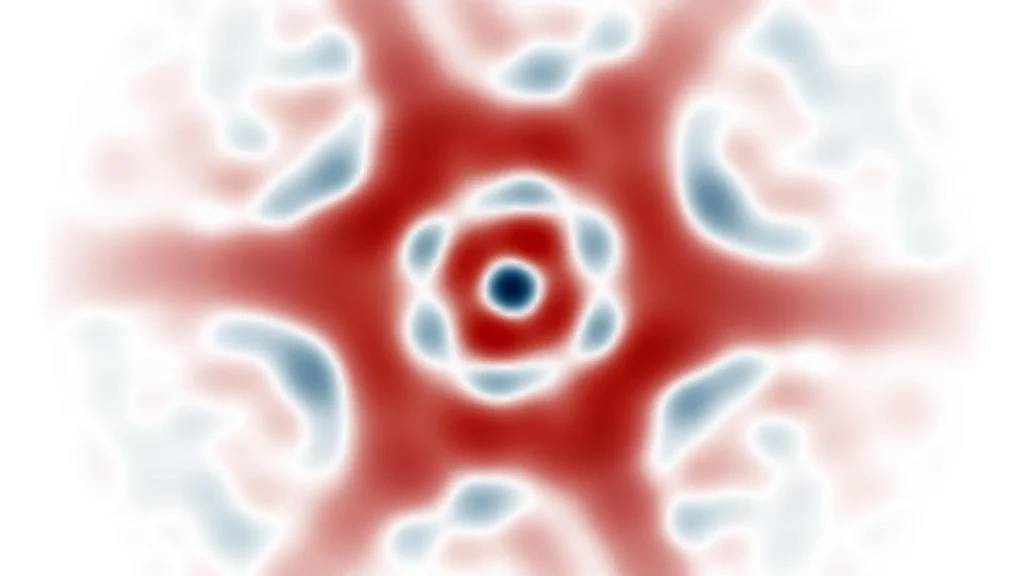
Crucially, after generating these exotic states, the researchers meticulously reconstructed them to verify their quantum nature. This reconstruction involved a process called quantum state tomography, where multiple measurements are performed on identically prepared states to build a complete picture of the quantum state’s wave function or density matrix. Their measurements yielded clear and compelling evidence of genuine quantum superpositions. Specifically, the reconstructed states exhibited distinct interference patterns, a hallmark of wave-like quantum behavior, and regions of Wigner negativity.
The Wigner function is a quasi-probability distribution used in quantum mechanics to visualize quantum states in phase space (a space where position and momentum are plotted). For classical systems, the Wigner function is always positive. However, for genuinely nonclassical quantum states, the Wigner function can take on negative values in certain regions, a phenomenon known as Wigner negativity. This negativity is a powerful and unambiguous signature that the observed states cannot be described as ordinary classical mixtures of possibilities but are, in fact, true quantum superpositions. These observations unequivocally confirmed that the experiment had successfully produced genuine quantum superpositions composed of truly nonclassical motional states.
Expert Perspectives and Ongoing Research
The scientific community has reacted with significant interest to Oxford’s pioneering work. Experts in quantum information and fundamental physics recognize the implications of being able to engineer such complex nonclassical states with high precision. "We were really encouraged by our colleagues’ reaction when we showed them what we had made," says Dr. Raghavendra Srinivas, also from the Department of Physics at the University of Oxford, who supervised the groundbreaking work. "We believe we’re still scratching the surface of what’s possible, both for practical applications and for understanding these states at a more fundamental level."
The team is now actively collaborating with theoretical physicists to delve deeper into the precise nature of these newly created states. This collaborative effort aims to better understand exactly how "quantum" these states are, to characterize their properties more fully, and to explore their potential for even more complex manipulations. Theoretical models will be crucial for predicting new types of nonclassical superpositions and for guiding future experimental designs.
Far-Reaching Implications for Quantum Technologies
The research by the Oxford team points toward a transformative future for quantum technologies, one that increasingly relies on the richer information capacity of quantum oscillators and higher-dimensional quantum systems (qudits) rather than being solely confined to simple two-state qubits.
-
Quantum Computing: One of the most promising applications lies in quantum computing. The development of fault-tolerant quantum computers, capable of correcting errors introduced by environmental noise, remains a formidable challenge. These new types of nonclassical superpositions, particularly those built from squeezed states, may offer an inherent advantage in this regard. Information encoded across multiple energy levels of a quantum harmonic oscillator (effectively creating a qudit) can be more robust to certain types of errors. Moreover, encoding information in such states could support simpler and more effective error-correction strategies. For instance, some theoretical proposals suggest that "cat states" and other exotic superpositions could form the basis of "logical qubits" that are intrinsically protected against phase-flip errors, a common source of decoherence. This could significantly reduce the overhead required for building large-scale, fault-tolerant quantum computers, accelerating their development.
-
Quantum Sensing and Metrology: Beyond computing, these highly nonclassical states provide a powerful new experimental platform for enhancing the precision of quantum sensors. By leveraging the reduced uncertainty inherent in squeezed states, it may be possible to develop sensors that operate at sensitivities far beyond the standard quantum limit, which is the best precision achievable with classical methods or unsqueezed quantum states. This could have profound impacts on various fields, from ultra-precise magnetometry for medical imaging and brain activity mapping to gravimetry for geological surveys and navigation, and even in the search for dark matter. The ability to "sculpt" these states with high precision also opens avenues for tailor-made sensors designed for specific applications, capable of detecting minute changes in physical parameters.
-
Fundamental Physics: The research also provides a novel experimental platform for investigating one of physics’ biggest and most enduring questions: where exactly does the boundary lie between the classical world we experience and the underlying quantum reality that governs it? By creating and controlling superpositions of increasingly complex and nonclassical components, scientists can probe the mechanisms of decoherence – the process by which quantum systems lose their quantum properties and begin to behave classically due to interaction with their environment. Understanding this transition is crucial for resolving the measurement problem in quantum mechanics and for developing a more complete picture of reality. These experiments offer a unique opportunity to test the limits of quantum coherence and explore the validity of different interpretations of quantum mechanics in a precisely controlled laboratory setting.
Challenges and the Road Ahead
While this achievement marks a significant milestone, challenges remain. Scaling up these complex quantum states to build larger, multi-ion systems capable of performing practical computations is a considerable hurdle. Maintaining the coherence of these intricate superpositions, which are inherently fragile and susceptible to environmental noise, will require ongoing innovation in experimental control and isolation techniques. Furthermore, engineering the precise interactions needed to generate and manipulate these highly nonclassical states with even greater fidelity will be critical for their widespread adoption in quantum technologies.
Nevertheless, the Oxford team’s work represents a profound step forward in our ability to harness the most exotic aspects of quantum mechanics. By demonstrating programmable control over superpositions built from truly nonclassical components, they have not only pushed the boundaries of quantum state engineering but also laid crucial groundwork for a new generation of quantum technologies. This breakthrough reinforces Oxford’s position at the forefront of quantum research, promising to reshape our understanding of the universe and our technological capabilities within it. The journey from Schrödinger’s thought experiment to the precise engineering of nonclassical superpositions in a laboratory continues, driven by the relentless pursuit of understanding and control over the quantum realm.