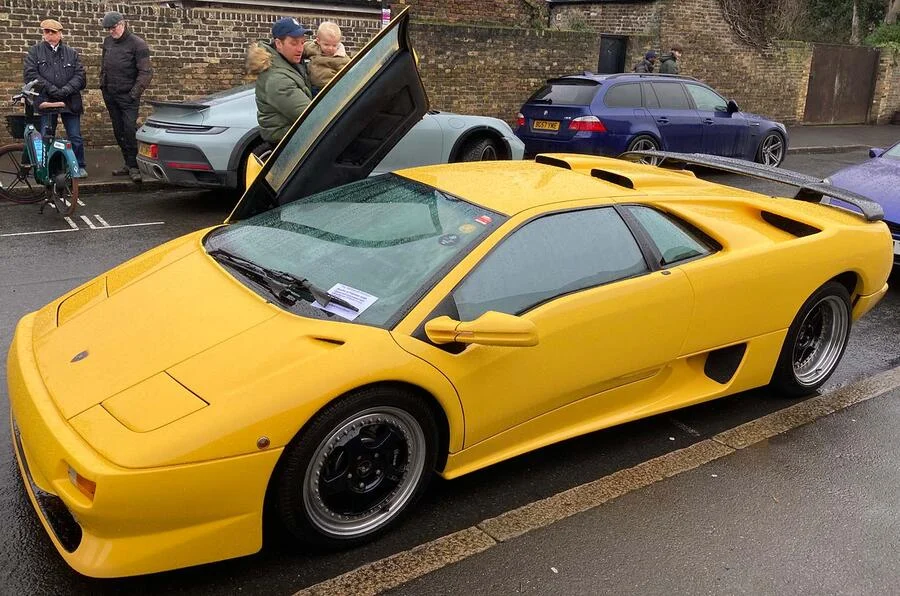
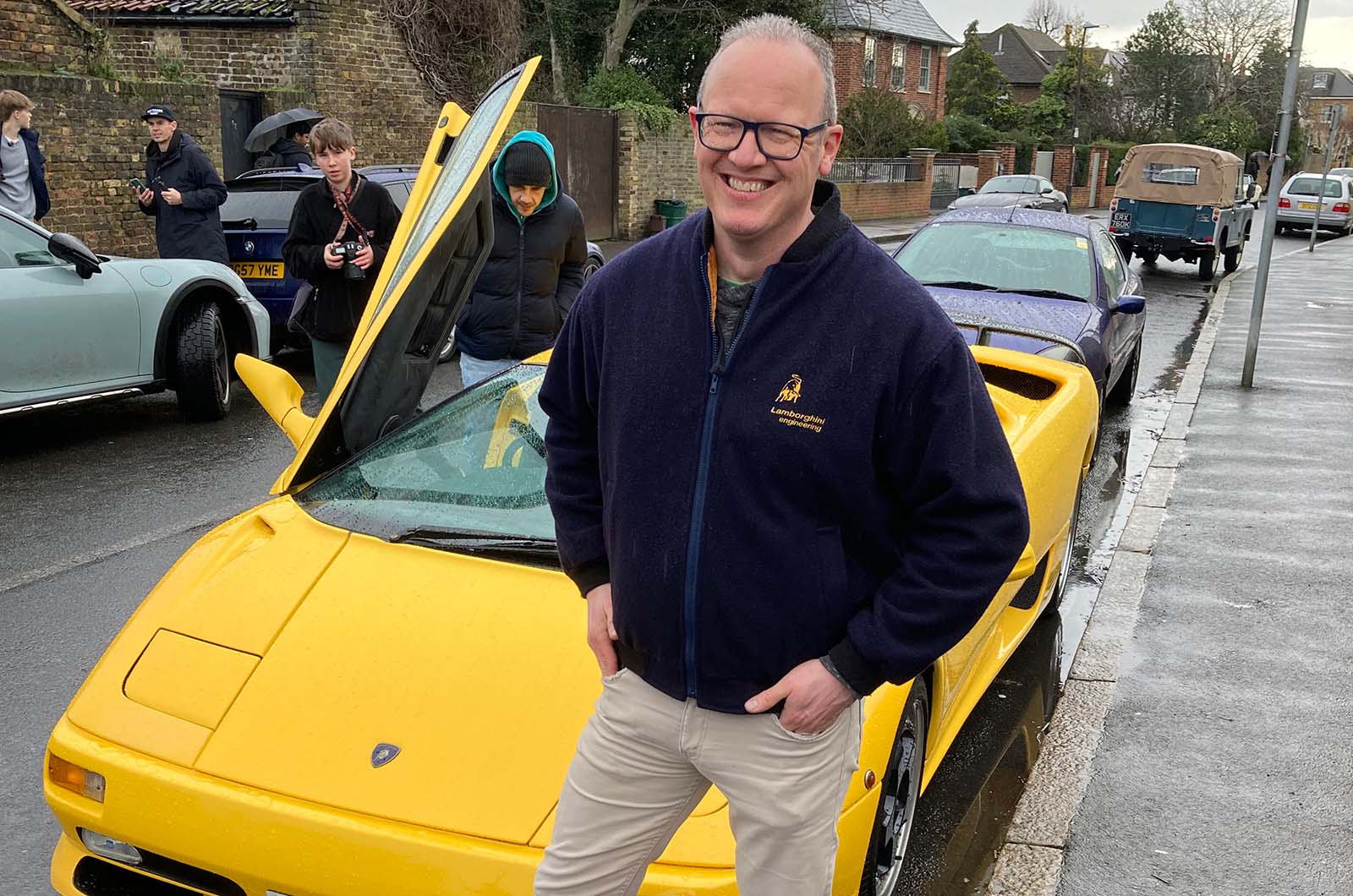
Seven years of ownership has taught Peter Dietsch how to live with a ’90s Italian supercar. The odometer in Peter Dietsch’s right-hand drive, UK-registered Lamborghini Diablo reads 83,000 kilometres, but that’s kilometres, not miles. Bizarrely, while the speedos in most pre-1999 Diablos were calibrated in both MPH and KPH, as required by law, their odos always displayed the distance the car had travelled in kilometres. That’s why, when I ask Peter how many miles he has done in his, he replies, rather confusingly, "20,000 kilometres." Before I can get my calculator out, he helpfully provides the conversion: "12,000 miles."
The Enduring Allure of the Lamborghini Diablo SV
The Lamborghini Diablo SV, a legendary icon of 1990s automotive engineering, continues to captivate enthusiasts and collectors alike. For Peter Dietsch, a dedicated owner, the experience of living with this V12 behemoth has transcended mere ownership; it has become a profound journey into the soul of a supercar designed to push boundaries. Dietsch’s right-hand drive, UK-registered Diablo SV, a model produced between 1995 and 1999, represents a significant chapter in Lamborghini’s history, bridging the gap between the raw, analog machines of the past and the more technologically advanced supercars of the new millennium.
The SV (Sport Veloce) variant, introduced in 1995, was an evolution of the standard Diablo, offering enhanced performance and a more aggressive aesthetic. Key upgrades included a power increase from the 5.7-liter V12 engine to 510 bhp, a revised engine management system, and a more focused suspension setup. Visually, the SV was distinguished by its larger rear spoiler, aggressive front air intakes, and distinctive side air vents. These enhancements were designed to make the Diablo even more of a driver’s car, capable of exhilarating performance on both road and track.
Dietsch’s personal connection with his Diablo SV, accumulating approximately 12,000 miles over seven years, offers a unique perspective on the realities of owning and utilizing such an exotic machine. The curious detail about the odometer displaying kilometres, a common quirk for many pre-1999 Diablos, highlights the specific engineering and regulatory considerations of the era. While speedometers were mandated to display both miles per hour (MPH) and kilometres per hour (KPH) in many markets, the odometer’s consistent use of kilometres was a deliberate choice by Lamborghini. This technicality, while initially confusing, underscores the car’s international design intent and the global automotive landscape of the time.
A Seven-Year Chronicle of Supercar Devotion
Peter Dietsch’s tenure with his Lamborghini Diablo SV spans seven years, a period during which he has embraced the challenges and rewards of daily driving an icon. His willingness to drive the car in "all weathers" is a testament to his passion and a direct refutation of the stereotype that such exotics are relegated to pampered garage life. This commitment allows for an intimate understanding of the Diablo SV’s capabilities and quirks, far beyond what a weekend enthusiast might experience.
The Diablo SV, as a product of its time, embodies a certain raw, unfiltered driving experience. Unlike modern supercars, which often feature sophisticated traction control systems and multiple driving modes, the Diablo SV demands a higher level of driver engagement. Its powerful V12 engine, mated to a manual transmission, delivers a visceral connection to the road. This analog nature means that driving in adverse conditions, such as rain or even light snow, requires a heightened sense of awareness and skill. Dietsch’s decision to expose his car to these conditions provides invaluable insights into its dynamic behavior and the driver’s role in managing its formidable power.
The car’s 83,000-kilometre odometer reading, translating to roughly 51,570 miles, indicates a significant history of use, even before Dietsch’s ownership. However, the 12,000 miles he has personally added during his seven years represent a substantial commitment to enjoying the vehicle. This level of engagement is crucial for understanding the long-term reliability and maintenance requirements of such a complex and high-performance machine.
The Technical Nuances of a ’90s Supercar
The specific detail regarding the Diablo’s odometers is a fascinating insight into the engineering and regulatory landscape of the 1990s. In many countries, including the UK, vehicles sold were required to have speedometers that displayed speed in both MPH and KPH. This dual calibration ensured compliance with local regulations and facilitated international travel. However, the decision to retain the odometer in kilometres was likely a cost-saving measure or a preference for a consistent internal metric.
For the Diablo, produced from 1990 to 2001, this meant that drivers had to mentally convert kilometres to miles when tracking their vehicle’s mileage. For example, a reading of 83,000 kilometres equates to approximately 51,570 miles. Dietsch’s personal mileage of 12,000 miles over seven years, while seemingly modest in absolute terms, represents a significant portion of the car’s overall usage during his ownership. This conversion exercise, while simple, highlights the unique challenges faced by owners of such exotic vehicles, particularly those with international specifications.
The Diablo SV, in particular, was designed to be a more potent iteration of the original Diablo. Its V12 engine, a signature of Lamborghini, underwent several revisions throughout the Diablo’s production run. The SV model typically featured a larger bore and stroke or other enhancements to boost power output. This focus on raw performance meant that the SV was a step up in terms of both speed and handling from its predecessors. The car’s lightweight construction and aerodynamic design further contributed to its impressive performance figures, making it a formidable competitor in the supercar arena of its time.
Contextualizing the Lamborghini Diablo’s Legacy
The Lamborghini Diablo emerged during a period of significant transition for the Italian supercar manufacturer. Following its acquisition by Chrysler in 1987, Lamborghini aimed to revitalize its lineup and compete more effectively with rivals like Ferrari and Porsche. The Diablo, launched in 1990, was the successor to the iconic Countach and was designed to be more refined and user-friendly, yet retain the dramatic styling and blistering performance that Lamborghini was renowned for.
The Diablo’s development was overseen by a team of engineers and designers who aimed to create a car that was both a technological marvel and a visual masterpiece. The car’s distinctive wedge-shaped profile, scissor doors (a Lamborghini trademark inherited from the Countach), and powerful V12 engine quickly established it as a modern classic. Over its eleven-year production run, the Diablo saw numerous iterations, including the VT (Viscous Traction) all-wheel-drive models, the more potent SE (Special Edition) variants, and ultimately, the Diablo GT and GTR.
The SV model, introduced in 1995, represented a significant performance upgrade. It featured a more powerful engine, revised suspension, and a more aggressive aerodynamic package. The SV was designed to appeal to a more performance-oriented buyer, offering a raw and engaging driving experience. Its introduction coincided with the growing trend towards more driver-focused supercars, and the Diablo SV certainly fit that bill.
The decision to maintain a kilometre-based odometer for the Diablo, even in markets where MPH was the primary unit of speed measurement, speaks to the global nature of the supercar market. Lamborghini, as a manufacturer of exclusive and high-performance vehicles, aimed to cater to a worldwide clientele. This sometimes led to technical specifications that differed from local market norms, requiring owners to adapt and understand these unique characteristics.
The Pragmatic Realities of Supercar Ownership
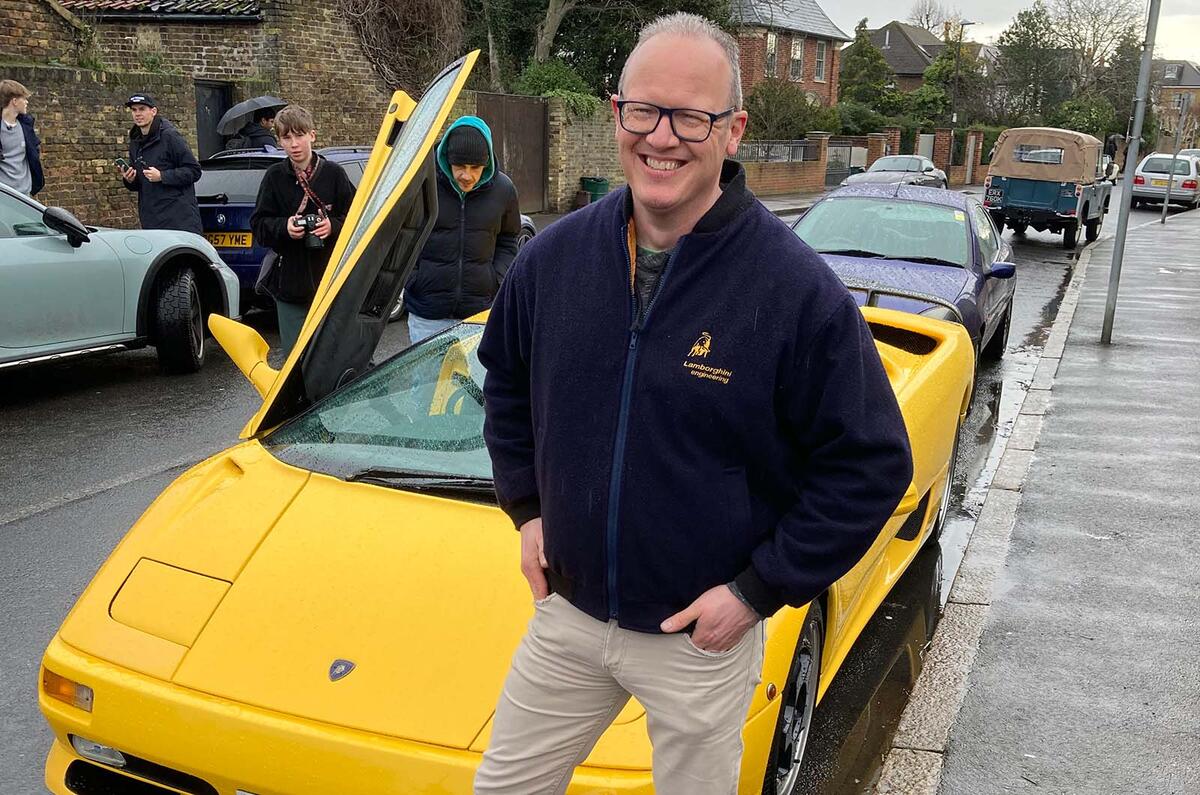
Peter Dietsch’s experience underscores the often-overlooked practicalities of owning a supercar like the Diablo SV. While the allure of V12 power, exotic styling, and blistering acceleration is undeniable, the reality of maintenance, reliability, and usability in diverse conditions is a significant consideration. Dietsch’s commitment to driving his car in "all weathers" suggests a pragmatic approach to ownership, embracing the vehicle’s capabilities rather than sheltering it from the elements.
The Diablo SV, despite its performance credentials, is a complex machine with a relatively high cost of ownership. Parts can be expensive, and specialized knowledge is often required for maintenance and repairs. Dietsch’s seven years of ownership, during which he has added 12,000 miles, indicate a level of dedication to keeping the car in good running order. This likely involves regular servicing, proactive maintenance, and a willingness to address any issues that arise promptly.
The car’s 83,000-kilometre reading is not unusual for a vehicle that has been regularly used. It suggests that the Diablo SV, when properly maintained, is capable of covering significant distances. This is a crucial point for potential buyers and enthusiasts who may be deterred by the perceived fragility of exotic cars. Dietsch’s experience demonstrates that with the right care and attention, a Diablo SV can be a reliable and enjoyable car to drive, even for extended periods and in varied conditions.
The Enduring Appeal and Future Outlook
The Lamborghini Diablo SV remains a highly sought-after classic car, admired for its striking design, exhilarating performance, and the raw, analog driving experience it offers. As automotive technology continues to advance, the Diablo SV stands as a testament to a bygone era of supercar design, where driver engagement and mechanical purity were paramount.
For collectors and enthusiasts, the Diablo SV represents not just a car, but a piece of automotive history. Its iconic status is secured by its presence in numerous films, video games, and its enduring appeal in automotive culture. The unique characteristics, such as the kilometre-based odometer, add to its distinctiveness and provide talking points for owners and admirers alike.
Peter Dietsch’s journey with his Diablo SV is a valuable case study for anyone considering the ownership of a classic supercar. His willingness to embrace the car’s quirks and drive it in all conditions offers a refreshing perspective on what it truly means to live with and enjoy such a remarkable machine. The 12,000 miles he has added over seven years are not just figures on an odometer; they represent a collection of experiences, a deep understanding of the car’s character, and a testament to the enduring allure of the Lamborghini Diablo SV. The continued demand for these vehicles in the classic car market suggests that their appeal will remain strong for years to come, cementing their place in automotive legend. The fact that the car is a right-hand drive, UK-registered model further adds to its desirability for collectors in specific markets, as these configurations are often rarer and more sought-after. The Diablo SV, in essence, is more than just a car; it is a statement, a piece of art, and a thrilling driving machine that continues to capture the imagination of automotive enthusiasts worldwide.