The horological landscape of Glashütte, a small German town renowned for its exceptional watchmaking heritage, is often characterized by the presence of several iconic brands. Among these, A. Lange & Söhne and Moritz Grossmann stand as testament to the region’s enduring craftsmanship. While they operate in close proximity, a palpable, albeit unspoken, dynamic exists between them. This dynamic, rooted in a shared history, geographical proximity, and a parallel reestablishment in the modern era, has significantly shaped their respective collections and continues to be a source of fascination for watch enthusiasts. This analysis delves into the distinct features that set Moritz Grossmann watches apart, particularly in the context of this subtle, yet influential, rivalry.
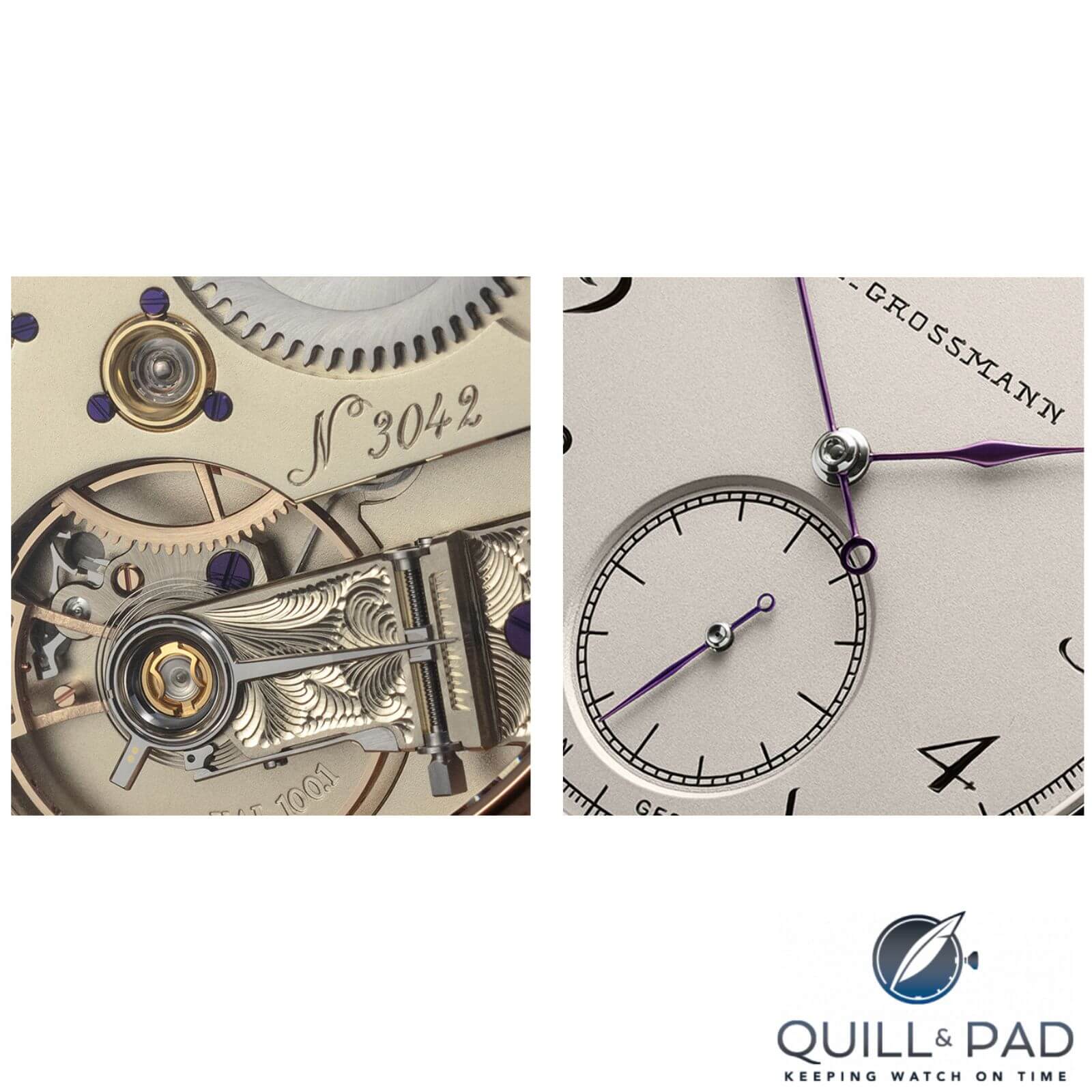
The genesis of Glashütte’s watchmaking prowess can be traced back to Ferdinand Adolf Lange, whose entrepreneurial vision and establishment of a watchmaking ecosystem laid the groundwork for numerous enterprises, including Moritz Grossmann. Historically, the Moritz Grossmann brand followed in the footsteps of A. Lange & Söhne, much like a younger sibling, a lineage evident in the surviving pocket watches from the 19th century that frequently surface at auctions. These vintage pieces, showcasing shared origins in era, location, and fundamental caliber technology, offer a glimpse into a period where both brands contributed to Glashütte’s burgeoning reputation.
A Divergent Path in Modern Watchmaking
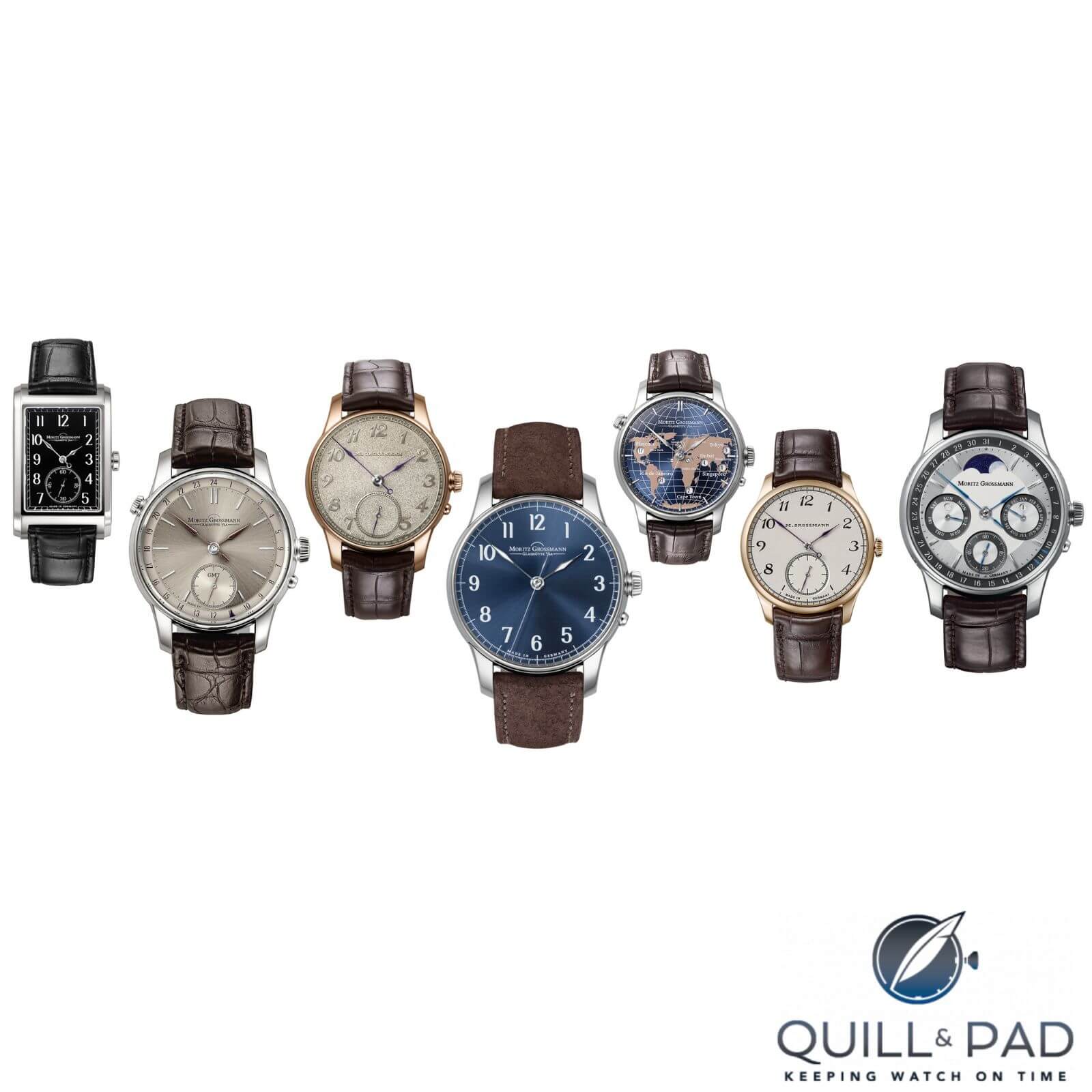
While historical ties are undeniable, the contemporary iterations of these Glashütte brands have charted distinct courses. Moritz Grossmann, in particular, has strategically distanced itself from A. Lange & Söhne by venturing into territories yet to be explored by its more established neighbor. This includes the creation of innovative timepieces such as skeletonized and open-dial watches, models featuring inverted calibers, and sophisticated automatic movements incorporating a unique pedometer winding system. These diversifications underscore a deliberate effort to carve out a unique identity in the high-end watch market.
The modern revival of both brands offers a compelling narrative of resurgence. A. Lange & Söhne re-emerged in 1990, with its first watches debuting in 1994. Moritz Grossmann followed suit, re-establishing its presence in 2008, with its initial collections launched in 2010. This temporal proximity in their modern rebirths highlights a shared ambition to reclaim their legacy. Despite this parallel journey, the brands exhibit clear distinctions in their horological philosophies.
A notable point of comparison lies in their movement architecture. Moritz Grossmann utilizes a distinctive 2/3 plate construction, contrasting with A. Lange & Söhne’s more traditional 3/4 plate. Both brands, however, predominantly employ nickel silver for their plates and bridges, a material choice rooted in Glashütte’s historical practices. The traditionally engraved balance cock is another shared characteristic, though Moritz Grossmann often extends this intricate artistry to the escapement wheel bridge as well. Both brands employ gold chatons for their jewels; A. Lange & Söhne opts for red jewels, adhering more closely to tradition, while Moritz Grossmann utilizes colorless jewels, perhaps as a subtle assertion of originality. Furthermore, the straight cut of Moritz Grossmann’s 2/3 plate differs from the three-arc cut found in A. Lange & Söhne’s 3/4 plate movements, a design choice stemming from the prevalent form of this component in 19th-century Glashütte pocket watches. It is noteworthy that historical Moritz Grossmann pocket watches predominantly featured the classic Saxon caliber layout, akin to A. Lange & Söhne’s pocket watches, with the straight cut being a rarer occurrence.
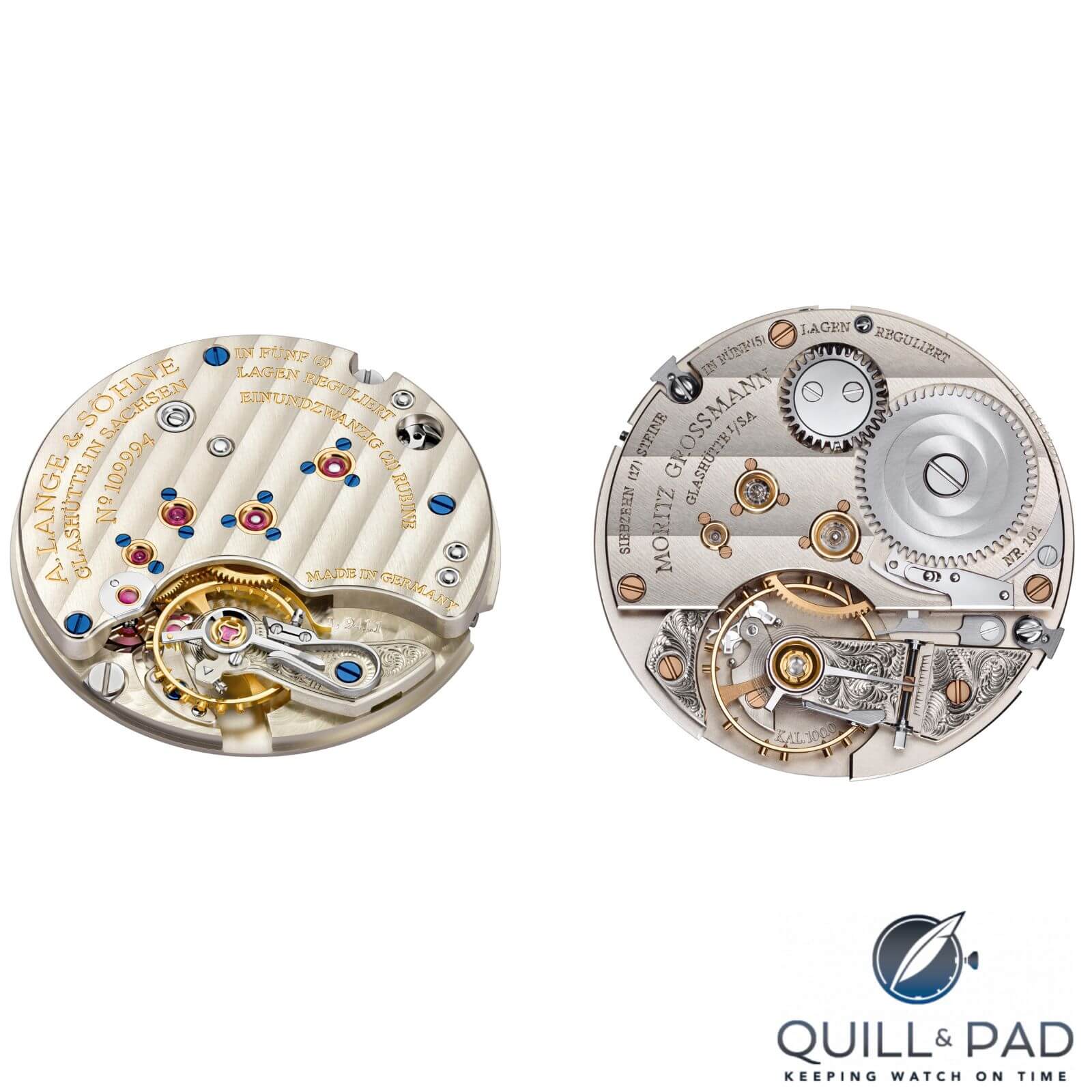
The subtle interplay between these Glashütte neighbors, and indeed with a third nearby brand, Glashütte Original, suggests a constant awareness of each other’s developments. This unspoken dialogue, driven by a desire for differentiation, ultimately benefits the discerning collector by expanding the spectrum of available horological masterpieces. For watch aficionados, this ongoing evolution at Moritz Grossmann, particularly in its collection development and the unique features that distinguish its timepieces, offers a compelling narrative of innovation and a deep respect for traditional watchmaking.
A Legacy of Innovation and Precision: The Moritz Grossmann Story
The foundation of the Moritz Grossmann brand dates back to 1854, when Carl Moritz Grossmann established his own watch company. His professional pursuits were wide-ranging, encompassing not only the production of high-quality pocket watches but also marine chronometers, precision measuring instruments, watchmaker’s lathes, and model escapements. His contributions extended beyond manufacturing; he developed the Glashütte seconds pendulum clock, a crucial reference timepiece for regional watchmakers. Grossmann was not focused on mass production; his company produced an estimated 8,000 pocket watches over three decades, averaging around 250 to 300 pieces annually. This dedication to artisanal production and niche strategy continues to define the modern Moritz Grossmann brand.
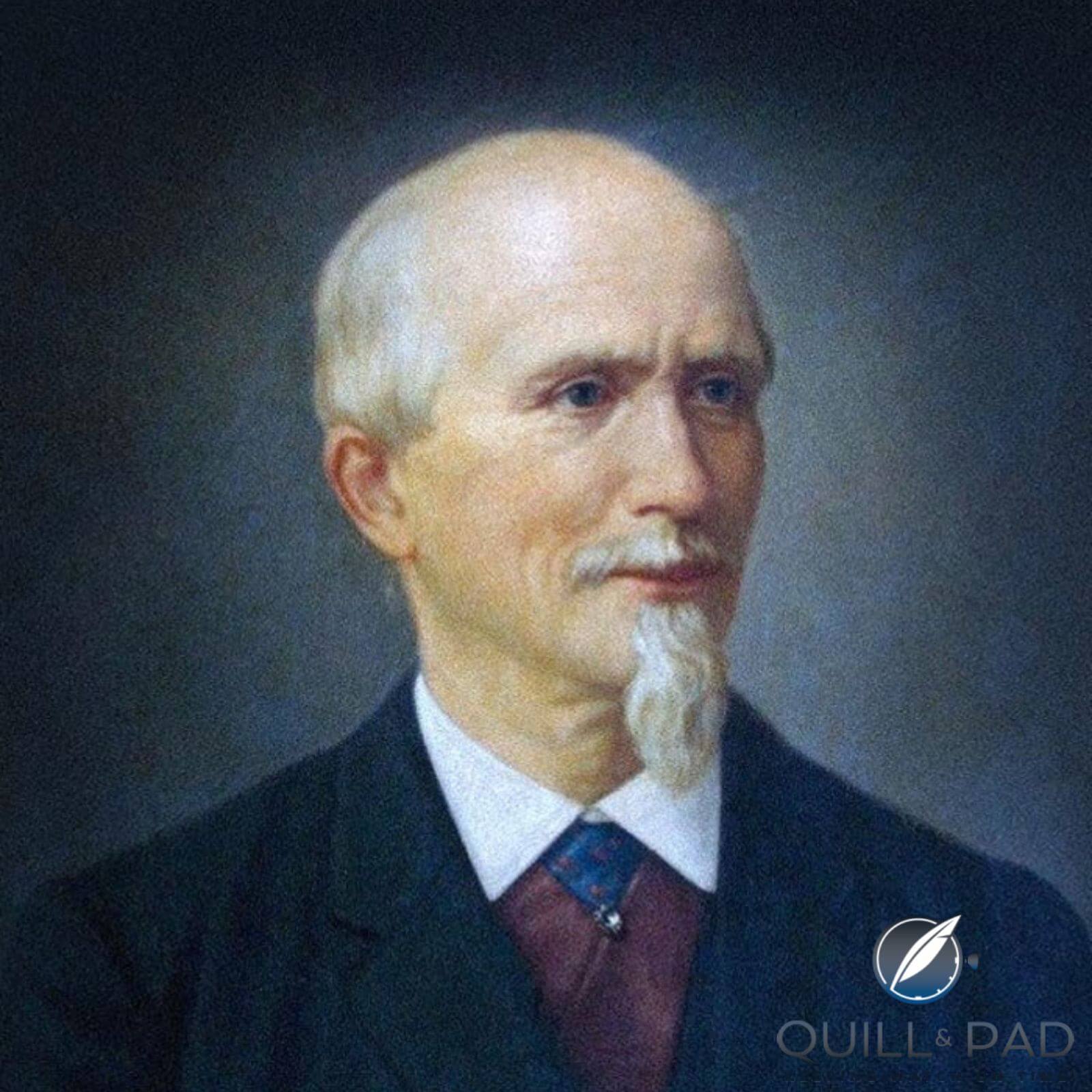
Beyond his technical acumen, Grossmann was also a prolific writer, significantly influencing horological knowledge long after his passing. His 1866 essay, "Der freie Ankergang für Uhren" (The Free Lever Escapement for Watches), offered a profound analysis of the Swiss lever escapement, a cornerstone of modern watchmaking. In his 1880 work, "Ueber die Konstruktion einer einfachen, aber mechanisch vollkommenen Uhr" (On the Construction of Simple, Yet Mechanically Perfect Watches), he detailed the techniques that would come to define Glashütte watches. His commitment to education was paramount, leading to the founding of the German School of Watchmaking in Glashütte in 1878, ensuring a skilled workforce and preserving the town’s status as a global horological hub.
Charting a Course: The Evolution of Modern Moritz Grossmann Timepieces
The contemporary wristwatch collection of Moritz Grossmann began its development in 2008 with the founding of Grossmann Uhren GmbH. This endeavor focused on adapting the stylistic, design, and technical principles established by the brand’s founder. The inaugural timepiece, the Benu, launched in 2010, featured Caliber 100.0, a movement that, much like the early calibers of A. Lange & Söhne, encapsulates the brand’s core DNA.
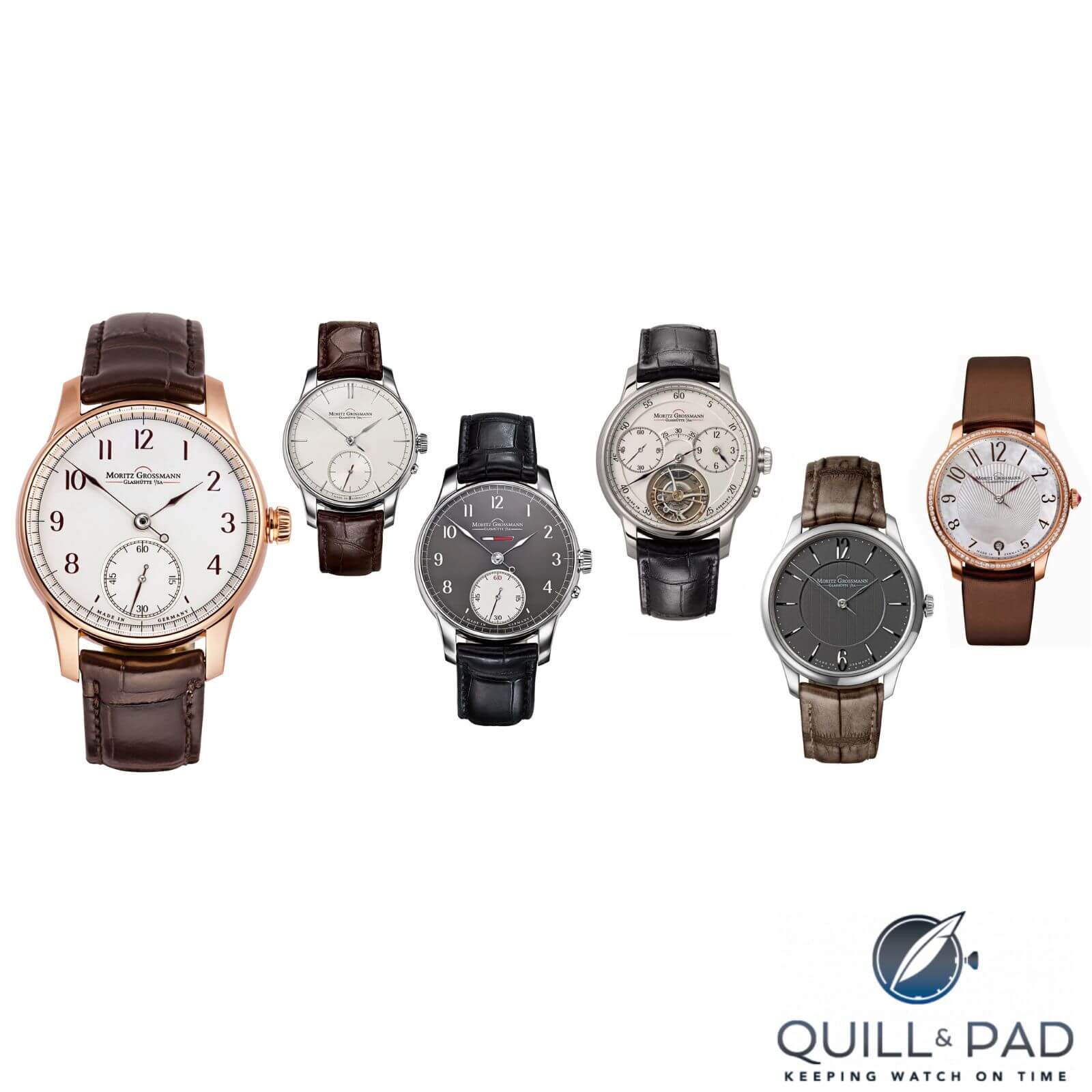
The brand’s product evolution can be observed through its key releases:
- 2010-2015: This period saw the introduction of the Benu (2010), embodying traditionalism and restraint; the Atum (2013), a contemporary classic; the Benu Power Reserve (2013), featuring discreet additional indications; the Benu Tourbillon (2013), showcasing a unique approach to complex mechanics; and the Tefnut (2015) and Tefnut Lady (2015), the latter being the brand’s first women’s watch, both characterized by a two-hand dress watch aesthetic.
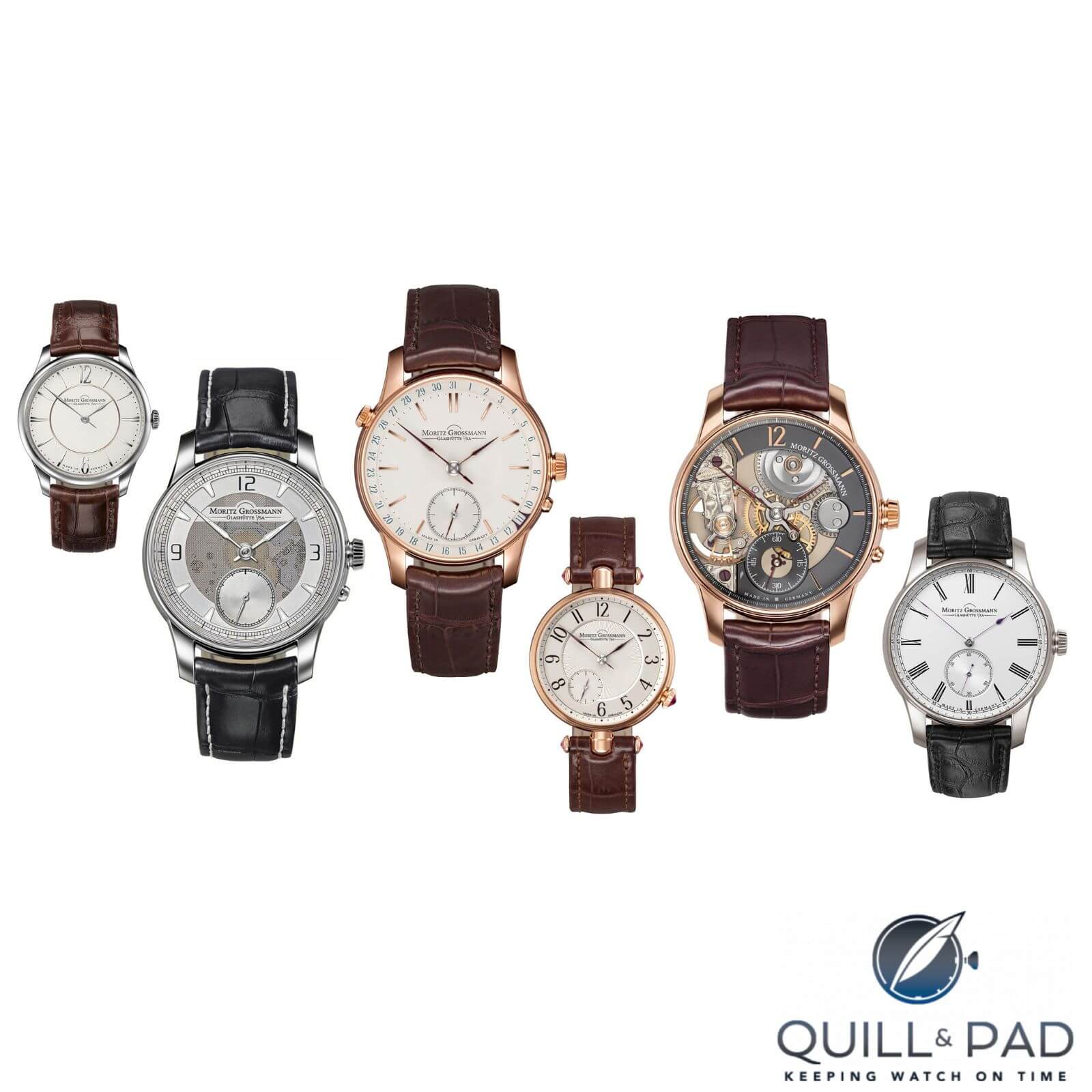
- 2016-2019: The Tefnut Pure (2016) marked the brand’s first steel watch with the new caliber 201.0 and 202.0, featuring unengraved bridges and a sandblasted finish. The Atum Pure M "Mesh Dial" (2016) offered a steel watch with a partially transparent dial. The Atum Date (2017) introduced an in-house developed date indication with both forward and backward setting. The Tefnut Twist (2017) was equipped with the Grossmann "strap winder." The Backpage (2018) presented a reversed caliber and an openworked dial. The Atum Hamatic (2019) debuted as the brand’s first automatic watch with a novel pedometric winding system.
- 2019-2025: This phase included the Corner Stone (2019), the brand’s first rectangular watch with a shaped caliber. The Atum GMT (2019) provided a practical complication for travelers. The Tremblage (2021) introduced a dial with an engraved, textured nickel silver finish. The Central Second (2021) featured the first version with a central seconds hand and its specialized drive. The Universalzeit (2022) offered a unique, truncated display of world time. The Tefnut Silver-plated by Friction (2023) showcased a refreshing antique dial decoration technique. The Perpetual Calendar (2025) presented the brand’s distinct interpretation of this complex calendar.
While this timeline highlights major releases, it also implicitly points to areas yet to be explored by Moritz Grossmann, such as chronographs and chiming watches. Concepts like fusée, constant force escapements, and thin designs, while technically feasible, might be considered less commercially viable or aesthetically aligned with the brand’s current direction. Sports watches with integrated bracelets or military-style timepieces could also be potential avenues, though their implementation would depend heavily on the quality of design and execution.
The Distinctive Allure: Unpacking Moritz Grossmann’s Unique Features
The true magic of Moritz Grossmann watches lies in the "little details" – the meticulously crafted elements that elevate them beyond mere timekeeping instruments. These "delicious" features are what inspire contemplation and desire among collectors.
Particularity #1: The Reflective Brilliance of Precision
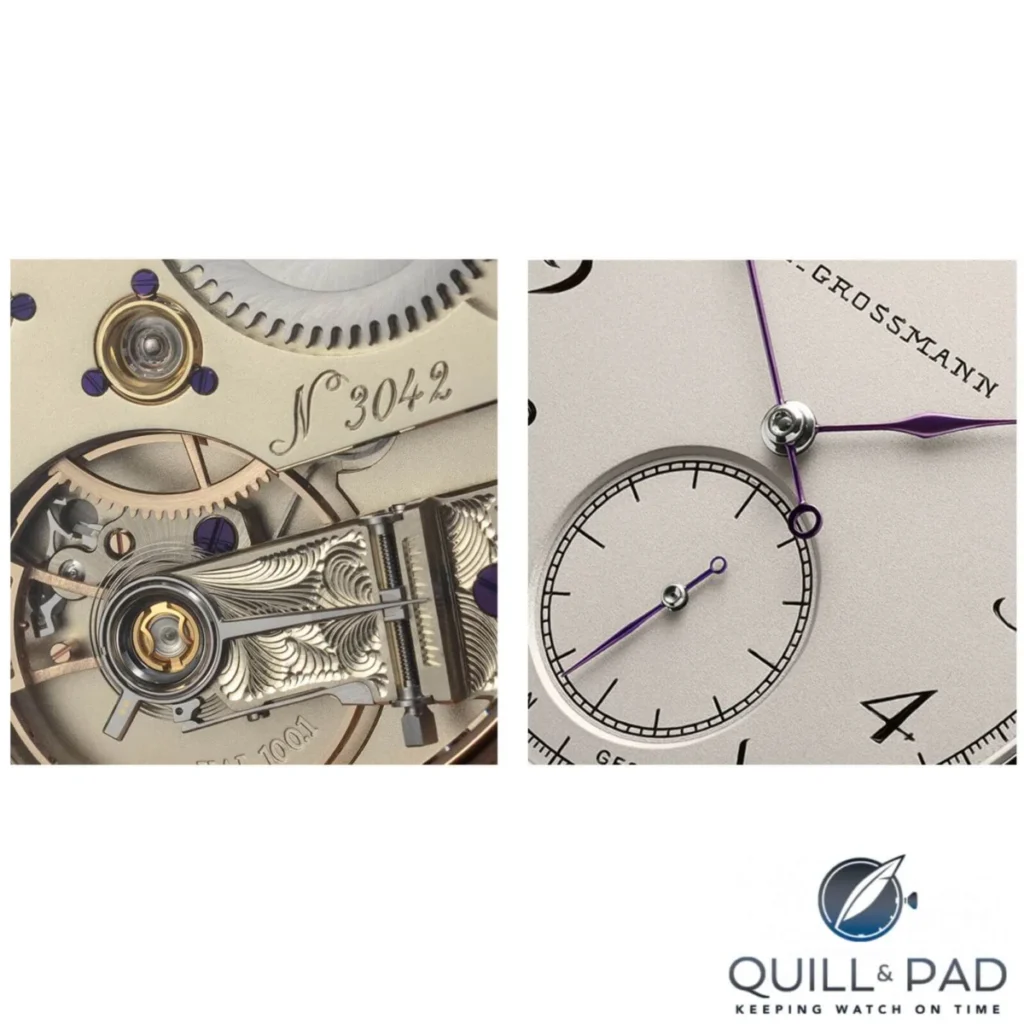
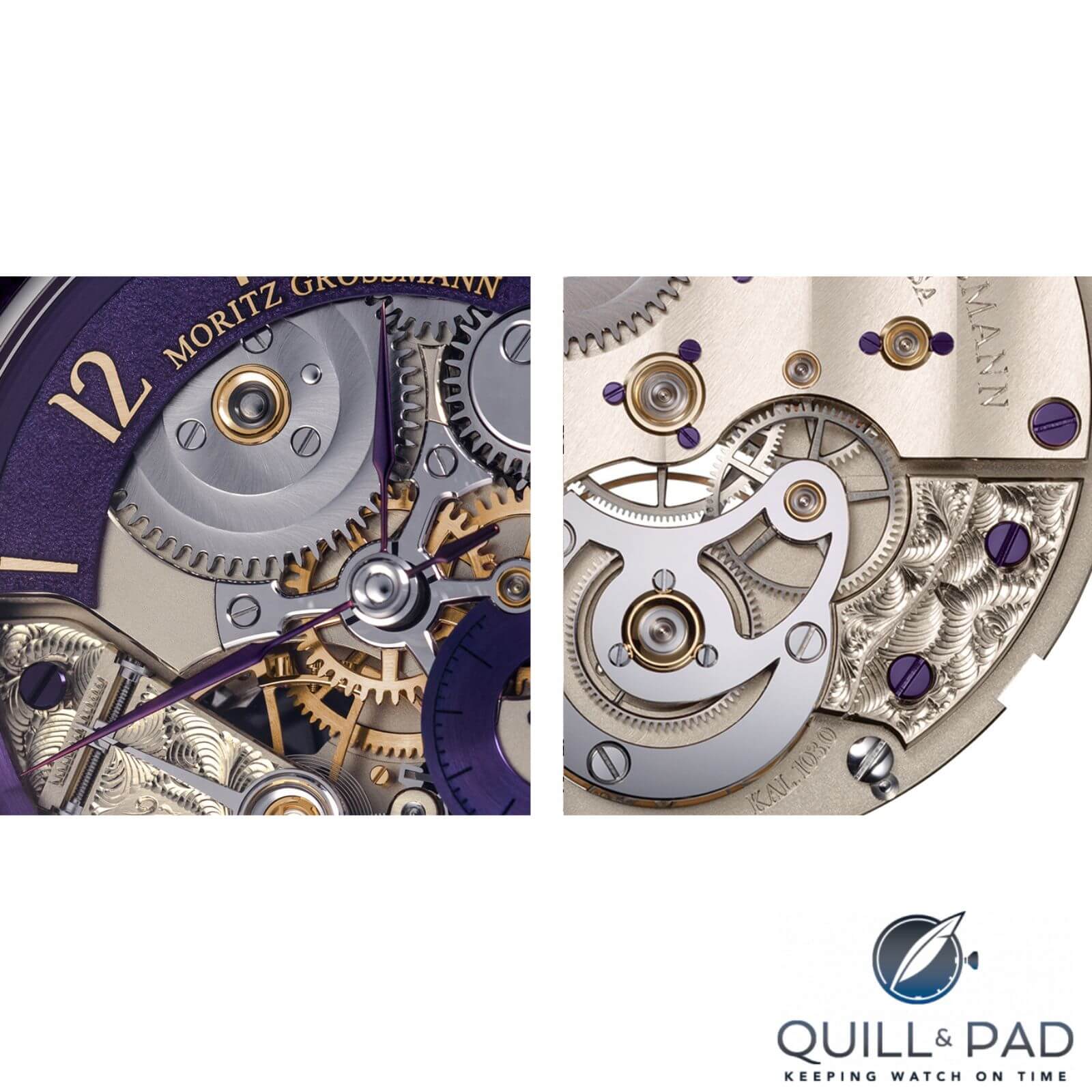
One of the first elements that captivates observers is the unusual, highly reflective shine emanating from the center of the dial, where the hands are attached. The minute hand collet, and similarly the small seconds hand collet, features a concave, spherical, mirror-polished internal section surrounding the cannon pinion shaft. This seemingly small detail is a profound indicator of meticulous attention to craftsmanship, demonstrating how ingenuity, skill, and time can transform any detail into a miniature masterpiece. This attention to reflective surfaces extends to the movement, where the chatons of the balance jewel and other jewels protrude noticeably, creating a stunning interplay of light and shadow that echoes the brilliance found on the dial.
Particularity #2: The Unique Hue of Blued Steel
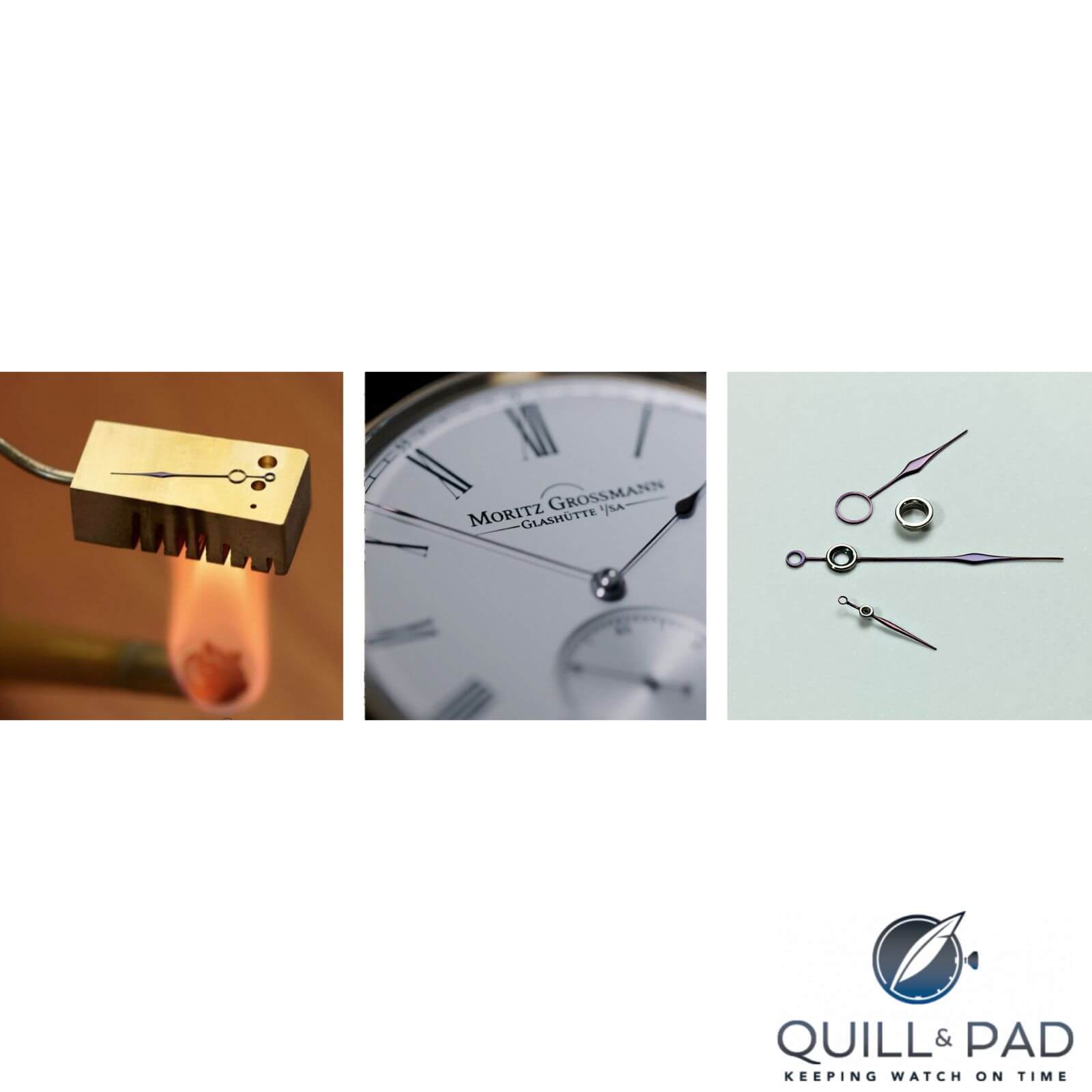
The blued steel components, including hands and screws, in Moritz Grossmann watches possess a distinctive hue. Rather than the typical dark blue favored by many watchmakers, these elements exhibit a unique shade often described as deep brownish-violet, ripe cherry, or purple. Achieving this specific color requires a craftsman’s precise control over the heating process, a testament to the brand’s dedication to subtle yet impactful aesthetic choices.
Particularity #3: Exquisite Hand Craftsmanship
Moritz Grossmann is recognized for producing some of the most refined and meticulously crafted hands in modern watchmaking. The finishing, including the brushing and polishing of the tips to ensure a sharp aesthetic, is unparalleled. This level of attention to detail in hand finishing is rarely seen, perhaps only rivaled by the work of Laurent Ferrier. Moritz Grossmann offers two primary hand styles: the "assegai" hands, an elongated and narrow interpretation of traditional spade and whip hands popular in the late 19th century (used on models like the Hamatic), and the more common, original hand style based on elongated and very narrow lozenge hands, a classic shape that gained prominence in the 1930s.
Particularity #4: The Pillar-and-Plate Construction
A significant technical characteristic of Moritz Grossmann movements is their in-house development and production, ensuring exclusivity. The use of pillar-and-plate construction is particularly noteworthy. This design, reminiscent of the early German watchmakers who resisted adopting French and Swiss Lepine bridge-caliber construction, is adapted from the traditional two-plate caliber scheme into 2/3 or 3/4 plate designs. This choice reflects a deep respect for historical German horological principles.
Particularity #5: The Breguet Overcoil Balance Spring
Many Moritz Grossmann calibers feature a balance spring with a Breguet overcoil. While modern watchmakers often deem this feature unnecessary and costly to produce, the brand’s commitment to equipping its watches with chronometer-quality components, including this refined balance spring, signifies excellent taste and a profound respect for its clientele.
Particularity #6: The Precision Restart System
Moritz Grossmann employs a sophisticated manual winding system with a crown and pusher for a perfect restart of the movement after precise hand setting. This complex mechanism, a modified remontoire, is designed for perfectionists. When the crown is pulled, the movement halts, and the crown retracts slightly under spring tension. The hands are then set, and the watch is restarted by pressing a dedicated pusher. This system not only offers technical sophistication but also completely eliminates the common issue of the minute hand shifting when the crown is returned to its normal position in traditional remontoire systems.
Particularity #7: The Art of the Click
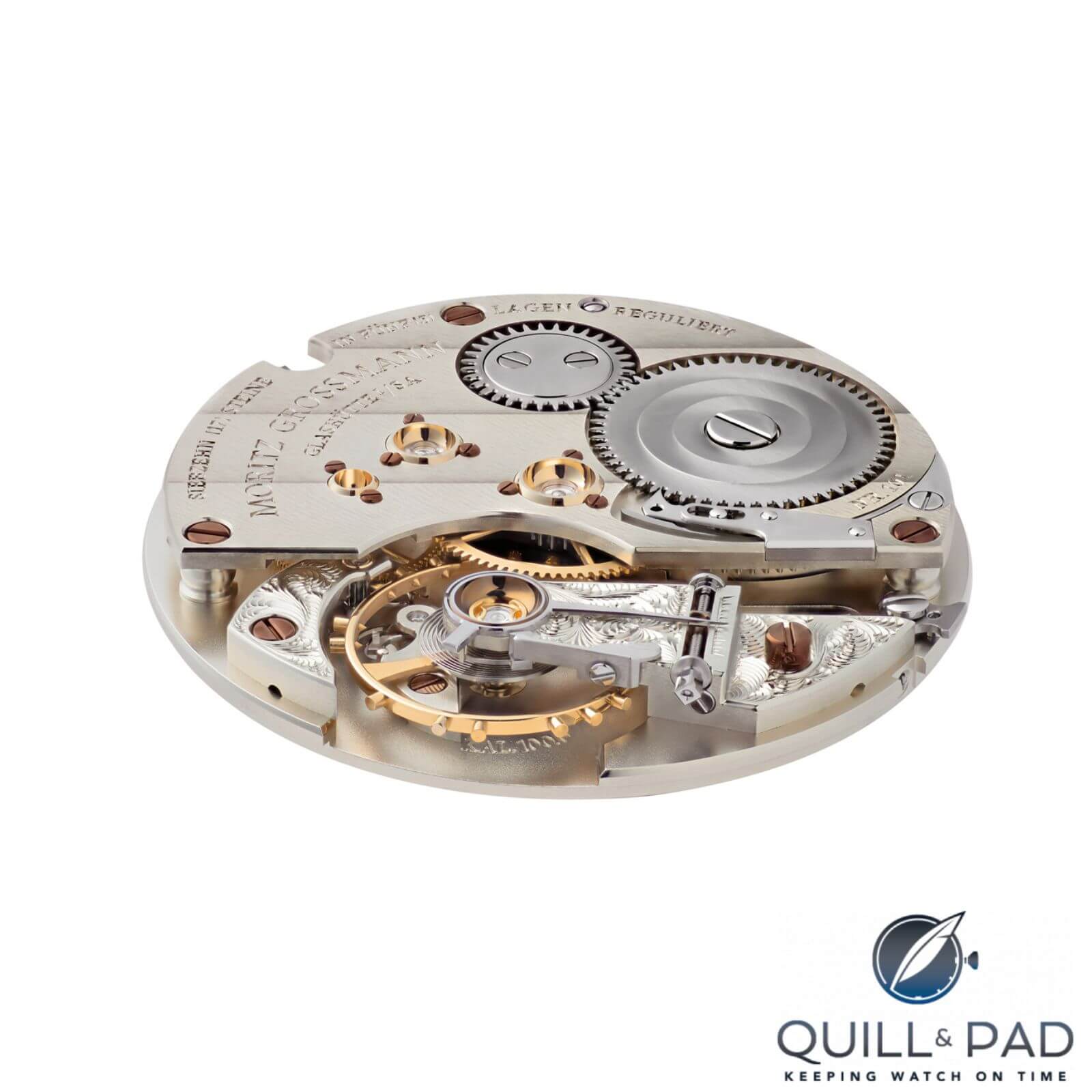
The diversity of click designs found in Moritz Grossmann watches is a fascinating aspect for horological enthusiasts. The brand utilizes at least five distinct types of clicks, each contributing to the overall character of the movement. The sliding-action ratchet wheel click, found in the original Caliber 100.0, is particularly spectacular, effectively relieving excess tension on the mainspring during manual winding.
Particularity #8: Elaborate Ratchet Wheel Finishing
The ratchet wheel of the winding barrel often features a traditional and rare finishing technique: 3-band snailing. While a single or double band would suffice to create an attractive effect, Moritz Grossmann frequently opts for the most elaborate three-band version, notably in Caliber 100.0 and its derivatives, as well as in Calibers 102.3 and 103.0. Even the simpler 2-band snailing, found in some models like Caliber 102.1, adds a very attractive accent to the movement.
Particularity #9: The Grossmann Micrometer Screw Regulator
Modern Moritz Grossmann watches incorporate the Grossmann micrometer screw regulator system, featuring a long micrometer screw and a non-rotating sliding bolt. This system allows for precise adjustment of the hairspring’s effective length. The brand offers two variations of this regulator: an open style in Caliber 100.0 and a semi-open style in Calibers 102.1 and 202.0. This regulator is believed to have been invented by Carl Moritz Grossmann himself, with evidence of its use dating back to around 1870-1871 in his pocket watches.
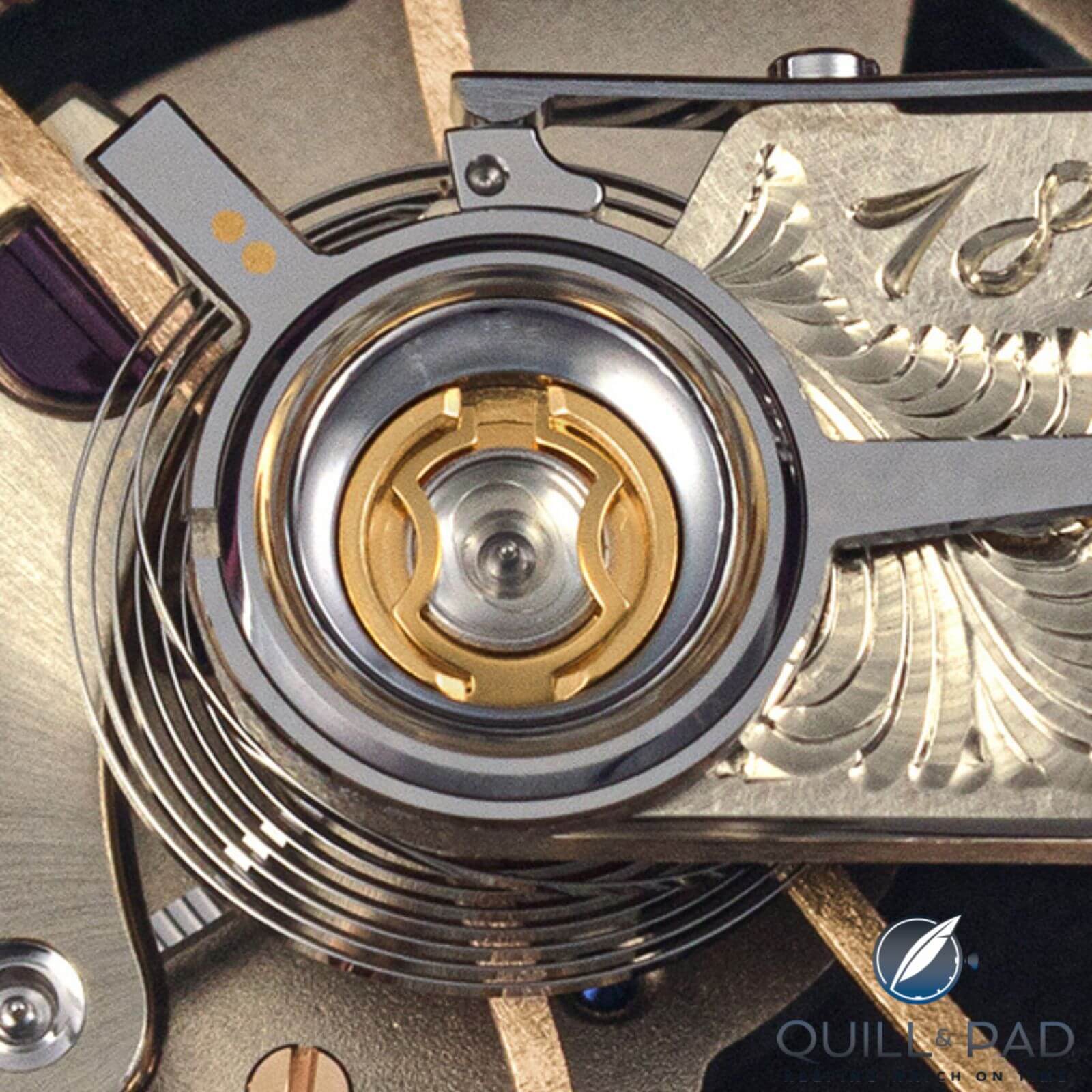
Particularity #10: Colorless Sapphire Jewels
The use of colorless sapphire jewels in many Moritz Grossmann calibers is a point of discussion. While technically sound, offering no drawbacks compared to red or blue jewels, from a traditional aesthetic perspective, red jewels are generally expected in high-quality movements. The magnificent appearance of large red stones in late 19th- and early 20th-century pocket calibers from Geneva and the Vallée de Joux highlights this contrast.
Particularity #11: Hand-Engraved Inscriptions
The presence of hand-engraved inscriptions on the two-thirds mainplate is a hallmark of niche mechanical watches. Moritz Grossmann eschews CNC machinery for this process, ensuring that only hand engraving imparts the distinctive touch of a master craftsman, adding immeasurable value and character to the watch.
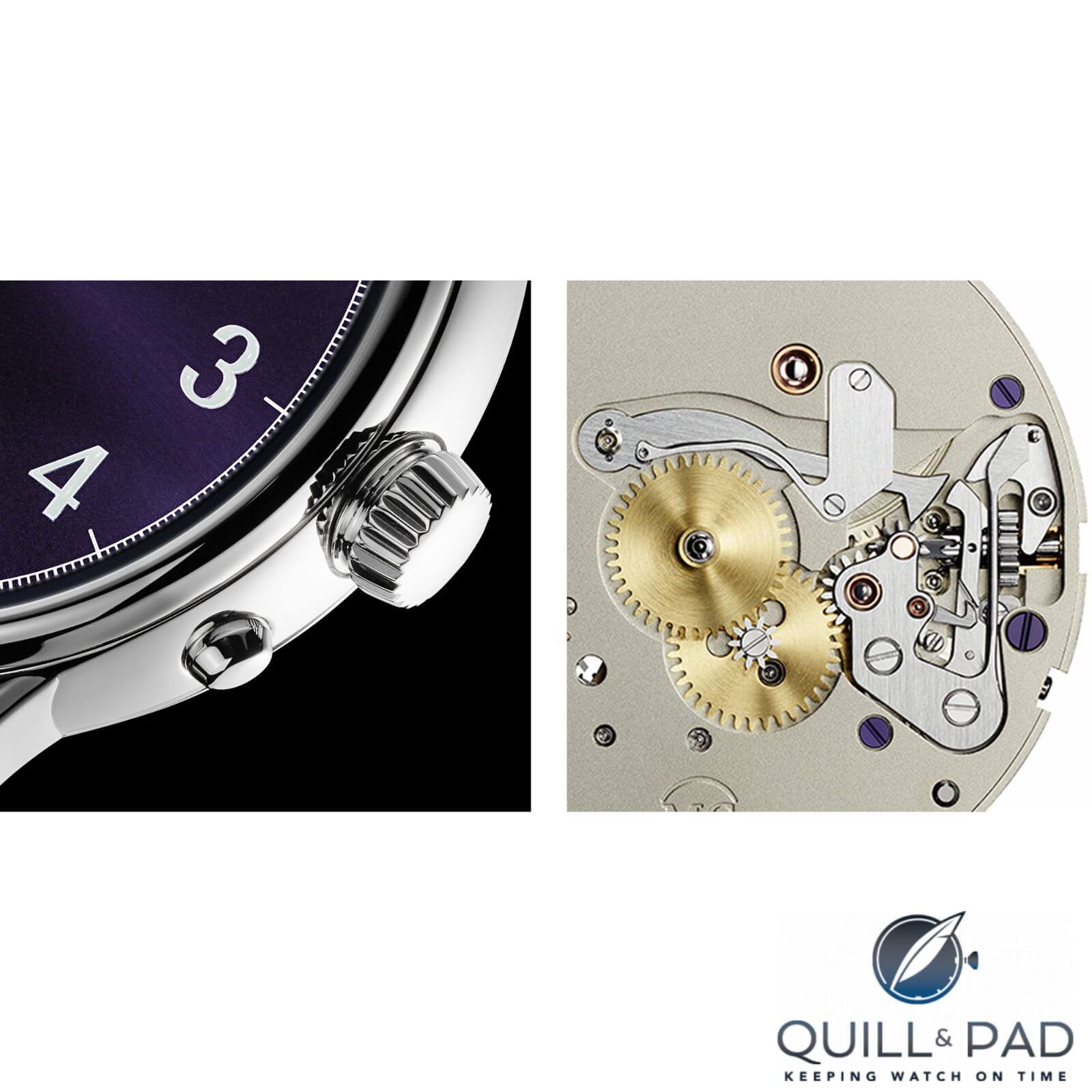
Particularity #12: Exquisite Hand-Engraved Scrollwork
In most Moritz Grossmann movements (excluding the 200-series calibers), the balance cock and escapement wheel bridge are adorned with an exquisite hand-engraved scroll motif. This intricate engraving covers almost the entire upper surface of these bridges, with exceptions made only where technical limitations prevent its application.
Particularity #13: The "Tremblage" Dial Finish
Introduced in 2021, the "tremblage" dial style features a chaotic yet uniform textured engraved finish. While not unique to Moritz Grossmann, the brand’s application of this technique, particularly on nickel silver dials, creates a dramatic and vintage aesthetic due to the inevitable patina that develops over time. This contrasts with A. Lange & Söhne’s use of a similar technique for its Handwerkskunst series dials.
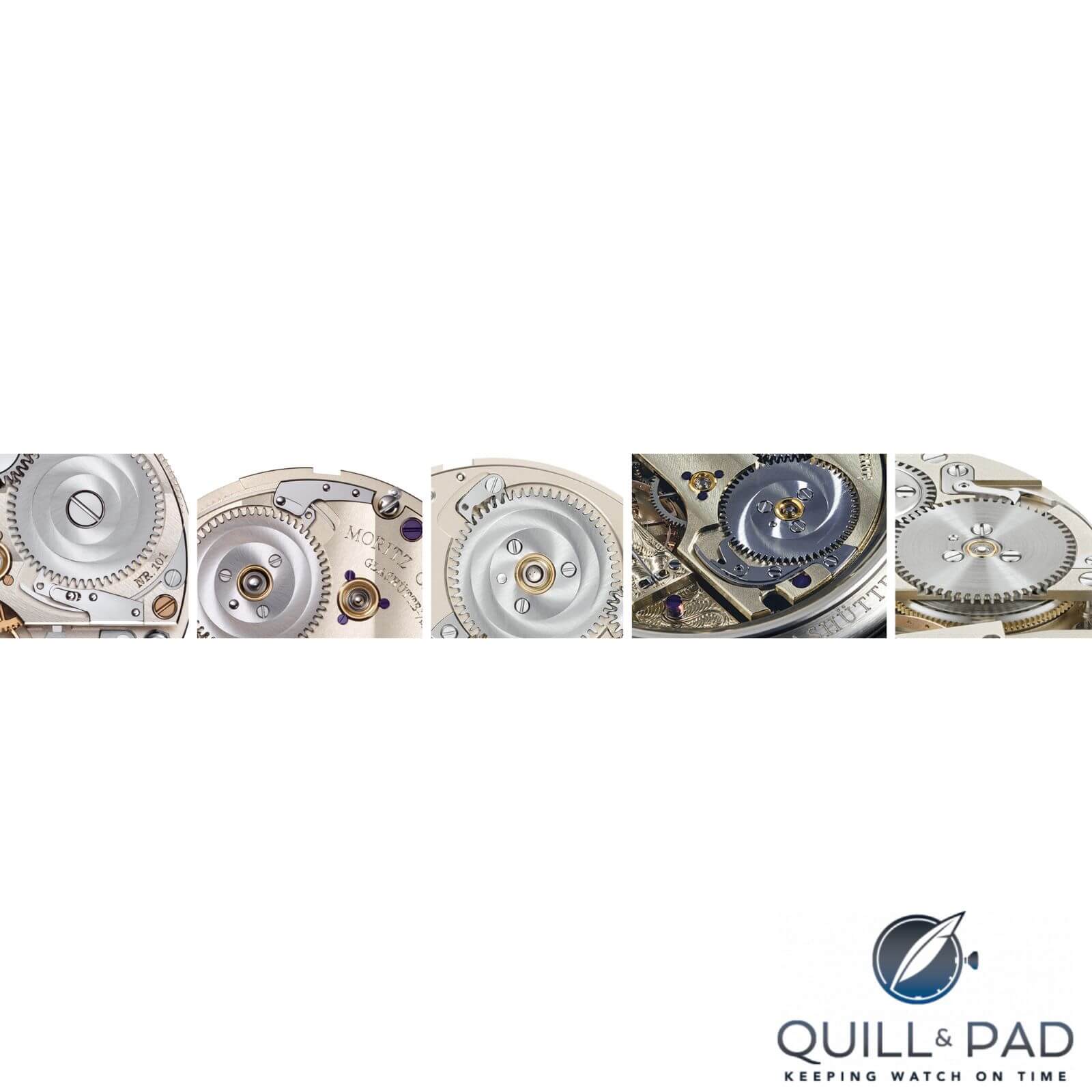
Particularity #14: Silver-Plating by Friction
The "silver-plating by friction" technique, a rare 19th-century method, imparts a distinctive character to Moritz Grossmann dials. This process, achieved by rubbing a mixture of silver powder, salt, and cream of tartar onto the dial blank, results in a fine matte texture reminiscent of an eggshell, exuding an airy, warm, and soft quality. This finish beautifully complements engraved numerals, inscriptions, and scales, while the tempered steel hands provide a striking contrast, creating unforgettable visual compositions.
These fourteen features, ranging from subtle aesthetic details to complex mechanical innovations, collectively define the unique identity of Moritz Grossmann watches. They reflect a deep-seated commitment to artisanal craftsmanship, a profound respect for horological heritage, and a forward-thinking approach that allows the brand to stand out in the competitive landscape of haute horlogerie.