The intricate dance of international relations, particularly between the United States and China, is increasingly shaping the trajectory of advanced technologies, with additive manufacturing (AM) emerging as a critical arena. Recent geopolitical maneuvers and strategic investments in South Korea’s burgeoning AM sector underscore its growing significance, not only for national industrial development but also as a potential leverage point in global power dynamics. This analysis delves into the evolving landscape of South Korean AM, its entanglement with international military exercises, and its strategic positioning in the face of escalating Sino-American competition.
Geopolitical Undercurrents and Military Exercises
The strategic implications of military exercises, long a cornerstone of international security cooperation, have taken on a new dimension in recent years. The Trump administration’s decision to scale back joint military drills between the U.S. and South Korea, reportedly linked to diplomatic negotiations with North Korea and, more broadly, to leverage in dealings with China, highlights the politicization of these exercises. This development occurred in the wake of reports indicating potential joint leadership summits between China and South Korea, underscoring the complex geopolitical tightrope South Korea walks.
The U.S. military’s increasing reliance on advanced manufacturing technologies, including additive manufacturing, within its joint exercises suggests these capabilities may themselves be viewed as strategic assets. This perspective is amplified by South Korea’s apparent commitment to rapidly expand its national AM ecosystem. The convergence of these trends suggests a scenario where technological prowess in AM could become a significant factor in international negotiations and alliances.
South Korea’s Accelerating AM Development
South Korea is experiencing a remarkable surge in its additive manufacturing capabilities, driven by both industrial giants and specialized enterprises. A pivotal development is the establishment of the Hyundai-Kia center for AM research and development, signaling a significant investment by the automotive sector in leveraging 3D printing for innovation and production. This initiative aligns with a broader trend of major industrial players recognizing the transformative potential of AM.
Further bolstering the nation’s AM credentials, the Korean Register (KR), a prominent classification society, has begun certifying additive manufacturing processes. Their issuance of the first-ever certification to a Daejeon-based company specializing in maritime applications marks a crucial step towards industry standardization and the formal recognition of AM’s reliability in critical sectors. This certification is particularly noteworthy for its application in the defense and shipbuilding industries, areas with stringent quality and safety requirements.
Lincsolution: A Hub for Aerospace and Defense AM
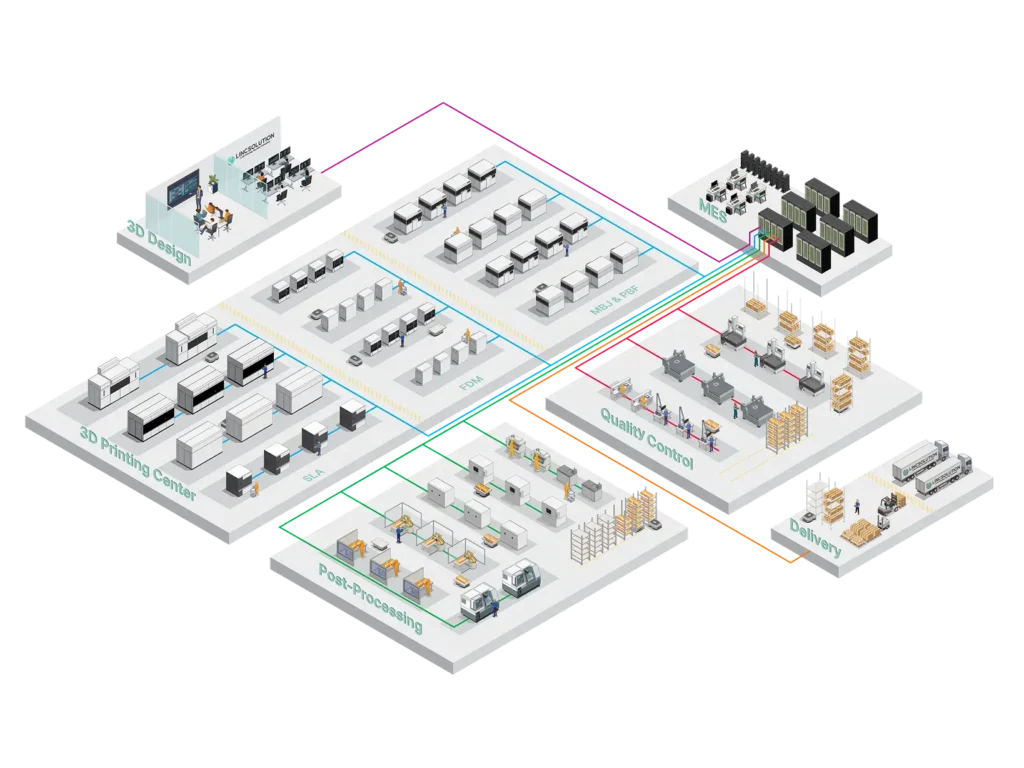
Emerging as a key player in this expanding ecosystem is Lincsolution, a dynamic enterprise that operates across multiple facets of the AM value chain. The company functions as an original equipment manufacturer (OEM) of its own polymer printers, a reseller of machines from other OEMs, and a provider of comprehensive AM services. Lincsolution’s strategic announcement to establish a dedicated AM hub for the aerospace and defense sectors in Daejeon signifies a targeted effort to capitalize on the growing demand for advanced manufacturing solutions in these critical industries.
Daejeon, situated in the heart of South Korea, is increasingly recognized as the nation’s technological nucleus, often referred to as its "Silicon Valley." The city’s concentration of research institutions, universities, and high-tech industries provides fertile ground for innovation and collaboration. Lincsolution’s planned AM facility in Daejeon is slated to be the largest in South Korea, encompassing over 200,000 square feet. This expansive facility, expected to be completed by December, will directly support the aerospace and defense hub, with dedicated, isolated servers to ensure stringent security protocols for sensitive applications. This measure is crucial for handling defense-related data and intellectual property, demonstrating a commitment to meeting the rigorous security demands of the sector.
Navigating Cybersecurity and Defense Standards
In its pursuit of serving the defense industry, Lincsolution is actively working towards compliance with the Pentagon’s Cybersecurity Maturity Model Certification (CMMC). CMMC is a framework designed to standardize and enhance cybersecurity practices across the defense industrial base, ensuring that contractors can adequately protect sensitive unclassified information. While CMMC has undergone revisions and is currently in a transitional phase with its move to Phase 2, the foundational Phase 1 guidelines remain in effect, emphasizing the ongoing importance of robust cybersecurity measures.

Lincsolution’s focus extends to a diverse range of critical components, including parts for aircraft, launch vehicles, satellites, and guided weapons. Furthermore, the company aims to address the persistent challenge of long lead times for low-volume parts in mature weapons systems, a significant bottleneck in defense supply chains. By offering on-demand AM solutions for these components, Lincsolution can contribute to enhanced military readiness and operational agility.
A Look Back at Lincsolution’s Trajectory
The recent prominence of Lincsolution might suggest a sudden emergence, but a deeper look reveals a company with a solid foundation and a history of strategic growth. Prior to its latest announcement, Lincsolution had already garnered attention from industry observers who recognized its potential. An article from nearly three years ago highlighted the company, noting that "not enough people are paying attention to [Lincsolution]." This prescient observation has proven accurate, as the company experienced a busy 2025.
Key milestones in 2025 included Lincsolution’s successful public offering on the KOSDAQ in June, a significant achievement that provided capital for further expansion and solidified its market position. The following month, the company secured a contract to supply South Korea’s military with an expeditionary 3D printing system, underscoring its relevance to defense logistics and operational capabilities. In the automotive sector, Lincsolution also entered into an agreement with Hyundai to supply auto parts at scale, demonstrating its versatility and ability to meet the demands of high-volume manufacturing. More recently, the company received recognition from the South Korean Army for its contributions to the development of 3D-printed drones, further cementing its reputation within the defense sector.
The Interplay of Joint Exercises and AM Innovation
The Combined Joint Logistics Over-the-Shore (CJLOTS) ‘26 exercise, held on July 11, provides a concrete example of how advanced manufacturing is being integrated into joint military operations. During this exercise, U.S. and South Korean militaries collaborated on expeditionary AM training, highlighting the practical application of these technologies in real-world scenarios. This training emphasizes the ability to rapidly deploy and utilize 3D printing capabilities in diverse operational environments, enhancing logistical support and component repair.
Further demonstrating regional collaboration, South Korean industry partners, alongside U.S. military personnel, engaged with Japanese defense contractors at the Valiant Shield exercise. This engagement showcases a growing trend of trilateral cooperation in advanced manufacturing, aimed at strengthening interoperability and shared technological development among key allies. Beyond military exercises, a joint agreement signed in May between the U.S. and South Korea to collaborate on shipbuilding objectives, including technology transfer and workforce development, signals a broader strategic alignment that encompasses advanced manufacturing capabilities.
South Korea’s Strategic Position in a Bipolar World
South Korea finds itself in a complex geopolitical and economic position, balancing its relationships with two of the world’s largest economies: China, its primary trading partner, and the United States, a close second. This dual positioning creates both opportunities and challenges, particularly in the context of escalating global trade tensions and technological competition.
The current global economic climate presents a unique moment for South Korea, which possesses the foundational assets to become a pivotal hub for the artificial intelligence (AI) boom. Its capacity to navigate the delicate balance between the United States and China—being courted by both while also facing pressure—could serve as a powerful catalyst for asserting strategic autonomy. This drive for autonomy would likely incentivize the nation to accelerate its innovation in key technological sectors, including additive manufacturing.
Implications for the Global AM Industry
As South Korea’s research and development capacity gains increasing prominence, Lincsolution’s new AM hub in Daejeon is poised to become a critical resource for both domestic and multinational manufacturers. This development is occurring at a time when global trade tensions, fueled by Sino-American power dynamics, are profoundly impacting the growth and evolution of the AM industry.
Industry observers will closely monitor how these geopolitical pressures influence long-term industry growth. Lincsolution’s strategic move to establish a specialized defense and aerospace AM hub, coupled with South Korea’s broader commitment to technological advancement, positions the nation as a key player in the future of additive manufacturing. The ability of countries like South Korea to leverage advanced manufacturing technologies for both economic prosperity and strategic advantage will be a defining characteristic of the evolving global technological landscape. The integration of AM into military readiness, coupled with its potential to foster national industrial independence, underscores its growing importance in the complex geopolitical arena. The success of such initiatives in South Korea may serve as a model for other nations seeking to enhance their technological sovereignty and economic resilience in an increasingly competitive world. The ongoing developments in Daejeon, and indeed across South Korea, will undoubtedly offer valuable insights into the future trajectory of additive manufacturing and its role in shaping international relations.