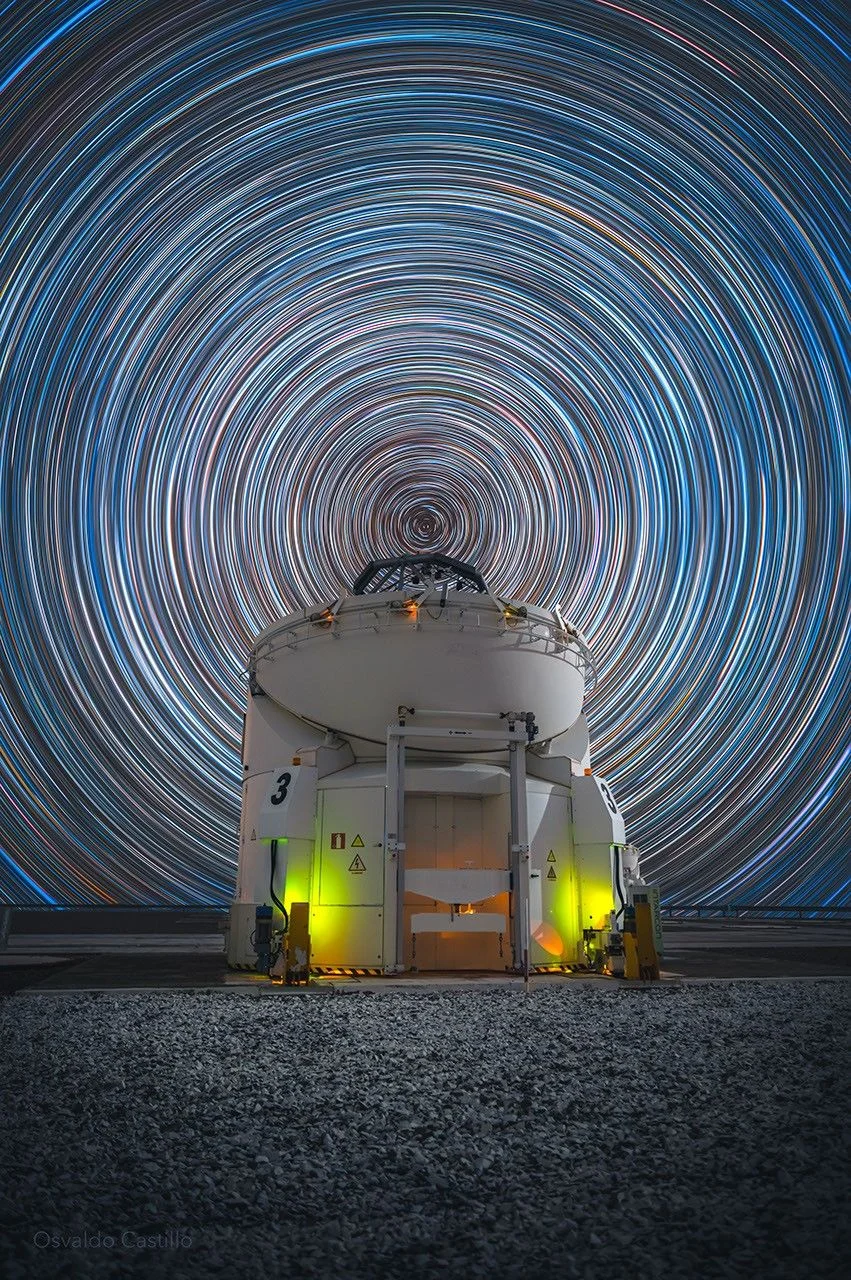
The vast expanse of the cosmos, with its celestial ballet of stars and galaxies, continues to inspire awe and scientific inquiry. A recent breathtaking image from the Astronomy Picture of the Day (APOD) program, titled "The Sky Turns Above Paranal," offers a profound visual testament to one of the most fundamental yet often imperceptible phenomena in our universe: Earth’s rotation. Captured above ESO’s Paranal Observatory in Chile, this photograph meticulously documents the apparent movement of stars across the night sky, painting a vivid picture of our planet’s ceaseless spin.
A Celestial Spectacle Unveiled
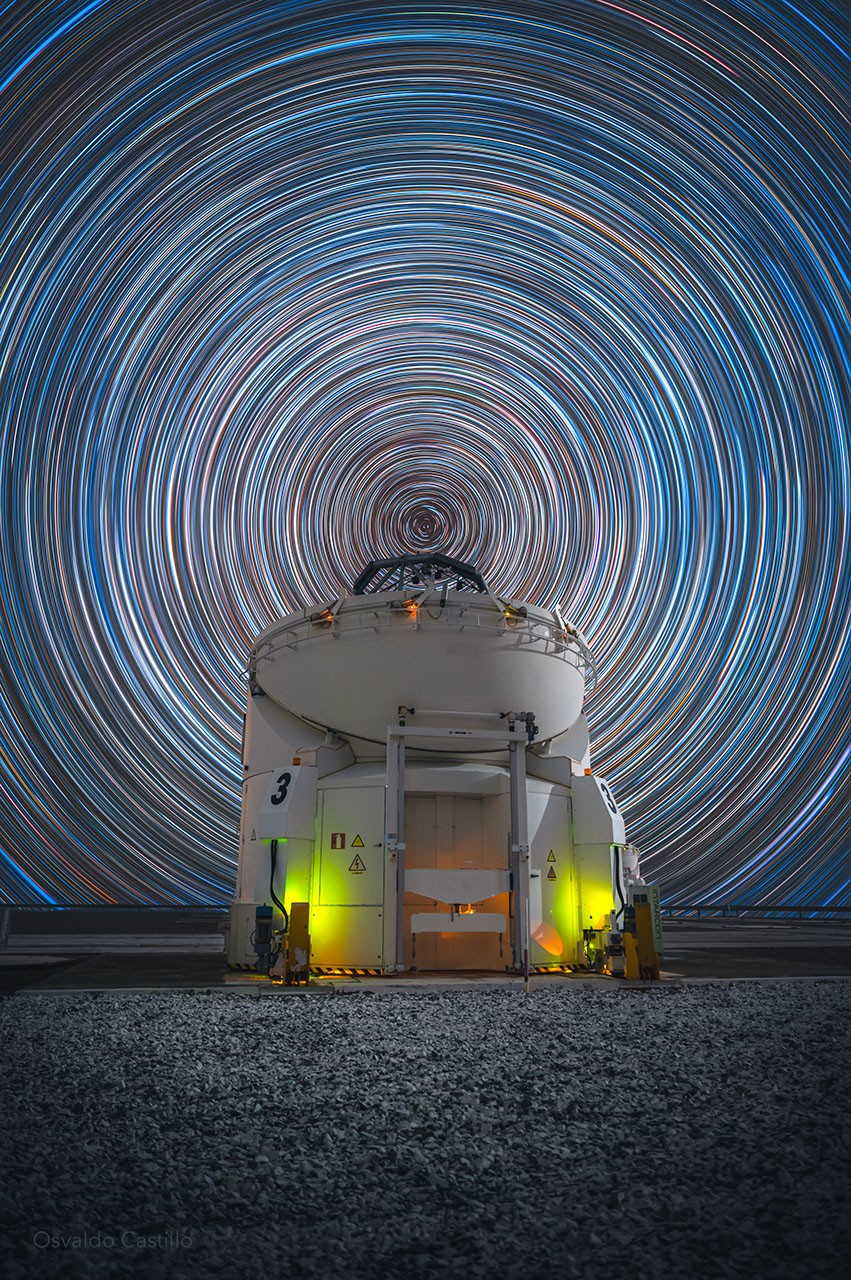
The image, composed of a digital stack of 300 consecutive 25-second exposures, showcases the graceful arcs of star trails. These luminous streaks are not the stars themselves moving erratically but rather the result of Earth’s rotation as viewed from a stationary camera. At the latitude of Paranal, approximately 25 degrees south of the equator, Earth’s surface is hurtling eastward at a remarkable speed exceeding 1,500 kilometers per hour. While this velocity is significantly faster than the speed of sound at sea level, its sheer magnitude renders the motion imperceptible to human senses. However, through the patient art of long-exposure astrophotography, this otherwise hidden motion is spectacularly revealed.
The star trails in the photograph are concentric, their curves radiating outwards from a central point. This point represents the south celestial pole, the imaginary projection of Earth’s axis of rotation onto the celestial sphere in the Southern Hemisphere. As the Earth spins, the stars appear to trace circular paths around this pole, mirroring the planet’s spin. This visual phenomenon is a direct consequence of the fundamental laws of celestial mechanics and provides a tangible connection between our terrestrial existence and the grand cosmic theater.
Beneath this celestial spectacle, the silhouette of ESO’s Paranal Observatory stands as a testament to humanity’s persistent quest to understand the universe. One of its 1.8-meter auxiliary telescopes, AT3, is visible, faintly illuminated. Its presence in the foreground grounds the ethereal beauty of the night sky, highlighting the sophisticated instrumentation that allows astronomers to study these very celestial movements in greater detail. The deliberate composition of the scene, with the observatory and the star trails harmoniously arranged, underscores the careful planning and execution required to capture such profound astronomical imagery.
The Science Behind the Stars
The Astronomy Picture of the Day (APOD) program, a long-standing initiative by NASA, has been dedicated to showcasing the beauty and wonder of the universe since its inception. Each day, a different image or photograph is featured, accompanied by a brief, insightful explanation penned by a professional astronomer. This program serves as a vital bridge between complex scientific concepts and the general public, fostering a deeper appreciation for astronomy and space exploration. The APOD website has recently undergone a significant transition, moving from its long-time home at apod.nasa.gov to science.nasa.gov/apod, marking a new chapter in its dissemination of cosmic knowledge.
The phenomenon depicted in "The Sky Turns Above Paranal" is a direct consequence of Earth’s axial rotation. This rotation, occurring once every approximately 23 hours and 56 minutes (a sidereal day), is the primary driver of the apparent daily motion of celestial objects across our sky. The inclination of Earth’s axis relative to its orbital plane around the Sun (approximately 23.5 degrees) also contributes to the changing positions of constellations throughout the year, leading to the distinct seasons.
Paranal Observatory, located in the Atacama Desert of northern Chile, is renowned for its exceptional astronomical observing conditions. The arid climate, high altitude, and minimal light pollution create an environment ideally suited for capturing faint celestial objects and intricate details of the night sky. Home to the Very Large Telescope (VLT), the most powerful optical telescope in the world, Paranal is a hub of cutting-edge astronomical research. The auxiliary telescopes, like AT3, often serve specific purposes, such as testing new technologies or conducting specialized observations that complement the capabilities of the larger VLT.
Chronology of Observation and Discovery
While the specific date of this particular APOD image’s publication is not explicitly stated in the provided text, the date embedded in the image URL ("apod/2026/august/") suggests it was featured in August of 2026. This indicates a forward-looking aspect to the APOD program, often showcasing images that may have been captured and processed in anticipation of their release.
The technique of photographing star trails has a long history in astronomy and astrophotography. Early pioneers utilized long exposure times on photographic plates to capture these celestial streaks. With the advent of digital photography, the process has become more accessible and versatile, allowing for sophisticated stacking techniques that combine multiple exposures to create a more detailed and visually striking representation of the night sky’s apparent rotation. The digital stacking of 300 exposures, each lasting 25 seconds, represents a significant investment of time and meticulous planning, ensuring the seamless integration of each frame into a cohesive and stunning final image.
The scientific understanding of Earth’s rotation dates back to ancient civilizations, with early astronomers meticulously observing the movements of the stars. However, it was through the rigorous application of scientific methodology and the development of precise instruments that the true nature of this rotation was fully understood. The work done at observatories like Paranal builds upon centuries of astronomical observation and theoretical development, pushing the boundaries of our knowledge about the universe and our place within it.
Supporting Data and Context
The speed of Earth’s rotation at the equator is approximately 1,670 kilometers per hour (1,037 miles per hour). This speed decreases with latitude, reaching zero at the poles. At Paranal’s latitude of 25 degrees south, the rotational speed is roughly 1,500 kilometers per hour, as stated in the explanation. This constant, yet imperceptible, motion is a fundamental aspect of our planet’s existence and has profound implications for everything from timekeeping to navigation and our understanding of celestial mechanics.
The concept of the celestial pole is crucial to understanding star trails. The celestial poles are the points in the sky directly above Earth’s geographic poles. The north celestial pole is very close to the star Polaris, making it appear to be a relatively stationary point in the Northern Hemisphere’s night sky. In the Southern Hemisphere, there isn’t a bright star as close to the south celestial pole, but its position is still well-defined and serves as the center of the apparent rotation of stars.
The use of auxiliary telescopes at observatories like Paranal is a common practice. These smaller telescopes can be used for a variety of purposes, including:
- Testing new instruments and technologies: Before deploying expensive new instruments on large telescopes, they are often tested on smaller, more accessible auxiliary telescopes.
- Targeted observations: Auxiliary telescopes can be used for specific, short-duration observations that might not warrant the use of a large telescope.
- Photometry and astrometry: Measuring the brightness and positions of stars with high precision.
- Educational and outreach purposes: As seen with the AT3 telescope featured in the image, these telescopes can also serve to engage the public with astronomical research.
Broader Impact and Implications
The "The Sky Turns Above Paranal" image, like all APOD features, serves a critical role in public engagement with science. By presenting complex astronomical phenomena in visually compelling ways, it sparks curiosity and encourages learning. Images of star trails, in particular, offer a tangible connection to the vastness of space and the dynamic nature of our solar system. They remind us that while we may feel stationary on Earth, we are, in fact, on a rapidly spinning planet hurtling through space.
This visual representation of Earth’s rotation also has pedagogical value. It can be used to illustrate fundamental astronomical concepts to students of all ages, from the basic understanding of day and night to more complex discussions of sidereal versus solar time. The image reinforces the scientific principle that what we observe in the sky is a product of both the motion of celestial objects and our own motion.
Furthermore, the continued operation and advancement of observatories like Paranal are crucial for ongoing astronomical discoveries. Understanding the precise movements of celestial bodies, the formation of galaxies, and the search for exoplanets all rely on sophisticated observational capabilities. The data gathered from these facilities contribute to a continuously evolving picture of the universe, expanding our knowledge and potentially answering some of humanity’s most profound questions about our cosmic origins and destiny.
The transition of the APOD site to science.nasa.gov signifies a strategic effort by NASA to integrate its various scientific outreach platforms, potentially leading to greater synergy and accessibility of scientific information. This move aims to consolidate resources and present a unified front for NASA’s scientific endeavors, making it easier for the public to explore the wealth of knowledge and imagery available.
In conclusion, "The Sky Turns Above Paranal" is more than just a beautiful photograph; it is a scientific document that eloquently captures the essence of Earth’s rotation. It stands as a testament to the power of astrophotography, the dedication of astronomers and observatories, and the enduring human drive to explore and understand the cosmos. Each star trail is a silent narrative of our planet’s journey through space, a reminder of the dynamic and awe-inspiring universe that surrounds us. The APOD program, in its new digital home, continues its vital mission of sharing these celestial wonders, inspiring a new generation of stargazers and scientists.