A pioneering test flight of a student-developed radar retroreflector technology recently took to the skies above ESTEC, the European Space Agency’s (ESA) technical centre in Noordwijk, the Netherlands. This milestone marks a significant step in validating an innovative approach to enhancing the detectability of small airborne vehicles, with potential applications ranging from sounding rockets to drones. The initiative, born from a student competition, has evolved into a collaborative effort involving ESA, multiple European universities, and industry partners, culminating in this critical ground-based validation before a planned sounding rocket launch.
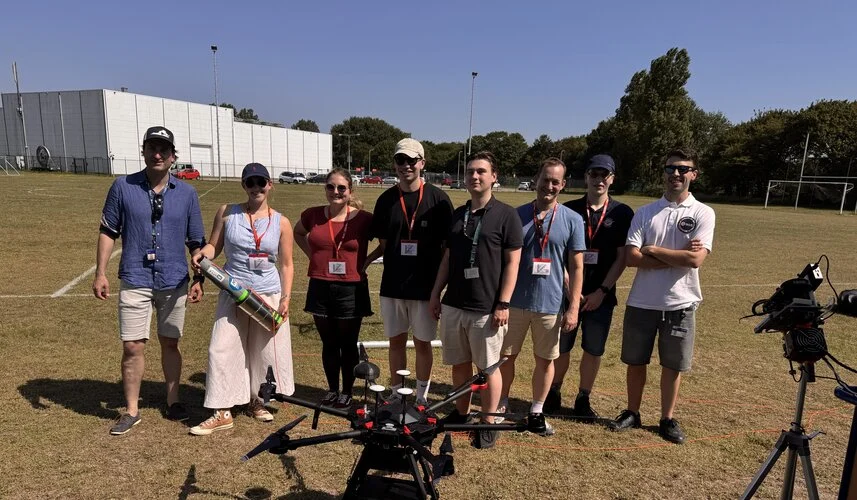
The test, conducted on a clear, hot summer day, saw a powerful drone, operated by ESA engineer Giovanni Serafini, ascend to an altitude of 120 meters. Suspended approximately five meters below the drone by a tether, a specially designed retroreflector payload swung gently in the breeze above ESTEC’s sprawling football field. The drone then executed a series of precise maneuvers, descending to within three meters of the ground and traversing the field, all while the retroreflector remained in the air. This carefully choreographed demonstration aimed to rigorously assess the performance of the student-designed technology under varying altitudes and orientations. The test team, seeking respite from the heat, monitored the equipment closely to prevent any operational disruptions due to overheating.
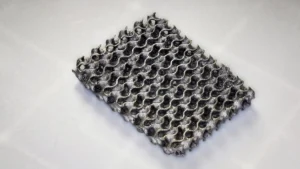
At the heart of this innovation is a compact, 28 cm long metal tube, ingeniously covered with a precise arrangement of cavities. This passive structure, developed by a student team from Ruhr University Bochum in Germany, is engineered to reflect radar signals directly back towards their origin. The fundamental principle behind a retroreflector is its ability to amplify the radar cross-section of an object without requiring any active electronics or onboard power source. This passive nature significantly reduces complexity, weight, and cost, making it an attractive solution for enhancing the visibility of objects that might otherwise be challenging to track.

Daria Tsukanova, a member of the Ruhr University Bochum team, explained the core functionality: "A retroreflector is a passive structure, in this case a 28 cm long metal tube covered with cavities, designed to reflect signals back towards their source. This makes an object easier to detect and track without requiring active electronics or transmitters onboard." This characteristic is particularly valuable for small, experimental vehicles like sounding rockets, which are often used to carry scientific payloads to the edge of space. These rockets, upon completing their suborbital trajectories, descend back to Earth, and ensuring their reliable tracking throughout this phase is crucial for recovery and data analysis.
Enhancing Radar Visibility for Aerospace Applications
The current methods for tracking rockets largely rely on their inherent metallic composition, which provides a degree of radar reflectivity. However, this reflectivity can diminish significantly depending on the viewing angle, leading to potential detection gaps. The student-developed retroreflector aims to overcome this limitation by providing a consistent and strong radar return, irrespective of the angle at which it is illuminated. This could extend the detectable range and duration for such vehicles, improving mission safety and efficiency.
The retroreflector’s design is a testament to modern manufacturing techniques. Stephan Hauptmeier, another member of the student team, highlighted the cost-effectiveness and accessibility of the technology: "What’s unique about this technology is that it’s very cheap. The reflector itself is passive, made by 3D printing and laser cutting." This approach not only minimizes production costs but also allows for rapid prototyping and customization, essential for adapting the technology to specific mission requirements.
A significant advantage identified by the team is the compatibility of their retroreflector with existing radar infrastructure. "Another advantage is that to detect it, we can use a radar technology well-established in the automotive industry – the same one that is part of driver assistance systems and will, for example, cause a car to break automatically if an obstacle is detected. This means no special ‘space-grade’ radar is needed," Hauptmeier elaborated. This integration with widely available automotive radar technology significantly lowers the barrier to entry for deploying and utilizing this enhancement.

Leveraging Existing ESA Technology and Expertise
The collaboration between the student team and ESA extends beyond just testing. Václav Valenta, an ESA microwave engineer, emphasized the synergy created by utilizing previously developed hardware: "This has been a unique opportunity to leverage hardware previously developed within ESA’s Technology Development Element programme for planetary and in-orbit missions, based on automotive radar technology." The ESA’s Technology Development Element (TDE) program has been instrumental in fostering innovation by exploring cutting-edge technologies, including those derived from the automotive sector, for space applications.
Valenta further elaborated on the educational benefits of this partnership: "By making one of these prototypes available to students, we enable them to gain practical experience with real radar technology and explore how such systems can be configured and optimised for specific applications." This hands-on approach provides invaluable real-world experience for the students, bridging the gap between academic learning and professional engineering practice.
A Journey from Competition to Space-Bound Testing
The retroreflector technology’s journey began as a winning entry in a competition organized by the Institute of Electrical and Electronics Engineers (IEEE). The International Microwave Symposium (IMS) competition served as the initial incubator for this promising concept. The successful validation at ESTEC represents a crucial step towards the next phase: a planned launch aboard a sounding rocket.
This future launch, scheduled for later in the summer, will take place in Brno, Czech Republic, with the rocket ascending up to one kilometer above a designated field. This suborbital flight will provide an even more realistic testing environment, simulating the conditions encountered during actual sounding rocket missions.

Karol Masztalerz, an ESA Graduate Trainee, reflected on the broader significance of this project: "This project is a great example of how student initiatives can evolve beyond the competition environment." He highlighted the expansive growth of the project, transforming from a university-led challenge into a multifaceted international collaboration.
The extended network now includes ESA, Ruhr University Bochum, and Imperial College London in the UK, alongside industrial partners. Crucially, the Czech Rocket Society is providing their new Sherpa rocket for the upcoming launch, underscoring the growing support and interest in this innovative technology.
Collaborative Framework and Future Implications
The successful test flight at ESTEC is the culmination of a carefully managed collaborative effort. The project was selected as the winner of an IEEE IMS competition, managed in close partnership between Václav Valenta from ESA and Markus Gardill from Brandenburg University of Technology Cottbus-Senftenberg. Gardill, who organized the competition as co-chair and chair of IEEE’s Microwave Theory and Techniques Society’s technical committee for Microwave Aerospace Systems (TC-29), played a pivotal role in fostering this interdisciplinary collaboration.
Further adaptation of the radar unit for terrestrial use cases was undertaken by engineer Václav Pavlíček at Imperial College London. His work involved modifying the system configuration and operating parameters, demonstrating the adaptability of the technology for diverse applications.

The implications of this successful validation are far-reaching. For ESA and the broader European space sector, it represents a cost-effective method to enhance the tracking capabilities of small, experimental space vehicles. The technology’s reliance on automotive radar also opens avenues for commercialization and broader adoption within the rapidly growing drone industry, where improved detectability and tracking are paramount for safe and regulated operations.
The project’s progression from a student competition to an ESA-backed test campaign, and now towards a sounding rocket launch, serves as a compelling model for fostering innovation in aerospace. It underscores the value of interdisciplinary collaboration, the power of leveraging existing technologies, and the potential for student-led initiatives to drive significant advancements in the field. The ability to improve the radar visibility of small airborne objects using affordable, passive technology could revolutionize how we monitor and interact with these craft in the future, paving the way for safer, more efficient, and more comprehensive space exploration and aerial operations. The continued testing and potential deployment of this retroreflector technology will undoubtedly be closely watched by the aerospace community.