The additive manufacturing (AM) industry witnessed a significant surge in investment and commercial activity throughout the latter half of August, with notable funding rounds and substantial equipment deals underscoring the sector’s continued growth and expanding applications. Hike Medical secured $22.5 million to bolster its 3D-printed custom medical device operations, while Swiss additive manufacturing specialist Exentis announced a series of major deals totaling CHF 33 million ($40.8 million) for its production systems. The burgeoning field of AI-driven 3D modeling also saw substantial backing, with Math Magic raising nearly $50 million across two funding rounds in just six months. Concurrently, PyroGenesis reported a series of new orders for its high-quality titanium powder, indicating growing commercial traction for its advanced materials.
Hike Medical Secures $22.5 Million for Scaled Medical Device Production
San Francisco-based Hike Medical has successfully closed a significant funding round, raising $22.5 million through a combination of seed and Series A financing. The investment, spearheaded by Saga Ventures with participation from Indicator Ventures, Fifth Down Capital, and RiverPark Ventures, signals strong confidence in the company’s innovative approach to personalized medical devices. Orthofeet, a prominent player in the orthotics market, joined as a strategic investor and commercial partner, alongside several angel investors, further validating Hike Medical’s business model and market potential.
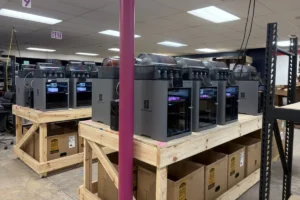
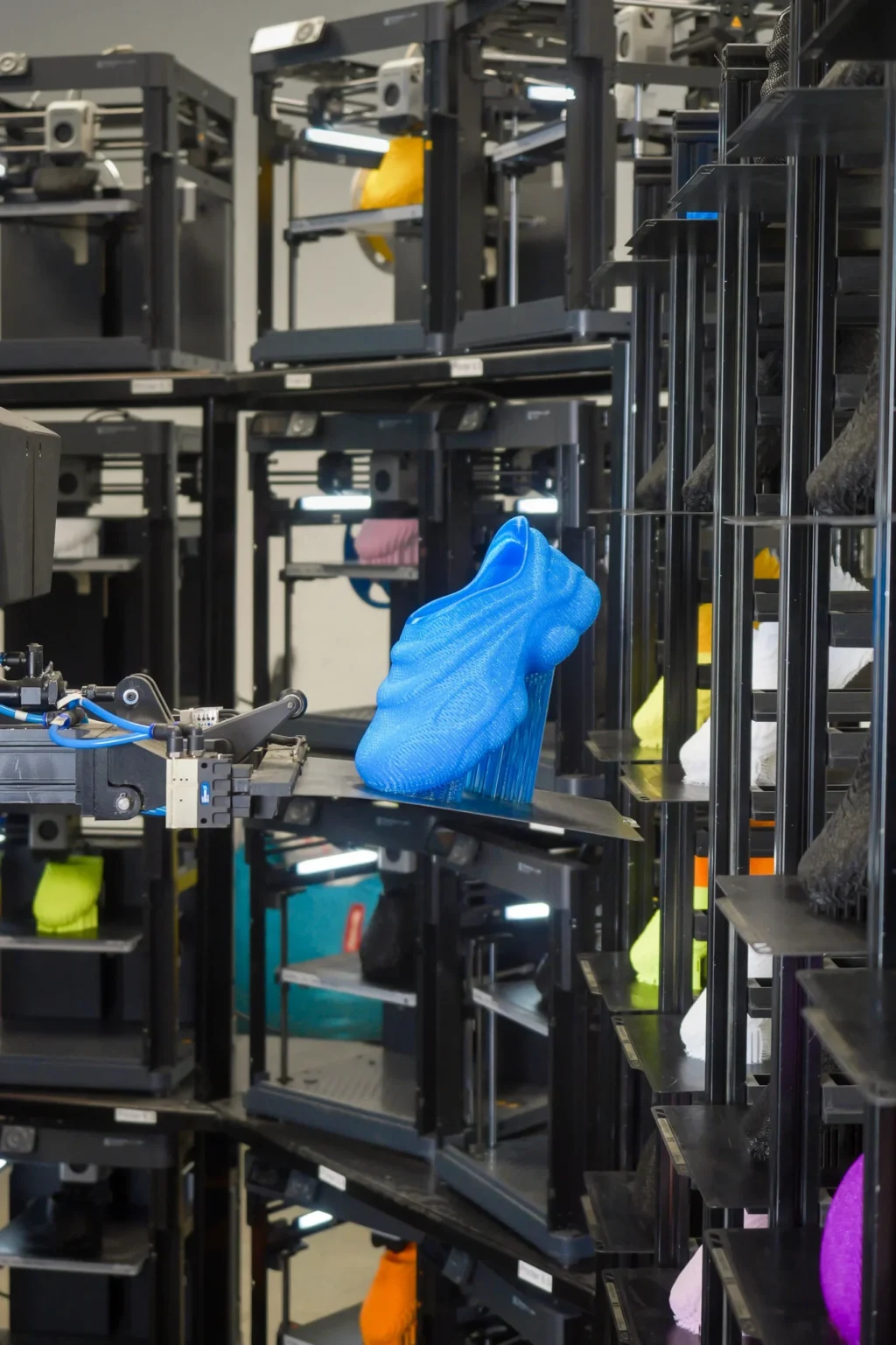
The company’s core innovation lies in its ability to leverage 3D printing for the creation of highly customized foot orthotics. This process begins with a digital scan of a patient’s feet, a detailed digital blueprint that is then used to manufacture bespoke devices at Hike Medical’s SoleForge facility located in Peoria, Illinois. This facility has rapidly evolved into what Hike Medical describes as the largest orthotics 3D printing farm in the United States, operating hundreds of printers continuously to meet demand.
This advanced manufacturing approach has yielded dramatic improvements in production efficiency and product quality. According to Hike Medical, production times have been slashed from weeks to mere days, and the rate of devices requiring remakes has plummeted from approximately one in every 15 to an impressive one in 400. These metrics highlight the scalability and precision achievable through their integrated digital manufacturing workflow.
Beyond its established success in custom insoles, Hike Medical is strategically expanding its scope. The company has developed sophisticated software for clinicians and integrated artificial intelligence (AI) tools to streamline administrative tasks, such as insurance paperwork. This comprehensive approach aims to manage a larger portion of the patient care continuum, from initial referral to the final delivery of the medical device. The newly acquired capital will be instrumental in enabling Hike Medical to penetrate additional segments within the orthotics, prosthetics, and broader medical equipment markets. The company also intends to significantly expand its workforce, with targeted hiring in engineering, sales, and manufacturing to support its ambitious growth plans. This expansion is poised to further solidify Hike Medical’s position as a leader in the personalized medical device landscape.
Exentis Seals Major Deals Worth Over $40 Million for High-Volume Manufacturing Systems
Swiss additive manufacturing company Exentis has announced the closure of two substantial framework agreements with new customers in Asia, collectively valued at approximately CHF 33 million (an estimated $40.8 million). These deals represent a significant win for Exentis, reinforcing its strategy to address high-volume industrial production needs.
The first agreement, with an unnamed Asian customer, involves 15 Exentis production systems and is valued at around CHF 22 million (approximately $27.2 million). This significant order is slated for the high-volume manufacturing of consumer electronics components, demonstrating the growing adoption of advanced additive manufacturing techniques in this competitive sector.
Shortly after, Exentis announced a second framework agreement with another new Asian client. This deal encompasses eight production systems, with a value of approximately CHF 11 million (around $13.6 million), and will also be dedicated to the mass production of consumer electronics components. The combined value of these two agreements, totaling 23 production systems, underscores the market’s demand for Exentis’s specialized additive manufacturing solutions.
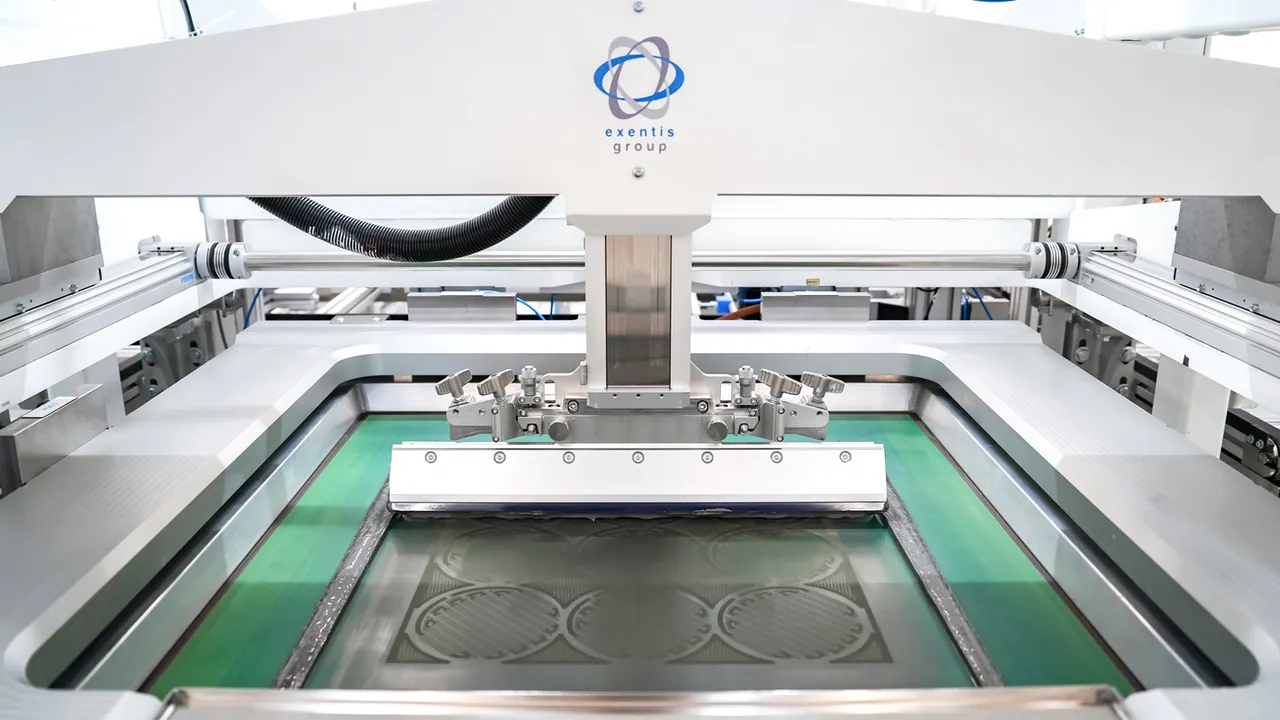
Exentis’s technological edge lies in its proprietary "Additive Screen Printing" process. This innovative method builds parts by precisely depositing material through screens in successive layers, a design optimized for efficient, high-volume industrial output. Beyond the sale of production systems, Exentis operates a comprehensive business model that includes the provision of associated services, specialized materials, and technology licensing. This integrated approach allows clients to not only acquire the necessary hardware but also to benefit from the full spectrum of support required for successful industrial-scale additive manufacturing implementation. The substantial value of these deals suggests that Exentis’s unique approach to mass-production additive manufacturing is gaining significant traction in key global markets.

Math Magic Secures Nearly $50 Million for AI-Driven 3D Modeling and Manufacturing
The intersection of artificial intelligence and 3D technology is attracting substantial investment, as evidenced by Beijing-based Math Magic’s recent funding success. The company announced the closure of its Series A+ funding round, following a Series A round, bringing its total capital raised to nearly $50 million within the past six months. Both funding rounds were led by BAI Capital and HyT Capital, with V Fund participating alongside a strong roster of existing investors including HSG, IDG Capital, Long-Z Investments, Crystal Stream, and Jinqiu Capital.
Math Magic positions itself primarily as an AI 3D company, with its connection to additive manufacturing being more indirect but profoundly impactful. Its flagship platform, Hi3D, is designed to transform various inputs, including images, into detailed digital 3D models. This capability is crucial for bridging the gap between digital design and physical production. The company is actively working to connect these AI-generated digital models with tangible manufacturing processes.
The Builda platform further advances this vision by enabling the transformation of AI-generated 3D designs into actual physical products. For instance, a user can upload a photograph, have AI convert it into a 3D figurine, and then seamlessly order the production and delivery of the finished item. This end-to-end "generation-to-delivery" model represents a significant step towards democratizing custom product creation.
The substantial new capital infusion will be strategically allocated to advancing Math Magic’s AI 3D technology and further developing its product portfolio. Crucially, the company also plans to invest in the production and delivery infrastructure that underpins its integrated model. This commitment to the physical manufacturing aspect of its AI-driven design process is particularly noteworthy for the broader 3D printing industry, suggesting a future where AI plays an even more central role in driving manufacturing demand and innovation. The company’s ability to generate complex 3D assets with detailed geometry and textures, as demonstrated by its Hi3D V3.0 platform, points to a future where digital design is seamlessly translated into physical reality.
PyroGenesis Reports Growing Demand for High-Quality Titanium Powder
PyroGenesis, a Montreal-based company specializing in advanced materials, has seen a notable uptick in orders for its titanium powder during the latter part of August. Utilizing its advanced NexGen plasma atomization process, PyroGenesis produces Ti64 powder, a critical material for various high-performance additive manufacturing applications.

On August 20th, PyroGenesis announced an order from a prominent U.S. applied research facility, which receives support from both the Department of Defense and NASA. This order specifies the use of PyroGenesis’s titanium powder in conjunction with Electron Beam Melting (EBM) technology for critical materials research. Demonstrating strong customer satisfaction and ongoing research needs, the same U.S. research customer placed a second order just six days later. The company has indicated that this repeat business suggests potential for further orders from this significant client.
Adding to its recent successes, PyroGenesis also secured a separate order on August 24th from an unnamed U.S. additive manufacturing equipment manufacturer. This customer had previously evaluated PyroGenesis’s titanium powder samples and has now transitioned to a commercial purchase of coarse Ti64 powder, intended for Directed Energy Deposition (DED) processes.
While PyroGenesis has not disclosed the specific financial value or volume of these orders, their cumulative impact is being closely watched for their contribution to the company’s additive manufacturing business segment. The combination of repeat orders from a key research institution and the conversion of sample testing into a commercial purchase by an equipment manufacturer is a positive indicator. It signifies that customers are increasingly recognizing the quality and performance of PyroGenesis’s titanium powder and are beginning to integrate it into their ongoing production and development pipelines. This trend suggests a growing commercialization of advanced metal powders for additive manufacturing, driven by the demand for specialized materials in critical applications.