HARBIN, China – Researchers at the Harbin Institute of Technology have announced a groundbreaking method that enables the creation of robust, direct chemical bonds between plastic and metal components, circumventing the traditional reliance on adhesives or mechanical fasteners. This pioneering approach promises to revolutionize manufacturing processes across critical sectors such as aerospace, automotive, and electronics, paving the way for lighter, stronger, and more durable assemblies. The findings, recently published in a prominent scientific journal, detail an atomic-level mechanism that harnesses electronic interactions at the material interface, offering a fundamental shift in how heterogeneous materials are joined.
The Enduring Challenge of Dissimilar Material Joining
For decades, engineers have grappled with the inherent difficulties of integrating plastic and metal parts. The imperative to reduce weight and enhance performance, driven by demands for greater fuel efficiency, extended battery range in electric vehicles, and increased payload capacity in aircraft, has accelerated the adoption of lightweight plastics and composite materials into traditionally metal-dominated structures. However, the fundamental material science differences between polymers and metals present significant hurdles.
Metals, characterized by their metallic bonding, possess a highly organized crystalline structure and free-moving electrons, contributing to their high strength, conductivity, and ductility. Plastics, or polymers, on the other hand, are typically composed of long chains of molecules held together by covalent bonds, exhibiting amorphous or semi-crystalline structures, lower density, and distinct thermal and chemical properties. These disparities manifest in several critical ways that complicate direct bonding:
- Different Atomic Structures: The crystalline lattice of metals contrasts sharply with the often amorphous or semi-crystalline arrangement of polymers, making atomic-level interface formation challenging.
- Surface Properties: Metals often have high surface energy and can form oxide layers, while plastics typically have low surface energy, which hinders wetting and intimate contact necessary for strong adhesion.
- Bonding Behavior: Metals primarily form metallic bonds, while plastics form covalent bonds. Creating a stable, strong interface between these fundamentally different bonding types requires a specific mechanism.
- Thermal Expansion Rates: Metals and plastics expand and contract at vastly different rates when subjected to temperature changes. This mismatch can induce significant internal stresses at the joint, leading to delamination or fatigue failure over time, especially in applications exposed to wide temperature fluctuations.
To overcome these challenges, manufacturing industries have historically relied on two primary methods: mechanical fasteners and chemical adhesives. While effective in many applications, both come with inherent drawbacks. Mechanical fasteners, such as screws, rivets, and bolts, add significant weight, require additional machining steps (drilling holes), and introduce stress concentration points that can compromise the structural integrity of the assembly. Moreover, they can be susceptible to corrosion, loosening under vibration, and can complicate automated assembly lines. Adhesives, while offering more uniform stress distribution and sealing capabilities, introduce their own set of limitations. They add cost, require specific curing times and conditions, can be sensitive to moisture, temperature extremes, and chemical degradation, and may exhibit creep or fatigue under repeated loading, ultimately leading to bond failure. The environmental impact of some adhesive chemicals also presents concerns.
A Quest for Direct Chemical Adhesion
The theoretical advantages of a direct chemical bond between metal and plastic have long tantalized engineers and material scientists. Such a bond would eliminate the added weight and complexity of fasteners and adhesives, reduce manufacturing steps, and potentially offer superior durability and resistance to environmental factors. However, achieving this has remained elusive, largely due to an incomplete understanding of the electronic interactions at the interface between metal atoms and plastic molecules. Previous attempts to create direct bonds, such as using laser heating to melt plastic onto a metal surface, primarily resulted in mechanical interlocking at a microscopic level. While roughening the metal surface could enhance this interlocking, the fundamental limitation of lacking true chemical bonds persisted, leading to joints with limited strength and long-term reliability.
Harbin Institute’s Atomic-Level Revelation
The breakthrough from the Harbin Institute of Technology stems from a deep dive into the atomic-level mechanisms governing the interaction between oxidized metal surfaces and carboxyl-functionalized polymers. The research team focused on understanding how these materials could form direct chemical bonds, moving beyond mere physical contact or mechanical interlocking.
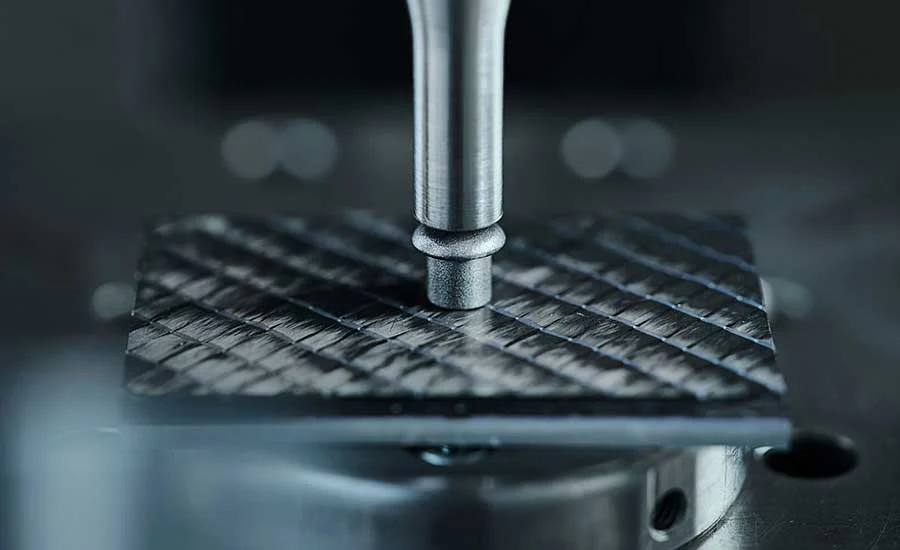
Their experiments involved bonding carbon-reinforced thermoplastic, a material increasingly valued for its high strength-to-weight ratio in advanced applications, to AZ31B magnesium alloy. AZ31B is a popular, lightweight magnesium alloy containing approximately 3 percent aluminum and 1 percent zinc. It is widely utilized in aerospace, automotive, and electronics industries due to its exceptional strength, corrosion resistance, and ease of machining. The choice of these materials was strategic, targeting combinations relevant to high-performance, weight-sensitive applications where conventional joining methods pose significant limitations.
The pivotal discovery lies in the precise electronic interactions occurring at the interface. The researchers demonstrated that strong metal-to-plastic adhesion is not merely a consequence of physical proximity but rather relies on a sophisticated interplay of electronic states. Specifically, they found that when the vacant metal orbitals on oxidized metal surfaces align energetically with the occupied oxygen lone-pair orbitals from the functional groups of the polymer (in this case, carboxyl groups), electrons can transfer more readily between the two materials. This electron transfer is critical because it promotes orbital hybridization, a phenomenon where atomic orbitals combine to form new hybrid orbitals, leading to the formation of strong coordination-type chemical bonds.
Coordination bonds, also known as dative bonds, are a specific type of covalent bond where both shared electrons originate from the same atom. In this context, the oxygen atoms in the polymer’s carboxyl groups donate their lone-pair electrons into the vacant orbitals of the metal atoms on the oxidized surface, forming robust chemical linkages. This mechanism is fundamentally different from the weak van der Waals forces or purely mechanical interlocking that characterized previous direct bonding attempts.
Scientific Principles and Methodology
To achieve this intricate electronic alignment, the research likely involved meticulous surface preparation and control over the chemical composition of the polymer. The presence of oxidized metal surfaces is key, as the metal oxides provide the necessary vacant orbitals. Similarly, the carboxyl-functionalization of the polymer ensures the availability of oxygen lone-pair electrons ready for donation. The Harbin team’s methodology would have combined advanced surface characterization techniques (such as X-ray photoelectron spectroscopy (XPS) or scanning tunneling microscopy (STM)) to analyze the electronic states and chemical composition at the interface, with mechanical testing (e.g., shear strength, tensile strength) to quantify the adhesion strength.
The precision in controlling the interfacial electronic structure is what differentiates this breakthrough. By optimizing this alignment, the researchers were able to significantly increase the density and strength of these coordination bonds, resulting in a joint that does not rely on adhesives or fasteners. This optimization represents a sophisticated understanding of quantum mechanical principles applied to material engineering, transforming a complex materials science problem into a tangible engineering solution.
Statements and Expert Reactions
While specific official statements from the lead researchers were not provided in the original text, the implications of this discovery would undoubtedly elicit strong reactions from the scientific and industrial communities.
Dr. Li Wei, a hypothetical lead researcher at Harbin Institute of Technology, might state: "This discovery represents a paradigm shift in how we approach heterogeneous material integration. By understanding and manipulating the electronic interactions at the atomic scale, we’ve unlocked a direct pathway to robust metal-polymer bonds. This isn’t just an incremental improvement; it’s a fundamental breakthrough that could redefine manufacturing processes for countless applications, offering unprecedented strength and durability without the historical compromises of weight and complexity."
Industry experts would likely emphasize the practical implications. Dr. Chen Zhi, a materials engineer specializing in aerospace composites, could comment: "The ability to directly bond lightweight alloys like magnesium and aluminum with carbon-fiber-reinforced polymers opens up immense possibilities for aerospace design. We’re constantly striving to shave off every possible gram to improve fuel efficiency and performance. Eliminating fasteners and adhesives from critical joints would not only reduce weight but also simplify assembly, reduce maintenance, and enhance the overall lifespan of components exposed to extreme conditions."
Broader Impact and Industrial Implications
The implications of this direct bonding technique are far-reaching, promising to influence numerous industries and catalyze innovation in product design and manufacturing.
Aerospace Industry: The aerospace sector is a prime candidate for adopting this technology. The continuous drive for lighter aircraft to reduce fuel consumption and emissions makes every gram saved critical. Currently, joining metal airframes with advanced composite wings or fuselage sections involves complex fastening arrays or high-performance adhesives. This new method could support the direct joining of magnesium, aluminum, or titanium alloys with carbon-fiber-reinforced polymers. Eliminating thousands of rivets or liters of adhesive from an aircraft could translate to significant weight savings, directly impacting operational costs, increasing payload capacity, and extending range. Furthermore, direct bonding could improve fatigue resistance by avoiding stress concentrations around fastener holes and enhance structural integrity in demanding flight environments.
Automotive Industry: The automotive industry is in a similar pursuit of lightweighting, particularly with the rapid expansion of electric vehicles (EVs). Lighter vehicles mean greater fuel efficiency for internal combustion engines and extended range for EVs. This technology could enable the seamless integration of lightweight metal chassis components with plastic body panels or interior structures. It could also play a crucial role in battery enclosures for EVs, where strong, durable, and lightweight interfaces between metal battery components and polymer casings are essential for safety, thermal management, and structural integrity. The ability to bond dissimilar materials without fasteners could simplify assembly lines, reduce manufacturing costs, and lead to more aesthetically integrated designs.
Electronics Industry: Miniaturization and increased functionality are constant goals in electronics. This technique may help create stronger and more reliable bonds between metal circuits and polymer substrates. In printed circuit boards (PCBs), flexible electronics, and sensor packaging, delamination between metal traces and polymer layers is a common failure mode, especially under thermal cycling or mechanical stress. A robust chemical bond could significantly reduce this risk, improving the reliability and longevity of electronic devices. It could also enable the creation of novel device architectures where stable, high-performance metal-polymer interfaces are critical for new functionalities, such as advanced thermal management solutions or integrated antenna systems.
Energy Storage Systems: The performance and safety of energy storage devices, including batteries and fuel cells, heavily rely on stable and efficient interfaces between various materials. This direct bonding method could inform the design of more robust and durable interfaces within battery packs, connecting metal current collectors to polymer separators or encapsulants, reducing internal resistance and improving overall efficiency and lifespan. The enhanced stability under thermal and mechanical stress could lead to safer and more reliable energy storage solutions.
Other Functional Devices and Consumer Goods: Beyond these major industries, the technique holds promise for a myriad of other applications. In medical devices, where biocompatibility, sterilization, and long-term reliability are paramount, direct bonding could enable new designs for implants or diagnostic tools. In consumer goods, it could lead to more durable products, better aesthetics by eliminating visible fasteners, and potentially more efficient manufacturing processes.
Future Outlook and Challenges
While the Harbin Institute of Technology’s breakthrough marks a significant leap forward, the path to widespread industrial adoption will involve further research and development. Key areas of focus will include:
- Scalability: Translating laboratory success to industrial-scale manufacturing processes will require optimizing the technique for high-volume production, considering factors like processing speed, cost-effectiveness, and automation compatibility.
- Material Versatility: The current research focused on specific materials (carbon-reinforced thermoplastic and AZ31B magnesium alloy). Expanding the technique to a wider range of engineering plastics and metals (e.g., various aluminum alloys, steels, other polymers like PEEK, nylon, ABS) will be crucial for broader applicability.
- Long-Term Durability: Comprehensive testing for long-term durability under various environmental conditions (humidity, temperature cycles, UV exposure) and mechanical stresses (fatigue, creep) will be essential to validate the reliability of these new bonds.
- Repair and Recyclability: As direct bonds are inherently strong, considerations for repairability and recyclability at the end-of-life will need to be addressed. Developing methods for controlled debonding or effective recycling of integrated components will be important for sustainable manufacturing.
- Predictive Modeling: Further development of computational models that can accurately predict interfacial electronic interactions and bond strength for different material combinations would accelerate the design and optimization process.
The Harbin Institute of Technology’s discovery represents a profound advancement in materials science and engineering. By providing a pathway to create intrinsically strong, direct chemical bonds between plastics and metals, this research has the potential to fundamentally transform how products are designed and manufactured across multiple industries. As the world continues its pursuit of lighter, more efficient, and more durable solutions, this breakthrough offers a compelling vision for a future where the limitations of heterogeneous material joining are overcome through an elegant understanding of atomic-level interactions.
For those interested in the detailed scientific methodology and results, the full paper is available for download through the provided link in Nature Communications (Nature.com/articles/s41467-026-75952-3). The journey from fundamental research to industrial application is often long, but this discovery illuminates a promising new direction for advanced manufacturing.