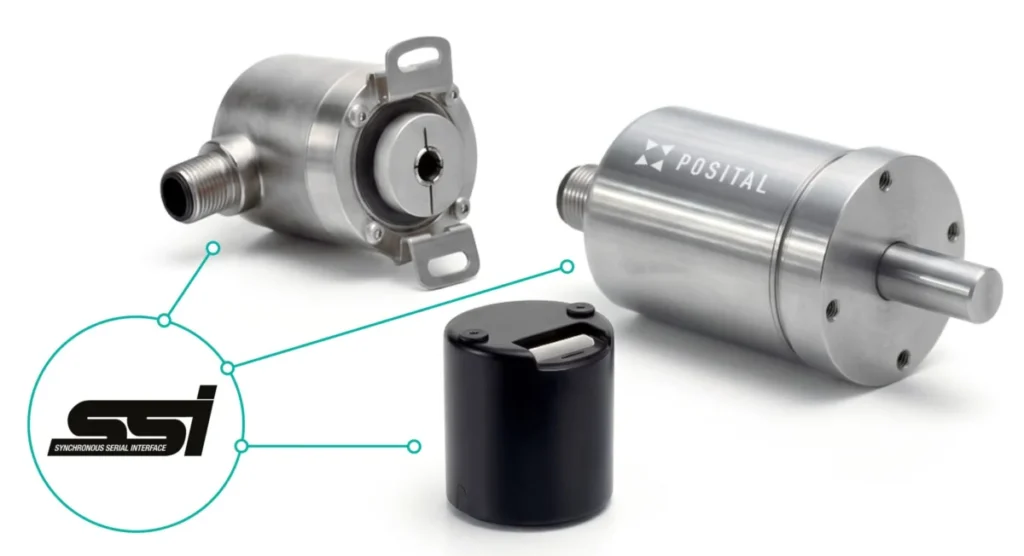
POSITAL has announced a significant expansion of its Synchronous Serial Interface (SSI) communication capabilities, integrating this widely adopted protocol across an extensive range of its IXARC absolute rotary encoders. This strategic move encompasses both the compact kit (modular) encoders and robust industrial-grade models, critically including the newly introduced 20 mm miniature form factor, alongside established larger variants. The enhancement underscores POSITAL’s commitment to providing flexible and reliable positioning solutions tailored to the diverse and evolving needs of modern industrial automation and control systems.
The integration of SSI into a broader spectrum of IXARC encoders represents a pivotal development for system integrators, machine builders, and end-users seeking efficient and dependable absolute position feedback. SSI, renowned for its simplicity, robustness, and cost-effectiveness, offers a direct and reliable communication link between sensors and control systems, making it an ideal choice for numerous industrial applications where the complexity and overhead of industrial Ethernet or fieldbus networks are not required.
Understanding the Synchronous Serial Interface (SSI)
The Synchronous Serial Interface (SSI) stands as a foundational digital communication protocol in industrial automation, primarily utilized for the transmission of absolute position data from sensors like encoders to a master control unit, typically a Programmable Logic Controller (PLC) or a microcontroller. Developed in the late 1980s by Siemens, SSI emerged as a reliable alternative to older analog or parallel communication methods, offering enhanced noise immunity and greater precision.
At its core, SSI is a point-to-point, synchronous serial protocol based on the RS-422 standard. This means that communication occurs directly between two devices – a master (e.g., PLC) and a slave (the encoder) – and data transmission is synchronized by a clock signal generated by the master. The master sends a series of clock pulses, and for each pulse, the slave transmits one bit of data. This synchronous nature ensures precise data acquisition and reduces the chances of data corruption, which is critical in time-sensitive industrial processes.
Key characteristics and advantages of SSI include:
- Simplicity: SSI requires only a few wires (typically four: clock+, clock-, data+, data-) for communication, making it straightforward to implement and troubleshoot. This reduces wiring complexity and associated costs compared to more elaborate network protocols.
- Reliability: The RS-422 differential signaling provides excellent noise immunity, crucial in electrically noisy industrial environments. This ensures data integrity over relatively long distances.
- High Transmission Rates: SSI supports high clock frequencies, allowing for rapid data updates, which is vital for dynamic control applications.
- Long Transmission Distances: With proper cabling, SSI connections can extend up to 1,200 meters, offering flexibility in plant layout.
- Absolute Position Data: Unlike incremental encoders that provide pulses relative to a starting point, SSI absolute encoders provide a unique digital code for each shaft position. This means the system always knows the exact position, even after power cycles, without needing to re-reference.
- Widespread Support: Most major PLC manufacturers provide integrated support for SSI inputs, simplifying system design and integration.
While powerful, SSI is a master-slave, point-to-point protocol, meaning it is designed for direct sensor-to-controller communication and does not inherently support networking multiple devices on a single bus, unlike fieldbus systems (e.g., Profibus, DeviceNet) or industrial Ethernet protocols (e.g., EtherCAT, PROFINET). For applications requiring complex network topologies, distributed control, or extensive data exchange, these more advanced protocols might be preferred. However, for dedicated position feedback where simplicity, reliability, and speed are paramount, SSI remains an incredibly effective and often preferred choice.
The Evolving IXARC Encoder Portfolio: A Deep Dive
POSITAL’s IXARC series of absolute rotary encoders is recognized for its robust design, versatility, and advanced measurement technologies. The expansion of SSI options across this range significantly broadens its applicability.
1. Modular (Kit) and Industrial Encoders:
The IXARC portfolio caters to distinct application needs through its modular (kit) and industrial encoder offerings.
- Kit Encoders: These are designed for integration directly into existing machinery or custom assemblies, often within confined spaces. They typically consist of separate sensor and magnetic components, allowing for flexible mounting directly onto a motor shaft or within a mechanical structure. Their compact nature and adaptability make them ideal for robotics, medical equipment, and integrated motor feedback systems where space is at a premium and a highly customized solution is required. The SSI integration into these kit encoders means that designers can now leverage the benefits of absolute position feedback with simplified wiring within their custom builds.
- Industrial Encoders: These are self-contained, rugged units designed for standalone mounting in harsh industrial environments. They feature robust housings, high IP (Ingress Protection) ratings, and durable bearings to withstand dust, moisture, vibration, and temperature extremes. Applications include factory automation, material handling, process control, and heavy machinery. The availability of SSI across this range ensures that these workhorse encoders can deliver reliable absolute position data directly to PLCs in challenging settings.
2. The New 20 mm Miniature Form Factor:
A significant highlight of this expansion is the inclusion of SSI in POSITAL’s new 20 mm miniature form factor. This development directly addresses the industry’s growing demand for miniaturization in automation components. As robotics become smaller, more collaborative, and integrated into complex systems, and as machine tools become more compact, the need for highly accurate yet incredibly small sensors is paramount. The 20 mm diameter IXARC encoders with SSI offer:
- Space Savings: Critical for compact designs, robotic joints, and embedded systems.
- Reduced Weight: Important for mobile robotics and applications where inertia needs to be minimized.
- High Precision in Small Packages: Enabling sophisticated control even in micro-applications.
This miniature form factor, coupled with SSI, positions POSITAL strongly in emerging markets like collaborative robots (cobots), miniature inspection equipment, and advanced prosthetics, where both compact size and reliable absolute position feedback are essential.
3. Robustness and Special Applications: Larger Models:
Beyond miniaturization, POSITAL continues to offer SSI options for its established range of larger, more rugged IXARC encoders, catering to applications demanding extreme durability and specialized certifications.
- 36 mm Compact Models: These offer a balance between compact design and enhanced robustness, suitable for a wide array of general industrial applications where space is a consideration but not as critical as with the 20mm variants.
- 58 mm Rugged Versions: The 58 mm standard is a widely adopted size in industrial automation. These versions are built to withstand severe operating conditions, offering superior mechanical stability and environmental protection. They are commonly found in heavy-duty machinery, material handling systems, and general factory automation.
- 78 mm Explosion-Proof Models with ATEX Certification: For the most demanding and hazardous environments, POSITAL provides 78 mm encoders with ATEX certification. ATEX (Atmosphères Explosibles) is a European directive mandating strict safety standards for equipment intended for use in potentially explosive atmospheres, such as those found in oil and gas, chemical processing, mining, and grain handling industries. The availability of SSI in these explosion-proof models ensures safe and reliable absolute position feedback in environments where conventional electronics pose a significant risk.
4. Magnetic vs. Optical Measurement Technologies:
For its larger encoder sizes, POSITAL offers customers the choice between magnetic and optical measurement technologies. Each technology presents distinct advantages:
- Magnetic Encoders: These use magnetic fields to determine angular position. They are inherently more robust and less susceptible to contamination from dust, dirt, oil, and moisture, making them ideal for harsh industrial environments. They also tend to be more resistant to shock and vibration. POSITAL’s advanced magnetic encoders leverage technologies like TMR sensors for enhanced performance.
- Optical Encoders: These use a light source and a coded disk to determine position. They typically offer higher resolution and accuracy, making them suitable for applications requiring extremely precise measurements, such as high-end machine tools, metrology equipment, and scientific instruments. However, they are generally more sensitive to contamination and vibration.
By offering both options, POSITAL allows customers to select the technology best suited to their specific application requirements, balancing factors such as environmental resilience, precision, and cost.
Technological Innovations within IXARC Encoders

The IXARC encoder series is not merely about form factors and communication protocols; it is built upon a foundation of cutting-edge sensor technology that enhances performance, reliability, and longevity.
1. The Power of TMR Sensors:
Most POSITAL IXARC magnetic encoders incorporate Tunneling Magnetoresistance (TMR) sensors for angular position measurement. TMR technology represents a significant advancement over older Hall-effect sensors.
- How TMR Works: TMR sensors utilize the quantum mechanical phenomenon of "tunneling magnetoresistance," where electrons "tunnel" through a thin insulating barrier between two ferromagnetic layers. The resistance of this junction changes significantly in the presence of an external magnetic field, providing a highly sensitive and stable measurement of the field’s strength and direction.
- Advantages over Hall-effect:
- Greater Stability: TMR sensors exhibit superior long-term stability, ensuring consistent performance over the encoder’s lifespan.
- Lower Temperature Sensitivity: They are less affected by temperature fluctuations, maintaining accuracy across a wider operating temperature range, which is critical in industrial settings.
- Better Response to Small Changes: TMR sensors offer higher sensitivity to subtle changes in magnetic fields, leading to more precise angular measurements.
- Improved Energy Efficiency: Their lower power consumption contributes to the overall energy efficiency of the encoder, reducing operational costs and supporting sustainable practices.
These advantages translate directly into more reliable, accurate, and robust position feedback, particularly beneficial for applications requiring high precision in challenging environments.
2. Wiegand Technology for Multiturn Reliability:
For multiturn versions of IXARC encoders, POSITAL employs an innovative Wiegand energy-harvesting sensor system for rotation counting. This technology addresses a common challenge in absolute multiturn encoders: maintaining absolute position information even when system power is unavailable.
- How Wiegand Works: The Wiegand effect is a phenomenon where a specially prepared ferromagnetic wire, when subjected to a changing magnetic field, rapidly switches its magnetic polarity. This switch generates a sharp, strong voltage pulse without requiring any external power source. In IXARC encoders, a small Wiegand sensor harvests energy from each shaft rotation.
- Benefits:
- Self-Powered Multiturn Counting: Each shaft rotation generates an energy pulse that powers the counting circuitry, eliminating the need for a backup battery. This significantly reduces maintenance requirements, eliminates the environmental concerns associated with battery disposal, and improves the overall reliability and lifespan of the encoder.
- Non-Volatile Memory: The rotation count is stored in non-volatile memory. This means that even if the main system power is lost for an extended period, the encoder retains its absolute multiturn position information. When power is restored, the encoder immediately provides the correct absolute position, without requiring a homing cycle or re-referencing.
- Enhanced Reliability: By removing the weakest link (the battery) from the multiturn counting system, the Wiegand sensor significantly enhances the encoder’s reliability and operational uptime.
3. Hybrid SSI/Incremental Functionality: Unlocking Versatility:
POSITAL also offers IXARC encoders with a hybrid communication interface that supports both absolute (SSI) and incremental measurements. This dual-mode capability provides exceptional flexibility for control system designers.
- Absolute Measurement (SSI): Ideal for precise positioning tasks, ensuring that the exact shaft angle is known at all times. This is crucial for applications where starting position is critical, or where power interruptions cannot compromise position knowledge.
- Incremental Measurement: Often used for monitoring rotational speed and direction due to its dynamic response. Incremental encoders generate pulses for each unit of angular displacement, allowing controllers to track movement and velocity.
- Strategic Advantage: Combining both functions in one device offers several benefits:
- Design Flexibility: Engineers can use the same hardware for different control strategies or adapt machine functionality without changing the encoder.
- Future-Proofing: It provides a seamless path for systems that might initially use incremental feedback for speed control but may transition to absolute position measurement for advanced positioning or safety functions in the future.
- Reduced Inventory: OEMs and system integrators can standardize on fewer encoder types, simplifying procurement and inventory management.
Enhancing User Experience: UBIFAST Programming Tool
POSITAL’s commitment to user-friendliness and adaptability is further exemplified by its UBIFAST programming tool. Many IXARC encoders with SSI interfaces are programmable, allowing users to configure various operating parameters through software updates.
- Parameter Configuration: UBIFAST enables users to adjust settings such as resolution, direction of rotation, code type (binary or Gray), and other critical operational characteristics.
- Flexibility and Customization: This programmability offers unprecedented flexibility, allowing a single encoder model to be adapted to a multitude of application requirements. It reduces the need for specialized encoder variants, simplifying inventory for distributors and users alike.
- Simplified Integration: System integrators can fine-tune encoder performance to precisely match the demands of their control systems, optimizing overall machine performance and efficiency.
- Future Adaptability: As application requirements evolve, the ability to update encoder parameters via software ensures that the installed base can adapt without requiring hardware replacement, extending the useful life of the equipment.
Market Impact and Industry Implications
The expansion of SSI options across POSITAL’s IXARC encoder range is a strategic move with significant implications for the industrial automation landscape.
1. Addressing Diverse Industry Needs:
This development directly caters to the varied requirements of industries such as:
- Robotics: The miniature 20 mm encoders with SSI are perfect for compact robotic joints, providing precise absolute feedback for delicate movements.
- Machine Tools: High-resolution SSI encoders enhance the accuracy and repeatability of CNC machines and other precision manufacturing equipment.
- Material Handling and Logistics: Robust industrial SSI encoders ensure reliable position tracking in conveyors, automated guided vehicles (AGVs), and storage and retrieval systems.
- Packaging Machinery: Speed and precision are critical, making hybrid SSI/incremental encoders valuable for both positioning and dynamic control.
- Process Control: ATEX-certified SSI encoders are essential for safe and accurate monitoring in chemical, pharmaceutical, and oil & gas facilities.
2. Contribution to Industry 4.0 and Smart Manufacturing:
In the era of Industry 4.0 and the Industrial Internet of Things (IIoT), sensors are the fundamental data providers. Accurate, reliable, and easily accessible position data is crucial for:
- Predictive Maintenance: Monitoring encoder performance and trends can help predict potential failures, enabling proactive maintenance and reducing downtime.
- Process Optimization: Precise position feedback allows for tighter control loops, leading to improved product quality, reduced waste, and increased efficiency.
- Digital Twins: Accurate sensor data feeds into digital twin models, providing real-time insights into machine status and performance.
By offering robust and versatile SSI encoders, POSITAL empowers manufacturers to collect the critical data needed to drive smart manufacturing initiatives.
3. Enhanced Competitive Positioning:
This comprehensive offering strengthens POSITAL’s position in the highly competitive industrial sensor market. By combining advanced technologies like TMR and Wiegand with a broad range of form factors, measurement principles, and flexible communication options, POSITAL presents a compelling value proposition. The emphasis on user-friendly programmability through UBIFAST further differentiates its products.
4. Economic and Operational Benefits for Customers:
- Reduced Total Cost of Ownership (TCO): The simplicity of SSI wiring, the maintenance-free Wiegand multiturn system, and the robustness of the encoders contribute to lower installation, operational, and maintenance costs.
- Faster Time-to-Market: Simplified integration with common PLCs and the flexibility offered by programmable parameters can accelerate machine design and commissioning cycles.
- Improved Machine Performance: The precision and reliability of IXARC encoders lead to better machine accuracy, higher throughput, and enhanced overall operational efficiency.
A spokesperson for POSITAL highlighted the company’s commitment, stating, "This strategic expansion of SSI options across our IXARC encoder range directly addresses the evolving demands of industrial automation. We understand that our customers require not only cutting-edge technology but also flexibility, reliability, and ease of integration. By offering SSI across our diverse portfolio, from miniature kit encoders to rugged, explosion-proof models, we empower engineers to build more efficient, robust, and adaptable control systems."
Industry analysts concur, suggesting that the move to expand SSI support is a pragmatic response to market needs. "While industrial Ethernet continues to gain traction for high-bandwidth, networked applications, SSI retains its vital role for point-to-point, cost-sensitive, and high-reliability position feedback," noted a leading automation sector analyst. "POSITAL’s approach of integrating advanced sensor technologies like TMR and Wiegand with a proven interface like SSI across such a wide product spectrum offers a compelling solution for a vast segment of the industrial market."
In conclusion, POSITAL’s broadened SSI capabilities for its IXARC absolute rotary encoders mark a significant step forward in providing versatile, high-performance, and reliable position sensing solutions. This development, encompassing miniaturized components, robust industrial designs, and advanced sensor technologies, reinforces POSITAL’s dedication to supporting the ongoing evolution of industrial automation and smart manufacturing practices worldwide.