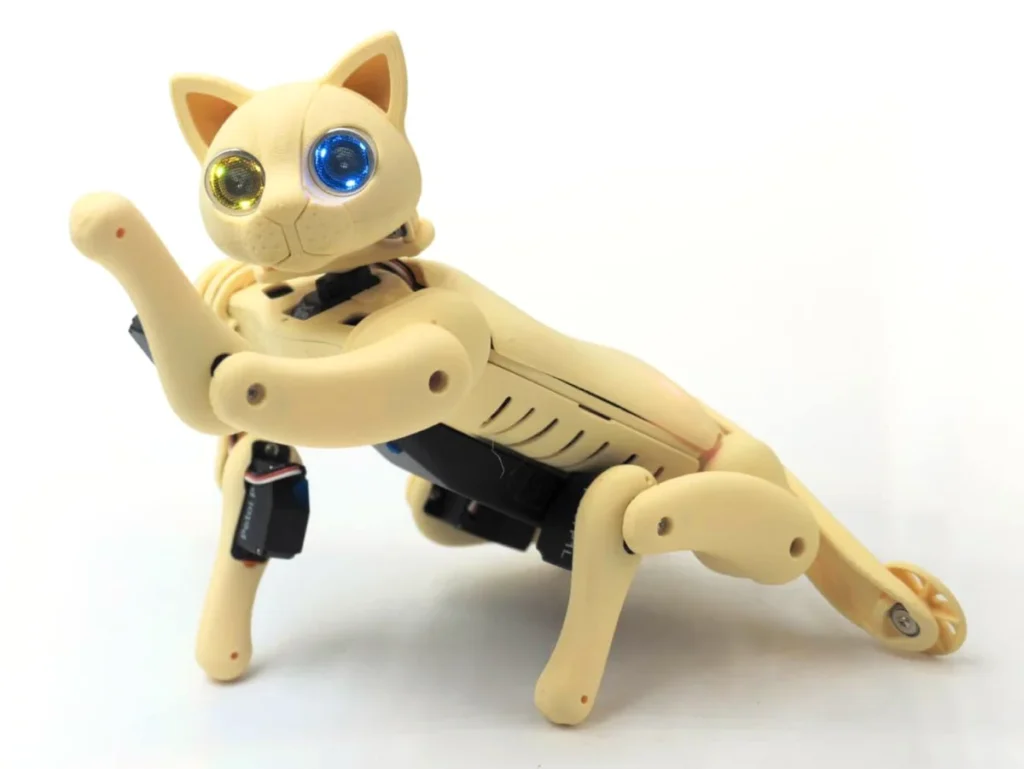
Petoi has introduced its latest iterations of programmable robot pets, the Nybble Q and Bittle X V2, marking a significant advancement in accessible robotics for education and hobbyist pursuits. These quadruped robots, reviewed at $435 for the Nybble Q and $469 for the Bittle X V2 + Arm, represent a sophisticated blend of entertainment and educational utility, designed to engage users with complex robotics principles through intuitive interaction and extensive programmability. Positioned as more than mere toys, these units serve as intermediate projects, offering a meticulously developed hardware platform that allows users to bypass foundational engineering hurdles and dive directly into the more engaging aspects of coding and robotic behavior design.
The advent of accessible programmable robotics like Petoi’s offerings comes at a crucial time when Science, Technology, Engineering, and Mathematics (STEM) education is gaining unprecedented global emphasis. Governments and educational institutions worldwide are investing heavily in initiatives to equip future generations with computational thinking and problem-solving skills, recognizing these as fundamental for innovation in an increasingly technology-driven world. The "maker movement," characterized by its hands-on approach to creation and emphasis on open-source collaboration, has further fueled the demand for platforms that bridge the gap between abstract concepts and tangible applications. Petoi’s robots seamlessly integrate into this ecosystem, providing a physical manifestation for code and an interactive medium for exploring AI, locomotion, and sensor integration.
Nybble Q: Precision and Elegance in a Feline Form
The Petoi Nybble Q, a palm-sized robot cat, stands out as a flagship product, designed to impress with its advanced capabilities and sleek aesthetics. This model represents a substantial upgrade from its wooden predecessor, now boasting a refined 3D-printed body that not only enhances its visual appeal but also contributes to its structural integrity. At its core, the Nybble Q is powered by an upgraded BiBoard V1.0 and features superior servos, contributing to its fluid and lifelike movements. Its immediate appeal lies in its built-in responsiveness to a range of voice commands, allowing for engaging interactions straight out of the box. Users report high accuracy in voice recognition, with only minor, often amusing, misinterpretations. This hands-free control method significantly enhances the user experience, often making the micro:bit-powered remote a secondary option.

Beyond its immediate entertainment value, the Nybble Q offers profound educational depth. It is fully programmable via mobile and desktop applications, supporting multiple coding paradigms including Arduino IDE, Python, and the visual block-based language Mind+. This multi-faceted approach ensures accessibility for learners of varying skill levels, from beginners grasping fundamental logic through block coding to experienced developers delving into complex algorithms with Python. Petoi further supports this learning journey with accompanying lessons and an active online community, providing invaluable resources for troubleshooting and project inspiration. The robot’s onboard Inertial Measurement Unit (IMU) allows it to detect its orientation and autonomously attempt to right itself after a fall, a feature that works remarkably well even on smooth surfaces, showcasing advanced robotic control.
Distinguishing features of the Nybble Q include an extra servo dedicated to tail wagging, adding to its lifelike demeanor. It also incorporates distance sensors and color-changing eyes that visually communicate its operational status or "mood," adding an expressive layer to its interactions. For users seeking to push the boundaries of its capabilities, the Nybble Q is designed for expandability, allowing for the integration of a Raspberry Pi. This augmentation enables a shared cognitive load between the Raspberry Pi and the BiBoard V1.0, opening doors to more complex AI applications, enhanced processing power for advanced behaviors, and seamless integration with broader IoT ecosystems. While the reviewed units arrived preassembled, minor adjustments, such as repositioning a servo plug for the tail, were straightforward and tool-free, highlighting the thoughtful design that balances pre-configuration with user-level maintenance and modification.
Bittle X V2: Robustness and Versatility in a Canine Companion
The Bittle X V2 robot dog offers a robust and versatile alternative to the Nybble Q, designed for users who prioritize durability and extensive modularity. This iteration improves upon the basic Bittle model with an upgraded ESP32-based board and integrated voice control, mirroring some of the advanced interaction capabilities found in the Nybble Q. While it does not feature the Nybble’s ultrasonic eyes, the Bittle X V2 compensates with an array of expansion options in its mouth, allowing for the addition of light, motion, and gesture sensors. This modularity makes it an excellent platform for experimenting with various forms of environmental interaction and data collection. The most advanced configuration includes an AI camera module, which significantly broadens its potential applications in areas such as object recognition, tracking, and autonomous navigation, bringing it closer to the capabilities of sophisticated research robots.
A particularly compelling option for the Bittle X V2 is the variant equipped with a robot arm in place of its head. This configuration unlocks macros that allow the robot to perform tasks such as picking up and tossing small objects. The reviewer noted the surprising strength of this arm, which adds a practical dimension to the robot’s functionality, making it suitable for demonstrations of robotic manipulation. However, the reviewer also expressed a preference for the agility and expandability of the Bittle with a traditional head, suggesting that the choice between the arm and head configuration depends heavily on the user’s intended projects and priorities. The Bittle X V2 kit is also available without the arm, providing a solid foundation for users who prefer to customize its functionalities with other sensors or their own head designs. The ruggedness of the Bittle X V2’s design makes it a suitable choice for environments where durability is a primary concern, or for users who anticipate more rigorous experimental use.

Technical Underpinnings and Open-Source Philosophy
At the heart of both the Nybble Q and Bittle X V2 lies a commitment to open-source hardware and software, a philosophy that empowers users to understand, modify, and expand upon the robots’ core functionalities. The Nybble Q’s BiBoard V1.0 and the Bittle X V2’s ESP32-based board are sophisticated microcontrollers that provide the computational backbone for their complex movements and interactive features. The BiBoard V1.0, specifically designed by Petoi, integrates various components necessary for quadrupedal locomotion and sensor data processing, while the ESP32 is a popular choice in the maker community due to its integrated Wi-Fi and Bluetooth capabilities, making it ideal for IoT projects and wireless communication.
The comprehensive programmability via Arduino, Python, and Mind+ block coding environments is a cornerstone of Petoi’s educational approach. Arduino provides a widely adopted platform for hardware interaction, allowing direct control over servos and sensors. Python, with its extensive libraries for robotics and AI, enables more advanced algorithms and machine learning applications. Mind+ offers a graphical programming interface, lowering the entry barrier for younger learners or those new to coding, allowing them to drag and drop blocks to create sequences and logic. This tiered approach to programming ensures that both novice and experienced users can find a suitable entry point and grow their skills.
Crucially, Petoi fosters an active online community, which serves as a vital support system for users. This community-driven approach means that hardware documentation queries, programming challenges, and creative project ideas are often addressed by fellow enthusiasts and Petoi developers alike. This collaborative environment is invaluable, especially for projects that involve a degree of disassembly or modification, such as adding Grove sensors or integrating a Raspberry Pi. The modular design principle, allowing for easy access to components and tool-free adjustments, further supports this hackable nature, making these robots ideal platforms for iterative learning and experimentation rather than sealed consumer products.
Chronology of Innovation: Petoi’s Journey

Petoi’s journey in the educational robotics space has been marked by a clear trajectory of iterative improvement and community engagement. The company initially gained recognition with its original Nybble and Bittle models, which were often presented as open-source, DIY robot kits. These early versions laid the groundwork for the current advanced offerings, establishing Petoi’s reputation for creating engaging and programmable quadruped robots. The original Nybble, with its wooden body, introduced the concept of a programmable robot cat, emphasizing graceful movements and modularity. Similarly, the first Bittle dog robot provided a robust, dog-like form factor for robotic experimentation.
The evolution to Nybble Q and Bittle X V2 represents significant leaps in both hardware sophistication and user experience. Key improvements include the transition from wooden bodies to more durable and aesthetically pleasing 3D-printed or injection-molded designs, as seen in the Nybble Q’s slick body. The integration of advanced microcontrollers like the BiBoard V1.0 and ESP32 boards has brought enhanced processing power, memory, and connectivity options, facilitating features like built-in voice control and more complex sensor integration. Servo technology has also seen an upgrade, leading to smoother, more precise movements and greater durability. The development of a comprehensive curriculum and the cultivation of a vibrant online community further underscore Petoi’s commitment to making advanced robotics accessible and educational. These latest versions, therefore, are not merely product updates but culminations of years of development, feedback, and a steadfast dedication to the open-source ethos.
Implications for STEM Education and Hobbyist Engagement
The introduction of the Petoi Nybble Q and Bittle X V2 carries significant implications for both formal STEM education and the burgeoning community of robotics hobbyists. For educators, these robots offer an unparalleled hands-on learning tool. The ability to program robot behaviors using various coding languages—from visual blocks to Python—allows for a progressive learning curve that caters to diverse student aptitudes. Teachers can leverage these robots to teach fundamental concepts in computer science, such as algorithms, conditional logic, and debugging, while simultaneously introducing principles of mechanical engineering, sensor technology, and artificial intelligence. The real-world application of code to control a physical entity makes abstract concepts tangible and engaging, fostering critical thinking and problem-solving skills in an interactive environment. The reviewer’s anecdote about a teacher friend acquiring a Nybble Q for their classroom speaks directly to this educational utility.
For hobbyists and makers, the Petoi robots are an ideal platform for personal projects and experimentation. The open-source nature of both hardware and software means that enthusiasts are not limited by manufacturer-defined functionalities but can explore endless customization. The modular design, allowing for the addition of various sensors, external computing power like a Raspberry Pi, or even custom 3D-printed parts, provides a canvas for creativity. The active online community serves as a collaborative hub where makers can share designs, troubleshoot issues, and learn from each other’s projects, further accelerating innovation. The balance between being a largely pre-assembled, functional robot and a fully hackable, expandable system makes Petoi robots an attractive entry point for those interested in complex robotics without the daunting task of building every component from scratch. They bridge the gap between simple kits and professional-grade robotic platforms, democratizing access to advanced robotic capabilities.

Manufacturer’s Vision and Community Engagement
While direct statements from Petoi were not provided in the original review, the product design and company philosophy strongly suggest a clear vision focused on empowering a new generation of roboticists and makers. Petoi’s consistent emphasis on open-source platforms, comprehensive educational resources, and an active online community indicates a commitment to fostering accessible learning and collaborative innovation. It can be inferred that Petoi aims to democratize advanced robotics, transforming what was once the domain of specialized researchers into an engaging and approachable field for students, educators, and hobbyists alike.
Their strategy of providing well-engineered, pre-assembled core units that are simultaneously deeply customizable and expandable speaks to a desire to lower the barrier to entry for complex robotics. By handling the intricate initial development, Petoi allows users to "skip to the fun part," as the review states, focusing on creative programming and experimentation rather than basic component assembly. The provision of detailed curricula and the cultivation of an engaged user community are crucial elements of this vision, ensuring that users have the necessary support and resources to maximize their learning and creative potential with these robots. Petoi’s ongoing product development, as evidenced by the Nybble Q and Bittle X V2, reflects a continuous effort to integrate user feedback and technological advancements, reinforcing their position as a key player in the educational robotics landscape.
In conclusion, both the Petoi Nybble Q and Bittle X V2 stand as exemplary products in the realm of educational and hobbyist robotics. The Nybble Q, with its sleek 3D-printed design, advanced voice control, and sophisticated sensor array, offers an elegant yet powerful platform for learning and demonstration. The Bittle X V2, characterized by its robust build, modular expandability, and optional robot arm, provides a versatile and durable option for more hands-on experimentation. While neither is presented as a foolproof consumer product, their design thoughtfully balances pre-assembly with ample opportunities for deep customization and learning. They represent excellent starting points for anyone interested in delving into the intricate world of robotics, offering a compelling blend of immediate fun and long-term educational potential. These Petoi quadrupeds are not just robots; they are gateways to understanding the future of technology, making the complex accessible, and inspiring the next generation of innovators.