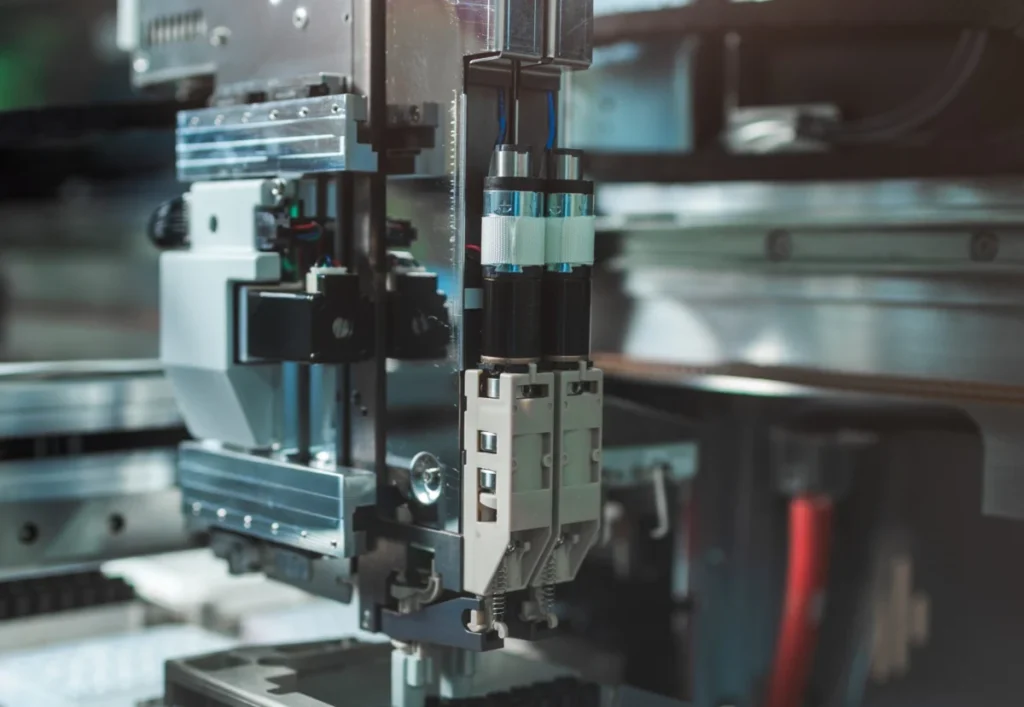
In this comprehensive primer, we delve into the fundamental principles and essential elements that underpin the design of automated motion systems, whether they form the intricate mechanics of advanced robotics or the dedicated machinery performing specific industrial routines. As industries worldwide continue their relentless push towards greater automation, efficiency, and precision, a thorough understanding of these foundational concepts becomes paramount for engineers, designers, and stakeholders alike.
Unpacking the Core Elements of Automated Motion Systems
At its heart, every automated motion system is an electric-motor-driven design meticulously constructed around two primary categories of components: the mechanical infrastructure that translates power into physical movement, and the sophisticated electronic and software controls that govern that movement with precision. These systems are the unseen workhorses powering a vast array of modern applications, from the minute precision required in medical devices to the robust demands of heavy industrial machinery.
The motion control industry often differentiates between two distinct yet related design philosophies. The term "power-transmission designs" typically refers to machine builds where the emphasis lies predominantly on raw torque or force and speed. In these systems, mechanical components like gears, belts, and chains dominate the architecture, designed to deliver sheer power to accomplish tasks such as lifting heavy loads or driving high-speed conveyors where exact positioning might be secondary to brute force and rapid transfer.

Conversely, the designation "motion systems" specifically indicates machine builds that prioritize precise positioning and highly controlled motion profiles. These profiles meticulously define critical parameters such as speeds, accelerations, jerk (the rate of change of acceleration), intricate speed-torque relationships, and sophisticated homing routines for a machine’s various axes. Such systems are engineered for applications demanding repeatable accuracy and smooth, predictable movements, crucial for delicate assembly, precise machining, or intricate inspection tasks. The global market for motion control systems, encompassing components like motors, drives, and controllers, is projected to reach significant valuations, reflecting the pervasive integration of these technologies across diverse sectors. For instance, market research from various industry reports indicates that the global industrial motion control market, valued at over $15 billion in 2023, is expected to grow at a compound annual growth rate (CAGR) of 5-7% through the end of the decade, driven by advancements in robotics, factory automation, and smart manufacturing initiatives.
These design types are the bedrock of countless innovations touching our daily lives. They are integral to the functionality of consumer products, the seamless operation of office automation equipment, the life-saving capabilities of medical devices, and the advanced diagnostics within laboratory automation equipment. In the industrial sphere, they are indispensable for discrete factory automation, a critical segment distinct from process or analog automation.
The Crucial Divide: Discrete vs. Process Automation
Understanding the nuanced difference between discrete and process automation is fundamental to appreciating the specific role of motion systems.

Discrete automation is characterized by the handling, manipulation, and processing of individual, separate workpieces or products. It involves a sequence of distinct operations performed on discrete items, which can be easily counted, separated, and re-assembled. Examples include the working, machining, assembling, testing, capping, wrapping, packaging, labeling, counting, scanning, and transporting of individual products. Each workpiece might undergo multiple, distinct operations before it is completed and ready for the next stage or final distribution. Key industries reliant on discrete automation include:
- Automotive Manufacturing: Assembly lines where individual car parts are joined, painted, and inspected with robotic arms and conveyor systems.
- Electronics Production: Fabrication and assembly of circuit boards, smartphones, and other electronic devices, requiring micron-level precision for component placement.
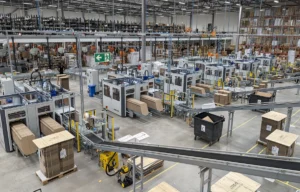
- Automated Warehousing and Logistics: Sorting, picking, and transporting individual packages or items within a distribution center using advanced robotic and conveyor systems.
- Packaging: Filling, sealing, and labeling individual consumer goods at high speeds on automated lines.
According to industry analysis, discrete manufacturing accounts for a substantial portion of global industrial output, with its automation market experiencing consistent growth due to demands for higher throughput, reduced labor costs, and improved product quality. Reports from organizations like the International Federation of Robotics (IFR) consistently highlight the increasing deployment of robots in discrete manufacturing sectors, with annual installations reaching record numbers globally.
In stark contrast, process automation deals with continuous flows, batches, or bulk materials that are generally difficult to stop and start once a process has begun. This type of automation involves managing vats of liquids, uninterrupted systems of fluids, gases, or other bulk materials subject to continuous chemical reactions, precise temperature controls, accurate metering, and flowing operations. Interrupting these processes can often lead to significant material loss, quality degradation, or even safety hazards. Industries where process automation dominates include:

- Mining: Extraction and processing of raw materials, often involving continuous flow systems for slurries and bulk solids.
- Energy Sector: Power generation (coal, nuclear, renewables), oil and gas extraction and refining, where continuous process control ensures stable operation.
- Food Processing: Large-scale production of beverages, dairy, and other food products where ingredients are mixed, heated, or cooled in continuous streams.
- Pharmaceutical and Chemical Manufacturing: Production of compounds and medications through intricate chemical reactions and purification steps, often in large batches or continuous flow reactors.
- Glass and Ceramic Production, Plastics, Textiles, and Wood and Paper Industries: Manufacturing processes that often involve continuous material flows and precise environmental controls.
Motion system designs are almost exclusively associated with discrete automation. Their core purpose is to deliver the precise placement, manipulation, and transport of individual workpieces or distinct products, ensuring high accuracy and repeatability essential for modern manufacturing.
Navigating the Motion System Design Process: Key Parameters
The journey of designing an automated motion system is a rigorous, iterative process that begins with a meticulous quantification of physical dynamics and culminates in sophisticated control strategies.
Quantifying Loads and Inertia
Automated motion designs fundamentally commence with the thorough documentation of the loads that need to be moved and the inertias involved. This crucial initial step also requires an assessment of the friction the motorized axis will need to overcome without introducing undesirable sluggishness or inefficiency into the system.

Recall that inertia is an object’s inherent resistance to changes in its state of motion – specifically, its resistance to accelerations or decelerations. In a motion system, total inertia encompasses not only that of the workpiece or payload but also the inertia of all the moving parts within the axis itself. This value can vary dramatically depending on the system’s configuration:
- Low Inertia Systems: In the case of direct-drive motors (like torque motors) or linear motors, there are no intermediate mechanical components (such as gearboxes), resulting in very low reflected inertia back to the motor. This configuration often allows for extremely dynamic and responsive movements, ideal for high-speed, high-accuracy applications.
- Higher Inertia Systems: When an axis’s electric motor is coupled with a gearset for speed reduction, the reflected inertia can be significantly higher. Gearboxes, while offering torque multiplication, also add their own inertia and modify the load inertia as seen by the motor. In some instances, designers strategically use gear ratios to achieve "inertia matching," optimizing the motor’s performance and simplifying servotuning. Industry best practices often recommend an inertia ratio (load inertia to motor inertia) of 5:1 or less for