The quest for more sustainable, cost-effective, and high-performance energy storage solutions has taken a significant leap forward with groundbreaking research from the Massachusetts Institute of Technology (MIT). A team of scientists, led by Ju Li, the Carl Richard Soderberg Professor of Power Engineering at MIT, has developed a novel approach to electrolyte design that could unlock the full potential of sodium-metal batteries, a promising alternative to the dominant lithium-ion technology. This advancement, detailed in a recent publication in the journal Joule, addresses critical challenges in sodium-metal battery stability and charging speed, paving the way for broader adoption in electric vehicles and grid-scale energy storage.
The Growing Demand for Advanced Energy Storage
The modern world’s insatiable appetite for energy, driven by the rapid expansion of renewable energy sources, electrified transportation, and increasingly sophisticated digital technologies, has placed immense pressure on existing energy storage systems. Lithium-ion batteries, while currently the industry standard, rely on critical minerals such as lithium, cobalt, nickel, and graphite. These materials are not only subject to volatile global supply chains, posing risks to economic and national security, but their extraction also carries significant environmental footprints. The escalating demand necessitates the development of energy storage solutions that are not only environmentally benign but also economically viable, readily available, and capable of meeting the performance requirements of rapidly evolving applications.
This imperative has spurred intense research into alternative battery chemistries. Among these, sodium-metal batteries have emerged as a compelling contender. Sodium, the key element in these batteries, boasts several inherent advantages over lithium. It is approximately 1,000 times more abundant on Earth and significantly less expensive, costing roughly one-hundredth of lithium on a per-pound basis. These attributes position sodium as an attractive candidate for large-scale energy storage applications where cost and resource availability are paramount.
However, the widespread adoption of sodium-metal batteries has been hampered by a critical technical hurdle: the inherent reactivity of sodium metal. This high reactivity makes it challenging to achieve both long-term operational stability and rapid charging and discharging capabilities, often referred to as cycling performance. Unwanted chemical reactions between the highly reactive sodium metal anode and the electrolyte can lead to the formation of insulating layers, impeding ion flow and ultimately causing battery degradation and failure.
A Breakthrough in Electrolyte Design
The MIT research team, a multidisciplinary group comprising 15 members from departments including Nuclear Science and Engineering (NSE) and Materials Science and Engineering, has focused on addressing this very challenge by meticulously engineering the electrolyte. The electrolyte, a crucial component of any battery, acts as the medium through which charged ions travel between the anode and the cathode, facilitating the flow of electricity.
"The electrolyte is supposed to just transmit those ions," explained Professor Ju Li. "It’s supposed to be an ion conductor." Yet, a persistent issue has been the tendency of many electrolytes to engage in detrimental chemical side reactions with the electrodes, significantly compromising battery lifespan and performance.
Weiyin Chen, a postdoctoral researcher in NSE and one of the paper’s lead authors, elaborated on the consequences of these "side reactions." "Insoluble compounds produced during the reactions can build up on the electrodes, creating a barrier that blocks ion transport and can eventually cause the battery to fail," Chen stated. Until recently, achieving an electrolyte that remained stable against these unwanted reactions at both the sodium anode and the cathode, a prerequisite for long-term rechargeable battery operation, had remained elusive.
A pivotal moment in this research trajectory occurred in 2021 when the Li group and their collaborators identified a "sulfonamide" molecule, a compound containing sulfur, oxygen, and nitrogen atoms. When used as a solvent within the electrolyte, this molecule, known as DMTMSA, demonstrated remarkable stability at both electrodes in lithium-ion batteries. "It is magically stable at both electrodes in lithium batteries," Li remarked, highlighting the significance of this discovery.
Building upon this success, the MIT team set out to explore whether similar molecules could be optimized for sodium-metal batteries, with the dual goals of maintaining electrolyte stability and enabling faster charging and discharging. The practical implications of slow charging are substantial; a battery that takes too long to recharge could render electric vehicles impractical for daily use, while slow discharge rates would limit their power output when needed most.
The "Small Solvent" Analogy: Optimizing Ion Transport
To explain their approach to enhancing charging and discharging speeds, Chen offered an insightful analogy: "Suppose you need to cross a street jam-packed with pedestrians, much like ions traveling from one electrode to another. You can move more quickly through the crowd with a small backpack that is snug against your body, rather than dragging a bulky suitcase on wheels."
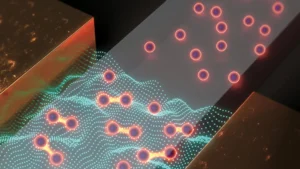
In the context of batteries, this translates to how sodium ions navigate through the electrolyte. When sodium ions are solvated by smaller molecules, they can move more rapidly than when they are surrounded by larger, bulkier solvent molecules. This increased ion mobility directly translates to faster charging and discharging rates. The team’s objective, therefore, was to identify solvent molecules that were sufficiently small to promote efficient ion transport while simultaneously maintaining the crucial electrolyte stability.
A significant complicating factor, however, is the inherent trade-off between ion transport speed and electrolyte stability. Highly conductive electrolytes often exhibit increased reactivity with electrode materials, thereby shortening battery life. The MIT researchers, however, discovered a novel pathway to circumvent this dilemma. "Reducing the size of solvents provides a new pathway to overcome this trade-off," Li explained. By shrinking the solvent molecules, they could enhance ion mobility without necessarily compromising stability.
AI-Driven Discovery and Experimental Validation
The challenge then shifted to identifying specific small solvent molecules that possessed not only the desired size but also other essential properties for optimal battery performance. The team adopted a strategy of searching for molecules that were "congeneric," meaning they belonged to a similar chemical family and shared molecular similarities with the already successful DMTMSA. The aim was to find candidates that were smaller than DMTMSA but could retain its proven stability characteristics.
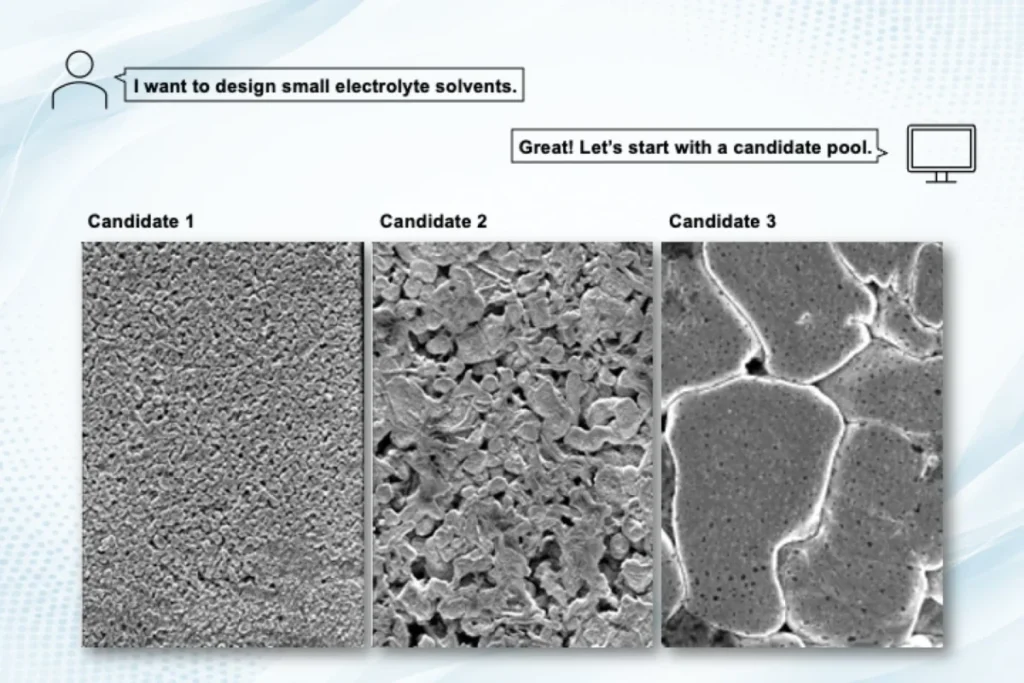
This exhaustive search was significantly accelerated by the integration of artificial intelligence. Chia-Wei Hsu, an MIT PhD student in materials science and engineering, developed an AI-guided algorithm capable of designing and evaluating an immense number of potential molecular structures. Within a mere 24 hours, the algorithm generated approximately 100,000 candidate molecules on Hsu’s computer.
Hsu then applied a rigorous set of technical criteria to narrow down this vast pool. These criteria included assessing the molecular shape for similarity to DMTMSA and evaluating their electronic properties. From this refined list, 200 promising candidates were selected. To ensure a comprehensive evaluation, 27 representative molecules, spanning the full spectrum of possibilities, were chosen for experimental testing.
The experimental validation was conducted under meticulously controlled conditions to ensure a fair comparison. "We tested them all under the same conditions to make it a fair, head-to-head competition," Chen stated. The results revealed a clear standout: a solvent named DMFSA. This molecule proved to be both the smallest among the tested candidates and exhibited the most superior performance, demonstrating an exceptional balance of stability and conductivity.
Expert Endorsements and Future Directions
The significance of this research has been recognized by experts in the field. Jinhyuk Lee, an associate professor of materials engineering at McGill University who was not involved in the study, commented, "This work addresses one of the most persistent challenges in battery research: improving battery performance at high charging and discharging rates without sacrificing long-term stability. By carefully tailoring the size of solvent molecules, the authors demonstrate a new design strategy that could enable lower-cost, higher performance batteries."
The MIT team is not resting on their laurels. They are already embarking on a new search for even more advanced electrolyte solvents. This next phase of research will build upon their established methodology, using DMFSA as the new starting point for identifying even more optimized molecules. Chen expressed optimism about the potential impact of these ongoing discoveries, believing that the newly developed solvents could ultimately lead to rechargeable sodium-metal batteries that seamlessly integrate low-cost, abundant materials with rapid charging and high-power capabilities. This would significantly expand the range of applications for sodium-based energy storage.
A Broader Paradigm for Electrolyte Design
Beyond the specific advancement in sodium-metal batteries, the researchers emphasize that their work represents a broader paradigm shift in electrolyte design. The core principle they have demonstrated is the strategic use of solvent size and molecular similarity as key guiding factors in the development of stable and high-performing electrolytes. The sodium-metal battery system serves as a powerful model for validating this more general design principle.
"Because the concept is broadly applicable, its impact could extend well beyond sodium batteries and influence the design of a wide range of future energy storage technologies," commented Lee, underscoring the far-reaching implications of this research. This innovative approach to electrolyte engineering holds the promise of accelerating the development of a new generation of advanced batteries capable of meeting the world’s escalating energy demands in a sustainable and economically viable manner.
The research was made possible through partial support from a National Research Foundation of Korea grant funded by the Korean government and a U.S. National Science Foundation graduate research fellowship. The advanced characterization equipment utilized in this project was, in part, provided by the MIT.nano Characterization Facilities.