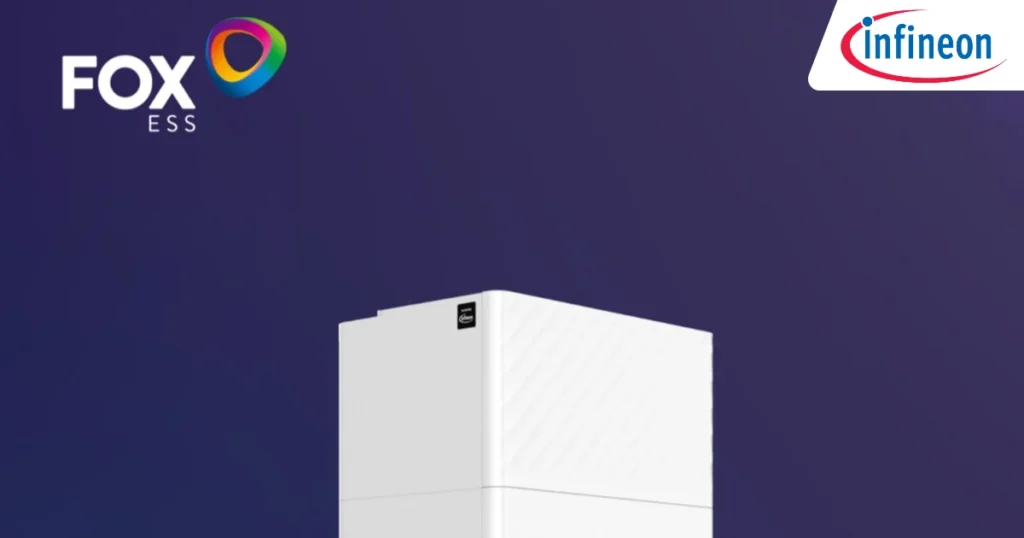
Infineon Technologies AG, a global leader in semiconductor solutions, is significantly bolstering the residential energy storage market through its strategic collaboration with Fox ESS, a prominent provider of energy storage systems. Infineon is supplying its cutting-edge silicon carbide (SiC) power semiconductors to Fox ESS, specifically for integration into their advanced residential energy storage solutions. This partnership is designed to dramatically reduce switching losses and substantially improve overall system efficiency, setting new benchmarks for home energy management.
The core of this technological advancement lies in Infineon’s CoolSiC MOSFETs 1200 V G2, which are being deployed in the Q-DPAK package within Fox ESS’s flagship PQ3-Ultra energy storage system. This integration has yielded remarkable results, with the companies reporting a 70% reduction in switching losses. Such a significant improvement translates directly into enhanced performance for end-users, with the resulting system achieving a peak photovoltaic (PV) inverter efficiency of up to 98.78% in grid-tied operation. Furthermore, the battery charge and discharge efficiency also reaches an impressive peak of up to 98.47%, underscoring the profound impact of SiC technology on power conversion.
CoolSiC MOSFETs: A Deep Dive into Enhanced Power Conversion Efficiency
Infineon’s CoolSiC MOSFETs 1200 V G2 represent a pinnacle of power semiconductor innovation. The devices feature a unique top-side-cooled Q-DPAK package, meticulously engineered to optimize thermal performance, elevate system efficiency, and boost power density in the most demanding power applications. Unlike conventional bottom-side-cooled designs, the Q-DPAK package offers several distinct advantages. Its design simplifies printed circuit board (PCB) layout, mitigating parasitic effects and stray inductance, which are critical factors in high-frequency power electronics. The compact footprint of the Q-DPAK package also facilitates smaller system designs, a crucial benefit in space-constrained residential installations. Moreover, its compatibility with automated assembly processes streamlines high-volume manufacturing, ensuring scalability and cost-effectiveness.
Beyond the packaging, the internal architecture of these CoolSiC MOSFETs incorporates Infineon’s proprietary .XT interconnection technology. This innovation is specifically designed to reduce thermal resistance, thereby lowering the operating junction temperature of the device. A cooler operating temperature extends the lifespan of the semiconductor and enhances its reliability, crucial for long-term energy storage solutions. Complementing this, a sophisticated trench gate architecture is employed to further minimize switching losses, a fundamental challenge in power conversion. By combining these advanced features, Infineon’s CoolSiC MOSFETs deliver superior performance that directly translates into tangible benefits for energy storage systems.
Amit Raut, Application Manager for Photovoltaic and Residential ESS at Infineon, emphasized the transformative potential of this technology. "With our SiC MOSFETs in the Q-DPAK package, we are enabling a new level of efficiency, thermal performance, and design flexibility for residential energy storage systems," Raut stated. "Fox ESS is demonstrating how advanced SiC technology can translate into measurable system-level gains and support the broader adoption of clean energy solutions in homes worldwide." His statement underscores Infineon’s commitment to fostering the global energy transition through innovative semiconductor solutions.
Fox ESS Achieves Unprecedented System Performance Index
The tangible benefits of this collaboration are clearly illustrated by the performance of Fox ESS’s hybrid energy storage solutions. The company has successfully integrated Infineon’s SiC technology within its PQ-H3-Ultra-10.0 inverter, paired with the EQ3300-5 battery. This combined system recently underwent rigorous testing conducted by the esteemed HTW Berlin University of Applied Sciences and AQUU Research. The results were groundbreaking: the system achieved an extraordinary System Performance Index (SPI) of 97.0%.
The System Performance Index (SPI) is a critical metric used to evaluate the overall efficiency and effectiveness of energy storage systems, considering various operational parameters including conversion losses, standby consumption, and control efficiency. According to Fox ESS, this achievement positioned their system at the forefront, ranking first in the highly competitive 10kW class among hybrid inverter and storage systems evaluated in the 2026 testing cycle. This 97.0% SPI score represents the highest recorded performance since the evaluation program commenced in 2018, signifying a major leap forward in residential energy storage technology.
Daniel Deng, R&D Director at Fox ESS, highlighted the strategic importance of the partnership. "The collaboration with Infineon is a major pillar of our strategy to deliver high-performance energy storage solutions," Deng remarked. "Infineon’s CoolSiC technology offers superior efficiency and outstanding reliability, values that perfectly match our philosophy. By working together, we will further advance the performance of residential energy storage systems and accelerate the adoption of renewable energy." This statement reflects Fox ESS’s dedication to innovation and their vision for a sustainable energy future powered by efficient home storage solutions.
Broader Context: The Surging Demand for Residential Energy Storage

The collaboration between Infineon and Fox ESS occurs against a backdrop of rapidly accelerating demand for residential energy storage systems globally. Several factors are driving this surge. Escalating electricity prices, growing concerns about grid stability, and a desire for greater energy independence are compelling homeowners to invest in solutions that allow them to store excess solar energy for later use or to provide backup power during outages. Government incentives and supportive policies for renewable energy adoption are further fueling this market expansion.
According to market research firms, the global residential energy storage market is projected to grow at a compound annual growth rate (CAGR) exceeding 25% over the next decade, potentially reaching tens of billions of dollars by the end of the decade. Key regions driving this growth include Europe, North America, and parts of Asia-Pacific, where solar panel installations are widespread and energy costs are significant. In this dynamic environment, the efficiency and reliability of energy storage systems are paramount, directly impacting the return on investment for homeowners and the overall viability of renewable energy integration.
Fox ESS has demonstrated significant prowess in this expanding market, having installed over 890,000 PV inverters and more than one million batteries across over 70 countries within the past three years alone. This extensive global footprint positions Fox ESS as a critical player in the democratization of renewable energy, making high-performance solutions accessible to a wide consumer base. Their commitment to integrating cutting-edge technologies like Infineon’s SiC MOSFETs ensures they remain at the forefront of this competitive landscape.
The Strategic Imperative of Silicon Carbide in the Energy Transition
Silicon carbide (SiC) is rapidly emerging as a foundational technology for the global energy transition. Compared to traditional silicon (Si) power semiconductors, SiC offers several inherent advantages that make it ideal for high-power, high-frequency applications such as electric vehicles (EVs), industrial power supplies, and, crucially, renewable energy systems like solar inverters and battery storage.
- Higher Breakdown Voltage: SiC devices can withstand significantly higher voltages, allowing for more compact and robust designs.
- Faster Switching Speeds: The intrinsic material properties of SiC enable much faster switching operations, directly reducing energy losses during power conversion. This is the primary driver behind the 70% reduction in switching losses reported by Infineon and Fox ESS.
- Lower On-Resistance: SiC MOSFETs exhibit lower resistance when turned on, which minimizes conduction losses and improves overall efficiency.
- Superior Thermal Performance: SiC can operate at higher temperatures with less degradation, simplifying cooling requirements and contributing to smaller system footprints. This benefit is further enhanced by Infineon’s top-side-cooled Q-DPAK package.
- Increased Power Density: The combination of these attributes allows for the design of more compact, lighter, and more powerful energy conversion systems. For residential energy storage, this means smaller inverters and battery management systems, which are easier to install and integrate into homes.
For the residential energy storage sector, the adoption of SiC technology translates into tangible benefits for consumers:
- Reduced Energy Bills: Higher efficiency means less energy is lost during conversion, maximizing the utility of stored solar power.
- Faster Return on Investment: Improved efficiency and potentially longer system lifespan contribute to a quicker payback period for the initial investment in an ESS.
- Enhanced Reliability: Lower operating temperatures and robust design contribute to the longevity and reliability of the entire system.
- Smaller Footprint: More compact components allow for less obtrusive installations within residential settings.
Infineon’s substantial investments in SiC manufacturing capacity, including its state-of-the-art facility in Villach, Austria, and its upcoming 300-millimeter SiC fab in Kulim, Malaysia, underscore its strategic commitment to scaling SiC production to meet the burgeoning global demand. These investments are critical for ensuring a stable supply chain for partners like Fox ESS and for accelerating the widespread adoption of SiC technology across various industries.
Implications and Future Outlook
This collaboration between Infineon and Fox ESS sets a new standard for efficiency and performance in residential energy storage. For Infineon, it solidifies its position as a leading innovator in power semiconductors, particularly in the rapidly growing SiC market for green energy applications. For Fox ESS, it reinforces their reputation for delivering high-performance, reliable, and cutting-edge energy storage solutions, positioning them favorably in a highly competitive market.
The achievement of a 97.0% SPI, the highest recorded by HTW Berlin since 2018 in its category, is a strong testament to the power of combining advanced semiconductor technology with sophisticated system design. This benchmark will likely spur other manufacturers to accelerate their own adoption of SiC technology, driving further innovation and competition within the residential ESS sector.
Beyond the immediate commercial benefits, the broader impact of such advancements is significant for the global energy transition. By making residential energy storage more efficient, reliable, and cost-effective, these technologies empower more homeowners to embrace renewable energy, reduce their carbon footprint, and contribute to a more sustainable and resilient energy grid. The continuous refinement of SiC technology and its integration into ever more sophisticated energy solutions will be a key enabler for achieving global climate goals and fostering a decentralized, clean energy future. This partnership serves as a powerful example of how technological synergy can drive significant progress towards a sustainable world.