The rapid expansion of data centers across the United States is putting growing pressure on the nation’s electricity supply. These facilities require enormous amounts of power not only to operate their sophisticated computing equipment but also to maintain optimal cooling temperatures, a critical factor for performance and longevity. Projections from the Electric Power Research Institute (EPRI) paint a stark picture: data centers, which accounted for approximately 4% of total U.S. electricity demand in 2023, are estimated to consume as much as 9% of annual U.S. electricity generation by 2030. This exponential growth trajectory underscores an urgent need for innovative energy solutions to avert significant strain on existing power grids.
Recognizing this impending challenge, researchers worldwide are intensifying efforts to develop sustainable and efficient power generation alternatives. A significant breakthrough in this domain comes from a team led by Gang Wu, the Elvera and William R. Stuckenberg Professor in the McKelvey School of Engineering at Washington University in St. Louis. Wu’s team has developed a novel approach that could dramatically improve low-temperature fuel cells, potentially expanding their viability as a crucial alternative source of electricity for energy-intensive operations like data centers. Their collaborative research, involving scientists from Brookhaven National Laboratory, Lawrence Berkeley National Laboratory, Northeastern University, and the University of Pittsburgh, culminated in findings published on August 6, 2026, in the prestigious journal Nature Nanotechnology.
The Looming Energy Crisis for Data Centers
The digital age, fueled by artificial intelligence, cloud computing, and burgeoning internet usage, has propelled data centers from niche facilities to critical national infrastructure. These vast complexes, often sprawling across acres, house thousands of servers, storage devices, and networking equipment, running 24/7. Their energy footprint is staggering. According to the U.S. Department of Energy, a typical data center can consume as much electricity as a small town, with some hyperscale facilities demanding hundreds of megawatts. This demand is not merely for processing power; cooling systems, essential to prevent overheating and equipment failure, often account for 30-40% of a data center’s total energy consumption.
The current electrical grid, designed for more predictable load patterns, is struggling to keep pace with this unprecedented and rapidly escalating demand. Regions with high concentrations of data centers, such as Northern Virginia, which hosts the largest cluster globally, are already experiencing significant grid congestion and delays in connecting new facilities. Utility companies are grappling with the immense capital investment required to upgrade transmission and distribution infrastructure, build new power plants, and ensure grid stability. The implications extend beyond economics, touching upon national energy security and the broader environmental impact of increasing reliance on fossil fuels for electricity generation. The EPRI forecast serves as a critical warning, highlighting the imperative to explore and deploy decentralized, efficient, and cleaner power generation methods.
Fuel Cells: A Promising Pathway to Decentralized Power
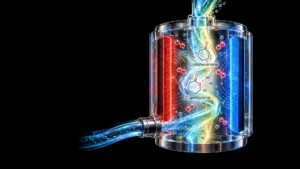
In this context, fuel cells emerge as a highly attractive solution. Fuel cells generate electricity through an electrochemical reaction, combining hydrogen and oxygen to produce power, water, and heat, without combustion. Unlike traditional generators, they don’t burn fuel, making them highly efficient and producing zero harmful emissions at the point of use (when pure hydrogen is used). This clean energy profile, coupled with their ability to provide continuous power, positions them as an ideal candidate for stationary power applications like data centers, which require uninterrupted, reliable electricity.
"If a data center is able to supply its electricity itself by using a fuel cell, it would directly convert hydrogen and other fuels into the electricity, reducing the burden on the energy grid," Wu explained, underscoring the potential for increased energy independence and resilience for these critical facilities. The concept of on-site, distributed power generation via fuel cells offers a dual benefit: it alleviates pressure on the centralized grid and provides a cleaner energy source, aligning with global decarbonization goals. However, the widespread adoption of fuel cell technology has historically been hampered by challenges related to cost, efficiency, and durability, particularly concerning the catalysts used in the electrochemical reactions.
The Enduring Challenge of Fuel Cell Catalysts: Platinum’s Predicament
At the heart of a fuel cell’s performance lies its catalyst, a material that accelerates the chemical reactions, enabling efficient energy conversion while minimizing losses and ensuring a longer operational lifespan. Platinum has long been recognized as one of the most effective catalyst materials due due to its exceptional activity and stability in electrochemical environments. However, platinum is a precious metal, scarce and expensive, making its widespread use a significant economic barrier for fuel cell commercialization. The high cost of platinum directly impacts the capital expenditure of fuel cell systems, making them less competitive against established power generation technologies.
Consequently, a major focus of fuel cell research has been to reduce the platinum content without compromising catalytic activity or durability. One widely adopted strategy involves transforming bulk platinum into nanoparticles. By breaking the metal into extremely small particles, researchers can dramatically increase the surface area exposed for chemical reactions, thereby maximizing the catalytic efficiency of even minute quantities of platinum. This approach allows for platinum loadings as low as typically less than one-quarter of a milligram per square centimeter.
Despite the advantage of reduced platinum usage, platinum nanoparticles present their own set of challenges. During prolonged fuel cell operation, these nanoparticles are susceptible to degradation mechanisms. They can dissolve into the electrolyte, migrate across the catalyst layer, and coalesce into larger particles, a process known as sintering. These changes reduce the active surface area and alter the catalyst’s structure, leading to a gradual decline in performance and a shortened operational life, thereby undermining the economic viability of the fuel cell. Addressing this delicate balance between activity, durability, and platinum content has remained a longstanding hurdle in fuel cell development.
A New Frontier: Platinum Intermetallic Catalysts and the High-Temperature Dilemma
More recently, platinum intermetallic catalysts have emerged as a promising alternative to conventional platinum alloys. These materials feature a highly ordered atomic arrangement, often forming a specific crystalline structure with another metal (like cobalt in this case). This ordered structure can significantly enhance both the activity and stability of the catalyst compared to disordered alloys. However, producing these ordered intermetallic nanoparticles presents a difficult compromise.
To achieve the desired ordered atomic structure, catalysts typically need to be annealed (heat-treated) at high temperatures. Yet, to keep the nanoparticles small, evenly distributed, and efficient in their use of platinum – crucial for maximizing surface area and preventing aggregation – researchers have generally been limited to annealing materials at temperatures below 700°C. These lower temperatures are often insufficient to fully trigger the transition from a disordered atomic arrangement to the highly ordered intermetallic structure that is essential for optimal performance and durability. The dilemma has been stark: either achieve high ordering at the expense of particle size control and distribution, or maintain small, well-dispersed particles at the cost of incomplete ordering and suboptimal performance.
Wu’s Innovative Carbon Nanostructure: Overcoming the Tradeoff
Professor Wu and his colleagues at Washington University in St. Louis have ingeniously addressed this fundamental limitation by developing a revolutionary carbon structure. This novel material is composed of porous, hollow carbon spheres that encapsulate orderly radial nanochannels, offering substantial pore space and an exceptionally high surface area. This unique architecture is not merely a passive support; it actively facilitates the synthesis and stabilization of highly ordered intermetallic nanoparticles.
The critical innovation lies in the ability of this carbon structure to confine and stabilize a large number of platinum cobalt intermetallic nanoparticles, ensuring they remain densely packed yet evenly distributed. Crucially, this unique confinement mechanism makes it possible to form the desired ordered intermetallic structure at much higher temperatures – exceeding the conventional 700°C limit – without causing the nanoparticles to clump together or lose their critical small size.
"Our strategy is using this new carbon nanostructure to synthesize platinum cobalt intermetallic nanoparticles that can reduce precious metal content and enhance activity and stability," Wu stated. He further elaborated on the breakthrough: "Traditionally, there would be a tradeoff between size and stability, but with the ordered carbon nanochannel host, platinum cobalt nanoparticles can be confined and remain stable at very small particle size even at high temperatures." This breakthrough effectively resolves the difficult tradeoff between achieving a highly ordered atomic structure, which boosts catalytic performance and durability, and maintaining an even distribution of very small catalyst particles, which maximizes the utilization of precious platinum.
Tiny Carbon Channels: Enhancing Durability and Activity
The meticulous design of Wu’s team extends beyond simple confinement. The nanostructured carbon support features tiny channels arranged in a precise radial pattern, with carefully controlled pore sizes and volumes. This intricate architecture plays a pivotal role in optimizing catalyst performance. Larger catalyst particles typically offer improved stability due to their reduced surface energy, but this often comes at the expense of catalytic activity because fewer active sites are exposed. Conversely, approaches that prioritize activity often sacrifice long-term stability. Wu’s team sought to achieve both, and their unique carbon support delivered.
In rigorous testing, the new material demonstrated exceptional durability, retaining 85% of its initial performance after an astonishing 150,000 severe voltage cycles. The researchers estimate that this could correspond to approximately 25,000 hours of continuous operation under demanding conditions, a lifespan significantly longer than many existing catalysts. This remarkable combination of larger pores, meticulously organized pore sizes, and high surface area enabled the catalyst to overcome the usual tradeoff between activity and stability, representing a significant leap forward in catalyst design.
"Because of this special carbon nanostructured support, we could heat the platinum-cobalt catalyst to 1000°C, which is high enough to form a very ordered structure while still keeping the nanoparticles smaller than 5 nanometers and well spread out, even with industry-preferred high content of platinum in catalysts," Wu explained. Heating the catalyst to such a high temperature allowed its atoms to form the highly ordered structure necessary for superior performance and long-term stability. Simultaneously, the innovative carbon support acted as a molecular cage, preventing the platinum cobalt nanoparticles from growing larger or becoming unevenly distributed, thus preserving their high activity.
A Potential Path Toward Better Fuel Cell Power: Broader Implications
The architectural ingenuity of the carbon support offers additional benefits that extend beyond merely stabilizing nanoparticles. Its open channels facilitate the more uniform spreading of materials involved in transporting ions, such as ionomers, through the electrode. Crucially, these channels also provide easier and more efficient pathways for the movement of protons, oxygen, and water – the key reactants and products of the fuel cell reaction – within the catalyst layer. This optimized transport mechanism further enhances the overall efficiency and performance of the fuel cell.
"The open channel structure also helps the ion-containing material, such as an ionomer, spread evenly and makes it easier for protons, oxygen and water to move through the electrode," Wu continued. "As a result, the platinum cobalt nanoparticles built into this support showed best-in-class performance and long-lasting durability. Eventually, through further development and collaboration with industry partners, we’ll be able to solve the remaining catalyst problems and significantly advance fuel cell technologies for powering our future more efficiently and sustainably."
If further development and scale-up prove successful, this groundbreaking technology could revolutionize fuel cell applications across various sectors. For the burgeoning data center industry, fuel cells could offer a transformative solution, enabling them to generate electricity directly from hydrogen or other fuels on-site. This capability would not only drastically reduce the growing demand placed on the strained electric grid but also position data centers as pioneers in adopting clean, reliable, and decentralized power.
Beyond data centers, the implications are vast. Improved fuel cell performance and durability could accelerate their adoption in transportation, powering everything from passenger vehicles to heavy-duty trucks, buses, and even maritime vessels. In the realm of distributed power generation, these enhanced fuel cells could provide resilient and clean electricity for remote communities, industrial facilities, and backup power systems, reducing reliance on fossil fuel generators. The economic impact could be significant, fostering growth in the hydrogen economy and creating new manufacturing opportunities. Environmentally, widespread adoption would contribute substantially to reducing greenhouse gas emissions and improving air quality.
While the scientific breakthrough is clear, the path to commercialization involves further challenges, including scaling up production of the novel carbon support and catalyst materials, optimizing system integration, and bringing down manufacturing costs. Professor Wu has already taken the initial step towards commercialization, filing a patent on the technology through the WashU Office of Technology Management. This foundational research, funded by Washington University in St. Louis and bolstered by collaborations with leading national laboratories and universities, lays a robust groundwork for a future powered by more efficient, durable, and sustainable fuel cell technologies. The potential for a cleaner, more resilient energy landscape, particularly in the face of escalating demands from the digital economy, is now closer than ever.