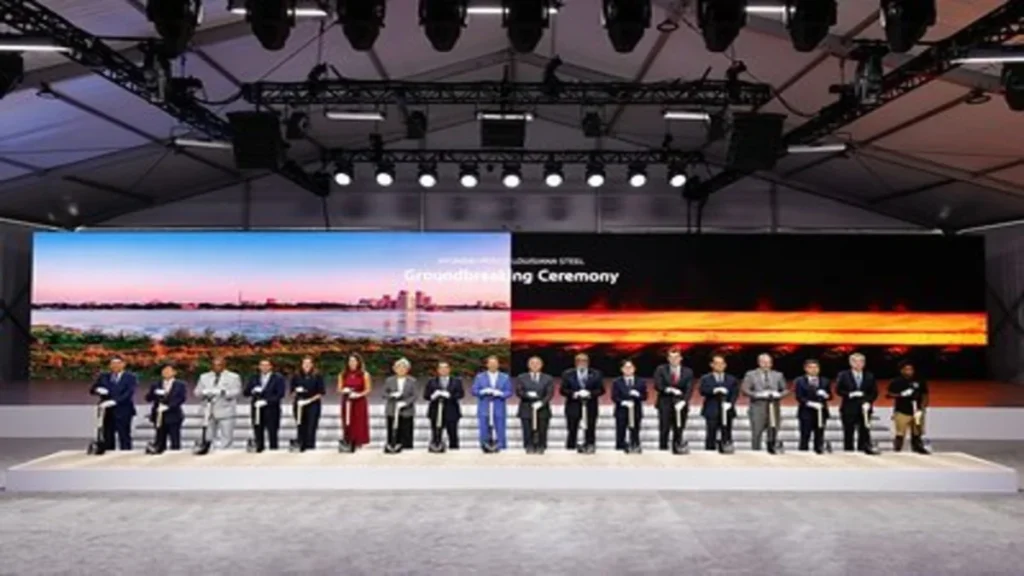
Hyundai Steel officially broke ground this week on its ambitious $5.8 billion Electric Arc Furnace (EAF)-based integrated steel mill project in Louisiana, marking a pivotal moment for sustainable manufacturing in North America. The massive facility, which is slated to commence commercial production in 2029, has been heralded as "the first of its kind in North America" due to its advanced, low-carbon steelmaking technology and integrated approach. This landmark investment underscores a significant shift in the global steel industry towards environmentally conscious production methods and strengthens the domestic supply chain for critical sectors like automotive manufacturing.
The groundbreaking ceremony, held on September 4 at the expansive RiverPlex MegaPark in Ascension Parish, Louisiana, gathered key stakeholders under the resonant slogan "Building the Future of Steel, Together with Louisiana." The event celebrated not just the initiation of a construction project, but the forging of a strategic partnership between an international industrial giant and a state committed to economic diversification and industrial growth. Hyundai Motor Group Executive Chair Euisun Chung emphasized the broader implications of the investment, stating, "As America strengthens its manufacturing leadership, steel will continue to power the next chapter of its industrial resurgence. We are proud to contribute to that vision and to the future of ‘Made in America’. Together, we will turn our shared ambitions into greater productivity and prosperity." His remarks highlight the project’s alignment with national priorities for robust domestic manufacturing and economic resilience.
A New Paradigm in Steel Production: Advanced EAF and Direct Reduction Technology
At the technological core of this state-of-the-art facility lies a sophisticated combination of Electric Arc Furnace (EAF) and Direct Reduction Process (DRP) technologies. Unlike traditional blast furnaces that rely on coal and produce significant carbon dioxide emissions, this integrated system represents a paradigm shift towards cleaner steelmaking. The mill’s DRP will utilize natural gas to meticulously remove oxygen from iron ore, yielding direct reduced iron (DRI). This high-quality DRI can then be fed directly into the electric arc furnace, bypassing the conventional, carbon-intensive blast furnace route entirely.
This innovative process is projected to slash carbon dioxide emissions by approximately 70 percent when compared to coal-based blast furnace production. Hyundai Steel further clarified the advantages, noting, "Electric arc furnace molten steel can reduce carbon dioxide emissions by about 70% compared to blast furnace molten steel, and by directly connecting the DRP and electric arc furnace within the same plant, we can further enhance efficiency and productivity. We will be able to produce higher-grade products than conventional electric arc furnaces that use only steel scrap." This capability to produce higher-grade steel, traditionally a domain of blast furnaces, using an EAF with DRI as a primary feedstock, positions the Louisiana mill at the forefront of sustainable and high-performance steel production.
The mill is designed to produce an impressive 2.7 million metric tons of hot-rolled and cold-rolled steel sheets annually. A substantial 1.8 million tons of this planned annual output will be dedicated to high-grade automotive steel sheets, a critical component for modern vehicle manufacturing, especially for electric vehicles which demand lighter yet stronger materials. The remaining 900,000 tons will cater to general industrial applications, demonstrating the mill’s versatility and broad market appeal. This significant capacity is strategically geared towards meeting the burgeoning demand from the automotive sector, particularly for Hyundai Motor Company and Kia Corporation’s growing manufacturing footprint in the United States.
Economic Catalyst: Job Creation and Regional Development
The economic ripple effect of the Hyundai Steel project is anticipated to be profound. The facility is expected to generate a total of 5,400 jobs, comprising 1,300 direct positions at the plant itself and an additional 4,100 indirect and induced jobs across the region. These direct positions are projected to offer an average annual salary of $75,000, significantly higher than the average wage in Ascension Parish and the state of Louisiana. Such high-wage jobs are crucial for fostering economic prosperity, attracting skilled labor, and retaining talent within the state.
Louisiana Governor Jeff Landry lauded the investment as a testament to the state’s robust business environment and strategic advantages. "This $5.8 billion investment by Hyundai Steel is a game-changer for Louisiana," Governor Landry stated, emphasizing the state’s commitment to attracting capital-intensive, high-tech manufacturing. "It will create thousands of jobs, diversify our industrial base, and solidify Louisiana’s position as a leader in advanced manufacturing and green energy initiatives. We are not just building a steel mill; we are building a more prosperous future for our communities."
The project is strategically located within the RiverPlex MegaPark, a sprawling 1,700-acre industrial site in Donaldsonville, on the west bank of the Mississippi River in Ascension Parish. This location offers unparalleled logistical advantages, including deep-water access for material shipments, robust rail infrastructure, and proximity to major highways, facilitating efficient distribution of finished products. The development of the RiverPlex MegaPark itself represents a broader initiative to cultivate a world-class industrial hub, attracting further investment and fostering synergistic relationships among businesses.
A Joint Venture for Strategic Supply Chain Resilience
The operation of this groundbreaking mill will be overseen by HYUNDAI-POSCO Louisiana Steel (HPLS), a strategic joint venture formed by some of South Korea’s industrial powerhouses. Hyundai Steel holds a controlling 50% stake in HPLS, underscoring its leadership in the project. POSCO, another global leader in steel manufacturing, owns 20%, bringing its extensive expertise and technological prowess to the partnership. Hyundai Motor Company and Kia Corporation each hold a 15% stake, reflecting their critical interest in securing a stable, high-quality, and sustainably produced steel supply for their North American automotive manufacturing operations.
This joint venture structure highlights a growing trend among major manufacturers to vertically integrate their supply chains, particularly for critical raw materials. By co-investing in the steel production facility, Hyundai Motor Company and Kia are directly ensuring the availability of the specialized steel grades required for their vehicles, reducing reliance on external suppliers and mitigating potential supply chain disruptions. This strategic move is especially pertinent given the increasing complexities of global logistics and the push for greater domestic content in manufactured goods.
Louisiana’s Strategic Incentives and Infrastructure Investment
Louisiana’s proactive approach to attracting this significant investment played a crucial role in securing the project. The state offered Hyundai Steel a substantial $100 million performance-based grant, earmarked for critical infrastructure improvements. These improvements are vital for supporting the massive industrial complex and include upgrades to road networks, rail lines, electrical grids, and pipeline infrastructure within the RiverPlex MegaPark.
Furthermore, Hyundai Steel is actively collaborating with the Port of South Louisiana, one of the largest ports in the world by tonnage, to develop a dedicated deep-water dock. This new dock will facilitate the efficient import of an estimated 3.6 million tons of iron ore annually, which will serve as the primary raw material for the DRP. It will also streamline the export of finished steel coils by rail and truck to various customers, including Hyundai Motor Company, Kia, and other U.S. automakers. A significant portion of the Louisiana-produced steel is destined for Hyundai’s U.S. vehicle manufacturing plants, further cementing the symbiotic relationship between the steel mill and its automotive partners. The port’s strategic location along the Mississippi River provides unmatched access to both domestic and international markets, reinforcing the logistical advantages of the site.
Broader Implications: Decarbonization and ‘Made in America’
The Hyundai Steel mill in Louisiana is not an isolated investment; it is a cornerstone of Hyundai Motor Group’s expansive $26 billion U.S. investment commitment through 2028. This broader commitment spans diverse sectors, including automotive production (especially for electric vehicles), advanced steelmaking, robotics innovation, and other cutting-edge technologies. This holistic approach signifies Hyundai’s long-term vision for a robust and sustainable presence in the North American market, driving innovation and creating a resilient ecosystem for its operations.
Once fully operational, this groundbreaking facility will establish Hyundai Steel’s first steel production base in North America, a significant milestone for the company’s global footprint. This move addresses several strategic imperatives: enhancing supply chain security, reducing carbon emissions in its manufacturing processes, and aligning with the ‘Made in America’ ethos that resonates strongly with consumers and policymakers alike. By producing advanced automotive steel domestically, Hyundai is not only shortening lead times and reducing transportation costs but also contributing directly to the revitalization of American manufacturing.
The project aligns perfectly with global efforts to decarbonize heavy industries. The steel industry is one of the largest emitters of greenhouse gases, and the transition from coal-intensive blast furnaces to EAFs powered by natural gas, and eventually hydrogen, is critical for achieving climate targets. Hyundai Steel’s investment serves as a tangible example of how established industrial players are taking concrete steps towards a greener future, setting a precedent for others in the sector.
The successful implementation of this project could also stimulate further investments in green steel technologies across the U.S., creating a virtuous cycle of innovation and sustainable industrial development. Louisiana’s role in attracting and supporting such a monumental project highlights its growing importance as a hub for advanced manufacturing and energy transition initiatives. The Hyundai Steel mill is more than just a factory; it is a symbol of technological progress, economic partnership, and a commitment to a more sustainable industrial future for North America.